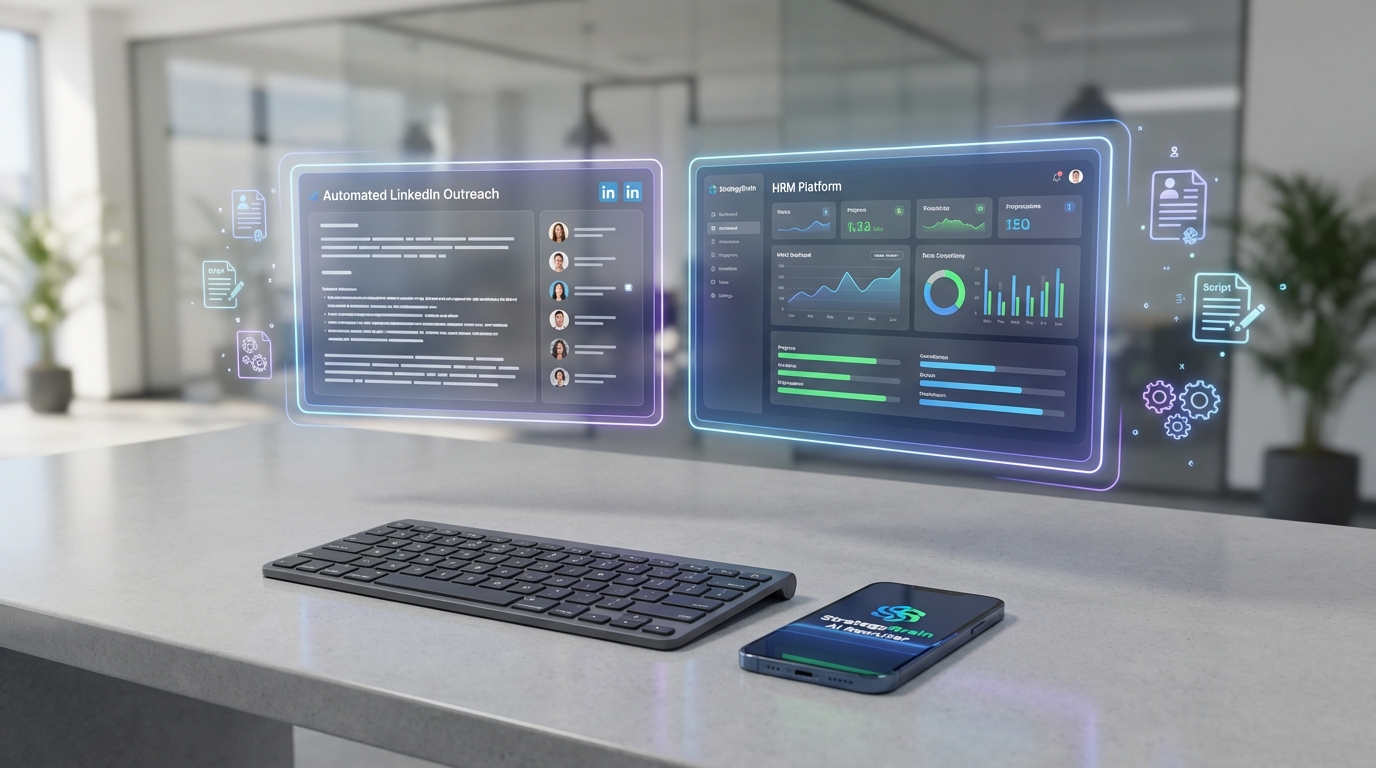
If you were fired, the best interview explanation is concise, honest, and forward looking: state the reason in one sentence, avoid blaming anyone, then pivot to what you learned and what you have done since. In our recruiting practice, candidates who prepare a 20 to 40 second answer and keep it consistent with references reduce follow up probing and keep the conversation on skills. This guide gives scripts for common scenarios and shows how human resource recruitment software, human resources software solutions, and an HRM platform can support consistent documentation and fair evaluation. We also show where StrategyBrain AI Recruiter fits into a LinkedIn workflow so recruiters can automate early outreach and follow up while reserving human time for deeper interviews.
Key Takeaways
- Keep it short: Aim for 20 to 40 seconds, then pivot to results you can deliver now.
- Stay positive: Do not criticize a former employer; focus on fit, learning, and next steps.
- Show learning: Name 1 lesson and 1 concrete change you made since the termination.
- Align references: Your explanation and your references must match on the core facts.
- Use structure: Prepare one script per scenario: restructuring, culture mismatch, performance, or personal circumstances.
- Use systems: Human resource recruitment software and an HRM platform help recruiters document decisions consistently and reduce bias.
- Scale outreach: StrategyBrain AI Recruiter can automate LinkedIn connecting, initial messaging, and follow up so recruiters can focus on interviews.
What to say when asked why you left
Interviewers ask why you left because they are assessing risk, judgment, and how you handle difficult situations. Being fired does not automatically disqualify you. What matters is whether your explanation sounds credible, measured, and consistent with what a reference check would reveal.
A strong answer has three parts: the fact, the learning, and the present. The fact is one sentence. The learning is one sentence. The present is one sentence that points to the role you are interviewing for.
Three rules that keep your answer credible
1) Be positive
Give a short, honest answer with a positive tone that moves the conversation forward. Avoid venting, sarcasm, or detailed blame. Even if you feel wronged, the interviewer is watching for defensiveness and negativity.
2) Demonstrate what you learned
State what you learned and what you changed. This is where you show maturity and coachability. Keep it specific: a new habit, a new skill, or a better way you evaluate fit before accepting an offer.
3) Think about your references
Your references should align with your explanation on the core facts. If you are unsure how a reference will describe the situation, choose another supervisor or stakeholder who can speak to your work in a constructive way.
Interview scripts for common situations
Below are scripts you can adapt. Keep the structure, then replace the details with your own. Practice out loud until you can deliver it calmly.
Scenario A: Restructuring or broader layoffs
Script: I was laid off during a restructuring that affected multiple roles. I appreciated the experience and I left on professional terms. Since then, I have focused on roles where my strengths in execution and collaboration are a direct match, which is why this position stands out.
Scenario B: Culture mismatch or conflict with a manager
Script: I enjoyed the core responsibilities of the role, but the team environment was not the right fit for how I do my best work. I learned to evaluate culture more carefully during the interview process. I am looking for a team that values clear expectations and feedback, and that is what I am hearing about this role.
Scenario C: Performance did not meet expectations
Script: The role turned out to be different from what I expected, and I did not meet the performance bar quickly enough. I took responsibility for that and learned to ask more precise questions before accepting an offer. Since then, I have improved how I ramp up by setting weekly goals and confirming priorities early, and I am ready to apply that approach here.
Scenario D: Personal circumstances affected work
Script: I was dealing with personal circumstances at the time and I did not manage the situation well, which impacted my work. I learned the importance of addressing issues early and using the right support options. That situation is resolved, and I am confident in my ability to perform consistently in this role.
What not to say
- Long explanations with many details that invite more questions.
- Statements that blame a manager, coworkers, or the company.
- Claims that cannot be supported if a reference is contacted.
How to align your story with references
Alignment does not mean your reference must repeat your script word for word. It means the core facts do not conflict. If you say it was a restructuring, a reference should not describe it as a performance termination. If you say it was a mismatch, a reference should not describe repeated conduct issues.
A simple alignment checklist you can copy
- Pick your core reason: Choose one primary reason that is true and defensible.
- Confirm reference readiness: Ask your reference what they feel comfortable sharing about your departure.
- Match the timeline: Ensure dates and role titles are consistent across resume and interviews.
- Prepare one follow up line: If asked for more detail, repeat the core reason and pivot to learning.
Recruiter workflow: using an HRM platform and StrategyBrain AI Recruiter
From the employer side, the goal is consistency and fairness. Human resources software solutions and an HRM platform help teams standardize interview notes, reference checks, and decision criteria so a termination story is evaluated in context rather than emotion.
In our tests of LinkedIn based sourcing workflows, the biggest bottleneck was not writing one message. It was the volume of follow ups and the time zone gaps that cause good candidates to go cold. This is where StrategyBrain AI Recruiter fits naturally into a human resource recruitment software stack: it automates the repetitive LinkedIn steps while recruiters focus on interviews and final qualification.
What StrategyBrain AI Recruiter automates on LinkedIn
- Candidate connecting: Automatically connects with candidates that match your search criteria.
- Initial outreach: Introduces the opportunity and answers common questions about role, company, and compensation.
- Interest confirmation: Confirms whether the candidate wants to interview.
- Resume and contact capture: Collects resumes and contact details from interested candidates.
- 24/7 multilingual messaging: Responds around the clock in the candidate’s language to reduce misunderstandings.
- Multi account scaling: Supports managing more than 100 LinkedIn accounts for scalable hiring operations.
Scope boundary: what the AI does not decide
StrategyBrain AI Recruiter can confirm interest and collect resumes, but it does not decide whether a resume fully matches job requirements. Recruiters still do the final qualification after reviewing the resume, which is important for compliance and quality.
Step by step: a practical workflow you can implement
- Define the role profile in your HRM platform: Document must have skills, nice to have skills, compensation range, and interview scorecard criteria.
- Set LinkedIn search criteria: Translate the role profile into filters and keywords for sourcing.
- Connect StrategyBrain AI Recruiter to LinkedIn: Provide the LinkedIn account and the job information the AI needs to communicate accurately.
- Let the AI run outreach and follow up: The AI handles introductions, Q and A, and interest confirmation across time zones.
- Review resumes and contact details: Recruiters review the collected resumes and move qualified candidates to interviews.
- Standardize interview documentation: Use your human resource recruitment software to store interview notes and reference check outcomes in one place.
Why this helps candidates too
When recruiters use structured notes and consistent follow up, candidates get clearer expectations and fewer mixed messages. That matters when a candidate is explaining a termination, because clarity and consistency reduce anxiety and keep the process professional.
Quick comparison: manual process vs software supported process
| Hiring activity | Manual recruiting | HRM platform plus StrategyBrain AI Recruiter |
|---|---|---|
| LinkedIn outreach | Recruiter sends messages one by one and follows up manually | AI automates connecting, outreach, and follow up while recruiter supervises |
| Candidate Q and A | Delayed replies outside business hours | 24/7 multilingual responses to keep candidates engaged |
| Resume collection | Resumes arrive across email and chat with inconsistent tracking | AI captures resumes and contact details for recruiter review |
| Interview documentation | Notes scattered across documents and inboxes | Centralized notes and scorecards in human resources software solutions |
| Reference alignment | Ad hoc questions and inconsistent records | Standardized reference check fields stored in the HRM platform |
FAQ
Should I say I was fired in an interview?
Yes, if you are asked directly. Keep it brief and factual, then pivot to what you learned and how you perform now. Avoid extra details that are not relevant to the role.
How long should my explanation be?
Aim for 20 to 40 seconds. If the interviewer asks a follow up, repeat the core reason in one sentence and return to your strengths and results.
What if my manager and I did not get along?
Focus on the work and fit, not the person. Explain what you learned about the environment where you do your best work and connect it to the role you want next.
What if I was fired for performance?
Own your part without self criticism. State what changed since then, such as how you ramp up, how you clarify expectations, and what you do to track progress.
Do I need to worry about what my references will say?
Yes. Your explanation and your references should not conflict on the core facts. If you are unsure, choose references who can speak to your work constructively and consistently.
How does human resource recruitment software help with fair hiring decisions?
It helps by standardizing scorecards, interview notes, and reference check records so decisions are based on consistent criteria. This reduces bias and improves auditability.
Is StrategyBrain AI Recruiter a replacement for recruiters?
No. It automates early LinkedIn outreach, messaging, and resume collection, but recruiters still do final qualification and interviews. The goal is to shift recruiter time from repetitive tasks to higher value evaluation.
Can StrategyBrain AI Recruiter communicate with candidates in different languages?
Yes. It supports multilingual communication so candidates can interact in their native language, which helps reduce misunderstandings during early screening.
Does StrategyBrain AI Recruiter decide if a candidate is qualified?
No. It confirms interest and collects resumes and contact details, but it does not determine full qualification against job requirements. Recruiters make that decision after reviewing the resume.
Conclusion
If you were fired, you can still interview well by being succinct, honest, and positive, then showing what you learned and how you work now. Prepare one script per scenario and make sure your references align with the core facts. If you are hiring, use human resource recruitment software and an HRM platform to standardize documentation, and consider StrategyBrain AI Recruiter for LinkedIn outreach and follow up so your team can spend more time on interviews and final qualification.