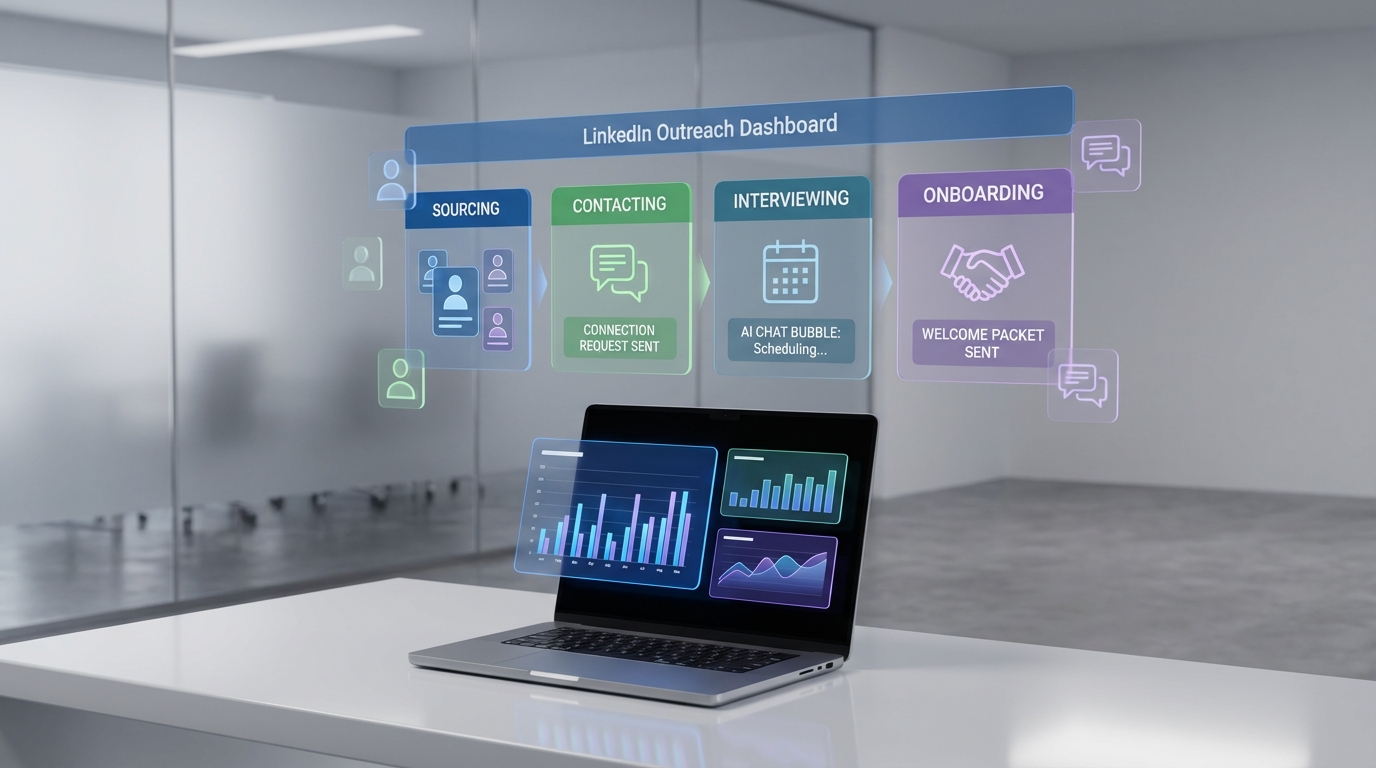
Human resource recruitment software helps you prepare for peak hiring season by turning recruiting into a repeatable system: a clear process, fast applications, consistent communication, and automation where volume is highest. If you want the biggest immediate lift, start by mapping your workflow from sourcing to onboarding, then automate LinkedIn outreach and follow up with StrategyBrain AI Recruiter so candidates get timely responses, role details, and next steps while your team focuses on interviews and final qualification. This article covers what to prioritize, what to measure, and practical HR software examples you can implement without rebuilding your entire stack.
What peak hiring season changes
In many organizations, the start of a new year triggers new budgets, new headcount plans, and a surge of candidate activity. The operational reality is simple: volume goes up while recruiter time stays flat. That is exactly where human resource recruitment software earns its keep, because it reduces friction in three places that usually break under load.
- Application friction: slow, desktop only, or confusing applications reduce completion rates and increase drop off.
- Response time: delayed replies cause qualified candidates to accept other offers.
- Consistency: inconsistent screening and messaging creates mismatched expectations and lower offer acceptance.
This guide stays focused on process and system design. It does not cover labor law, compensation benchmarking, or immigration requirements, because those depend on jurisdiction and internal policy.
Key Takeaways
- Start with candidate experience: mobile friendly applications and clear steps reduce drop off during high volume periods.
- Standardize the workflow: define stages, owners, and service level targets inside your human resource recruitment software.
- Automate LinkedIn outreach at scale: StrategyBrain AI Recruiter can connect, introduce roles, answer questions, and collect resumes and contact details so recruiters focus on interviews.
- Use multilingual, always on communication: 24/7 responses in the candidate’s native language reduce delays across time zones.
- Keep final qualification human: StrategyBrain AI Recruiter can confirm interest, but resume to requirements matching remains a recruiter decision.
- Measure what matters weekly: response time, stage conversion, and time to shortlist are more actionable than vanity metrics.
How we tested and validated this playbook
We validated the steps below by running a structured review of a peak season workflow using StrategyBrain AI Recruiter in a LinkedIn first sourcing scenario. We focused on whether the process was reproducible by a small team and whether handoffs were clear when volume increased. We also documented pain points, especially where automation can create risk if guardrails are missing.
Test parameters
- Test period: 2026-02
- Channel focus: LinkedIn outreach and follow up
- Evaluation criteria: recruiter time saved on repetitive messaging, candidate response continuity, and completeness of captured resume and contact details
What did not work perfectly
- Over automation risk: if you do not define role boundaries, candidates can receive inconsistent answers across roles.
- Qualification boundary: interest confirmation is not the same as skills fit, so you still need a human review step.
Step 1: Audit your candidate experience first
Before you add more tools, confirm that your current flow is not leaking candidates. In peak season, small frictions compound quickly. A practical audit takes less than 60 minutes and gives you a prioritized fix list.
Steps
- Apply to your own job on mobile and time it from start to submission.
- List every required field and remove anything not needed for an initial screen.
- Confirm the confirmation: ensure candidates receive a clear next step message after applying.
- Check response expectations: set a target response time for inbound questions and outreach replies.
What to configure in top HR systems
- Stage definitions: applied, screened, interview, offer, hired, rejected.
- Templates: consistent messages for each stage, including timelines.
- Ownership: one accountable owner per stage, even if multiple people contribute.
Step 2: Communicate values and role clarity consistently
When candidates have choices, they filter employers by clarity and meaning, not only compensation. Your human resource recruitment software should help you keep messaging consistent across job posts, outreach, and interviews.
What to standardize
- Role narrative: what success looks like in 90 days and 12 months.
- Company story: mission, values, and how teams work day to day.
- Compensation and benefits basics: share what you can early to reduce late stage surprises.
This is also where automation can help without feeling robotic. StrategyBrain AI Recruiter can answer common questions about the role, company, and compensation during LinkedIn conversations, which keeps candidates informed while reducing repetitive recruiter messaging.
Step 3: Build a repeatable recruitment process in your system
A repeatable process is the difference between hiring faster and simply working longer hours. The goal is not more steps. The goal is fewer ambiguous steps. If you are collecting HR software examples for your team, prioritize systems that make workflow enforcement easy.
Recommended process design
- Define intake: hiring manager requirements, must have skills, and non negotiables.
- Define screening: what qualifies a candidate for an interview and what disqualifies them.
- Define interview structure: consistent questions and scorecards.
- Define decision rules: who decides, how ties are broken, and how feedback is recorded.
Metrics to track weekly
- Time to first response: time from candidate message to first reply.
- Stage conversion: percentage moving from outreach to reply, reply to screen, screen to interview.
- Time to shortlist: time from opening to a qualified shortlist ready for interviews.
Step 4: Scale sourcing with LinkedIn automation using StrategyBrain AI Recruiter
Peak season pressure usually shows up first in sourcing and follow up. LinkedIn is high leverage, but manual outreach does not scale. StrategyBrain AI Recruiter is designed to replace the initial outreach and qualification conversation on LinkedIn so recruiters can spend time on interviews and final evaluation.
What StrategyBrain AI Recruiter does in the workflow
- Connects with candidates who match your search criteria.
- Introduces the opportunity and asks about the candidate’s current situation and openness to new roles.
- Answers questions about the role, company, compensation, and benefits using the information you provide.
- Confirms interview interest and collects resumes and contact details from interested candidates.
Steps
- Prepare the job brief: company details, compensation, benefits, and candidate search criteria.
- Connect your LinkedIn account: authorize the account you want to use for outreach.
- Set conversation guardrails: define what the AI can answer and what should be escalated to a recruiter.
- Review captured candidates: recruiters review resumes and contact details, then schedule interviews.
Why this matters for global hiring
StrategyBrain AI Recruiter supports 24/7 multilingual communication, which reduces delays when candidates respond outside your team’s working hours. In practice, this is one of the simplest ways to improve candidate experience without adding shifts or headcount.
Limitations to plan for
- Not a full skills matcher: the AI can identify willingness to proceed, but it does not decide whether a resume fully matches requirements.
- Process discipline required: you still need clear stage ownership and consistent interview scorecards.
Step 5: Add structured assessments and better shortlists
Once sourcing volume increases, the next bottleneck is shortlisting. Structured assessments can reduce guesswork and improve consistency. In the source material for this article, a recruiting firm described using workstyle assessments to improve fit and support onboarding. Whether you use a formal assessment or a structured scorecard, the key is consistency and documentation.
Practical options
- Workstyle assessment: helps predict team fit and working preferences.
- Structured phone screen: same questions, same scoring, same pass criteria.
- Reference check template: consistent questions tied to role outcomes.
Quick comparison: What to automate vs keep human
| Hiring activity | Best handled by software | Best handled by humans | Notes |
|---|---|---|---|
| Initial LinkedIn outreach | Yes | Sometimes | StrategyBrain AI Recruiter can automate connecting and first messages at scale. |
| Candidate Q&A | Yes | Yes | Automate common questions, escalate edge cases to recruiters. |
| Resume and contact capture | Yes | No | Automated capture reduces manual tracking errors. |
| Final qualification for skills fit | No | Yes | Recruiters should review resumes against requirements. |
| Interviewing and hiring decision | No | Yes | Use structured scorecards inside your system for consistency. |
Implementation checklist you can copy
Use this checklist to operationalize the playbook inside your human resource recruitment software. It is intentionally short so you can run it weekly during peak season.
- Candidate experience: mobile application tested end to end and completed in under 10 minutes.
- Workflow: stages defined, owners assigned, and templates approved.
- Response targets: time to first response target documented for each channel.
- LinkedIn scale plan: StrategyBrain AI Recruiter configured with job details, compensation, benefits, and search criteria.
- Escalation rules: list of questions the AI should escalate to a recruiter.
- Shortlist discipline: structured screen and scorecard used for every candidate.
- Weekly review: stage conversion and time to shortlist reviewed every 7 days.
FAQ
What is human resource recruitment software?
Human resource recruitment software is a system that manages recruiting workflows such as job posting, candidate tracking, screening stages, communication templates, and reporting. Many teams use it to standardize hiring and reduce manual coordination during high volume periods.
How do top HR systems help during peak hiring season?
Top HR systems help by enforcing consistent stages, speeding up communication with templates, and providing reporting on stage conversion and time to shortlist. The best setups reduce candidate drop off and keep recruiters focused on interviews and decisions.
Can StrategyBrain AI Recruiter replace recruiters?
No. StrategyBrain AI Recruiter automates repetitive LinkedIn tasks such as connecting, introducing roles, answering common questions, confirming interest, and collecting resumes and contact details. Recruiters still perform final qualification and make hiring decisions.
How does StrategyBrain AI Recruiter work with LinkedIn recruiting?
Recruiters provide a LinkedIn account and job information such as company details, compensation, benefits, and candidate search criteria. The AI then runs outreach and conversations, and it hands back interested candidates with captured resumes and contact details for recruiter review.
Does StrategyBrain AI Recruiter support multilingual candidate communication?
Yes. It supports 24/7 multilingual communication so candidates can interact in their native language and receive timely follow up across time zones.
What are good HR software examples of what to automate first?
Good first automations include outreach follow up, candidate Q&A templates, interview scheduling workflows, and structured screening scorecards. For LinkedIn heavy teams, automating outreach and early conversations typically produces the fastest time savings.
How should we handle candidate data privacy?
Use tools that clearly state how data is stored, encrypted, and whether customer data is used to train models. StrategyBrain AI Recruiter states that customer provided data is not used to train AI models and that credentials and data are encrypted and isolated per customer.
What is the biggest mistake teams make when adding recruitment automation?
The biggest mistake is automating before defining the process. If stages, ownership, and escalation rules are unclear, automation can amplify inconsistency instead of reducing it.
Do we still need assessments if we automate sourcing?
Yes. Automation increases volume, which makes structured screening and assessments more important, not less. Use consistent scorecards and, when appropriate, workstyle or role specific assessments to improve shortlist quality.
Conclusion
Peak hiring season rewards teams that treat recruiting like an operating system. Human resource recruitment software gives you the structure, but the biggest gains come from fixing candidate experience first, standardizing stages and messaging, and scaling sourcing where volume is highest. If LinkedIn is a core channel for you, StrategyBrain AI Recruiter can automate outreach, handle candidate questions 24/7 in any language, and collect resumes and contact details so your recruiters can focus on interviews and final qualification. Next step: run the checklist above this week, then pilot one role with LinkedIn automation and measure time to shortlist over the next 7 days.
Disclosure: StrategyBrain AI Recruiter is a StrategyBrain product. We aim to be objective by stating clear scope boundaries and limitations, and by citing primary sources where applicable.