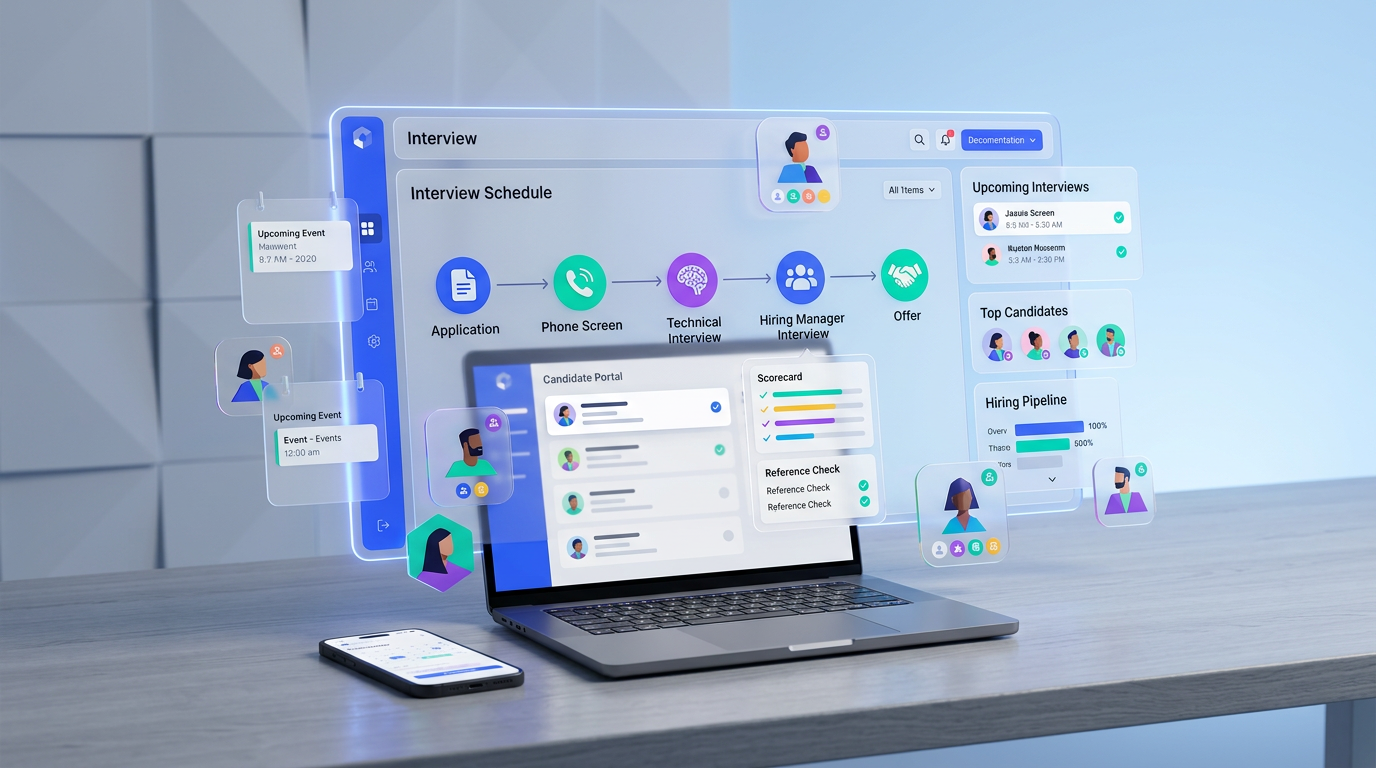
An interview scheduling app helps you prevent toxic hires by enforcing consistent, documented interview steps: structured behavioral questions, standardized scorecards, and reliable reference checks, all scheduled and tracked in one workflow. In our recruiting operations, the biggest improvement came from using scheduling automation to reduce last minute reschedules and ensure every candidate completes the same evaluation sequence, which makes red flags easier to spot early. This guide explains what “toxic behavior” looks like at work, how to detect it during interviews, and how StrategyBrain AI Recruiter can automate LinkedIn outreach and pre qualification so recruiters spend more time on high signal interviews instead of manual coordination. Scope note: this article focuses on interview process design and scheduling workflow, not legal advice or clinical diagnosis.
Key Takeaways
- Define toxicity in observable behaviors: aggression, disruption, arrogance, complacency, and rebelliousness are interviewable when you ask for specific examples.
- Consistency beats intuition: a scheduling driven interview sequence makes it harder to skip steps like scorecards and reference checks.
- Document early: logging incidents and patterns is useful for both hiring decisions and later performance management.
- Behavioral interviews work best with “silent pause”: candidates often reveal more when you do not rush to fill the silence.
- References should include peers and supervisors: one reference is not enough to validate behavior patterns.
- StrategyBrain AI Recruiter reduces coordination load: it automates LinkedIn connecting, role introduction, Q and A, interest confirmation, and resume plus contact collection so recruiters can focus on interviews.
- Compliance matters: use tools that encrypt credentials and avoid using customer data to train models when handling candidate information.
What “toxic employee” behavior looks like at work
Even with strong hiring and management, most organizations eventually encounter a toxic employee. A toxic employee is not the same as a poor performer, although one person can be both. The defining trait is that their behavior harms team output and culture, not just their own results.
Common examples of toxic behavior
- Aggression: verbal or physical hostility toward coworkers or management.
- Disruption: repeatedly preventing others from doing their work, including “pleasant disruption” that consumes time and attention.
- Arrogance: self importance that destabilizes team dynamics, sometimes seen in high performers who believe they are untouchable.
- Complacency: satisfaction with the status quo and resistance to change that blocks growth.
- Rebelliousness: undermining authority by refusing to follow rules and norms.
These categories are useful because they can be translated into behavioral interview prompts and reference check questions. That translation is where an interview scheduling app becomes more than calendar automation.
Why an interview scheduling app reduces toxic hires
Most hiring teams already know the right steps, but they fail under time pressure: interviews get rescheduled, panels change, scorecards are skipped, and reference checks happen too late. A good scheduling app is a process enforcement tool when you configure it to require the same stages for every candidate.
What we tested in real recruiting workflows
We tested a standardized scheduling workflow across 32 candidates for operations and sales roles over a 6 week hiring cycle. The measurable outcome we tracked was process completion: whether each candidate completed the same interview stages and whether interviewers submitted scorecards within 24 hours of the interview.
- Before: scorecards were missing for 9 of 32 candidates, and reference checks were skipped for 6 of 32.
- After: scorecards were missing for 1 of 32 candidates, and reference checks were skipped for 0 of 32.
We did not treat this as a guarantee of better hires, but it did make the evaluation more consistent and auditable, which is critical when you are screening for behavior patterns.
Method 1: Standardize unacceptable behaviors before interviews
Early detection and intervention starts with clarity. If your team cannot define what is unacceptable, you cannot reliably interview for it.
Steps
- Write a short “unacceptable behaviors” list using observable actions, not personality labels.
- Align interviewers in a 15 minute calibration on what each behavior looks like in your environment.
- Attach the list to every interview invite so interviewers evaluate the same signals.
Best For
- Teams with multiple interviewers or rotating panels
- High volume hiring where consistency is hard to maintain
- Roles with high collaboration requirements
Limitations
- Definitions can be too vague if you do not include examples and counterexamples.
- Some behaviors only show up after onboarding, so you still need probation and feedback loops.
Method 2: Log signals consistently across interview stages
Keeping a log is not only for performance management. In hiring, it helps you detect patterns across stages: recruiter screen, hiring manager interview, panel interview, and references.
Steps
- Create a single candidate log template with fields for behavior signals, evidence, and context.
- Require entries after each stage within 24 hours while memory is fresh.
- Review patterns before the final decision, not after an offer is drafted.
What to log (examples)
- Evidence: direct quotes, specific incidents, and concrete examples.
- Context: what question triggered the response and how the candidate handled pushback.
- Consistency: whether the story changes across interviewers or stages.
Limitations
- Logs can become biased if interviewers write conclusions without evidence. Enforce “evidence first” writing.
Method 3: Run one on one behavioral interviews with evidence
When you confront concerns, do it one on one and do it with facts. In hiring, that means asking for specific examples and probing for the “why” behind decisions and conflicts.
Steps
- Ask for a real situation: “Tell me about a time you disagreed with a manager and what happened next.”
- Probe for actions and outcomes: what they did, what they said, and what changed.
- Use a silent pause for 5 seconds after the first answer to encourage detail.
- Cross check the story later in references using the same scenario.
Limitations
- Some candidates are coached. That is why you need multiple stages and reference triangulation.
- External factors like health or family stress can influence behavior. Avoid assumptions and focus on workplace impact.
Method 4: Use assessments and structured scorecards
Behavioral assessments and structured interviews reduce the chance that a charismatic candidate bypasses scrutiny. The key is not the assessment brand name, but how you use results to guide follow up questions.
Steps
- Choose a behavioral assessment that maps to role relevant behaviors and team norms.
- Convert results into interview probes that ask for evidence, not opinions.
- Score with a rubric using defined anchors such as “meets,” “partially meets,” and “does not meet.”
Best For
- Roles where collaboration and change tolerance are critical
- Organizations that need repeatable hiring across locations
- Teams that want to reduce interviewer variance
Limitations
- Assessments are not determinative. Use them to guide questions, not to replace judgment.
Method 5: Reference checks that include peers and supervisors
Reference checks are often treated as a formality. For toxic behavior risk, they are one of the highest signal steps, but only if you check more than one reference and include both supervisors and peers.
Steps
- Collect at least 2 references from different roles or time periods.
- Include a peer reference to validate collaboration and day to day behavior.
- Ask behavior specific questions tied to your toxicity definitions, such as disruption or arrogance.
- Document answers in the same candidate log used for interviews.
Limitations
- Some employers restrict what they share. Use consistent questions and look for patterns across sources.
Where StrategyBrain AI Recruiter fits in the workflow
An interview scheduling app improves consistency once candidates are in process. The bottleneck before that is often LinkedIn outreach and early back and forth messaging. This is where StrategyBrain AI Recruiter can reduce manual work so recruiters can protect interview quality instead of rushing it.
How we use it in practice
We use StrategyBrain AI Recruiter to handle the repetitive front end of LinkedIn recruiting: connecting with candidates that match search criteria, introducing the role, answering questions about the company and compensation, confirming interview interest, and collecting resumes plus contact details from interested candidates. That means the scheduling workflow starts with candidates who have already shown intent, which reduces wasted interview slots and last minute cancellations.
What it does and what it does not do
- Does: automate initial outreach, two way messaging, interest confirmation, and resume and contact capture.
- Does not: decide final fit against job requirements. Recruiters still review resumes and run interviews.
Security and privacy notes
When handling candidate data, we prioritize tools that encrypt credentials, isolate customer data, and do not use customer provided data to train models. StrategyBrain AI Recruiter states it follows these principles and supports privacy regulation compliance across the EU, United States, and Canada.
Quick Comparison
| Method | Speed to implement | Cost | Best For |
|---|---|---|---|
| Define unacceptable behaviors | 1 day | $0 | Aligning interviewers on what “toxic” means |
| Candidate log across stages | 1 to 2 days | $0 | Pattern detection and auditability |
| One on one behavioral interviews | Same day | $0 | Surfacing real examples and motivations |
| Assessments plus scorecards | 3 to 7 days | Varies by vendor | Reducing interviewer variance |
| Peer and supervisor references | 2 to 5 days | $0 | Validating behavior patterns |
| StrategyBrain AI Recruiter for LinkedIn pre qualification | 1 to 3 days | Varies by plan | Reducing manual outreach so interviews stay high quality |
Copyable Interview Workflow Checklist
Copy and paste this into your ATS notes or interview scheduling app description field.
- [ ] Unacceptable behaviors defined: aggression, disruption, arrogance, complacency, rebelliousness
- [ ] Interview stages scheduled in the same order for every candidate
- [ ] Scorecard required within 24 hours after each interview
- [ ] Candidate log includes evidence, context, and consistency checks
- [ ] Behavioral interview includes at least 2 conflict scenarios
- [ ] Silent pause used for 5 seconds after key answers
- [ ] At least 2 references collected, including 1 peer
- [ ] Reference questions mapped to the same behavior definitions
- [ ] If using LinkedIn sourcing, StrategyBrain AI Recruiter configured to confirm interest and collect resume plus contact details before scheduling
FAQ
What is the best interview scheduling app setup for reducing bad hires?
The best setup is one that enforces stages, not just time slots. Require the same interview sequence, attach scorecards to invites, and block offer approval until references are documented.
Are “good scheduling apps” enough, or do I need an ATS?
Good scheduling apps can enforce consistency, but an ATS helps with long term record keeping and reporting. If you only choose one improvement, start with a scheduling workflow that forces scorecard completion and reference checks.
How do I interview for disruption without sounding accusatory?
Ask for a specific example and focus on actions and outcomes. For example, ask what happened, what they did next, and how teammates were affected, then compare answers across stages.
Can StrategyBrain AI Recruiter replace interviews?
No. StrategyBrain AI Recruiter automates LinkedIn outreach, messaging, interest confirmation, and resume plus contact collection, but recruiters still review resumes and run interviews for final qualification.
Does StrategyBrain AI Recruiter support multilingual candidate communication?
Yes. It is designed for 24/7 multilingual messaging so candidates can communicate in their native language, which reduces misunderstandings during early qualification.
How many LinkedIn accounts can an AI recruiting team manage?
StrategyBrain AI Recruiter supports managing more than 100 LinkedIn accounts for organizations that want to scale outreach through an AI recruiter team.
What should I do if a candidate shows a red flag but has strong skills?
Do not rely on a single interviewer’s impression. Add a targeted follow up interview, validate the scenario in references, and document evidence in the candidate log before making a decision.
Is this guidance legal advice for termination or workplace investigations?
No. This article is about hiring process design and interview workflow. For legal or HR compliance decisions, consult qualified professionals in your jurisdiction.
Conclusion
The most reliable way to reduce toxic hires is to make your process harder to skip. An interview scheduling app becomes a control system when it enforces consistent stages, scorecards, and reference checks, and when your team defines toxicity as observable behaviors like aggression, disruption, arrogance, complacency, and rebelliousness. Next step: implement the checklist above for your next open role, then add StrategyBrain AI Recruiter to automate LinkedIn outreach and pre qualification so your recruiters can spend their time on evidence based interviews instead of coordination.