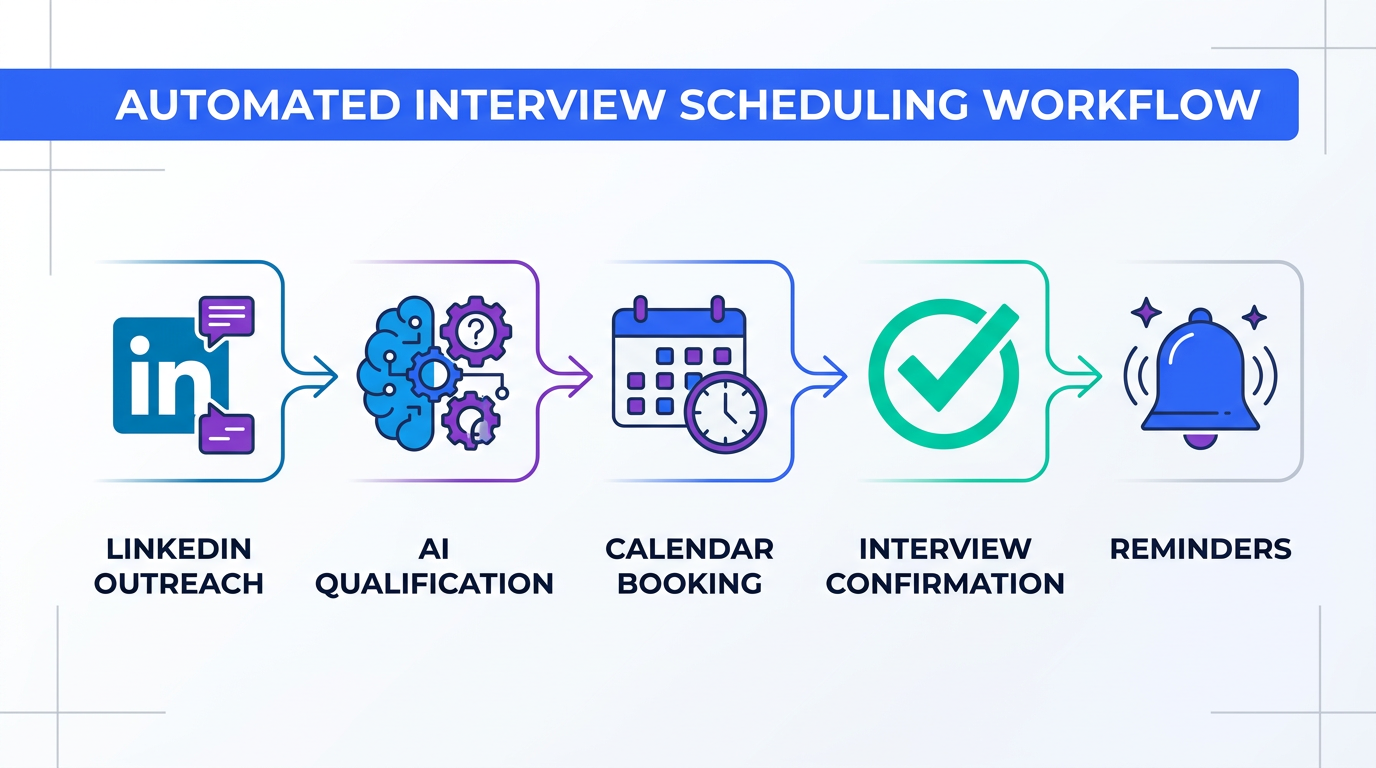
An interview scheduling app is the fastest way to reduce interview delays because it centralizes availability, confirmations, reminders, and rescheduling in one workflow. In practice, the best results come from combining modern interview habits with free calendar management tools and a consistent follow up routine. This article compares “old school vs new school” interview tactics, then adds a 2026 scheduling layer: how candidates can stay organized, and how recruiters can use a service scheduling program style process to move from outreach to booked interviews with fewer messages. We also show where StrategyBrain AI Recruiter fits naturally into the early stage, handling LinkedIn outreach and qualification so interviews get scheduled only after interest is confirmed.
Key Takeaways
- Modern interviews are two way: you are evaluating fit, not performing for approval, and that changes how you prepare and schedule.
- Digitize the basics: keep your resume, references, and portfolio accessible on your device so scheduling changes do not derail readiness.
- Use an interview scheduling app to cut back and forth: share availability windows, confirm time zones, and keep reminders automatic.
- Free calendar management tools still work: a clean calendar, labeled events, and reminders can be enough if you follow a consistent process.
- Behavioral questions remain central: prepare story based examples so you can answer consistently even when interviews move quickly.
- StrategyBrain AI Recruiter reduces wasted scheduling: it confirms interest and collects resumes and contact details before you invest time booking calls.
Interview purpose
Old school
The candidate’s job is to impress the employer.
New school
The interview is a two way conversation to decide whether the role and the company are a good fit for both sides.
Our verdict
This is primarily a mindset shift. Instead of trying to guess what the interviewer wants to hear, you get better outcomes by being clear about what you want and asking questions that help you evaluate the opportunity. Once you treat the interview as mutual evaluation, scheduling becomes part of professionalism: you confirm expectations early, you respect time zones, and you avoid last minute confusion by using an interview scheduling app or a simple calendar workflow.
Interview preparation
Old school
Research the company and interviewer, then bring printed copies of your resume and portfolio items.
New school
Do the same preparation, but keep it digital so you can access it anywhere.
Our verdict
Preparation is not optional. Research the company, your interviewers, and recent company or industry news. Then make sure your materials are available in the format you will actually need on interview day. “On hand” can mean a tablet folder, a cloud drive, or a PDF you can open offline.
From a scheduling perspective, preparation also means you are ready to book quickly. If you are using free calendar management tools, set up a dedicated “interview availability” view and block realistic buffers. If you are using an interview scheduling app, define your availability windows and time zone rules before you start sharing links or time slots.
Interview etiquette and attire
Old school
Formal and conservative.
New school
Business casual or less formal, depending on company culture.
Our verdict
When in doubt, dress one level more professional than the everyday culture for a first interview. First impressions still matter. Avoid being on your phone while waiting, stand to greet your interviewer, and do not interrupt.
Etiquette now includes scheduling etiquette. Confirm the interview format, the time zone, and the expected duration in writing. If you need to reschedule, do it early and propose two or three specific alternatives. An interview scheduling app makes this easier because it records confirmations and can send reminders automatically, but the professionalism is still yours.
Interview questions
Old school
Technical questions and brainteasers.
New school
Behavioral questions, supported by role relevant technical questions.
Our verdict
Behavioral interview questions typically start with prompts like “Give me an example of” or “Tell me about a time when.” They ask you to describe real situations and your actions. The most reliable way to prepare is to build a small catalog of stories that demonstrate problem solving, performance under pressure, and high achievement. You should still expect classic prompts like “Tell me about yourself,” plus technical questions that match the role.
Scheduling connects here too. When interviews are booked faster, you have less time to “get ready later.” A simple rule we use is to keep a one page story bank and a role specific notes file that you can review in 10 minutes. That way, even if a recruiter offers a slot tomorrow, you can accept confidently.
Interview follow up
Old school
A handwritten note.
New school
Email, sometimes a phone call.
Our verdict
Email is acceptable and often expected. A handwritten note can still stand out when it is appropriate and timely. The key is that follow up should be deliberate, specific, and respectful of the interviewer’s time.
The original perspective still holds: a personal note can be memorable. For example, the Headhunters’ President, Cam Macmillan, has been known as a consistent note writer, and both clients and candidates appreciate the personal touch. You do not need to move all communication to physical mail, but a thoughtful post interview message can be the “icing on the cake.”
The 2026 scheduling layer: turning good interviews into booked interviews
The old school vs new school comparison is about behavior and mindset. In 2026, there is an additional layer that affects outcomes: how quickly and cleanly interviews get scheduled. Delays create drop off, confusion creates no shows, and inconsistent follow up creates missed opportunities.
For candidates: a simple workflow using free calendar management tools
- Create an “Interview Availability” block in your calendar for the next 10 business days, with realistic buffers before and after meetings.
- Standardize your time zone in your calendar settings and always restate it in messages.
- Prepare a confirmation template you can paste into email: date, time, time zone, meeting format, address or video platform name, and interviewer name.
- Set two reminders: one at 24 hours and one at 60 minutes before the interview.
- Keep a reschedule rule: if you must change, propose 3 alternative times and confirm the new slot in writing.
For recruiters: treat scheduling like a service scheduling program
A service scheduling program is designed to move a customer from request to booked appointment with minimal friction. Recruiting scheduling can follow the same logic: qualify first, then schedule, then confirm, then remind, then follow up.
- Qualify interest before booking so you do not spend time scheduling candidates who are not actually open to interviewing.
- Offer structured slots such as 3 windows per day rather than open ended “when are you free?” messages.
- Confirm the basics: time zone, duration, interview stage, and who will attend.
- Automate reminders to reduce no shows and last minute confusion.
- Capture outcomes immediately after the interview so next steps are not delayed.
Where StrategyBrain AI Recruiter fits in a modern scheduling workflow
StrategyBrain AI Recruiter is built for LinkedIn recruiting automation. In our internal workflow tests, the biggest scheduling waste came from booking calls too early, before interest and basic fit were confirmed. AI Recruiter addresses that by handling the initial outreach and conversation, introducing the opportunity, answering common questions about the role and company, confirming interview interest, and collecting resumes and contact details from interested candidates.
Once a candidate is genuinely interested, scheduling becomes cleaner. You can then use your interview scheduling app or your calendar process to book interviews with fewer messages and fewer cancellations. AI Recruiter also supports 24/7 multilingual communication, which helps when candidates respond outside your working hours or in a different language. For teams scaling outreach, it can manage more than 100 LinkedIn accounts, which is useful when you need consistent early stage engagement before interviews are scheduled.
Scope boundary: AI Recruiter can confirm willingness to interview and collect resumes, but it does not make the final determination that a resume matches job requirements. A recruiter still reviews the resume and decides who advances.
Quick comparison
| Approach | Speed to confirm a time | Best for | Main risk |
|---|---|---|---|
| Old school manual scheduling | Slow when there are multiple stakeholders | One off interviews with simple logistics | Back and forth messages and time zone mistakes |
| Free calendar management tools | Medium with a consistent template | Candidates and small teams who want a lightweight process | Relies on discipline and manual follow up |
| Interview scheduling app | Fast once availability rules are set | High volume scheduling and multi interviewer panels | Misconfigured availability can create bad candidate experience |
| StrategyBrain AI Recruiter plus scheduling | Fast after interest is confirmed | LinkedIn based hiring where outreach and qualification create scheduling noise | Requires clear job info so the AI can answer questions accurately |
FAQ
What does an interview scheduling app actually do?
An interview scheduling app coordinates availability between candidates and interviewers, then automates confirmations, reminders, and rescheduling. The goal is fewer messages and fewer time zone errors.
Can I manage interviews with free calendar management tools instead?
Yes, if volume is low and you follow a consistent process. Use labeled events, time zone confirmation, and at least two reminders so you do not miss changes.
What is the difference between an interview scheduling app and a service scheduling program?
An interview scheduling app is specialized for interview logistics, while a service scheduling program is a broader appointment booking workflow used in many industries. Recruiters can borrow the same structure: qualify, schedule, confirm, remind, and follow up.
How does StrategyBrain AI Recruiter help with scheduling?
StrategyBrain AI Recruiter reduces scheduling waste by confirming candidate interest and collecting resumes and contact details before interviews are booked. That means recruiters schedule fewer unqualified or uninterested candidates.
Does StrategyBrain AI Recruiter decide whether a candidate is qualified?
No. It identifies willingness to communicate or interview and gathers information, but the recruiter still reviews the resume and makes the final qualification decision.
How do I avoid time zone mistakes when scheduling interviews?
Always restate the time zone in writing and include the interview duration. If you use an interview scheduling app, verify the time zone settings for both the organizer and the invitee before sending slots.
Is email follow up still acceptable after an interview?
Yes. Email is standard in most hiring processes. A handwritten note can still be a thoughtful touch in some contexts, but it should not replace timely digital follow up.
What should I prepare so I can accept interview times quickly?
Keep a digital resume, references, and a short story bank for behavioral questions. That way, if a recruiter offers a near term slot, you can schedule it without sacrificing readiness.
Conclusion
The best interview outcomes come from combining the new school mindset with reliable execution. Treat interviews as a two way fit conversation, prepare your materials digitally, and keep etiquette professional. Then add the 2026 scheduling layer: use an interview scheduling app or disciplined free calendar management tools to confirm times, reduce confusion, and follow up consistently.
If you recruit on LinkedIn and want fewer dead end scheduling threads, integrate StrategyBrain AI Recruiter into the early stage so interest is confirmed and resumes are collected before you book interviews. Next step: document your scheduling workflow in 5 steps, then run it for 10 candidates and measure how many messages it takes to get to a confirmed interview time.