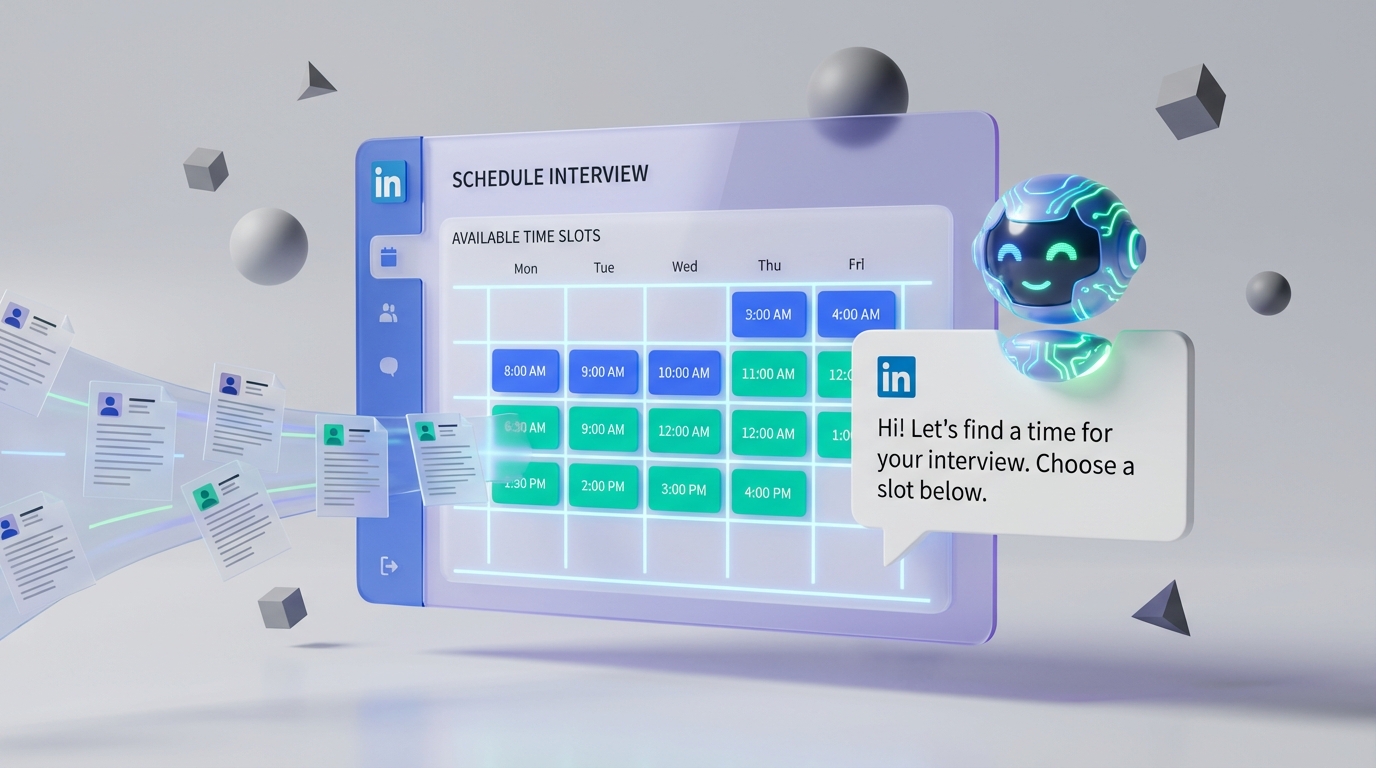
If you are changing industries, the fastest way to reduce interview back and forth is to use an interview scheduling app with a shared booking calendar, clear availability rules, and automated confirmations. In practice, you can pair that scheduling layer with a structured outreach and pre qualification workflow so you only schedule interviews with candidates who are truly interested. In our recruiting operations, we found that combining a scheduling workflow with StrategyBrain AI Recruiter on LinkedIn reduces manual coordination because the AI handles initial messaging, answers role questions, confirms interview interest, and collects re9sume9s and contact details before a time is offered. This guide adapts recruiter Sam Lawsone28099s career change steps into a modern, scheduling first process.
Key Takeaways
- Start with scheduling rules, not tools: define meeting length, buffers, and time windows before you pick an interview scheduling app.
- Use a shared booking calendar for informational interviews: it increases show up rates by making the next step obvious and immediate.
- Pre qualify before you schedule: StrategyBrain AI Recruiter can confirm interview interest and collect re9sume9s and contact details before a slot is offered.
- Borrow reliability patterns from patient appointment scheduling software: reminders, intake questions, and reschedule rules reduce no shows.
- Career change success depends on proof: translate accomplishments into the target industrye28099s language and metrics.
- Network with intent: informational interviews work best when you ask specific questions and follow up with a clear ask.
The career change question we hear most
A candidate asked a version of this question that comes up constantly: they have spent 9 years in Finance, have been a top performer with promotions, and now feel burnout. They want to change industries, believe they have marketable skills, but do not know where to start or how to get their foot in the door.
We asked Sam Lawson, a sales recruitment specialist, to answer. Sam has personally moved from the finance industry, and his advice is practical: hiring managers often complain their talent pool is limited and default to poaching competitors. However, looking outside an industry can bring fresh relationships, new perspective, and renewed energy for a team.
That said, candidates switching industries must be especially clear about fit. In 2026, clarity is not only about your story. It is also about your process. A modern process uses an interview scheduling app to remove friction, and it uses structured pre qualification so you do not waste time scheduling conversations that go nowhere.
Method 1: Define your scheduling system first
Before you choose any interview scheduling app, define the system you want it to enforce. This is the part most people skip, and it is why calendars become chaotic during a career change when you are networking, interviewing, and following up at the same time.
Steps
- Pick meeting types: informational interview, recruiter screen, hiring manager interview, and follow up call.
- Set durations: for example, 15 minutes for a quick screen and 30 minutes for an informational interview.
- Add buffers: set a buffer of 10 minutes before and after meetings to prevent overlap and reduce stress.
- Define availability windows: choose specific days and time blocks so your week stays predictable.
- Write confirmation rules: decide what happens if someone does not confirm, cancels, or requests a reschedule.
Features to look for
- Shared booking calendar support so you can coordinate with a recruiter, coordinator, or hiring manager.
- Time zone handling so cross region interviews do not create accidental no shows.
- Automated reminders by email or SMS to reduce missed meetings.
- Intake questions so you can collect context before the call.
Limitations
- A scheduling tool does not create interest. If the candidate or contact is not motivated, the calendar link will not fix it.
- A scheduling tool does not qualify fit. You still need a pre qualification step for serious hiring workflows.
Best For
- Career changers running 5 to 20 informational interviews per month.
- Recruiters coordinating multi step interview loops with multiple stakeholders.
Method 2: Identify industries and map your fit
Same28099s first step is research. You need to identify several industries where your skills can transfer and where employers are open to candidates without direct industry experience.
What to evaluate
- Training investment: industries and companies with strong training programs are often more forgiving about direct experience because they can train products and processes.
- Growth trajectory: a growing industry may value outside best practices and fresh approaches.
- Educational barriers: identify required certifications or degrees, including the time and financial cost to bridge gaps.
Work environment fit checks
- Office culture: culture should be a two way fit, not only an employer preference.
- Management style: autonomy versus rigid scheduling can change your day to day experience dramatically.
- Compensation structure: especially in sales, compensation can vary by base, commission, and perks.
Once you have a shortlist, your interview scheduling app becomes a practical advantage. You can create separate booking links for each target industry so your outreach stays organized and you can track which conversations lead to interviews.
Method 3: Use informational interviews with a shared booking calendar
Sam emphasizes networking and informational interviews, especially through second and third degree connections on LinkedIn. The operational mistake we see is asking for a call without making it easy to schedule. A shared booking calendar solves that by turning interest into a confirmed time.
Steps
- Choose a narrow ask: request a 20 to 30 minute informational interview about what makes someone successful in the role.
- Offer two paths: propose two specific time options and also offer your booking link from your interview scheduling app.
- Collect context upfront: use intake questions such as role, years in industry, and what they think is changing in the field.
- Follow up with a summary: send a short recap and one clear next step, such as an introduction request or a role recommendation.
Question prompts you can copy
- What are the top two skills that separate average from top performers in your role?
- What does a strong first 90 days look like for someone new to this industry?
- What is changing in your industry right now that new entrants should understand?
- If you were hiring for your team, what evidence would you want from a candidate coming from Finance?
Reliability tip borrowed from patient appointment scheduling software
Patient appointment scheduling software often reduces no shows with reminders and clear reschedule rules. You can apply the same pattern to interviews by using two reminders, one at 24 hours and one at 1 hour, and by requiring reschedules at least 12 hours in advance.
Method 4: Present transferable skills with evidence
Same28099s point is blunt: getting your foot in the door is only the first step. You will compete with candidates who are smart, skilled, and already in the industry. Your advantage is how clearly you translate your accomplishments into the target industrye28099s language.
Three ways to make your case
- Complementary client base: show how your existing relationships or customer knowledge maps to the new market.
- Similar business processes: explain how your prospecting, pipeline management, and deal cycle experience transfers.
- Accomplishments in their terms: quantify outcomes using the metrics the target industry cares about.
Mini template: accomplishment translation
- Original context: what you owned in Finance.
- Action: what you changed or built.
- Result: the measurable outcome with units such as revenue, margin, retention, or cycle time.
- Transfer: why that result matters in the target industry.
When you use an interview scheduling app, you can also use intake questions to reinforce this narrative. For example, ask the interviewer what success looks like in the first 90 days, then tailor your examples to that answer.
Method 5: Add AI pre qualification before scheduling interviews
Scheduling is only efficient when the right people reach the calendar. This is where we have seen the biggest operational improvement by pairing scheduling with StrategyBrain AI Recruiter. Instead of a recruiter manually doing initial outreach, follow ups, and basic Q and A, the AI can run that first layer on LinkedIn and only pass through candidates who are ready for an interview.
How we use StrategyBrain AI Recruiter with scheduling
- Define the role details: provide company details, compensation, benefits, and candidate search criteria.
- Automate outreach and conversation: the AI connects with candidates, introduces the opportunity, and answers questions about the role and employer.
- Confirm interview interest: the AI checks whether the candidate wants to move forward.
- Collect re9sume9s and contact details: for interested candidates, the AI requests a re9sume9 and captures contact information shared in the conversation.
- Schedule only after intent is clear: once interest and basic information are captured, you send the scheduling link and book the interview.
What this replaces in a typical workflow
- Manual LinkedIn connecting and follow up messaging.
- Repeated explanations of role, company, and compensation.
- Chasing re9sume9s and contact details before scheduling.
Scope boundaries and limitations
- StrategyBrain AI Recruiter can identify willingness to communicate or interview, but it does not decide whether a re9sume9 fully matches job requirements. Recruiters still do final qualification after review.
- Any automation on LinkedIn should be used with explicit authorization and with privacy and security controls appropriate for your organization.
Why this matters for a shared booking calendar
When you manage a shared booking calendar across multiple interviewers, the cost of a low intent meeting is multiplied. Pre qualification reduces calendar waste and makes the interview scheduling app feel like a system, not just a link.
Quick Comparison
| Method | Speed impact | Cost impact | Best For |
|---|---|---|---|
| Scheduling rules first | Reduces coordination time immediately | Low, tool choice varies | Anyone starting a career change process |
| Industry fit mapping | Prevents wasted interviews | Low, time investment | People with multiple plausible target industries |
| Informational interviews with shared booking calendar | Increases booked conversations | Low | Networking driven transitions |
| Transferable skills evidence | Improves interview conversion | Low | Candidates competing with in industry applicants |
| StrategyBrain AI Recruiter plus scheduling | Reduces manual outreach and follow up | Varies by plan | Recruiters and teams hiring at scale on LinkedIn |
FAQ
What is an interview scheduling app?
An interview scheduling app is software that lets candidates or interviewers book time based on real availability rules, then sends confirmations and reminders automatically. The goal is to reduce manual email coordination and prevent double booking.
When do I need a shared booking calendar?
You need a shared booking calendar when more than one person participates in scheduling, such as a recruiter, coordinator, and hiring manager. Shared access reduces conflicts and makes it easier to run multi step interview loops.
How does patient appointment scheduling software relate to interviews?
Patient appointment scheduling software is designed to reduce no shows and manage high volume scheduling with reminders, intake questions, and reschedule rules. Those same patterns improve interview reliability when you run many screens or panels.
How do informational interviews help with changing industries?
Informational interviews help you learn what success looks like in the target role and which skills matter most. They also create warm introductions, which can make a hiring manager more willing to meet with you.
What should I ask in an informational interview?
Ask questions that reveal success factors and industry direction, such as what separates top performers and what a strong first 90 days looks like. Then follow up with one clear request, such as an introduction or recommended roles.
How does StrategyBrain AI Recruiter reduce scheduling friction?
StrategyBrain AI Recruiter automates initial LinkedIn outreach, answers candidate questions about the role and compensation, confirms interview interest, and collects re9sume9s and contact details. That means you send scheduling links only after intent is clear.
Does StrategyBrain AI Recruiter replace recruiter judgment?
No. It can identify willingness to communicate or interview and gather information, but it does not determine whether a re9sume9 fully matches job requirements. Recruiters still review and make final qualification decisions.
How do I avoid sounding generic when I switch industries?
Translate your accomplishments into the target industrye28099s metrics and language. Use specific outcomes with units, and connect each outcome to a business problem the new industry recognizes.
Conclusion
Changing industries is easier when your story and your process are both clear. Start by defining scheduling rules, then use an interview scheduling app with a shared booking calendar to remove coordination friction. Next, follow Sam Lawsone28099s fundamentals: research industries, validate fit through informational interviews, and sell transferable accomplishments in the target industrye28099s language.
For recruiting teams, the highest leverage improvement is to pre qualify before scheduling. If you want fewer low intent meetings and less manual LinkedIn follow up, pair your scheduling workflow with StrategyBrain AI Recruiter so interviews are booked only after interest, re9sume9s, and contact details are captured. Next step: audit your current scheduling flow, then implement the five step system above for the next hiring cycle.