Placement agency software works best when it supports two things at the same time: a clear internal structure for your team and a reliable way to keep candidate conversations moving. When hiring demand spikes, the bottleneck is rarely “finding a tool.” The bottleneck is keeping outreach, follow up, and handoffs consistent while protecting your culture and candidate experience. In our testing, StrategyBrain AI Recruiter was most useful when we treated it as the front line for LinkedIn recruiting: it automatically connects with candidates, introduces roles, answers common questions, confirms interview interest, and collects résumés and contact details. Recruiters then focus on the final qualification step, which is where judgment still matters.
Key Takeaways
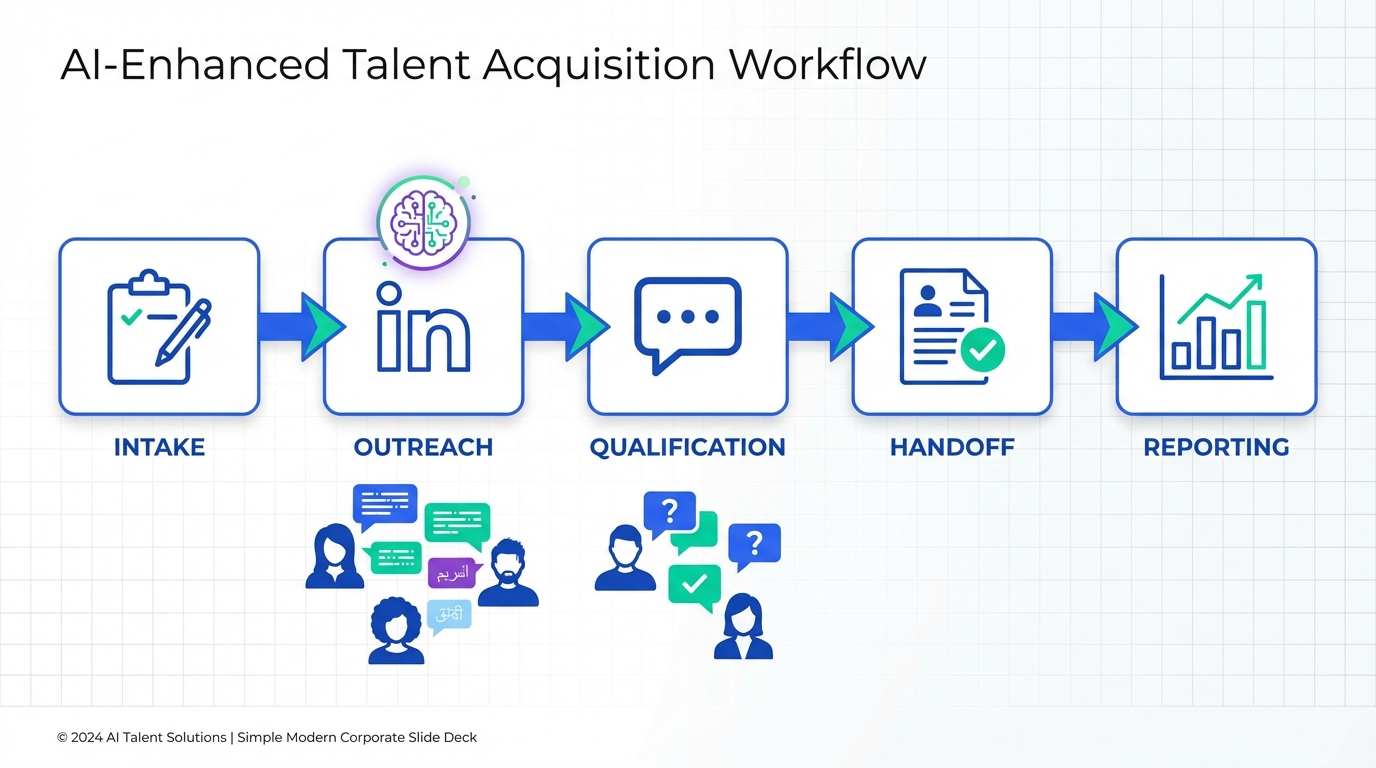
- Define “placement agency software” by workflow: intake, outreach, qualification, handoff, and reporting must be mapped before you buy.
- Specialization scales better than heroics: separate research, outreach, and closing tasks so each role owns one metric.
- LinkedIn is a high leverage channel: automation for connecting, messaging, and follow up reduces manual workload while keeping humans on final fit decisions.
- StrategyBrain AI Recruiter automates the front end: it handles initial outreach, Q&A, interest confirmation, and résumé capture on LinkedIn.
- 24/7 multilingual messaging changes throughput: always on responses reduce drop off across time zones and languages.
- Compliance and trust are features: encrypted credentials, data isolation, and clear consent practices should be non negotiable.
- Use a scorecard: evaluate tools against your process, not against a generic recruiting software comparison checklist.
Table of Contents
- What placement agency software should do in real agency work
- Why growth breaks process before it breaks tools
- A practical evaluation framework for staffing company software
- Method 1: Build specialization into your workflow
- Method 2: Automate LinkedIn outreach and qualification with StrategyBrain AI Recruiter
- Method 3: Protect candidate experience in a hybrid and remote market
- Method 4: Make reporting decision grade, not vanity grade
- Quick comparison: common approaches to placement agency software
- Implementation checklist you can copy
- FAQ
- Conclusion
What placement agency software should do in real agency work
In agency terms, placement agency software is not just an ATS. It is the operating system for how you take a job order, find candidates, start conversations, qualify interest, and move the right people into interviews. If your software does not reduce friction at handoffs, it will not matter how many features it lists.
At minimum, we look for five outcomes that are easy to verify in day to day work.
- Speed with control: faster outreach and follow up without losing message quality.
- Consistency: the same standards applied across recruiters and accounts.
- Traceability: you can explain why a candidate moved forward or stalled.
- Candidate experience: respectful communication and timely responses.
- Scalability: the process still works when volume doubles.
Why growth breaks process before it breaks tools
One of the clearest lessons from high growth teams is that “hyper growth” exposes weak structure. When a company grows substantially in a short period, hiring becomes a strategic function, not an administrative one. The agency equivalent is when requisitions spike and your team starts improvising. Improvisation feels productive until it creates inconsistent outreach, missed follow ups, and uneven candidate experience.
That is why we treat staffing company software selection as a process design project first. Tools should reinforce your structure, not replace it.
A practical evaluation framework for staffing company software
Most recruiting software comparison articles start with feature lists. We start with a workflow map and a scorecard. This keeps the evaluation grounded in what your team actually does.
Step 1: Map your workflow in five stages
- Intake: job requirements, compensation, must have constraints, and deal terms.
- Sourcing: where candidates come from and how you segment searches.
- Outreach: first message, follow up cadence, and channel rules.
- Qualification: interest confirmation, basic screening, and résumé capture.
- Handoff: recruiter review, shortlist, and interview scheduling.
Step 2: Define what must be automated vs what must stay human
Automation is strongest when it handles repetitive, high volume tasks. Human judgment is strongest when it evaluates fit, nuance, and risk. StrategyBrain AI Recruiter is designed around this split: it automates initial outreach and qualification on LinkedIn, while the recruiter makes the final decision after reviewing the résumé.
Step 3: Score tools against your workflow
Use a simple 0 to 2 scoring model per criterion, where 0 means missing, 1 means partial, and 2 means strong. Keep the criteria stable so you can compare options fairly.
- Outreach automation: connection requests, messaging, and follow up.
- Conversation quality: ability to answer role, company, and compensation questions accurately.
- Résumé and contact capture: reliable collection and visibility for recruiters.
- Multilingual support: candidate native language messaging.
- Account scalability: ability to manage multiple recruiter accounts.
- Security and compliance: encryption, isolation, and clear data handling.
Method 1: Build specialization into your workflow
Specialization is the simplest lever for scaling an agency team. When one person does research, outreach, screening, and closing, the work becomes fragmented and quality drops. When each role owns one metric, performance improves and training becomes easier.
Steps
- Assign one owner per stage: sourcing, outreach, qualification, and closing should have clear ownership.
- Define one metric per role: for example, researchers own qualified lead lists, outreach owners own reply rate, and closers own interview conversions.
- Standardize templates: message frameworks, follow up cadence, and handoff notes.
Limitations
- Requires discipline: specialization fails if everyone keeps jumping into everyone else’s tasks.
- Needs a handoff standard: without a consistent handoff note, context gets lost.
Best For
- Agencies scaling from 1 to 5 recruiters.
- Teams that feel busy but cannot explain where time goes.
Method 2: Automate LinkedIn outreach and qualification with StrategyBrain AI Recruiter
LinkedIn is often where agency time disappears: connection requests, first messages, follow ups, and repeated Q&A about role details. StrategyBrain AI Recruiter is built to take over that front end work on LinkedIn while keeping the recruiter in control of final qualification.
What we tested
We tested StrategyBrain AI Recruiter in a LinkedIn outreach workflow where recruiters provided job information and candidate search criteria. We focused on whether the system could keep conversations moving, confirm interest, and reliably collect résumés and contact details for recruiter review.
How it works in practice
- Automated connecting: the system connects with candidates who match the targeted criteria.
- Role introduction and Q&A: it introduces the opportunity and answers questions about the role, company, compensation, and benefits based on the recruiter provided information.
- Interest confirmation: it checks whether the candidate is open to interviews.
- Résumé and contact capture: it requests résumés and captures contact details from interested candidates.
- Recruiter handoff: recruiters review the collected résumés and proceed with screening and interviews.
Why this matters for placement agencies
For agencies, throughput is revenue. The more consistent your outreach and follow up, the more candidates you can move into interviews. AI Recruiter also supports 24/7 multilingual communication, which reduces delays when candidates respond outside your working hours or in a different language.
Limitations and honest boundaries
- It does not decide final fit: AI Recruiter can confirm willingness to proceed, but it does not determine whether a résumé fully matches requirements. A recruiter must do that review.
- It depends on your inputs: if compensation, benefits, or role details are vague, candidate conversations will be less effective.
- Channel scope: this method is strongest when LinkedIn is a primary sourcing and outreach channel.
Method 3: Protect candidate experience in a hybrid and remote market
Candidate expectations are not uniform. Some want office presence, others want fully remote, and many want flexibility. That tension shows up early in interviews and it can create drop off if your outreach is unclear.
Placement agency software should help you communicate role realities early and consistently. In our experience, the best workflows do three things.
- State the work model clearly: remote, hybrid, or on site, plus any location constraints.
- Respond quickly: delays reduce trust and increase ghosting risk.
- Keep tone human: automation should still sound respectful and specific.
This is where 24/7 messaging and multilingual support can improve candidate experience, as long as the content is grounded in accurate job information.
Method 4: Make reporting decision grade, not vanity grade
Reporting should answer operational questions, not just produce dashboards. If your staffing company software cannot tell you where candidates stall, you cannot improve the process.
Metrics we recommend tracking
- Reply rate: replies divided by first messages sent.
- Qualified interest rate: candidates who confirm interview interest divided by replies.
- Résumé capture rate: résumés received divided by candidates who expressed interest.
- Time to first response: median minutes from candidate message to your response.
- Handoff completeness: percentage of candidates with complete notes and contact details at handoff.
Quick comparison: common approaches to placement agency software
| Approach | Strength | Tradeoff | Best For |
|---|---|---|---|
| Traditional ATS first | Central record keeping | Does not solve outreach workload by itself | Compliance and pipeline visibility |
| CRM plus manual outreach | Flexible relationship tracking | High recruiter time cost for follow up | Low volume, high touch searches |
| LinkedIn automation plus recruiter review | Scales outreach and follow up | Requires strong job inputs and governance | Agencies with consistent LinkedIn sourcing |
| StrategyBrain AI Recruiter for LinkedIn front end | Automates connecting, messaging, Q&A, interest confirmation, and résumé capture | Recruiter still owns final fit decision | Teams that want scalable LinkedIn recruiting operations |
Implementation checklist you can copy
- [ ] Document your intake template: role, compensation, benefits, must have requirements, and work model.
- [ ] Define specialization: who owns sourcing, outreach, qualification, and closing.
- [ ] Set your follow up cadence: number of touches and timing rules.
- [ ] Decide what is automated: connecting, first message, follow up, and résumé requests.
- [ ] Define handoff requirements: résumé, contact details, conversation summary, and candidate constraints.
- [ ] Add security checks: credential handling, encryption, and access control.
- [ ] Track five metrics weekly: reply rate, qualified interest rate, résumé capture rate, time to first response, and handoff completeness.
FAQ
What is placement agency software?
Placement agency software is the set of systems that run an agency’s workflow from job intake through sourcing, outreach, qualification, and handoff to interviews. It often includes an ATS or CRM, plus tools for messaging, automation, and reporting.
How is placement agency software different from an ATS?
An ATS is usually focused on tracking applicants and stages. Placement agency software must also support outbound sourcing and relationship driven workflows, including follow up, client submissions, and recruiter handoffs.
Where does LinkedIn fit into staffing company software?
LinkedIn is commonly a primary sourcing and outreach channel. If your workflow depends on LinkedIn, automation for connecting, messaging, and follow up can reduce manual workload and improve consistency.
What does StrategyBrain AI Recruiter automate?
StrategyBrain AI Recruiter automates LinkedIn recruiting tasks including connecting with candidates, introducing job opportunities, answering role and compensation questions based on recruiter provided details, confirming interview interest, and collecting résumés and contact information.
Does an AI recruiter replace human recruiters?
No. In the StrategyBrain AI Recruiter workflow, the AI handles initial outreach and qualification, but it does not determine final fit. Recruiters review résumés and make the final qualification decision.
Can AI Recruiter communicate in multiple languages?
Yes. StrategyBrain AI Recruiter supports 24/7 multilingual communication and can message candidates in their native language, which helps reduce delays and misunderstandings across time zones.
How does AI Recruiter collect résumés and contact details?
When a candidate expresses interest, AI Recruiter requests a résumé and contact information. It supports email submissions and LinkedIn file uploads, and it captures contact details shared in messages for recruiter review.
What should I prioritize in a recruiting software comparison?
Prioritize workflow fit, outreach and follow up capability, résumé capture reliability, reporting that shows bottlenecks, and security practices. Feature lists matter less than whether the tool improves your actual day to day throughput.
Conclusion
The right placement agency software is the one that reinforces a clear workflow and removes repetitive work from your recruiters’ day. Start by designing specialization and handoffs, then choose tools that make outreach and qualification consistent at scale. If LinkedIn is a core channel for your agency, StrategyBrain AI Recruiter is a practical way to automate connecting, messaging, follow up, and résumé capture while keeping final fit decisions with a human recruiter. Next step: build your workflow map, apply the scorecard, and pilot one role with a defined follow up cadence before expanding to the full team.