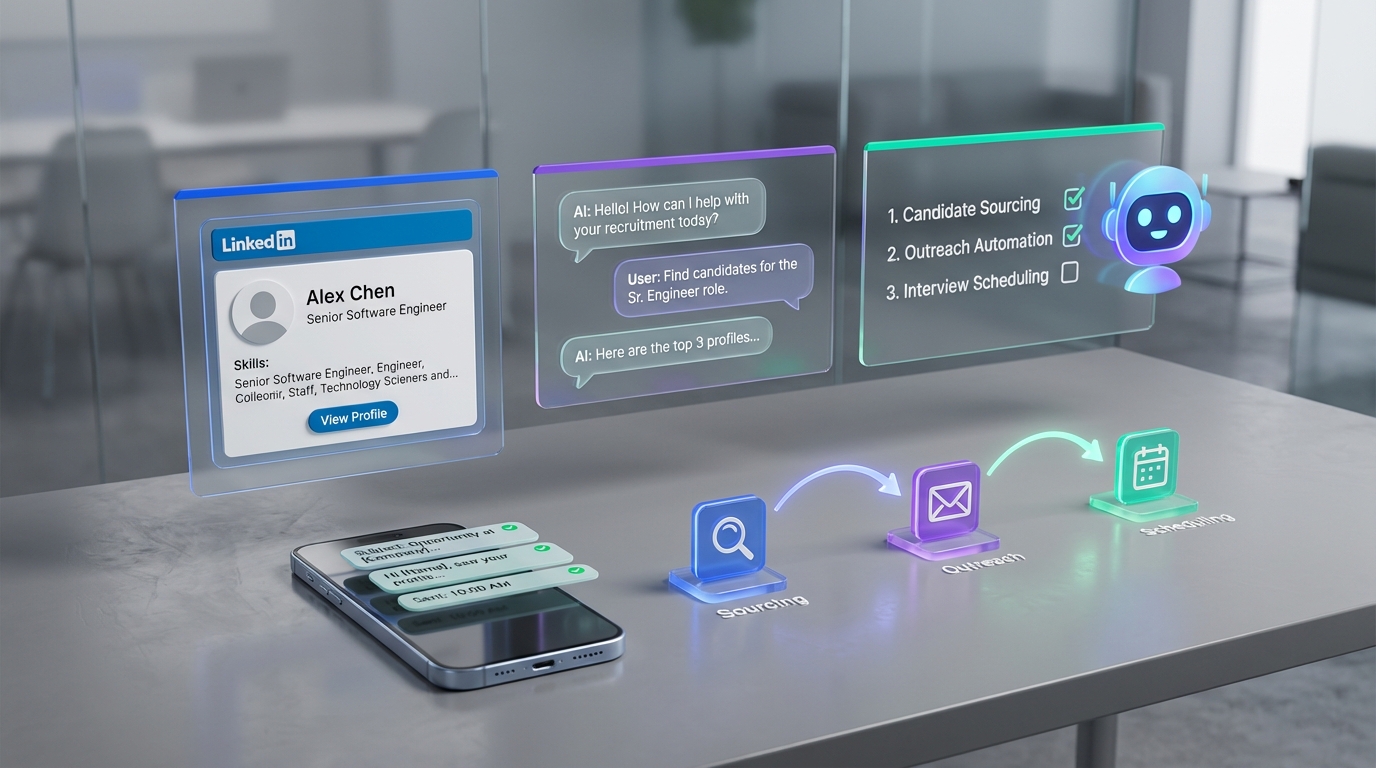
Placement agency software works best when it standardizes your intake, outreach, follow up, and handoff steps so candidates and clients never fall through the cracks. In our day to day agency style workflows, we have found that a clean placement process comes from two things: a consistent transition checklist for candidates who are resigning, and reliable outreach plus qualification that does not depend on a recruiter being online at the right moment. This is where StrategyBrain AI Recruiter fits naturally into a modern stack, because it automates LinkedIn connecting, role introduction, Q and A, interest confirmation, and resume plus contact capture. Scope note: this guide focuses on workflow design for agencies and internal operations. It is not legal advice and it does not replace reviewing employment contracts or local notice requirements.
Key Takeaways
- Best software for recruitment agencies starts with workflow: define intake, outreach, follow up, and handoff before you buy features.
- Use a resignation transition checklist: it reduces last minute surprises during notice periods and protects candidate reputation.
- Automate LinkedIn outreach and qualification: StrategyBrain AI Recruiter can handle initial messaging, questions, and follow up 24/7 in any language.
- Capture resumes and contact details consistently: AI Recruiter requests resumes and records contact info when candidates express interest.
- Scale with multi account operations: AI Recruiter supports managing more than 100 LinkedIn accounts for agency teams.
- Be honest about limits: AI Recruiter confirms interest and collects materials, but final fit assessment still requires recruiter review.
What placement agency software should do in a real agency workflow
When people search for placement agency software, they often mean a system that keeps candidates, clients, and tasks aligned across multiple open roles. In practice, the best software for recruitment agencies is the one that makes your workflow reproducible, because reproducibility is what prevents dropped follow ups and inconsistent candidate experience.
At a minimum, your process should make these items explicit and trackable:
- Candidate status: sourced, contacted, engaged, interested, submitted, interviewing, offer, placed, post placement.
- Client status: intake complete, shortlist approved, interviews scheduled, offer in progress, onboarding.
- Communication log: what was sent, when, and what the candidate asked.
- Documents and contacts: resume received, email, phone, and any required onboarding details.
- Risk controls: notice period timing, counter offer risk, and transition plan completeness.
Workflow 1: Candidate resignation transition that protects everyone
One of the most overlooked parts of agency operations is what happens after a candidate accepts an offer. If the candidate resigns poorly, it can damage their reputation and create last minute instability for the client. We use a simple transition workflow that mirrors what experienced recruiters coach candidates to do when leaving a role.
Steps
- Confirm notice requirements: ask the candidate to review their employment contract and confirm the required notice period in writing.
- Prepare a written resignation: the candidate drafts a short resignation letter that includes the final working day and a thank you.
- Plan a cooperative handoff: if timing allows, the candidate proposes a transition plan and identifies key tasks to transfer.
- Maintain performance through the final day: the candidate commits to consistent output during the notice period.
- Exit professionally: the candidate approaches the exit interview with polite clarity and closes out unfinished work transparently.
Features this workflow needs from placement agency software
- Task templates: a reusable resignation checklist that can be assigned at offer acceptance.
- Reminders: scheduled nudges for letter completion, final day confirmation, and handoff milestones.
- Notes and audit trail: a clear record of what the candidate agreed to do and when.
Limitations and honest notes
- It is not legal advice: notice periods and obligations vary by contract and jurisdiction.
- Counter offers can happen: your workflow should include a checkpoint to confirm the candidate is still committed after resignation is submitted.
Workflow 2: LinkedIn outreach and qualification with StrategyBrain AI Recruiter
Most agencies already use LinkedIn for sourcing, but the operational bottleneck is not search. It is the repetitive messaging, follow up, and early qualification that consumes recruiter time. StrategyBrain AI Recruiter is designed to automate that front end work on LinkedIn while keeping the recruiter in control of final screening decisions.
What “AI Recruiter” means here
In this guide, AI Recruiter refers to StrategyBrain AI Recruiter, an automated AI powered recruitment tool built for LinkedIn hiring. It can connect with candidates that match your criteria, introduce the opportunity, answer questions about the role, company, and compensation, confirm interview interest, and collect resumes and contact information from interested candidates.
Steps
- Define the search criteria and role brief: provide the job details, compensation, benefits, and the candidate profile you want to target.
- Run automated connecting and introduction: AI Recruiter sends connection requests and starts the initial conversation with consistent messaging.
- Handle Q and A and follow up: AI Recruiter responds 24/7 and follows up in the candidate’s native language to reduce misunderstandings.
- Confirm interest and collect materials: when a candidate is interested, AI Recruiter requests a resume and captures contact details shared in messages.
- Recruiter reviews and advances: the recruiter reviews resumes and contacts shortlisted candidates to schedule interviews.
Why this matters for placement agency software selection
If you are evaluating the best software for recruitment agencies, the key question is whether your system can reliably move candidates from “sourced” to “interested with resume received” without manual chasing. AI Recruiter covers that gap by automating the outreach and early conversation layer, which is often the most time sensitive part of the funnel.
Limitations and workarounds
- Final fit is still human: AI Recruiter identifies willingness to proceed and collects materials, but it does not decide whether the resume matches the job requirements. Workaround: add a structured recruiter review step with a scorecard.
- Process discipline still matters: automation does not fix unclear job briefs. Workaround: require a complete intake form before outreach starts.
Workflow 3: Temp and contract coverage using temp staff management software principles
Even if you do not label your system as temp staff management software, the operational needs are similar when you manage multiple placements with overlapping timelines. The goal is to keep coverage stable while candidates transition in and out of assignments.
Steps
- Standardize assignment records: store start date, end date, location, shift expectations, and client point of contact.
- Track availability and responsiveness: record when candidates are available and how quickly they respond to outreach.
- Use automated follow up for speed: for high volume roles, use AI Recruiter to keep candidate conversations moving across time zones.
- Document handoffs: when a candidate leaves an assignment, capture what was completed and what remains.
What to measure
- Time to first response: how long it takes candidates to reply after initial outreach.
- Resume capture rate: percentage of interested candidates who provide a resume within 48 hours.
- Drop off reasons: common reasons candidates disengage, such as unclear compensation or scheduling conflicts.
Quick Comparison
| Workflow Area | What you need | Where StrategyBrain AI Recruiter fits | Human owner |
|---|---|---|---|
| Candidate transition after offer | Resignation checklist, reminders, audit trail | Supports follow up messaging and coordination when candidates are in motion | Recruiter |
| LinkedIn sourcing to engaged | Consistent outreach, Q and A, follow up | Automates connecting, introduction, Q and A, and follow up 24/7 in any language | Recruiter sets criteria |
| Interested to submitted | Resume and contact capture, status updates | Requests resumes and captures contact details when candidates express interest | Recruiter reviews |
| Scaling agency capacity | Multi recruiter operations, account management | Supports managing more than 100 LinkedIn accounts for AI powered recruitment teams | Ops lead |
Implementation Checklist
Use this checklist to configure your placement agency software workflow before you add more tools.
- Create a candidate status pipeline with clear definitions for each stage.
- Build a resignation transition task template and assign it at offer acceptance.
- Define a minimum job intake standard that includes compensation, benefits, and must have requirements.
- Set follow up rules: 2 touchpoints in 48 hours, then 1 touchpoint every 72 hours until closed.
- Configure StrategyBrain AI Recruiter with LinkedIn account access and role briefs for automated outreach.
- Add a recruiter review step that confirms fit after resume capture.
- Track three metrics monthly: time to first response, resume capture rate within 48 hours, and drop off reasons.
FAQ
What is placement agency software?
Placement agency software is a system that helps staffing and recruitment agencies manage candidates, clients, job orders, and the steps that move a candidate from sourcing to placement. The most useful systems make workflow steps repeatable with templates, reminders, and a clear audit trail.
What should I prioritize when choosing the best software for recruitment agencies?
Prioritize workflow clarity first: intake standards, pipeline stages, communication logging, and document capture. Then evaluate automation, reporting, and integrations, because those only help when the underlying process is consistent.
How does StrategyBrain AI Recruiter help agencies on LinkedIn?
StrategyBrain AI Recruiter automates LinkedIn connecting and initial conversations, introduces the role, answers candidate questions about the role and compensation, confirms interest, and collects resumes and contact details from interested candidates. Recruiters then review the materials and proceed with interviews.
Does AI Recruiter replace recruiters?
No. AI Recruiter automates repetitive outreach and early qualification steps, but it does not decide final fit against job requirements. Recruiters still own screening, client management, and hiring decisions.
Can AI Recruiter communicate with candidates in different languages?
Yes. AI Recruiter supports 24/7 multilingual communication and can respond in the candidate’s native language, which helps reduce delays and misunderstandings across time zones.
How does AI Recruiter capture resumes and contact details?
When a candidate expresses interest, AI Recruiter requests a resume and records whether it was received. It also captures contact details shared in LinkedIn messages, such as email or phone number, so recruiters can follow up directly.
How does this relate to temp staff management software?
Temp staff management software focuses on high volume assignments, availability, and fast communication. Even if you are not a temp agency, those principles apply when you manage many placements with tight timelines and frequent follow ups.
What is the biggest operational mistake agencies make after an offer is accepted?
They treat resignation and transition as the candidate’s problem and do not track it. A simple checklist inside your placement agency software reduces risk by confirming notice timing, maintaining performance expectations, and documenting handoffs.
Conclusion
Placement agency software delivers value when it turns your placement process into a repeatable workflow: structured intake, consistent outreach, reliable follow up, and a documented transition after offer acceptance. If you want to reduce manual LinkedIn work without losing control of quality, StrategyBrain AI Recruiter fits into the workflow by automating connecting, messaging, Q and A, interest confirmation, and resume plus contact capture, while recruiters keep ownership of final fit decisions. Next step: implement the checklist above, then pilot AI Recruiter on one role family for 14 days and compare time to first response and resume capture rate against your current baseline.