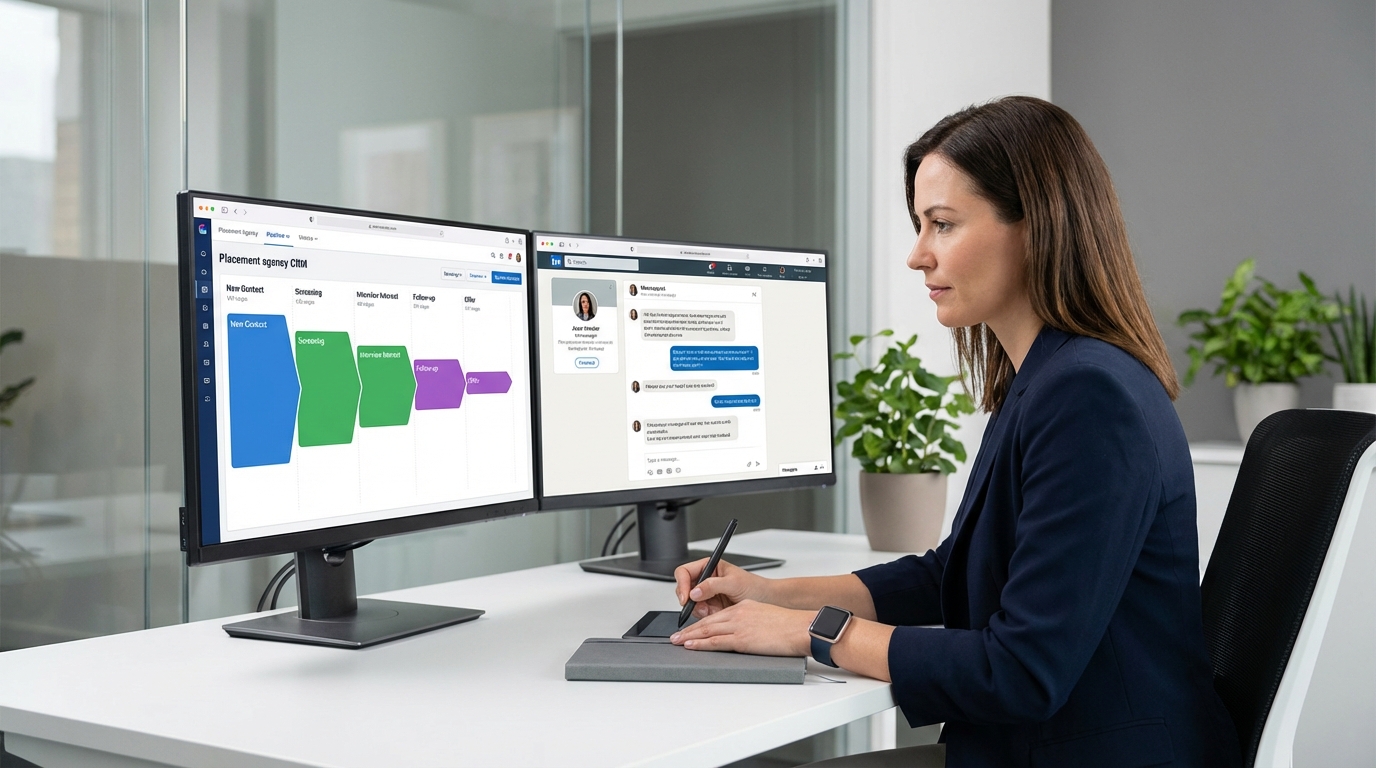
The most reliable way to turn networking into real job leads is to run it like a repeatable workflow inside placement agency software: capture every new contact, tag them by role and industry, schedule follow ups within 24 hours, and track referrals and introductions as pipeline stages. In our recruiting operations, the biggest improvement came from pairing a CRM style workflow with automated LinkedIn outreach and follow up, so candidates get timely replies and recruiters stay focused on qualification and interviews. This guide covers practical networking tactics you can use at events, at work, and online, plus a simple system you can implement in temporary staffing software to reduce missed follow ups and surface the hidden job market.
Key Takeaways
- Networking works best as a system: log contacts, set follow ups within 24 hours, and track outcomes in placement agency software.
- Referrals create a hidden pipeline: many roles are filled through introductions rather than public postings (Source: Alberta Learning Information Service, ALIS).
- LinkedIn follow up is the multiplier: connect after events, then run a consistent message and response workflow.
- Automation should handle repetition: StrategyBrain AI Recruiter can automate LinkedIn connecting, role introduction, Q&A, and résumé collection so recruiters focus on final qualification.
- Multilingual and always on messaging matters: 24/7 responses reduce drop off when candidates reply outside business hours.
- Use a simple pipeline: New Contact → Warm Intro → Active Conversation → Résumé Received → Interview Interest → Handoff to Recruiter.
What networking means in a job search
Networking is the ongoing practice of building professional relationships that exchange information, context, and support. It is not a one time activity you start only when you need a job. It is also not limited to formal events. In recruiting terms, networking is how you create warm paths to opportunities that never become public postings.
In a job search, networking can help you access referral driven roles, understand what employers are prioritizing, and find mentors who can pressure test your direction. It also shapes your personal brand because every interaction influences how people describe you when you are not in the room.
Why networking still beats only applying online
Traditional job boards matter, but they are not the whole market. One widely cited benchmark is that 70% of jobs are filled through connections rather than purely through online applications (Source: Alberta Learning Information Service, ALIS). Even when the exact percentage varies by industry and seniority, the operational takeaway is consistent: referrals and introductions are a measurable channel.
For recruiters and staffing teams, this is also why the biggest recruitment agencies invest heavily in relationship management. They treat relationships as inventory and they protect it with process. The same approach can be implemented by smaller teams using placement agency software that enforces follow ups, notes, and pipeline stages.
Where to build your network
Your network can be built in more places than most people expect. The key is to be intentional about capturing contacts and following up consistently. If you are a recruiter, this is where placement agency software becomes the system of record. If you are a job seeker, the same logic applies using any structured tracker.
- People you already know: family, friends, neighbors, classmates, and former colleagues.
- At work: your team, cross functional partners, vendors, and clients. Stay in touch after role changes.
- Activities: sports, hobbies, volunteering, and community groups.
- Online communities: LinkedIn groups and professional forums where you can contribute consistently.
- Learning environments: courses, workshops, conferences, and seminars.
- Schools and alumni networks: clubs, alumni events, and career centers.
- Local groups: chambers of commerce and topic focused meetups.
Networking events: find, prepare, attend, follow up
How to find networking events
Start with a simple search for events in your city, then narrow by relevance. The goal is not volume. The goal is to meet people who are adjacent to your target roles, industries, or hiring managers.
- Professional associations such as accounting, HR, engineering, and operations groups.
- Job fairs and employer open houses.
- Industry trade shows and conferences.
- Alumni events hosted by colleges and universities.
- Topic groups focused on leadership, technology, entrepreneurship, or women in business.
- Local business associations such as chambers of commerce.
- Company hosted events run by employers you want to work with.
Before you go
Preparation reduces awkwardness and increases the chance you leave with actionable next steps. For recruiters, this is also where you decide what data you will capture in your placement agency software so the event does not become a pile of business cards.
- Set a goal: for example, 5 new relevant contacts and 2 follow up meetings scheduled.
- Prepare a short introduction: a 20 to 30 second summary of who you are and what you are looking for.
- Draft 5 questions: questions about the person’s work, hiring needs, or industry changes.
- Bring a contact capture method: business cards or a digital card, plus a way to take notes.
- Update your résumé: so you can send it quickly if asked.
At the event
- Dress appropriately: match the formality of the event and the industry.
- Talk to people early: it gets easier after the first two conversations.
- Listen more than you talk: your goal is to learn context you can reference later.
- Use the content: if there is a keynote, ask people what they thought and why.
After the event
Follow up is where networking becomes outcomes. We recommend a 24 hour rule because response rates drop when the interaction goes cold. If you run a staffing desk, this is also where temporary staffing software should create tasks automatically so nothing slips.
- Connect on LinkedIn with a short note that references the event and your conversation.
- Log the contact with tags such as role, industry, and location.
- Send what you promised such as a résumé, an article title, or an introduction.
- Schedule the next step such as coffee, a call, or an informational interview.
LinkedIn workflow that fits placement agency software
LinkedIn is where networking becomes scalable because it supports search, messaging, and lightweight relationship maintenance. The challenge is consistency. Many teams connect once and then fail to follow up. That is why the workflow needs to live inside placement agency software, not in someone’s memory.
A simple LinkedIn sequence you can reuse
- Connection request: reference where you met or why you are reaching out.
- Context message: share what you do and what you are exploring in 2 sentences.
- One question: ask a specific question that is easy to answer.
- Follow up: if no reply, send one polite follow up after 3 business days.
If you are staffing multiple roles, this is where StrategyBrain AI Recruiter can fit naturally into the process. It can automate connecting with candidates that match your search criteria, introduce the opportunity, answer common questions about the role and compensation, confirm interview interest, and collect résumés and contact details. Recruiters then review the résumé and make the final qualification decision.
What to track in your system
- Source: event name, referral name, LinkedIn group, or inbound message.
- Tags: function, seniority, industry, and geography.
- Last touch date: the last meaningful interaction date.
- Next action: a scheduled task with an owner and due date.
- Outcome: referral made, résumé received, interview interest confirmed, or not a fit.
A practical workflow inside temporary staffing software
This section is the operational bridge between good intentions and consistent execution. You can implement it in most temporary staffing software or any placement agency software that supports contacts, notes, tasks, and stages.
Pipeline stages
| Stage | Definition | Exit criteria |
|---|---|---|
| New Contact | Met at an event, introduced by a referral, or found on LinkedIn | Contact info captured and tagged |
| Warm Intro | Connection established and context exchanged | Next step agreed or question answered |
| Active Conversation | Two way messaging or call in progress | Interest confirmed or declined |
| Résumé Received | Résumé collected and stored | Recruiter review completed |
| Interview Interest | Candidate open to interview or employer wants to meet | Interview scheduled or handoff completed |
| Handoff to Recruiter | Recruiter takes over final qualification and process | Submitted, interviewed, or closed |
Step by step implementation
- Create required fields: source, tags, last touch date, next action date, and stage.
- Set a follow up SLA: 24 hours for new contacts and 3 business days for non responses.
- Standardize notes: capture what they do, what they need, and what you promised.
- Automate repetitive outreach: use StrategyBrain AI Recruiter for LinkedIn connecting, initial messaging, Q&A, and résumé collection when appropriate.
- Review weekly: run a pipeline review to clear stalled contacts and reassign tasks.
Limitations and honest boundaries
- Automation is not final qualification: StrategyBrain AI Recruiter can confirm interest and collect résumés, but recruiters still decide fit after reviewing the résumé.
- Data quality matters: if tags and notes are inconsistent, reporting and follow ups degrade quickly.
- Candidate experience must stay human: even with automation, messaging should be respectful, relevant, and easy to opt out of.
Common mistakes that break networking ROI
- Collecting contacts without follow up: business cards do not become opportunities by themselves.
- Vague outreach: messages that do not reference context get ignored.
- No next action date: if it is not scheduled, it will not happen.
- Mixing personal and pipeline notes: keep notes structured so the team can act on them.
- Over relying on job boards: you miss referral driven roles and warm introductions.
FAQ
What is placement agency software in practical terms?
Placement agency software is a system that helps staffing and recruiting teams manage contacts, candidates, jobs, and follow ups in one workflow. In practice, it functions like a recruitment CRM plus pipeline tracking so introductions and referrals do not get lost.
How is temporary staffing software different from placement agency software?
Temporary staffing software often includes scheduling, time tracking, and assignment management for contingent workers. Placement agency software is usually broader for relationship and pipeline management, although many platforms overlap depending on the vendor.
How fast should I follow up after a networking event?
Follow up within 24 hours if possible. The goal is to reference the conversation while it is still fresh and to propose a clear next step such as a short call or coffee.
What should I say in a LinkedIn follow up message?
Start with context, then one sentence on what you do, then one specific question. Keep it short enough to read on a phone and avoid asking for too much in the first message.
Can StrategyBrain AI Recruiter replace recruiters?
No. StrategyBrain AI Recruiter automates repetitive LinkedIn tasks such as connecting, initial outreach, answering common questions, confirming interest, and collecting résumés and contact details. Recruiters still perform final qualification and manage interviews and offers.
Does StrategyBrain AI Recruiter support multilingual candidate messaging?
Yes. It is designed for 24/7 multilingual communication so candidates can receive timely responses in their native language, which helps reduce misunderstandings and drop off.
How do the biggest recruitment agencies keep networking organized?
They treat relationships as a pipeline with clear ownership, consistent follow ups, and structured notes. You can replicate the same discipline with smaller teams by enforcing stages, tags, and task due dates in your placement agency software.
What is the minimum data I should capture for each new contact?
Capture name, role, company, source, tags, last touch date, and a next action date. Add one sentence on what they care about so your next message is relevant.
Is networking only useful when I am actively job searching?
No. Networking is most effective when it is continuous. If you only start when you need something, you have less trust and fewer warm connections to activate.
Conclusion
Networking produces results when it is treated as a workflow, not a personality trait. Use placement agency software to capture contacts, tag them, schedule follow ups within 24 hours, and move each relationship through a simple pipeline. Then use LinkedIn as the execution channel, where consistent follow up turns introductions into conversations.
Next step: implement the pipeline stages in your temporary staffing software this week, and decide which parts of LinkedIn outreach you want to automate. If your team is spending too much time on repetitive messaging, consider using StrategyBrain AI Recruiter to handle connecting, initial conversations, and résumé collection so recruiters can focus on qualification and interviews.