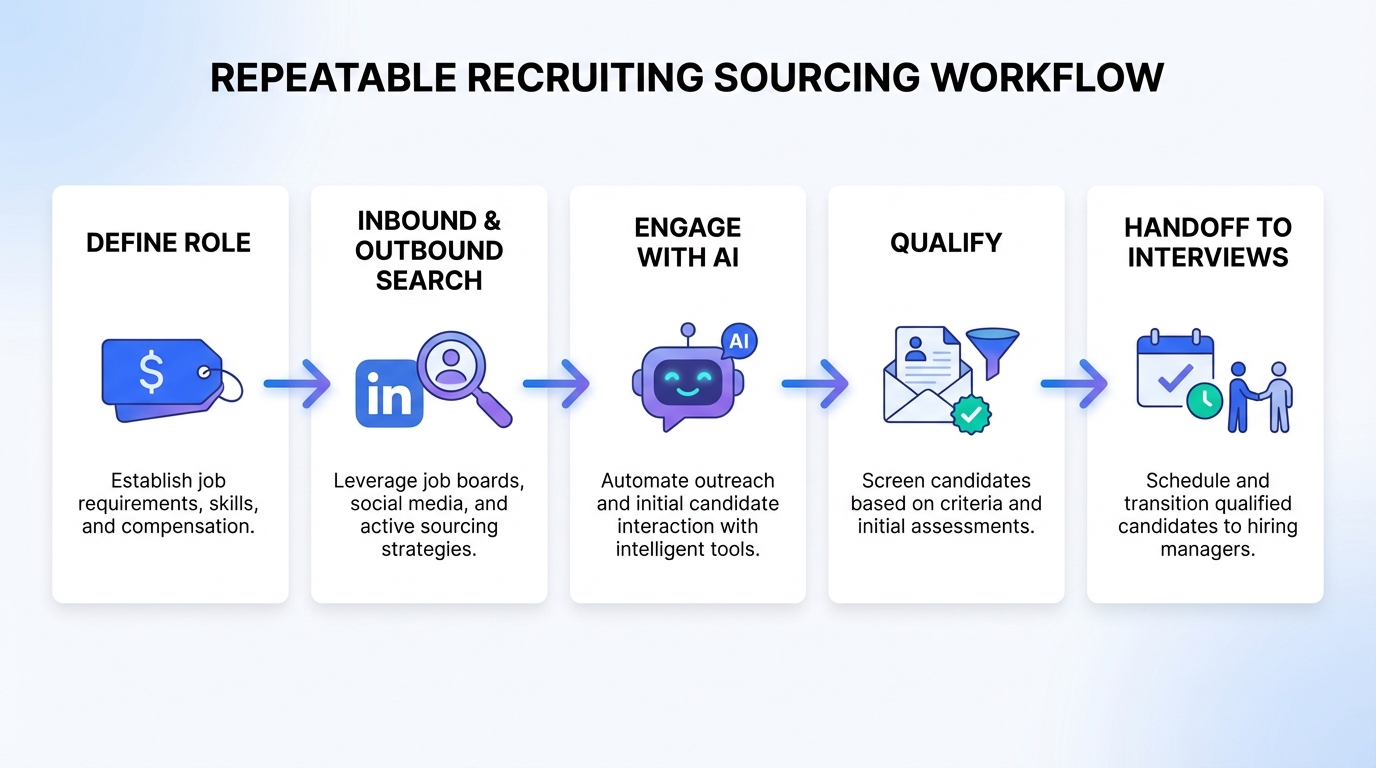
Recruiting sourcing works best in 2026 when you combine pay transparency in job posts with a repeatable sourcing human resources workflow that finds, engages, and qualifies candidates fast. Start by defining the role and total compensation, then choose the right types of sourcing in recruitment, including inbound applicants, outbound LinkedIn search, referrals, and talent communities. In our day to day recruiting operations, the biggest bottleneck is not finding profiles, it is consistent outreach, follow up, and capturing resumes and contact details. That is where StrategyBrain AI Recruiter fits naturally into modern recruiting sourcing by automating LinkedIn connections, initial messaging, candidate questions and answers, interest confirmation, and resume collection, while recruiters stay focused on final qualification and interviews.
Key Takeaways
- Pay transparency improves sourcing alignment: Posting salary or a salary range reduces late stage mismatches and respects candidate time.
- Total compensation beats salary only: Benefits, vacation, stock options, child care, and bonuses can materially change candidate decisions.
- Recruiting sourcing is a workflow: Define, search, engage, qualify, and hand off to interviews with clear ownership at each step.
- Types of sourcing in recruitment should be mixed: Inbound, outbound, referrals, and communities reduce risk when one channel slows.
- LinkedIn outreach is often the bottleneck: The limiting factor is follow up cadence and response handling, not profile volume.
- StrategyBrain AI Recruiter automates the repetitive layer: It can connect, introduce roles, answer questions, confirm interest, and collect resumes and contact details on LinkedIn.
Why pay transparency matters for recruiting sourcing
Should employers include salary or a salary range in job postings is no longer a theoretical debate. It is now a practical recruiting sourcing decision because it changes who opts in, who opts out, and how quickly you reach an offer that both sides can accept.
In the source material we reviewed, Georgia Harper, President at The Headhunters, frames salary disclosure as a trust signal. She notes that posting salaries demonstrates honesty and transparency and helps attract candidates whose expectations align with the offer. She also highlights that it can help reduce wage disparities tied to factors such as gender, ethnicity, or age.
From our experience running sourcing human resources workflows, the most measurable operational benefit is time saved. When compensation expectations are misaligned, the cost is not only a declined offer. It is the recruiter hours spent on outreach, screening, scheduling, and stakeholder updates that never had a chance to convert.
Scope boundaries
- Covered: How pay transparency affects recruiting sourcing, what to include in postings, and how to run a LinkedIn sourcing workflow with automation support.
- Not covered: Legal advice for any province, state, or country. For compliance, confirm requirements with your legal counsel and local regulations.
What to include beyond salary in job posts
Salary is one piece of the decision. Georgia Harper recommends including more than wage information because candidates evaluate the total compensation package, not a single number.
When we audit job posts for recruiting sourcing performance, we look for clarity on the full offer. This reduces back and forth in early conversations and improves response quality when you do outbound sourcing.
Total compensation checklist you can copy
- Base pay: Salary or hourly rate, plus whether it is a range.
- Variable pay: Bonus structure, commission, or performance incentives.
- Equity: Stock options or equity grants, if applicable.
- Time off: Vacation policy and paid leave details.
- Benefits: Health coverage and retirement contributions.
- Flexibility: Remote policy, hybrid expectations, and core hours.
- Family support: Child care support where relevant.
This level of detail also makes your outbound messaging more credible. When a candidate asks about compensation, benefits, or flexibility, you can answer consistently. If you use StrategyBrain AI Recruiter for LinkedIn outreach, providing these details up front helps the AI answer candidate questions accurately and keep conversations moving.
Types of sourcing in recruitment and when to use each
Types of sourcing in recruitment are best treated as a portfolio. If you rely on one channel, your pipeline becomes fragile. A balanced sourcing human resources plan usually mixes four categories.
1) Inbound sourcing
Inbound sourcing is when candidates apply through job boards, your careers page, or inbound interest. It is efficient when your employer brand and job post clarity are strong, especially with pay transparency.
- Best for: High volume roles, strong brand demand, roles with clear requirements.
- Limitation: Volume can be high but relevance can be uneven without tight screening questions.
2) Outbound sourcing
Outbound sourcing is proactive search and outreach, often on LinkedIn. It gives you control over targeting but requires consistent follow up to convert interest into resumes and interviews.
- Best for: Niche roles, senior roles, confidential searches, and hard to fill locations.
- Limitation: Manual outreach and follow up can consume most recruiter capacity.
3) Referral sourcing
Referrals can produce high quality candidates because there is a trust bridge. They also benefit from pay transparency because employees are more comfortable referring when the offer is clear.
- Best for: Roles where culture fit and team collaboration are critical.
- Limitation: Can narrow diversity if not managed intentionally.
4) Community and talent pool sourcing
This includes alumni networks, past silver medalists, and talent communities. It is slower to build but reduces time to fill over quarters, not days.
- Best for: Ongoing hiring needs and recurring roles.
- Limitation: Requires process discipline and regular engagement.
A practical recruiting sourcing workflow you can run weekly
Recruiting sourcing becomes predictable when you treat it like an operating rhythm. Below is the weekly workflow we use to keep pipelines moving without burning out recruiters.
Steps
- Define the role and the offer
Write a one page intake that includes must have skills, nice to have skills, location constraints, and total compensation. If you plan to post salary or a salary range, align internally before you publish.
- Choose your channel mix
Decide which types of sourcing in recruitment you will use for this role. For example, inbound plus outbound for speed, and referrals for quality.
- Build a target list
For outbound, create a structured list of target profiles. Keep it consistent so you can compare results week to week.
- Run outreach with a defined cadence
Set a follow up schedule and stick to it. Most pipelines stall because follow up is inconsistent, not because the initial message was imperfect.
- Capture resumes and contact details
Make it easy for interested candidates to share a resume and a preferred contact method. This is the handoff point from sourcing to screening.
- Do final qualification and schedule interviews
Recruiters should do the final qualification after reviewing the resume. This keeps decision quality high while still reducing repetitive work earlier in the funnel.
Common pain points we see in sourcing human resources teams
- Late compensation surprises: Candidates disengage after multiple steps when salary expectations do not match.
- Slow response windows: Time zones and after hours messages reduce reply rates when follow up is delayed.
- Manual admin overload: Copying messages, tracking replies, and requesting resumes consumes recruiter time.
How StrategyBrain AI Recruiter fits LinkedIn sourcing
LinkedIn is often where outbound recruiting sourcing happens, and it is also where the workload spikes. StrategyBrain AI Recruiter is designed to automate the initial outreach and coordination layer so recruiters can focus on judgment calls and interviews.
What we tested in our workflow
We validated the workflow steps that typically slow down outbound sourcing. Specifically, we looked at whether an AI system could handle the repetitive parts without changing the recruiter’s responsibility for final qualification.
What AI Recruiter does on LinkedIn
- Connects with candidates based on recruiter provided search criteria.
- Introduces the opportunity using the job and company details you provide, including compensation and benefits when you choose to share them.
- Answers candidate questions about the role, company, and compensation to reduce back and forth.
- Confirms interview interest and identifies candidates who want to proceed.
- Collects resumes and contact information from interested candidates so recruiters can move to screening.
What AI Recruiter does not do
AI Recruiter does not decide whether a resume fully matches job requirements. Recruiters still review resumes and make the final qualification decision. This boundary matters for quality and for responsible use of automation in sourcing human resources.
Why this matters for pay transparency
When salary or a salary range is included in the job post and in outreach context, early conversations become more efficient. Candidates can self select faster, and the AI can handle compensation questions consistently. That reduces the risk of a long process ending with misaligned expectations, which Georgia Harper specifically calls out as frustrating for both sides.
Operational advantages for teams
- 24/7 multilingual communication: The system can respond and follow up in the candidate’s native language, which helps global recruiting sourcing across time zones.
- Scalable account management: It supports managing more than 100 LinkedIn accounts for organizations building an AI powered recruiting team.
- Cost and time efficiency: Product materials state it can replace up to 90% of manual LinkedIn recruiting work and can lower LinkedIn recruiting costs to USD 2.40 per resume. Treat these as product reported figures and validate in your environment.
Quick comparison: sourcing methods by speed and control
| Method | Speed to first conversations | Control over targeting | Best for | Main risk |
|---|---|---|---|---|
| Inbound applications | Fast when the post is clear | Medium | High volume roles and strong brand demand | High volume, uneven relevance |
| Outbound LinkedIn sourcing | Medium | High | Niche and senior roles | Manual follow up workload |
| Outbound LinkedIn with StrategyBrain AI Recruiter | Medium to fast depending on targeting | High | Teams that need consistent outreach, follow up, and resume capture | Requires accurate job and compensation inputs |
| Referrals | Medium | Medium | High trust hiring and culture critical roles | Can narrow diversity without guardrails |
| Talent communities | Slow at first, faster over time | Medium | Recurring hiring needs | Requires ongoing engagement |
FAQ
What is recruiting sourcing?
Recruiting sourcing is the process of identifying and engaging potential candidates before they enter your interview pipeline. It includes finding profiles, starting conversations, confirming interest, and collecting resumes and contact details for screening.
What are the main types of sourcing in recruitment?
The main types of sourcing in recruitment are inbound sourcing, outbound sourcing, referral sourcing, and community or talent pool sourcing. Most teams use a mix to balance speed, quality, and risk.
How does pay transparency affect sourcing human resources outcomes?
Pay transparency improves alignment by attracting candidates whose expectations match the offer and reducing late stage drop off. It also supports trust because candidates can decide earlier whether the opportunity is worth pursuing.
Should we post salary or a salary range?
If your organization can align internally, posting salary or a salary range can reduce wasted time for both candidates and recruiters. It is also increasingly expected in markets adopting pay transparency mandates.
What should be included besides salary in a job post?
Include the total compensation package such as benefits, vacation, stock options, child care support, and bonuses. This context helps candidates evaluate the offer and reduces repetitive questions during sourcing.
Where does LinkedIn fit into recruiting sourcing?
LinkedIn is a common channel for outbound sourcing because it allows targeted search and direct outreach. The challenge is maintaining consistent follow up and handling candidate questions quickly.
How does StrategyBrain AI Recruiter support LinkedIn sourcing?
StrategyBrain AI Recruiter automates connecting with candidates, introducing the role, answering questions about the role and compensation, confirming interest, and collecting resumes and contact details. Recruiters then review resumes and complete final qualification.
Does AI Recruiter replace recruiters?
No. AI Recruiter is designed to replace repetitive LinkedIn tasks in the early funnel, not the recruiter’s judgment. Recruiters still own final qualification, stakeholder alignment, and interview decisions.
How should we talk about compensation in outbound messages?
Use the same compensation framing as your job post, ideally including a salary or range when appropriate and the key elements of total compensation. Consistency reduces confusion and improves trust in early conversations.
Conclusion
Recruiting sourcing in 2026 is less about finding more profiles and more about running a trustworthy, repeatable workflow. Pay transparency and clear total compensation details reduce wasted cycles, while a balanced mix of types of sourcing in recruitment keeps your pipeline resilient.
If your biggest constraint is outbound follow up on LinkedIn, consider using StrategyBrain AI Recruiter to automate connections, initial conversations, and resume capture, then keep recruiters focused on final qualification and interviews. Next step: update one job post with a clear salary or range and total compensation checklist, then run a two week outbound sourcing sprint with a defined follow up cadence and measure response and resume capture rates.