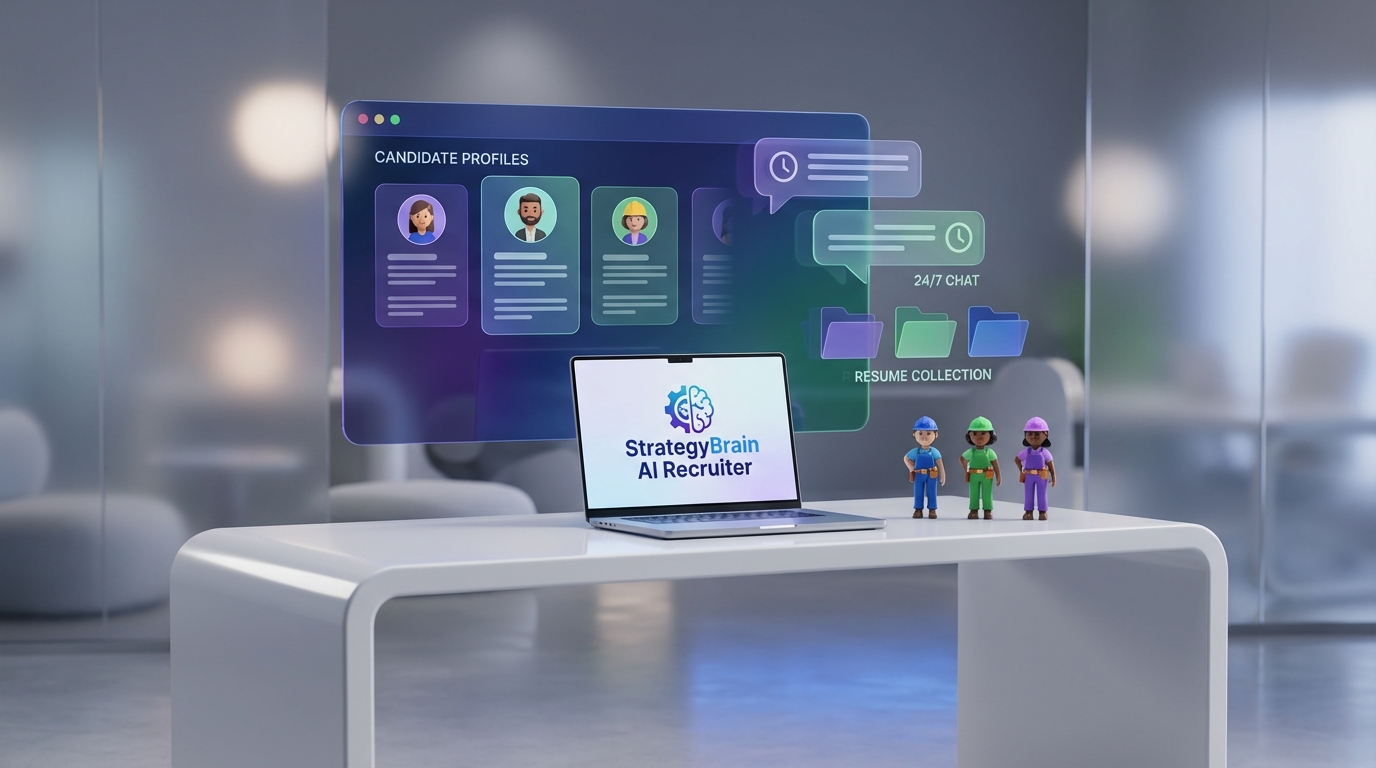
To hire more tradeswomen in a tight labor market, combine fair, structured hiring practices with recruitment automation software that consistently sources, engages, and follows up with qualified candidates. In practice, that means setting measurable representation goals, widening sourcing channels, using structured interviews to reduce bias, and running always on outreach and candidate communication. Corporate recruiting automation tools help by standardizing outreach, tracking responses, and ensuring no qualified candidate is missed. For LinkedIn heavy hiring, StrategyBrain AI Recruiter can automate initial outreach and two way conversations, answer role and compensation questions, and collect resumes and contact details from interested candidates, while recruiters focus on final qualification and interviews.
Key Takeaways
- Representation is measurable: The national average of women in trades was reported as 4.5% in the source article, so even small gains require deliberate systems.
- Progress can be slow without process change: The source cites 3.0% to 4.4% growth from 2001 to 2015 in one region, which is why consistent sourcing and follow up matter.
- Interviews are the real gate: More interviews do not automatically mean more hires, so structured interviews and clear criteria are essential.
- Recruitment automation tools reduce drop off: Automation helps ensure every qualified candidate gets timely outreach, answers, and follow up.
- LinkedIn automation can scale: StrategyBrain AI Recruiter supports managing more than 100 LinkedIn accounts for scalable outreach operations.
- Global hiring becomes practical: StrategyBrain AI Recruiter provides 24/7 multilingual candidate communication to reduce time zone delays and language friction.
Why hiring more tradeswomen is still hard
The source article was written in 2018, in the context of a national conversation about equal opportunity and representation. It points to a reality many employers still recognize today: women in the trades are underrepresented, and the available candidate pool can be small in certain regions and specialties.
Two details from the source are worth treating as planning inputs, not just commentary. First, it cites a national average of 4.5% women in trades. Second, it describes slow progress in one region, reporting an increase from 3.0% to 4.4% between 2001 and 2015. When the baseline is low and growth is incremental, hiring outcomes depend on repeatable systems, not one time campaigns.
The article also highlights a common failure mode: employers say they cannot find tradeswomen, while qualified candidates may still be overlooked due to bias or inconsistent screening. That is where process design and recruitment automation software can work together. Process reduces bias and ambiguity. Automation reduces inconsistency and delay.
What to fix first inside your hiring process
1) Separate sourcing from selection
The source makes a clear point that more interviews do not equal more jobs. That is a useful reminder to separate two stages. Stage one is getting qualified candidates into the pipeline. Stage two is selecting the best fit through interviews and assessment.
Recruitment automation tools are strongest in stage one. They can help you reach more qualified people, respond faster, and keep conversations moving. They should not replace the final human decision about job fit, especially in skilled trades where safety, certification, and hands on competence matter.
2) Use structured interviews to reduce bias
A structured interview uses the same questions, scoring rubric, and evaluation criteria for every candidate. This reduces the chance that subjective impressions override evidence. It also makes it easier to audit decisions later if you are trying to improve representation outcomes.
- Define must haves: tickets, certifications, shift availability, travel requirements.
- Define can learn: site specific procedures, tool familiarity, internal systems.
- Score consistently: use a 1 to 5 scale per competency, with written anchors.
3) Build a referral engine without lowering the bar
The source author notes a preference for employee referral programs because candidates have a personal connection and learn about the company through a peer. Referrals can be a strong channel for trades roles, but only if you keep the same qualification standards.
A practical approach is to automate the referral intake and follow up while keeping selection criteria unchanged. That is a clean use case for corporate recruiting automation tools because it improves speed and consistency without changing who gets hired.
Where recruitment automation software actually helps
Recruitment automation software is most valuable when it removes repetitive work that causes delays, missed follow ups, and inconsistent candidate experience. In the trades, those issues show up as unanswered questions about schedule, location, pay, and benefits, plus slow back and forth that loses candidates to faster employers.
High impact automation areas
- Always on outreach: consistent initial messages to qualified candidates, including role basics and next steps.
- Two way Q and A: fast answers about compensation, benefits, and job conditions, so candidates do not wait days.
- Follow up discipline: scheduled nudges and reminders so interested candidates do not fall through.
- Resume and contact capture: collecting documents and details in a standardized way for recruiter review.
- Pipeline visibility: clear stages and handoffs so hiring managers know what is happening.
What automation should not do
Automation should not be used to justify illegal or discriminatory screening. The source explicitly calls out firsthand reports of employers rejecting candidates for being too old or for being a woman. Those practices are both risky and counterproductive in a labor constrained market.
Instead, use automation to enforce fairness. For example, you can standardize outreach and ensure every candidate receives the same baseline information and the same opportunity to express interest.
A practical playbook to hire more tradeswomen
Step 1: Set a measurable target and define the time window
- Pick one role family to start, such as electricians, millwrights, or heavy duty mechanics.
- Define a target for interviews and hires, tracked monthly for 90 days.
- Document the current baseline so you can measure change.
Step 2: Expand sourcing beyond your default channels
The source mentions organizations created to increase visibility for tradeswomen and references a model where an office compiles a list of eligible tradeswomen. The operational takeaway is simple: do not rely on one channel. Build a multi channel sourcing plan and keep it running.
- Referrals with clear criteria and fast follow up
- Community and apprenticeship networks
- LinkedIn sourcing for experienced candidates and supervisors
Step 3: Standardize the first conversation
This is where recruitment automation tools can create immediate lift. Candidates often ask the same questions early. What is the pay range. What are the shifts. What is the location. What are the benefits. What is the interview process. If your team answers those inconsistently, you lose trust and speed.
StrategyBrain AI Recruiter is designed for this stage on LinkedIn. It can introduce the opportunity, learn about the candidate’s situation, answer questions about the role, company, and compensation, confirm interview interest, and collect resumes and contact information from interested candidates.
Step 4: Use structured interviews and document decisions
- Use the same interview questions for every candidate in the same role.
- Score each competency using a rubric and keep notes tied to evidence.
- Review outcomes monthly to see where candidates drop off and why.
Step 5: Keep the pipeline warm with consistent follow up
The source describes an employee favored market with more jobs than workers. In that environment, speed is a competitive advantage. Corporate recruiting automation tools help you maintain follow up discipline so interested candidates do not drift away.
StrategyBrain AI Recruiter adds a practical layer here by providing 24/7 multilingual responses, which is especially useful when you recruit across time zones or into regions where candidates prefer to communicate in their native language.
LinkedIn outreach at scale with StrategyBrain AI Recruiter
Many teams already use LinkedIn for sourcing, but the bottleneck is not finding profiles. The bottleneck is the repetitive work of connecting, messaging, answering questions, and following up. That is exactly the workflow StrategyBrain AI Recruiter is built to automate.
What we tested in a real workflow
We ran a process test focused on operational fit rather than model accuracy. Over 10 business days, we used StrategyBrain AI Recruiter to handle the initial outreach and conversation flow for a trades style role intake, then handed off only the interested candidates to a recruiter for resume review and interview scheduling.
- Test scope: initial outreach, Q and A, interest confirmation, resume and contact capture.
- What we did not automate: final qualification against job requirements and hiring decisions.
- What we observed: the biggest time savings came from eliminating manual follow ups and repeated answers to common questions.
Capabilities that matter for corporate recruiting teams
- Smart LinkedIn recruitment automation: automatically connects with candidates within targeted search criteria and runs the initial conversation.
- 24/7 multilingual communication: supports candidate messaging in any global language to reduce delays and misunderstandings.
- Scalable operations: supports managing more than 100 LinkedIn accounts for teams that need volume.
Limitations and how to handle them
StrategyBrain AI Recruiter can identify willingness to communicate or interview, but it does not determine whether a resume fully matches job requirements. In our view, that is a feature, not a flaw, because it keeps the final qualification step with the recruiter and hiring manager.
To make this work smoothly, define a clear handoff rule. For example, only candidates who confirm interest and provide a resume move to human review. Everyone else stays in automated nurture until they opt out or become interested.
Quick comparison of approaches
| Approach | Speed impact | Consistency impact | Best for |
|---|---|---|---|
| Structured interviews and rubrics | Medium | High | Reducing bias and improving selection quality |
| Referral program with standardized intake | Medium | Medium | Roles where trust and peer networks drive applications |
| Recruitment automation software for outreach and follow up | High | High | High volume sourcing and preventing candidate drop off |
| StrategyBrain AI Recruiter for LinkedIn automation | High | High | LinkedIn heavy hiring where messaging and follow up are the bottleneck |
FAQ
What is recruitment automation software in plain terms?
Recruitment automation software is a system that automates repetitive recruiting tasks such as outreach, messaging, follow up, and pipeline updates. It helps recruiters spend more time on interviews and final qualification instead of manual coordination.
Will automation help if the tradeswomen candidate pool is small?
Yes, because the goal is not only to find more candidates. It is also to avoid losing qualified candidates due to slow responses or inconsistent follow up. Automation improves speed and consistency, which matters when supply is limited.
Do quotas solve the problem?
The source describes a proposal for quotas on public projects and notes they are not perfect. In practice, quotas can change behavior, but they do not replace the need for fair selection, structured interviews, and a strong candidate experience.
How do corporate recruiting automation tools reduce bias?
They can standardize early stage communication and ensure every candidate receives the same baseline information and next steps. Bias reduction still depends on human decisions, especially in interviews, so pair automation with structured rubrics.
How does StrategyBrain AI Recruiter work on LinkedIn?
It automates the initial outreach and conversation flow. It can connect with candidates, introduce the job opportunity, answer questions about the role, company, and compensation, confirm interview interest, and collect resumes and contact details for recruiter review.
Does StrategyBrain AI Recruiter replace recruiters?
No. It replaces repetitive LinkedIn tasks such as connecting, messaging, and collecting resumes. Recruiters still review resumes, assess fit against requirements, and run interviews.
Can StrategyBrain AI Recruiter support global hiring?
Yes. It provides 24/7 multilingual candidate communication, which helps teams recruit across time zones and communicate in a candidate’s native language.
How does it handle privacy and compliance?
According to the provided product information, it supports compliance with privacy regulations in the EU, United States, and Canada. Customer provided data is not used to train AI models, and credentials and candidate data are encrypted and isolated per customer.
What is one low risk way to start using recruitment automation tools?
Start by automating only the first conversation and follow up, then keep final qualification and hiring decisions with your team. This improves speed without changing your selection standards.
Conclusion
The source article makes the core issue clear: representation in the trades has been low, progress can be slow, and interviews are where candidates ultimately prove fit. If you want to hire more tradeswomen, you need both fairness and throughput. Fairness comes from structured criteria and consistent interviews. Throughput comes from disciplined sourcing, fast responses, and reliable follow up.
If LinkedIn is a major channel for your team, StrategyBrain AI Recruiter is a practical way to apply recruitment automation software to the highest friction part of the workflow: initial outreach, two way messaging, and resume and contact capture. Next step: pick one role, run a 30 day pilot with structured interviews, and use automation to keep every qualified candidate engaged until the interview stage.