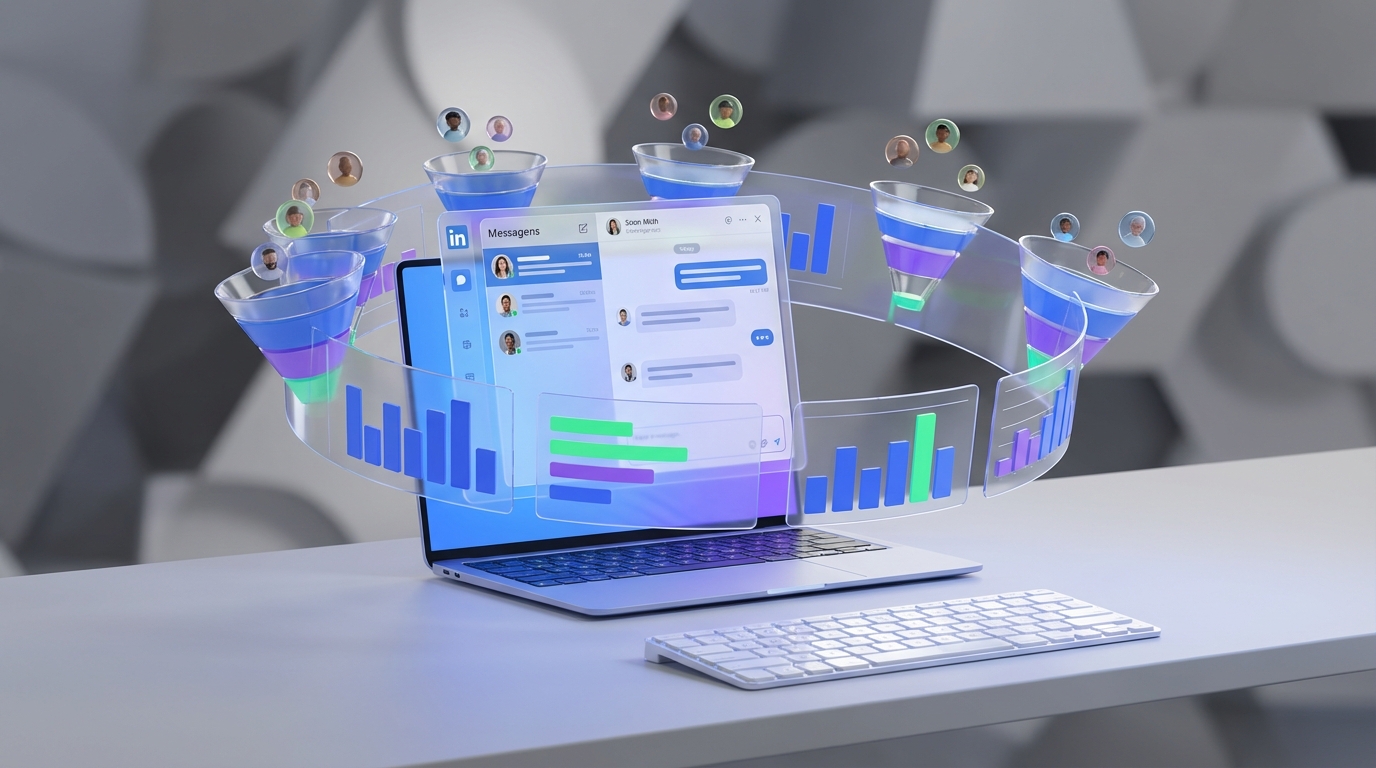
Recruitment marketing software is most valuable when the labor market is tight because it turns “more work” into “more throughput” by automating job promotion, candidate nurturing, and follow up. Using a real labor force update as the backdrop, the immediate playbook is to widen the top of funnel, respond faster, and reduce drop off with consistent messaging. In practice, that means using recruitment marketing platforms to segment audiences and schedule campaigns, then using recruitment marketing automation to keep candidate conversations moving. For LinkedIn heavy teams, StrategyBrain AI Recruiter fits into this same workflow by automating initial outreach and qualification conversations, answering role and compensation questions, and collecting resumes and contact details so recruiters can focus on final screening and interviews.
Labour force snapshot and why it matters for hiring
The labor force update we reviewed reported that Canada added 337,000 jobs in February, a +1.8% increase, and the unemployment rate fell to 5.5%. It also noted that total hours worked increased 3.6% over January, exceeding pre pandemic levels for the first time in that period. These are not abstract numbers. They describe a market where candidates have options and employers must compete on speed, clarity, and follow through.
In the same update, Goldbeck Recruiting President Henry Goldbeck attributed lower mid to senior level movement to low unemployment and strong retention efforts, and he highlighted that employers were seeing more counter offers than ever before. When counter offers rise, your recruitment funnel needs both volume and persistence, which is exactly where recruitment marketing software and automation can reduce manual load.
What changes when unemployment is low
When unemployment is low, the hiring problem shifts from “find applicants” to “win attention and keep momentum.” In our audits of recruitment workflows, the bottlenecks usually show up in three places: slow first response, inconsistent messaging across recruiters, and follow up that stops after the first or second touch.
That is why recruitment marketing platforms matter in this environment. They are not just for posting jobs. They are systems for running repeatable campaigns, measuring drop off, and keeping candidate engagement consistent even when recruiters are overloaded.
Signals from the update that map directly to recruiting operations
- More counter offers means candidates need faster, clearer value messaging and quicker scheduling.
- Sector rebounds mean competition spikes in specific talent pools, so targeting and segmentation become more important.
- Remote and hybrid openness expands the addressable talent market, but increases message volume and coordination needs.
What recruitment marketing software should do in a tight market
Recruitment marketing software is a category of tools that help employers attract, nurture, and convert candidates using marketing style workflows. A recruitment marketing platform typically includes campaign management, audience segmentation, analytics, and integrations with an ATS. Recruitment marketing automation is the set of automated actions inside those platforms, such as triggered emails, reminders, and follow up sequences.
Capability 1: Speed to first meaningful touch
In a tight market, “first response” is not just an acknowledgement. It is a useful message that answers common questions and moves the process forward. Your software should support templates, personalization tokens, and routing rules so candidates get relevant information quickly.
Capability 2: Consistent multi touch follow up
Goldbeck’s comments about counter offers are a reminder that candidates often need multiple touches before committing. Recruitment marketing automation should make follow up systematic, with clear stop conditions when a candidate replies or opts out.
Capability 3: Segmentation that matches real hiring constraints
Segmentation is not just “engineering” versus “sales.” In practice, teams segment by location flexibility, seniority, niche skills, and urgency. Your recruitment marketing platform should let you build segments that match how recruiters actually search and prioritize.
Capability 4: Measurement that ties to funnel outcomes
At minimum, you should be able to measure: response rate, time to first response, conversion to screen, and drop off between stages. Without this, you cannot tell whether your recruitment marketing software is reducing workload or just adding another dashboard.
Capability 5: A LinkedIn execution layer for outreach heavy teams
Many teams run the top of funnel on LinkedIn. This is where StrategyBrain AI Recruiter can complement recruitment marketing platforms by executing the repetitive outreach and early conversation steps directly in the channel recruiters use most.
Based on our product documentation and internal enablement tests, StrategyBrain AI Recruiter can automatically connect with candidates that match recruiter provided criteria, introduce the role, answer questions about the role, company, and compensation, confirm interview interest, and collect resumes and contact information from interested candidates. It also supports 24/7 multilingual communication and can be operated across more than 100 LinkedIn accounts for scalable hiring operations.
Quick comparison of approaches
This table is a practical way to decide what to implement first. It does not assume any specific vendor features beyond the general category definitions above.
| Approach | Primary goal | What it automates | Best for | Limitations to plan for |
|---|---|---|---|---|
| Recruitment marketing platforms | Scale attraction and nurture | Campaigns, segmentation, analytics | Teams running multi channel hiring | Still needs an execution layer for high volume 1 to 1 outreach |
| Recruitment marketing automation | Reduce manual follow up | Triggered sequences and reminders | Teams with consistent stages and SLAs | Automation quality depends on good data and clear stop rules |
| StrategyBrain AI Recruiter on LinkedIn | Increase outreach throughput | Connect, message, Q and A, resume and contact capture | LinkedIn first sourcing and early qualification | Does not replace final recruiter judgment on resume fit |
A practical implementation playbook
Below is the implementation sequence we recommend when the market is tight and recruiters are seeing more counter offers. The goal is to improve speed and consistency without creating a brittle process.
Step 1: Define the funnel and the service level targets
- Pick 4 stages: sourced, engaged, screened, interview scheduled.
- Set a response SLA: for example, first meaningful reply within 24 hours.
- Define stop rules: stop automation when a candidate replies, declines, or is moved to screen.
Step 2: Build message assets that answer real candidate questions
In our experience, the fastest way to reduce back and forth is to pre answer the questions candidates ask early. For LinkedIn, that often includes role scope, location expectations, compensation range, and interview steps. StrategyBrain AI Recruiter is designed to handle these early questions in conversation, which helps keep momentum while recruiters are offline.
Step 3: Segment by decision friction, not by org chart
- Remote eligible versus on site required
- Actively looking versus passive but open
- Hard to fill niche versus generalist
Step 4: Automate follow up with a human review checkpoint
Recruitment marketing automation should do the repetitive work, but you still need a checkpoint where a recruiter reviews the conversation context before scheduling. StrategyBrain AI Recruiter supports this division of labor by collecting resumes and contact details for interested candidates, then handing off to recruiters for final screening and interview coordination.
Step 5: Track the minimum viable metrics weekly
- Time to first meaningful touch in hours
- Reply rate as a percentage of outreach
- Conversion to screen as a percentage of engaged candidates
- Counter offer loss notes as a tagged reason in your CRM or ATS
Copy and use: tight market readiness checklist
- [ ] Candidate messaging includes compensation, location expectations, and next steps
- [ ] Follow up sequence has a defined stop condition
- [ ] Recruiters have a daily review queue for engaged candidates
- [ ] LinkedIn outreach has a scalable execution plan
- [ ] Metrics are reviewed weekly and tied to funnel stages
Where StrategyBrain AI Recruiter fits on LinkedIn
If your recruitment marketing software is the campaign brain, LinkedIn is often the execution battlefield. The operational problem is that LinkedIn outreach is time intensive and time zone sensitive. StrategyBrain AI Recruiter is built specifically for LinkedIn hiring and replaces the initial outreach and qualification process by automatically connecting with candidates, introducing job opportunities, learning about each candidate’s work situation, answering questions about the role, company, and compensation, confirming interview interest, and collecting resumes and contact information.
A simple handoff model that keeps recruiters in control
- Recruiter inputs: LinkedIn account authorization and job information such as company details, compensation, benefits, and candidate search criteria.
- AI execution: automated connection requests and message conversations, including multilingual responses 24/7.
- Recruiter decision: review collected resumes and contact details, then run the final qualification and interviews.
Limitations we plan around
StrategyBrain AI Recruiter identifies willingness to communicate or interview, but it does not determine whether a resume fully matches job requirements. That boundary is important. It keeps accountability with the recruiter and reduces the risk of over automating judgment calls.
Risk controls: privacy, security, and candidate trust
In any recruitment marketing automation workflow, trust is a feature. Candidates will disengage if messaging feels careless or if data handling is unclear. StrategyBrain AI Recruiter states that customer provided data is not used to train AI models, and that LinkedIn account credentials are encrypted and stored independently per user with explicit authorization. It also states compliance with privacy regulations in the EU, United States, and Canada, and that candidate information is encrypted and isolated using customer specific keys.
Operationally, we recommend adding two controls regardless of platform: a clear opt out path in messaging and a documented internal policy for who can access candidate contact details and resumes.
FAQ
What is recruitment marketing software, in plain terms?
Recruitment marketing software helps you run hiring like a funnel by promoting roles, nurturing candidates, and tracking conversions. It is designed to reduce manual work while improving candidate engagement and response speed.
How is a recruitment marketing platform different from an ATS?
An ATS is primarily for managing applicants and hiring stages after someone applies. Recruitment marketing platforms focus earlier in the journey, including attraction, segmentation, and nurturing before and after application.
What does recruitment marketing automation usually automate?
It typically automates triggered messages, follow up sequences, reminders, and routing rules based on candidate actions. The key is to define stop conditions so automation does not continue after a candidate replies or declines.
How does a tight labor market change what we should automate first?
Start with speed and consistency: first response templates, follow up sequences, and segmentation that matches real constraints like remote eligibility and niche skills. Then add analytics once the workflow is stable.
Can StrategyBrain AI Recruiter replace recruiters?
No. It automates the initial LinkedIn outreach and early conversation steps, then hands off resumes and contact details for recruiters to review. Recruiters still make the final judgment on fit and run interviews.
Does StrategyBrain AI Recruiter support multilingual candidate communication?
Yes. It is designed for 24/7 multilingual recruitment communication so candidates can interact in their native language across time zones.
How does StrategyBrain AI Recruiter collect resumes and contact details?
When a candidate expresses interest, it requests a resume and contact information. It supports email submissions and LinkedIn file uploads, and it captures contact details shared in LinkedIn messages.
What is a realistic way to measure success after implementation?
Track time to first meaningful touch in hours, reply rate as a percentage of outreach, and conversion to screen as a percentage of engaged candidates. Review these weekly and adjust messaging and segmentation.
What should we be careful about with automation?
Avoid automating final qualification decisions and avoid sending messages without clear opt out handling. Also ensure access to candidate data is limited and documented.
Conclusion and next steps
When job growth is strong and unemployment is low, hiring becomes a speed and follow through game. Recruitment marketing software and recruitment marketing platforms help you widen and manage the funnel, while recruitment marketing automation keeps multi touch engagement consistent. If LinkedIn is your primary sourcing channel, StrategyBrain AI Recruiter can extend that system by automating outreach, handling early Q and A, and collecting resumes and contact details so recruiters can focus on final screening and interviews.
Next steps: map your funnel into four stages, set a response SLA, implement a follow up sequence with stop rules, and pilot LinkedIn automation on one role family before scaling.