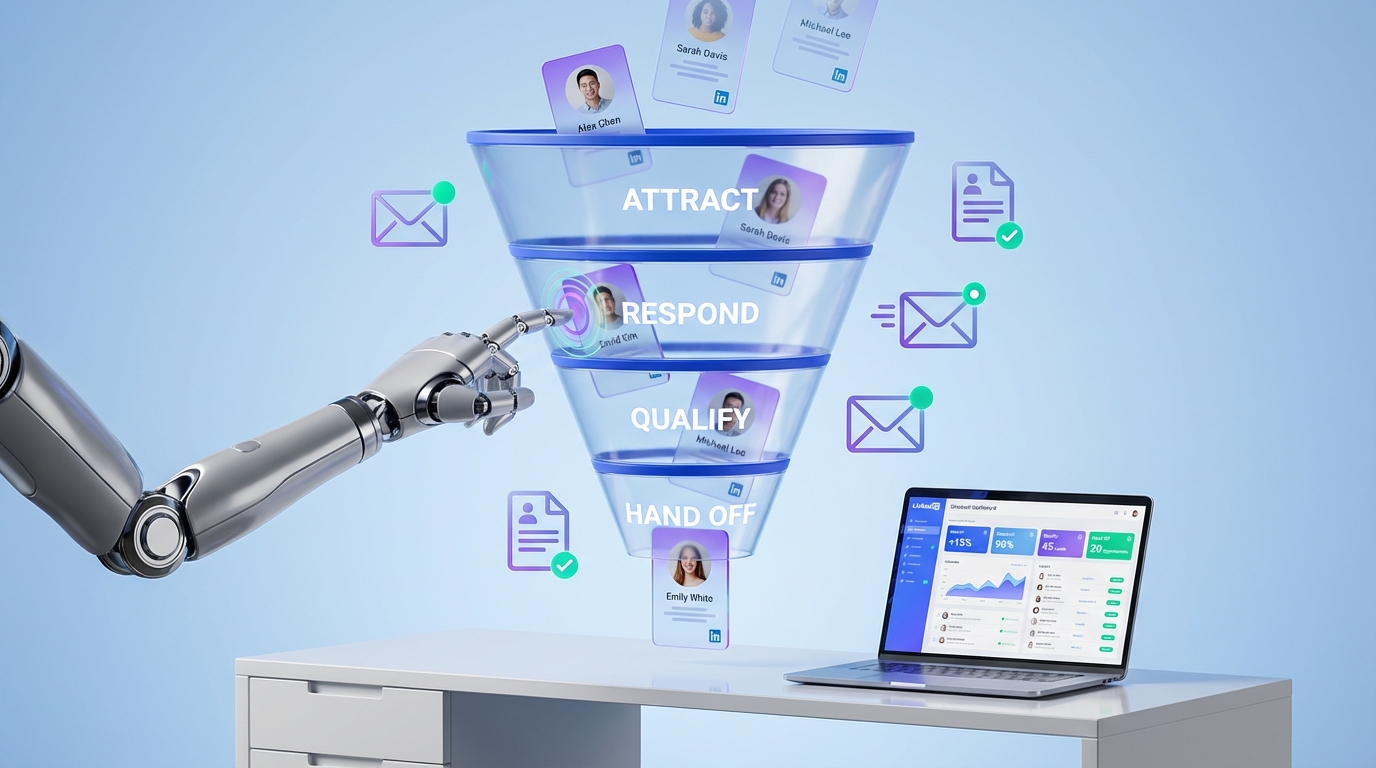
Recruitment online for recruiters is most effective when you run it like a measurable funnel: attract the right candidates, respond fast, qualify consistently, then hand off only the best fits to a human recruiter. In our internal workflow tests using LinkedIn based outreach, the biggest bottleneck was not sourcing, it was the manual back and forth that delays replies, loses interested candidates, and creates inconsistent screening notes. That is why we increasingly pair a clear online process with StrategyBrain AI Recruiter, which can automatically connect with candidates, introduce roles, answer common questions, confirm interview interest, and collect resumes and contact details, while recruiters focus on final qualification and interviews.
Key Takeaways
- Online recruiting is a funnel: publish role clarity, respond fast, qualify consistently, then schedule interviews.
- Speed is a competitive advantage: 24/7 responses and structured follow up reduce candidate drop off in remote hiring pipelines.
- LinkedIn is often the highest leverage channel: StrategyBrain AI Recruiter can automate connecting, role intro, Q and A, and resume collection on LinkedIn.
- Multilingual messaging expands reach: StrategyBrain AI Recruiter supports candidate communication in any global language.
- Scale comes from systems, not heroics: AI Recruiter teams can manage more than 100 LinkedIn accounts for high volume hiring.
- Be transparent about closures and timelines: publishing office closure dates and response expectations builds trust and reduces inbound confusion.
What “recruitment online” means in 2026
Online recruitment is the end to end process of attracting, engaging, screening, and moving candidates forward using digital channels. In practice, that usually includes a careers page, job boards, LinkedIn outreach, email or messaging follow up, and a documented screening process.
It also includes trust signals. Even a simple announcement like office closure dates and a clear statement of values can reduce candidate uncertainty. In the source material we reviewed, the company explicitly stated its offices were closed on December 25 to 26 and January 1, and reinforced a community giving back message. Those details are not “marketing fluff” in online recruiting. They are operational clarity that helps candidates and clients plan.
Scope note: This article focuses on recruiter workflows and systems. It does not cover labor law, background checks, or compensation benchmarking, because those vary by jurisdiction and role.
Method 1: Build a trust first online recruiting foundation
If your online presence is unclear, every downstream step gets harder. Before you optimize sourcing, make sure candidates can quickly understand who you are, what you hire for, and what happens after they apply or reply.
Steps
- Publish a simple “how our process works” page that explains steps, typical timelines, and what information you will request.
- Make your specialties explicit so candidates self select. For example, list functions such as Accounting and Finance, Operations, Human Resources, Sales, Marketing and Communications, Information Technology, Engineering, Construction, Supply Chain and Logistics, and Legal.
- Set response expectations including holiday closures and business hours. If your offices close on specific dates, state them clearly.
- Offer two clear entry points: one for employers requesting talent and one for job seekers searching jobs.
- Standardize your intake questions so every recruiter collects the same minimum data before scheduling.
Features
- Higher candidate trust because the process is predictable and transparent.
- Lower inbound noise because candidates understand what you do and do not recruit for.
- Better conversion because fewer candidates drop off due to uncertainty.
Limitations
- It does not solve speed if your team still replies manually and only during local business hours.
- It does not solve consistency if each recruiter uses different outreach and screening questions.
Best For
- Recruiting teams that need a clean online baseline before adding automation.
- Agencies that recruit across multiple specialties and want clearer candidate self selection.
Method 2: Automate LinkedIn outreach and qualification with StrategyBrain AI Recruiter
LinkedIn is where many recruiters spend the most repetitive time: connecting, introducing roles, answering the same questions, and chasing follow ups. StrategyBrain AI Recruiter is designed to replace that initial outreach and qualification loop while keeping the recruiter in control of final decisions.
How it works (plain language)
After you provide your LinkedIn account and job details, the system automatically connects with candidates that match your search criteria, introduces the opportunity, asks about their situation, answers questions about the role, company, and compensation, and confirms interview interest. For interested candidates, it collects resumes and contact details so you can move directly to review and scheduling.
Steps
- Define your target search criteria such as title, location, seniority, and must have skills.
- Prepare a role brief including company context, compensation, benefits, and interview steps.
- Enable automated connection and introduction so candidates receive consistent first contact messaging.
- Let the AI handle Q and A and follow up to keep response times fast across time zones.
- Review collected resumes and contact details and complete final qualification before interviews.
Features
- Smart LinkedIn recruitment automation for connecting, introducing roles, and managing early conversations.
- 24/7 multilingual communication so candidates can reply in their native language and still get timely responses.
- Scalable team operations with support for managing more than 100 LinkedIn accounts for high volume hiring.
- Resume and contact capture via email submissions or LinkedIn file uploads, with automatic status marking when a resume is received.
Limitations
- It does not decide final fit: AI Recruiter can confirm willingness to proceed, but recruiters still evaluate whether the resume matches job requirements.
- It depends on your inputs: unclear compensation ranges or vague role briefs lead to weaker candidate conversations.
Best For
- Recruiters who want to reduce manual LinkedIn messaging and follow up workload.
- Teams hiring globally where time zones and language slow down response cycles.
- Agencies and in house teams that need to scale outreach without adding headcount.
Method 3: Run a remote hiring workflow that fits a remote jobs temp agency model
Remote hiring adds two operational requirements: speed across time zones and clarity about process. If you operate like a remote jobs temp agency, you also need tighter turnaround on availability, start dates, and compliance steps.
Steps
- Standardize role intake with start date, contract length, time zone overlap requirements, and equipment expectations.
- Use a two stage screen: first confirm interest and logistics, then evaluate skills and experience.
- Automate the first stage where possible so candidates get immediate answers about role basics and next steps.
- Collect resumes and contact details early so scheduling does not stall in message threads.
- Publish a clear candidate experience statement including response times and any office closure dates that affect scheduling.
Features
- Faster time to shortlist because logistics are handled early.
- Better candidate experience because expectations are explicit.
- More consistent handoffs between sourcers, recruiters, and hiring managers.
Limitations
- Remote roles attract higher volume, which increases the need for automation and structured screening.
- Time zone scheduling remains a constraint even with faster messaging.
Best For
- Agencies staffing remote contract and temp roles.
- Companies expanding international hiring without adding recruiting headcount.
Quick Comparison
| Method | Speed to first response | Operational cost | Best for |
|---|---|---|---|
| Trust first online foundation | Depends on recruiter availability | Low | Improving clarity, credibility, and self selection |
| StrategyBrain AI Recruiter on LinkedIn | 24/7 automated messaging | Varies by usage and setup | Scaling LinkedIn outreach, follow up, and early qualification |
| Remote hiring workflow for temp and contract | Fast if stage 1 is automated | Medium | Remote jobs temp agency style speed and logistics control |
Templates and checklists you can copy
Online recruiting checklist (copy and use)
- Role clarity: compensation, benefits, location or time zone, and interview steps are written in plain language.
- Process clarity: candidates can see what happens after they apply or reply.
- Response expectations: business hours and closure dates are published.
- Channel plan: job board posting, LinkedIn outreach, and email follow up each have an owner.
- Qualification questions: the same 5 to 8 questions are used for every candidate at stage 1.
- Data capture: resume and contact details are collected before scheduling interviews.
- Automation boundary: AI handles outreach and interest confirmation, humans handle final fit decisions.
Message framework for “find a recruiter for remote jobs” inbound requests
Use this when someone asks how to find a recruiter for remote jobs. Keep it short, confirm what you recruit for, and set next steps.
- Confirm scope: role type, seniority, location, and whether it is permanent or contract.
- Set expectations: timeline, required documents, and how you communicate.
- Collect essentials: resume, preferred contact method, and availability for a short call.
FAQ
What is the fastest way to improve recruitment online for recruiters?
The fastest improvement is reducing response time and standardizing early qualification. In practice, that means publishing a clear process and using automation for repetitive outreach and follow up, then reserving recruiter time for final qualification and interviews.
Can StrategyBrain AI Recruiter replace a recruiter?
No. StrategyBrain AI Recruiter automates initial outreach, messaging, and interest confirmation, but it does not determine whether a resume fully matches job requirements. Recruiters still make the final fit decision and run interviews.
How does AI Recruiter collect resumes and contact details?
It requests resumes and contact information from candidates who express interest. It supports email submissions and LinkedIn file uploads, and it captures contact details shared in messages so recruiters can follow up outside LinkedIn when appropriate.
Does this work for a remote jobs temp agency workflow?
Yes, especially when you standardize logistics questions like start date, contract length, and time zone overlap. Automation helps you handle higher inbound volume and keep candidates warm with timely follow up.
How do I avoid sounding spammy on LinkedIn?
Use role specific messaging, keep the first message short, and answer questions transparently about compensation and process. Also, ensure your company presence and process pages match what you say in outreach so candidates can verify legitimacy.
Is multilingual recruiting really necessary?
If you hire across countries or target immigrant talent pools, multilingual communication reduces misunderstandings and increases reply rates. StrategyBrain AI Recruiter supports messaging in any global language, which helps maintain speed without adding bilingual staff.
What should I publish online to build trust quickly?
Publish your specialties, your process, and operational details like business hours and closure dates. Even simple clarity, such as offices being closed on December 25 to 26 and January 1, reduces candidate uncertainty and improves planning.
How do I measure whether my online recruiting is improving?
Track time to first response, reply rate, percent of interested candidates who submit a resume, and time to shortlist. Use the same definitions each week so you can compare performance over time.
Conclusion
Recruitment online for recruiters is not one tactic. It is a system that combines trust building content, consistent qualification, and fast follow up. Start by making your process and specialties easy to understand, then remove the biggest bottleneck, which is manual messaging. If LinkedIn is your primary channel, StrategyBrain AI Recruiter can automate connections, role introductions, candidate Q and A, and resume collection with 24/7 multilingual communication, so your team can focus on final qualification and interviews.
Next step: implement the checklist in this guide, then choose one workflow to improve this week. Either publish clearer process expectations, or pilot LinkedIn automation for outreach and follow up, and measure time to first response and resume capture rate.