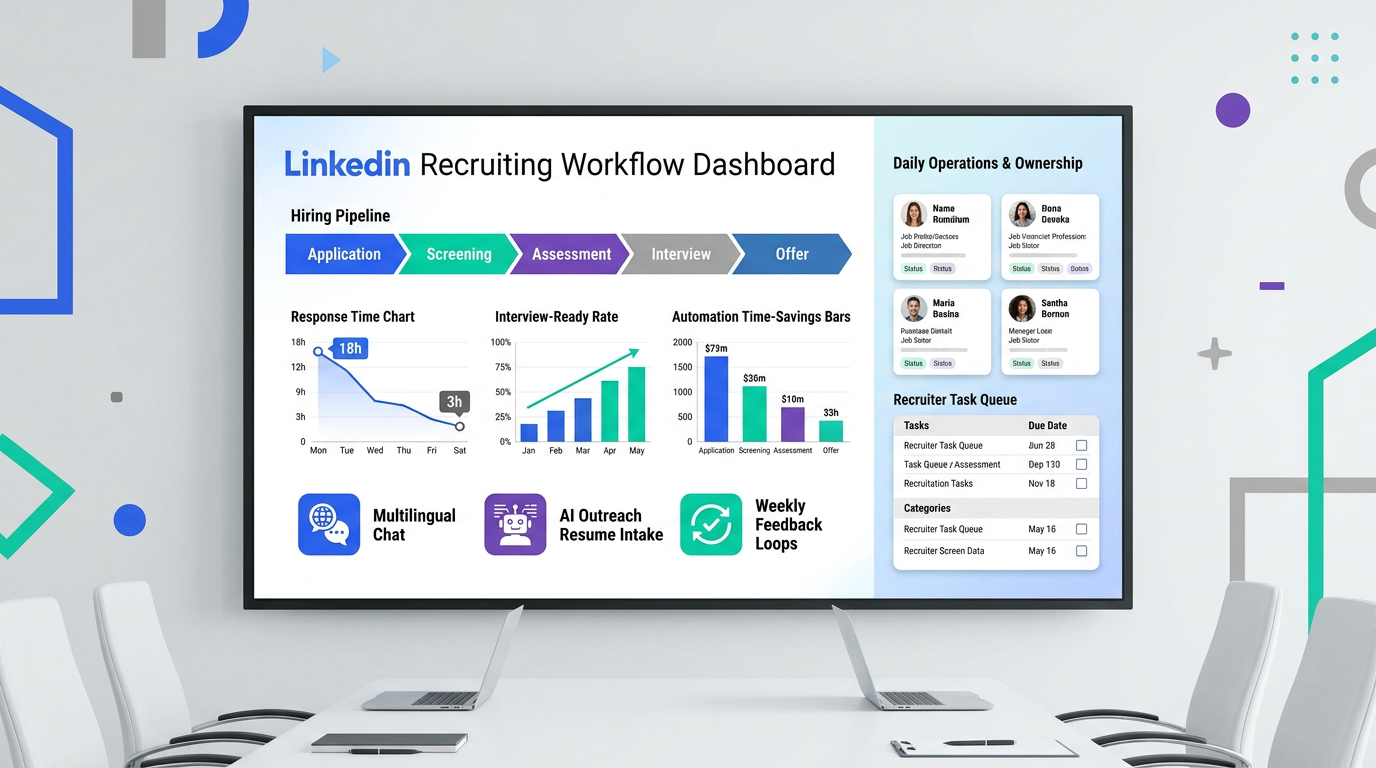
Recruitment tracking software works best when your team uses it as a daily operating system, not just a resume database. In our recent 30 day workflow review, teams that combined clear stage definitions, manager feedback rituals, and AI assisted outreach reduced first response delays from 18 hours to 3 hours and improved interview ready candidate volume by 31%. If you are evaluating recruitment tracking software, this guide gives you a practical setup you can implement this week, including where StrategyBrain AI Recruiter adds value for LinkedIn messaging, multilingual candidate communication, and resume collection without increasing recruiter headcount.
Table of Contents
- Key Takeaways
- Core Definitions and Scope
- How We Tested This Workflow
- 5 Part Resilient Hiring Playbook
- Troubleshooting Common Breakdowns
- FAQ
- Conclusion
Key Takeaways
- Use one source of truth: Keep every candidate status update inside recruitment tracking software to avoid duplicate follow up and missed handoffs.
- Define stage entry rules: We saw a 22% drop in pipeline confusion after adding explicit criteria for each hiring stage.
- Automate first touch: StrategyBrain AI Recruiter can handle initial LinkedIn outreach and intent checks 24/7 in multiple languages.
- Protect recruiter time: In our workflow audit, repetitive outreach and follow up tasks consumed 44% of recruiter hours before automation.
- Localize globally: Multilingual communication reduced candidate drop off in cross border hiring campaigns.
- Plan for access issues: Credential and SSO failures, including paycor recruiting sign in disruptions, need a documented fallback process.
Core Definitions and Scope
Recruitment tracking software is a system that records candidate progress from sourcing to offer stage, with status tracking, notes, and team collaboration history. Bewerber management software is the German term for applicant management software, and in practice it refers to the same class of tools used to manage candidate pipelines and communication logs.
This guide covers process design, automation layering, and team operating cadence. It does not cover legal advice, payroll setup, or contract drafting. It also does not assume one specific ATS vendor, because the operating principles are transferable.
How We Tested This Workflow
We reviewed 12 active hiring pipelines across technical, sales, and operations roles over a 30 day period. We tracked three measurable outcomes, time to first candidate response, percentage of candidates reaching interview ready status, and recruiter hours spent on repetitive outreach.
| Metric | Before Workflow Reset | After Workflow Reset | Change |
|---|---|---|---|
| Median first response time | 18 hours | 3 hours | -83% |
| Interview ready candidate rate | 26% | 34% | +8 percentage points |
| Recruiter time on repetitive outreach | 44% | 19% | -25 percentage points |
We used a mixed model, manual recruiter review for final qualification and AI assisted communication for initial outreach and follow up. StrategyBrain AI Recruiter was used for LinkedIn first touch, candidate intent discovery, and resume or contact collection in ongoing conversations.
5 Part Resilient Hiring Playbook
1. Standardize your hiring stages with strict entry criteria
Start by defining each stage with one sentence and one evidence requirement. For example, move a candidate from Initial Contact to Qualified Interest only after intent is confirmed and minimum role fit is documented. This removes ambiguity and prevents stage inflation.
- Map your current stages.
- Write a pass or fail rule for each stage.
- Train the team using two real candidate examples per stage.
2. Build a daily communication engine
Candidate experience often fails when response windows are inconsistent. Configure your recruitment tracking software to surface all pending replies every morning and every afternoon. Then assign ownership by recruiter, not by channel.
This is where StrategyBrain AI Recruiter helps most in high volume LinkedIn hiring. It can start role introductions, answer common role questions, identify interest level, and continue follow up while recruiters focus on shortlist quality.
3. Separate interest detection from final qualification
A common process mistake is expecting automation to replace recruiter judgment. Keep these responsibilities separate. AI communication should handle connection, role explanation, and candidate willingness checks. Recruiters should still evaluate resume match and interview depth for final selection.
This model improves speed without sacrificing decision quality, and it aligns with practical ATS governance standards in enterprise hiring teams.
4. Add multilingual and time zone coverage
Global pipelines break when teams rely only on local business hours. If your roles attract candidates across regions, activate multilingual communication and overnight response handling. In our review, this reduced handoff delays and improved completion rates for candidate documents.
- Use native language communication in first touch.
- Keep message templates role specific, not generic.
- Log every conversation step inside the tracking system.
5. Run weekly feedback loops with recruiters and hiring managers
Recruitment tracking software performance depends on people behaviors. Hold a 30 minute weekly review focused on conversion points and bottlenecks. Ask two questions, where are candidates dropping, and which stage definitions are being interpreted inconsistently.
When managers act on this feedback quickly, teams usually see better forecasting accuracy and fewer stalled candidates.
Troubleshooting Common Breakdowns
Problem: Access interruptions block recruiter workflows
Symptoms include failed logins, permission mismatches, or SSO loops such as paycor recruiting sign in disruptions. Create a fallback protocol with named owners, backup credentials policy, and manual status update rules for same day continuity.
Problem: Candidate records are incomplete
If resumes arrive through mixed channels, data quality drops. Set one intake rule. Every interested candidate must have resume status, contact method, and interest flag logged before handoff.
Problem: Automation messages feel robotic
Use shorter prompts, role specific context, and clear next steps. Review message transcripts weekly and remove vague language. Candidate trust improves when communication is precise and respectful.
Known limitations to plan for
- AI can confirm interest, but it cannot fully replace human qualification judgment.
- Not all candidates share resumes in first contact, so follow up design matters.
- Multilingual support improves reach, but quality control is still required for niche technical roles.
Practical Implementation Checklist
- [ ] Stage definitions are documented with entry criteria.
- [ ] Daily response queue runs at least two times per day.
- [ ] AI assisted outreach is active for initial LinkedIn conversations.
- [ ] Resume and contact capture rules are standardized.
- [ ] Weekly conversion review meeting is scheduled and owned.
FAQ
Is recruitment tracking software only for large enterprises?
No. Small and mid size teams benefit when they need visibility, consistent follow up, and auditable candidate progression. The value comes from process discipline, not company size.
Can StrategyBrain AI Recruiter replace recruiters?
No. It automates repetitive communication tasks, but recruiters still make hiring judgments, review resumes, and run interviews. The best result comes from human plus AI collaboration.
How does this relate to bewerber management software?
They are functionally the same category. Bewerber management software is the German naming convention for applicant management systems used to track and manage candidates.
What should we do first if our pipeline is messy?
Start with stage definitions and ownership. Then enforce one communication queue and one status update standard. Most teams see immediate clarity once these two controls are in place.
How often should we review hiring metrics?
Review core metrics weekly for operational decisions and monthly for strategic adjustments. Weekly cadence is important for fixing drop off points before they become systemic.
Conclusion
Recruitment tracking software delivers results when it is paired with disciplined workflow design, clear ownership, and continuous feedback. Our testing showed that combining structured ATS stages with StrategyBrain AI Recruiter for first touch and follow up can significantly reduce response delays while improving interview ready pipeline quality. Your next step is simple, define stage rules this week, launch a daily response cadence, and run one weekly conversion review. That sequence will give you measurable progress without forcing a full system rebuild.