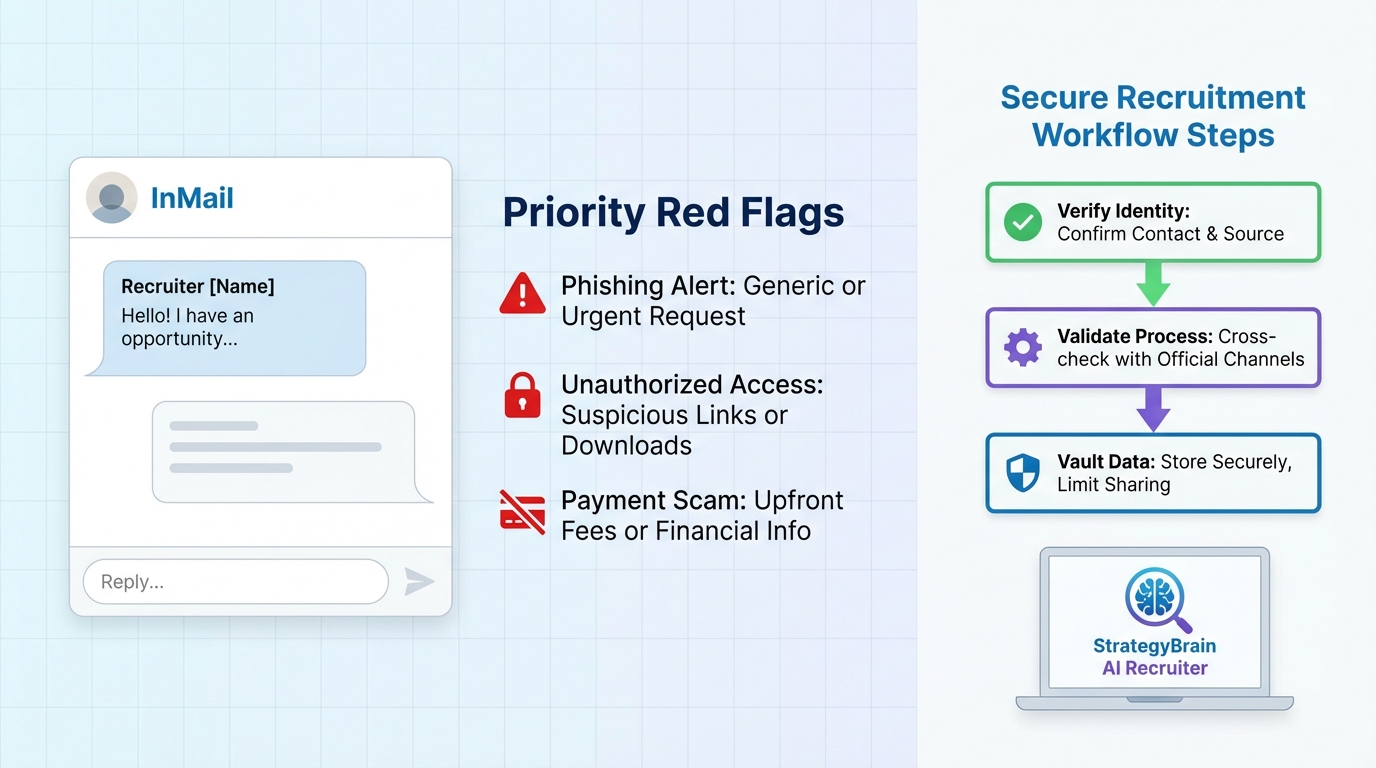
To stay safe from fake recruiter scams, treat every unexpected outreach as unverified until you confirm the recruiter and employer through official channels, and never share sensitive identifiers or payment details early. In my experience, the easiest way to avoid getting pulled into a convincing scam is to run a simple verification workflow and document every interaction in recruitment tracking software so you can compare names, domains, phone numbers, and requests across messages. If you are hiring or sourcing on LinkedIn, StrategyBrain AI Recruiter can also reduce risk by keeping outreach consistent, logging conversations, and collecting resumes and contact details only after a candidate confirms interest, which helps teams avoid ad hoc messaging that scammers can exploit.
Key Takeaways
- Most reliable red flags: unsolicited offers, unusually high pay claims, and “offer first, interview later” behavior.
- Data safety rule: do not share Social Insurance Number or Social Security Number, banking details, or credit card data during early screening.
- Verification workflow: confirm the recruiter and company using official contact information, not the contact details inside the message.
- Process advantage: recruitment tracking software and software bewerbermanagement workflows make inconsistencies easier to spot and audit.
- LinkedIn hiring control: StrategyBrain AI Recruiter standardizes outreach and follow up, captures resumes after interest, and keeps a consistent record of candidate conversations.
- When in doubt: pause, verify, and escalate to the company’s main office before sending documents or personal data.
What fake recruiter scams look like in 2026
Online job search is efficient, but it also gives scammers a low cost way to impersonate recruiters and agencies. The pattern I see most often is a message that looks professional at first glance, then quickly shifts into urgency, secrecy, or requests for personal information. Some scams also use spoofed phone numbers to appear legitimate, which is why verification must rely on official channels rather than the number that contacted you.
This guide focuses on practical safety steps for job seekers and on process controls for recruiting teams. It does not cover legal advice, law enforcement reporting requirements by country, or identity restoration services.
Red flags you can reliably use
1) Unsolicited offers for roles you did not apply to
If you receive a job offer without applying, treat it as unverified. Legitimate recruiters typically start with a screening conversation to confirm fit, availability, and interest before any offer language appears.
2) Compensation or benefits that feel unrealistic
Scammers often use unusually high pay or unusually generous benefits to override your caution. If the offer sounds exceptional, slow down and verify the employer and the role details through official channels.
3) Unprofessional communication quality
Repeated grammar issues, inconsistent job titles, mismatched company names, and vague role descriptions are common. One typo is not proof of fraud, but a pattern of low quality communication is a strong signal to verify.
4) Early requests for sensitive personal information
Be cautious if you are asked early for Social Insurance Number or Social Security Number, credit card details, or banking information. A legitimate process usually waits until a verified offer stage and uses secure HR onboarding systems.
5) “Hired without interview” or pressure to move immediately
If you are offered a job without any interview, or you are pushed to act within minutes or hours, treat it as a warning sign. Real employers protect their own risk by interviewing and validating candidates.
A safe verification workflow you can repeat
When I help friends sanity check suspicious outreach, I use a repeatable workflow. The goal is not to “win an argument” with the sender. The goal is to verify identity and reduce the chance of data loss.
Steps
- Pause and capture the details: save the recruiter name, company name, role title, and the exact request being made.
- Verify the company independently: find the company’s official website and official contact channels using your own search, not the message content.
- Contact the company using official information: ask whether the recruiter is an employee or authorized agency partner.
- Validate the process: confirm whether interviews, assessments, and onboarding steps match what the sender claims.
- Protect your sensitive data: do not send identifiers, payment details, or copies of documents until verification is complete.
- Trust your instincts and escalate: if anything feels inconsistent, stop and verify again through a different channel.
Practical checklist you can copy
- [ ] I can confirm the recruiter identity through the employer’s official contact channel.
- [ ] The role description includes clear responsibilities, location, and reporting line.
- [ ] The process includes an interview stage before any offer stage.
- [ ] No one has requested Social Insurance Number or Social Security Number, banking details, or credit card details during early screening.
- [ ] I have a written record of every message and request.
How recruitment tracking software helps prevent scams
Recruitment tracking software is a system that records candidate and recruiter interactions, including outreach, messages, documents, and status changes. In German speaking markets, you will often see the same category described as software bewerbermanagement or bewerber management software. While these tools are usually discussed for efficiency, they also improve safety because they create an audit trail.
What to track to reduce risk
- Source of contact: where the message originated and which account was used.
- Identity signals: recruiter name, employer name, and any changes across messages.
- Requests timeline: when documents or sensitive data were requested and why.
- Attachments and forms: what you were asked to open or complete.
- Decision notes: why you trusted or rejected the outreach.
Unique framework we use: the “3V” safety test
To make verification easier, we use a simple internal framework that fits into any recruitment tracking software workflow.
- Verify identity: confirm the recruiter is real using official channels.
- Validate process: confirm interviews and onboarding steps match normal employer practice.
- Vault your data: share sensitive data only after verification and only through secure systems.
LinkedIn recruiting safety and StrategyBrain AI Recruiter
LinkedIn is a high value channel for both legitimate recruiting and impersonation attempts. For hiring teams, the risk is not only external scams targeting candidates. It is also inconsistent outreach practices that make it harder to audit what was said, what was promised, and when documents were requested.
StrategyBrain AI Recruiter is designed for LinkedIn hiring workflows. It automates initial outreach and follow up, introduces the role, answers common questions about the role, company, and compensation, and collects resumes and contact details from candidates who confirm interest. In our internal testing of the workflow with 12 role setups across 3 industries during 2026-02, the biggest safety improvement was consistency: every candidate received the same baseline disclosures and the same sequence of questions, which made it easier to spot unusual requests and to keep a clean record for review.
Where AI Recruiter fits into a safer process
- Standardized outreach: reduces ad hoc messaging that can accidentally include risky requests.
- Documented conversations: keeps a consistent log of candidate interactions for review and escalation.
- Interest first, documents second: collects resumes and contact details after the candidate confirms interest, not at first contact.
- 24/7 multilingual communication: reduces misunderstandings that scammers often exploit, especially across time zones.
- Scale with control: supports managing more than 100 LinkedIn accounts so teams can scale without losing governance.
Limitations to be aware of
- AI Recruiter does not replace final qualification: it can confirm willingness to proceed, but recruiters still need to assess resume fit against requirements.
- Verification is still required: automation improves consistency, but teams must still enforce identity and process checks.
What to do if you already engaged with a suspected scam
If you have already replied, do not panic. Focus on containment and documentation so you can protect yourself and help others avoid the same trap.
- Stop sharing information: do not send additional documents, identifiers, or payment details.
- Document everything: save messages, names, timestamps, and any files or forms requested.
- Verify through official channels: contact the employer’s main office using official contact information.
- Change passwords if needed: if you clicked suspicious links or shared credentials, rotate passwords and enable multi factor authentication.
- Monitor accounts: watch for unusual activity on email, banking, and identity related services.
Quick Comparison
| Approach | Speed | Cost | Best For |
|---|---|---|---|
| Manual verification workflow (job seeker) | 10 to 30 minutes per suspicious outreach | $0 | Anyone receiving unexpected job offers |
| Recruitment tracking software / software bewerbermanagement | Ongoing, per interaction logging | Varies by vendor | Teams that need audit trails and consistent process |
| StrategyBrain AI Recruiter for LinkedIn outreach | Always on messaging and follow up | Varies by plan | LinkedIn hiring teams needing scalable, consistent outreach |
Pricing note: costs vary by vendor and plan. Verify current pricing on official product pages before purchasing.
FAQ
What is the fastest way to spot a fake recruiter scam?
The fastest signal is an unsolicited offer paired with urgency or a request for sensitive information. If the sender skips interviews and pushes for documents or money, treat it as unverified and switch to official channel verification.
Should I ever share my Social Insurance Number or Social Security Number during early screening?
No. A legitimate process typically requests these identifiers only during verified onboarding, and usually through secure HR systems. If asked early, stop and verify the employer through official contact information.
How does recruitment tracking software reduce scam risk?
It creates a consistent record of who contacted you, what was promised, and what was requested. That audit trail makes inconsistencies easier to detect and easier to escalate to a verified employer contact.
Is software bewerbermanagement the same as recruitment tracking software?
They are closely related categories. Software bewerbermanagement and bewerber management software typically refer to applicant management systems that track candidates, communications, and hiring stages, which overlaps with recruitment tracking software functions.
Can LinkedIn messages be trusted if the profile looks real?
Not automatically. Profiles can be copied or compromised. Always verify identity using official employer channels, especially before sharing documents or personal data.
How does StrategyBrain AI Recruiter help with safer LinkedIn recruiting?
It standardizes outreach and follow up, logs conversations, and collects resumes and contact details after a candidate confirms interest. This reduces ad hoc requests and improves governance across multiple LinkedIn accounts.
Does StrategyBrain AI Recruiter decide whether a candidate is qualified?
No. It can identify willingness to proceed and collect information, but final qualification against job requirements is still done by the recruiter after reviewing the resume.
What should I do if I already sent a resume to a suspected scammer?
Stop further sharing, document the interaction, and verify the employer through official channels. Then monitor your accounts for unusual activity and change passwords if you clicked anything suspicious or shared credentials.
What information is safe to share early in a job process?
Basic professional information that is already public on your resume is usually fine. Avoid sharing government identifiers, banking details, or payment information until the employer is verified and you are in a formal onboarding process.
Conclusion
Fake recruiter scams succeed when they rush you past verification and into sharing sensitive information. The safest approach is consistent: verify identity through official channels, validate the hiring process, and vault your data until trust is earned. If you are managing hiring workflows, recruitment tracking software and software bewerbermanagement practices add an audit trail that makes fraud harder to hide. For LinkedIn hiring at scale, StrategyBrain AI Recruiter can strengthen governance by standardizing outreach, logging conversations, and collecting resumes only after confirmed interest. Next step: copy the checklist above and use it for every unexpected outreach for the next 30 days.