Hi J***a,
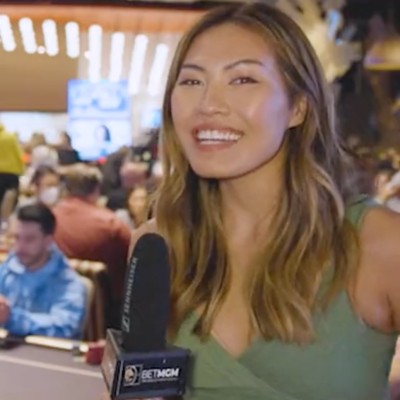
I hope you’re doing well. I came across your profile and was really impressed by your work at B***M,especially your live poker tournament coverage and creative social media posts across Casino, Poker, and Bingo channels. Your on-camera hosting experience and knack for engaging communities would be a perfect fit for a Senior iGaming Content and Social Media Manager role I’m working on at S***e I***e.
I’m J***e, an HR recruiter at StrategyBrain partnering with S***e on this search. Would you be open to a brief chat to explore the opportunity and see if it aligns with your career goals?
Looking forward to hearing from you!
J***e
Hi J***e, thanks for reaching out! I’m intrigued by the Senior iGaming Content and Social Media Manager role,could you share a bit more on the day-to-day responsibilities and team setup at S***e before we schedule a chat?
Hi J***a,
Great to hear you’re intrigued! Here’s a snapshot of what a typical week looks like in our Senior iGaming Content & Social Media Manager role at S***e:
• Content Strategy & Planning
, You’ll map out monthly and quarterly social calendars across our Casino, Poker and Bingo channels.
, Work closely with product and design to align on new game launches, promotions and live-event coverage.
• Asset Production & Oversight
, Brief, review and edit photo/video shoots for live tournaments, influencer partnerships and promo campaigns.
, Partner with our in-house videographer and a freelance photographer network to ensure high-quality, on-brand assets.
• Community Management
, Monitor social channels, respond to player inquiries, and drive engagement through polls, contests and gamified activations.
, Collaborate with our Community Manager to turn feedback into actionable insights.
• Analytics & Optimization
, Dive into platform metrics (engagement, reach, conversions) and deliver weekly performance reports.
, Recommend tweaks to content formats, posting cadence and ad spend.
Team Setup
You’ll report to our Head of Marketing and work alongside a Social Media Specialist, a Community Manager, a Designer, and freelance video partners. Cross-functionally, you’ll liaise with Product, Growth and PR to keep messaging consistent and timely.
Does this align with what you had in mind? If so, I’d love to schedule a quick call to dive deeper and answer any other questions. Let me know your availability!
Best,
J***e
Honestly, at B***M I’m often heads-down executing live-tournament posts and asset shoots but don’t get much input on broader content strategy or collaboration with design/product. I’d love a role where I own the analytics piece to really refine performance and drive meaningful community growth.
Hi J***a,
Thanks for sharing more about your experience and what you’re looking for. At S***e I***e, the Senior iGaming Content & Social Media Manager role is designed to give you strategic ownership and full visibility into performance,exactly the stretch you’re seeking. Here’s how the position aligns with your goals:
1. Analytics Ownership
• You’ll lead weekly and monthly performance deep dives across Casino, Poker, and Bingo channels, using tools like G***e Analytics, native platform insights, and our in-house dashboards.
• You’ll set KPIs, run A/B tests on content formats and posting cadences, and present optimization recommendations directly to senior leadership.
2. Strategic Collaboration
• You’ll co-create the quarterly content roadmap alongside Product and Design, ensuring every new game launch and promotional push is supported by data-driven storytelling.
• You’ll work hand-in-hand with our Community Manager and Social Media Specialist to translate player feedback into fresh content ideas and engagement tactics.
3. Creative & Operational Leadership
• You’ll oversee concepting, scripting, and editing for live tournament shoots and influencer campaigns,guiding both our in-house videographer and a network of freelance talent.
• You’ll mentor a mid-level specialist, helping them grow their creative chops and analytical know-how.
4. Career Growth & Resources
• As a key member of a ten-person marketing team, you’ll have direct exposure to our Head of Marketing and the executive team, positioning you for a future leadership role.
• We provide a competitive salary, performance bonus structure, flexible remote options, and a robust professional development budget for courses and conferences.
Does this sound like the kind of strategic, analytics-driven role you’re after? Let me know if you’d like any more detail or if you’re ready to set up a time for a deeper conversation.
Looking forward to your thoughts,
J***e
Thanks, J***e,this sounds right up my alley. Could you share the current team size and who I’d report to, and what success looks like in the first six months?
Hi J***a,
Great questions! Here’s a quick overview:
1. Team & Reporting
- You’ll sit on our ten-person Marketing team, working most closely with a Social Media Specialist, a Community Manager and an in-house Designer.
- You’ll also partner regularly with our videographer and a pool of freelance video/photo talent.
- You’ll report directly to our Head of Marketing.
2. First-Six-Month Success Framework
• Month 1:
, Deep dive into current content calendars, analytics dashboards and channel performance.
, Align with Product, Design and Growth on upcoming launches and key community priorities.
, Set baseline KPIs (engagement rate, follower growth, response time, etc.).
• Months 2,3:
, Roll out your refreshed content strategy & editorial calendar across Casino, Poker and Bingo.
, Launch your first A/B tests on formats (video vs. static), posting cadence and gamified activations.
, Begin weekly performance syncs with Head of Marketing and the broader team.
• Months 4,6:
, Demonstrate measurable lift (e.g., engagement %, sentiment, community participation) against your baseline.
, Refine your playbook,optimizing creative hooks, live-tournament coverage workflows and influencer collaborations.
, Deliver a comprehensive six-month report with insights, next-quarter roadmap and resource recommendations.
By the end of month six, you’ll have full ownership of the content lifecycle,strategy, execution, analysis,and clear evidence of community growth and brand lift. Let me know if you’d like to dive deeper on any point or schedule our next call!
Best,
J***e
Thanks for the clarity,just curious, what analytics platforms and content-scheduling tools does the team use day-to-day? And roughly what budget flexibility will I have for paid social tests and influencer collabs in those first six months?
Hi J***a,
Great questions,here’s a quick rundown:
1. Analytics Platforms
• G***e Analytics for site-level and campaign tracking
• Native channel insights (M***a Business Suite, X***r Analytics, L***n Analytics)
• Our in-house dashboards that pull in metrics across Casino, Poker and Bingo for real-time monitoring
2. Content-Scheduling Tools
• We maintain a central editorial calendar (managed in A***a) to align on themes, launches and assets
• For actual post scheduling, we leverage native schedulers (e.g. M***a Business Suite) alongside S***t S***l to queue, preview and batch-publish across platforms
3. Budget Flexibility (First Six Months)
• You’ll have a dedicated testing pool,roughly $8K,12K/month,for paid social experiments
• We typically earmark $5K,10K/month for influencer and partner collaborations
• As you demonstrate lift in engagement and ROI, you’ll have the autonomy to reallocate or expand those funds in collaboration with our Head of Marketing and Finance
Hope this gives you a clear sense of the tools and resources you’ll have. Let me know if you’d like to dive deeper or set up a call to chat through any of these points!
Best,
J***e
Thanks, J***e,that’s super helpful. A couple quick ones: how granular are your in-house dashboards (e.g., do they pull in player LTV/CRM data)? And how often do you revisit that $8K,12K monthly test budget (formal reviews or more ad hoc)?
Hi J***a,
Great questions,here’s some more color on both:
1. Dashboard Granularity
• Our in-house dashboards pull in player-level CRM and LTV data (new vs. reactivated vs. VIP segments), deposit/ wager behavior and campaign attribution.
• You can slice by channel, content type, tournament vs. evergreen, time period and even geography. Data refreshes hourly, so you’ll always have up-to-the-minute insights.
2. Budget Review Cadence
• We hold a formal budget review in our monthly Marketing Ops meeting, where you’ll present test results vs. KPIs and propose any reallocations.
• Between those meetings, you have the flexibility to shift funds ad hoc,if a particular ad creative or influencer collab is outperforming, you can reallocate immediately without waiting for month-end.
Let me know if you’d like to set up a quick call with our Head of Marketing (and analytics lead) to walk through the dashboard in real time. Happy to coordinate!
Best,
J***e
That dashboard detail is awesome,would I be able to build custom segments (e.g. high-roller vs casual players) or set automated alerts when a KPI falls below a threshold? And when you shift funds ad hoc, do you get real-time burn reports to ensure pacing stays on track, or is there a specific governance around those moves?
Hi J***a,
Absolutely,our in-house dashboard lets you define and save custom segments (high-roller vs. casual, new vs. reactivated, VIP tiers, etc.) and slice performance by those groups. You can also set up automated alerts (email or S***k) to ping you the moment a KPI (engagement rate, deposit volume, conversion, etc.) dips below your chosen threshold. Data refreshes hourly, so you’re never working with stale numbers.
When you shift funds ad hoc, you’ll have real-time burn-rate and pacing reports at your fingertips,our dashboard shows spend vs. budget in live time, with drill-downs by campaign or channel. You’re empowered to reallocate immediately, and then at our monthly Marketing Ops meeting you’ll review pacing, performance, and any proposed budget shifts with the Head of Marketing and Finance. That governance layer ensures transparency without slowing you down.
Would you like to hop on a 15-minute call with our Analytics Lead and Head of Marketing to see a live demo and run through any other scenarios?
Best,
J***e
Great stuff,one more thing: given my live-tournament/community background, does the dashboard pull in social listening or sentiment data alongside KPIs? And when we pivot ad hoc on budget, what’s the typical workflow and who signs off on those adjustments?
Hi J***a,
Great questions,here’s how we handle both:
1. Social Listening & Sentiment
• We pull in real-time social listening data (via our S***t S***l listening suite and partner tools) directly into the same in-house dashboard you use for engagement KPIs.
• You’ll see sentiment scores (positive/negative/neutral), trending keywords, share-of-voice and volume alongside metrics like reach, clicks and conversions,so you can correlate community mood with performance.
2. Ad-hoc Budget Workflow & Sign-off
• You have the autonomy to reallocate within your $8K,12K/month test pool right in the dashboard. As soon as you trigger a shift, Head of Marketing and Finance get a real-time notification.
• For routine moves (under 20% of a channel’s monthly budget), you can go live instantly. Any larger reallocation simply requires a quick S***k or email sign-off from our Head of Marketing.
• All adjustments,big or small,are then reviewed together at our monthly Marketing Ops meeting for formal alignment and pacing checks.
If you’d like to see this in action, I can set up a 15-minute live demo with our Analytics Lead and Head of Marketing. Let me know your availability and I’ll coordinate!
Best,
J***e