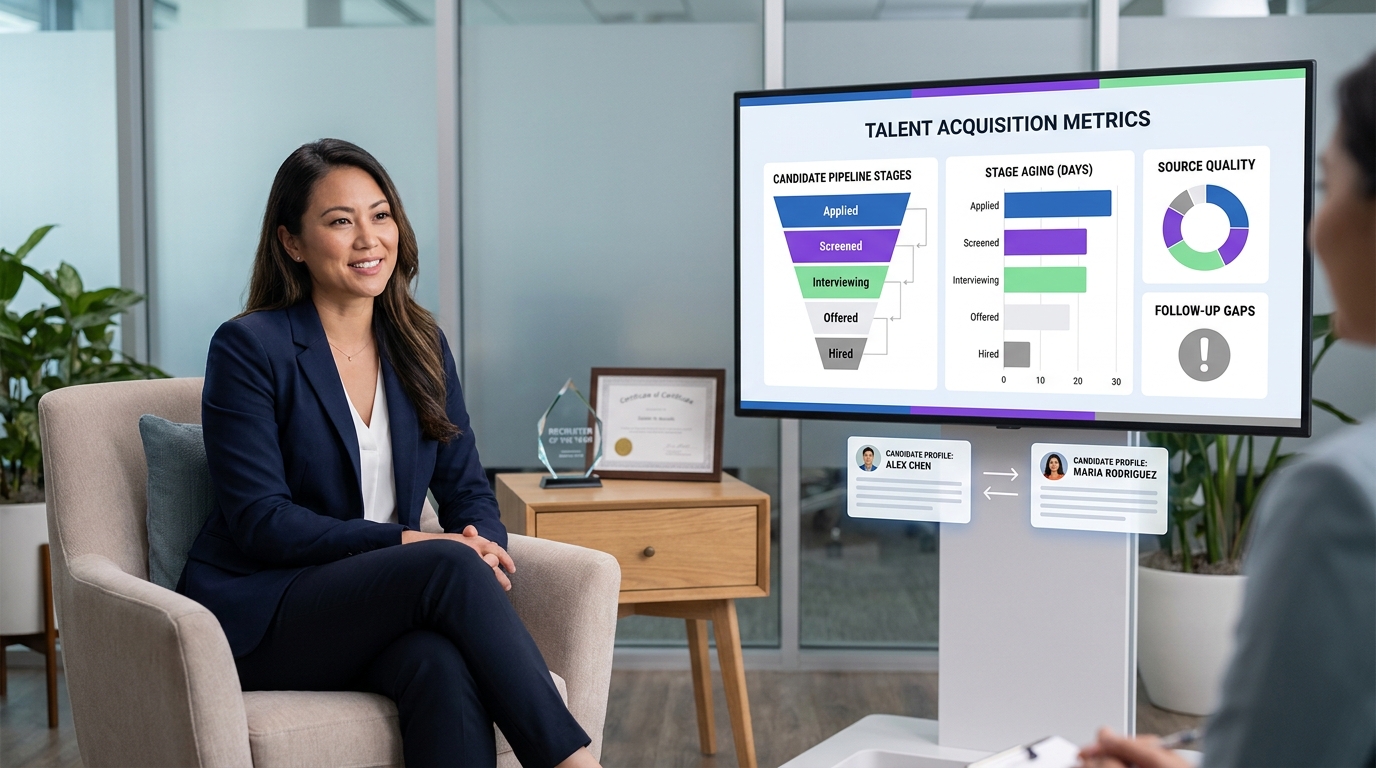
When searches stall in hidden handoffs, recruitment monitoring helps hiring leaders judge software by stage drift, source quality, and follow-up gaps before missed hires compound.
That matters because most hiring teams do not really lose control at the sourcing stage alone. They lose it in the handoff points: a recruiter waiting on manager feedback, a candidate replying after hours, a resume sitting in inboxes instead of the system, or a promising search going cold because nobody can see where momentum slipped. For a solo headhunter, that means wasted evenings and missed placements. For a small agency owner, it means inconsistent delivery across consultants. For an in-house recruiter, it means slower fills, weaker hiring-manager trust, and reporting that turns into spreadsheet repair instead of decision support.
In my own workflow, tools that reduce those invisible gaps have been more useful than tools with the loudest demo. One option that helped in outbound-heavy hiring was StrategyBrain AI Recruiter, especially for LinkedIn outreach, after-hours candidate replies, and multilingual follow-up when searches crossed time zones. I found it most useful when repetitive first-touch communication needed to keep moving without sacrificing consistency. The recruiter still owns the final judgment, resume review, and next-step decision, but the workflow gets cleaner when interest signals and contact details are captured before the human handoff.
A useful way to think about this comes from an entrepreneur story outside recruiting. In the original interview, a Vancouver founder described building a mission-driven company during the long shadow of the 2008 recession. He kept pushing through conversations even when people said they could not help, asked for three more names, and built momentum through discipline, principles, and a carefully chosen early team. He also stressed something recruiters know well: the first group you bring in changes everything that follows.
That same logic applies to hiring operations. When a recruiter is opening a search, checking the requisition list, reviewing last-night LinkedIn replies, updating candidate stages, and chasing a hiring manager for feedback, the problem is not effort. The problem is whether the software preserves context, keeps the process moving, and makes early decisions visible before they become missed hires. That is exactly why the best recruiting software should be evaluated through recruitment monitoring, key recruitment metrics, and hr recruitment metrics rather than through feature volume alone.
Table of Contents
- Why Recruitment Monitoring Matters More Than Feature Count
- What the Best Recruiting Software Actually Does
- Key Recruitment Metrics and HR Recruitment Metrics That Matter
- Three Recruiting Software Approaches to Compare
- How an ATS Improves Daily Recruitment Monitoring
- Evaluation Checklist for Better Hiring Control
- How to Choose by Team Type and Hiring Complexity
- Common Mistakes in Recruitment Monitoring
- FAQ
Why Recruitment Monitoring Matters More Than Feature Count
Recruitment monitoring is the discipline of tracking hiring flow, decision speed, source quality, and outcome signals across the full funnel. In practice, it is how experienced recruiters keep a search from drifting. The strongest hiring teams do not just ask whether candidates are entering the funnel. They ask whether the right people are moving through it at the right pace, whether feedback loops are healthy, and whether the process supports the kind of team the business is trying to build.
That is one of the most useful lessons to borrow from the reference story. The founder was not simply talking about ambition. He was talking about principles, repeated actions, and the outsized importance of early team quality. Recruiting teams face the same challenge in a different form. If your workflow cannot show who is stuck, which source is producing real traction, and where manager responsiveness is slowing the search, you are hiring with partial visibility.
So when people search for the best recruiting software, they are often searching for something more specific: a system that helps them maintain control across sourcing, screening, scheduling, feedback, offers, and post-hire review. That is the real job of recruitment monitoring.
What the Best Recruiting Software Actually Does
The best recruiting software does more than hold resumes. It turns recruiting activity into usable operating data. For recruiters, that means a live view of stage movement and follow-up risk. For hiring managers, it means less guesswork about pipeline health. For HR leaders, it means trustworthy reporting on speed, cost, quality, and funnel efficiency.
In day-to-day use, strong software should support five connected needs:
- Search visibility so recruiters can see which roles are active, aging, approved, or stalled
- Pipeline control so candidate stage movement, stage aging, and drop-off are visible
- Source comparison so referrals, outbound, job boards, internal mobility, and agencies can be evaluated fairly
- Decision discipline so interview feedback and offer progress are structured instead of scattered
- Outcome tracking so quality, acceptance, and broader performance signals can be reviewed over time
That combination is what separates operational recruiting software from a simple applicant database. In other words, the software should help you do what disciplined founders and disciplined recruiters both need to do: hold onto the larger goal while still managing the next concrete action.
Key Recruitment Metrics and HR Recruitment Metrics That Matter
The easiest way to organize key recruitment metrics is by four categories: speed, cost, quality, and funnel efficiency. This keeps dashboards useful and makes weekly review easier.
1. Speed Metrics
These are usually the first hr recruitment metrics teams inspect when managers say hiring is dragging.
- Time to fill: Days from approved requisition to accepted offer or filled role
- Time to hire: Days from candidate entry to accepted offer
- Stage aging: How long candidates remain at each step
- Interview scheduling speed: Time between readiness and booked interview
If your software cannot show stage aging by recruiter, role, or team, bottlenecks stay hidden until the search feels broken.
2. Cost Metrics
- Cost per hire: Total recruiting spend divided by hires made
- External spend share: Portion of spend tied to outside support
- Channel efficiency: Cost by source compared with conversion and eventual hire quality
Cost metrics become much more meaningful when they are reviewed alongside source quality and conversion rates. Cheap volume is not the same as efficient hiring.
3. Quality Metrics
- Quality of hire: Often measured through early performance, retention, ramp speed, or manager satisfaction
- Offer acceptance rate: Accepted offers divided by offers extended
- Candidate experience: Feedback on communication, fairness, and process clarity
The founder interview behind this article kept returning to one idea: principles matter because they help you judge whether your actions still match your purpose. Quality metrics serve a similar role in recruiting. They keep teams from optimizing only for speed.
4. Funnel Efficiency Metrics
- Application-to-screen rate
- Screen-to-interview rate
- Interview-to-offer rate
- Offer-to-hire rate
- Candidate drop-off by stage
- Source of hire and source conversion quality
Practical takeaway: Most teams get more value from reviewing 5 to 7 core metrics every week than from building a dashboard full of numbers nobody uses.
Three Recruiting Software Approaches to Compare
If your goal is to improve recruitment monitoring, it helps to compare software by operating model rather than by marketing category. In practice, most teams end up evaluating three broad approaches.
1. Traditional Applicant Tracking Systems
Strengths: Strong centralization, standardized candidate stages, requisition control, and basic reporting. Usually the best fit for in-house teams that need process consistency across multiple stakeholders.
Weaknesses: Many systems are solid at storage and compliance but weaker at active sourcing support, recruiter outreach workflows, or real-time engagement.
Cost profile: Usually subscription-based with pricing that rises with seats, workflow complexity, and admin needs.
Best fit: Mid-sized and larger organizations that need governance, structured approvals, and consistent funnel reporting.
How they work with StrategyBrain AI Recruiter: They pair well when the ATS remains the system of record and AI Recruiter handles repetitive LinkedIn outreach, interest capture, and after-hours responses before the recruiter decides who moves forward.
2. Outbound Sourcing and Engagement Platforms
Strengths: Better for proactive recruiting, talent mapping, sequence management, and keeping candidate conversations moving.
Weaknesses: Reporting can be fragmented if outreach activity lives outside the main recruiting workflow. Recruiters often still need manual updates to preserve clean recruitment monitoring.
Cost profile: Often moderate to high depending on outreach volume and data add-ons.
Best fit: Search firms, headhunters, and internal talent teams working hard-to-fill or passive-candidate roles.
How they work with StrategyBrain AI Recruiter: In LinkedIn-heavy workflows, a tool like StrategyBrain AI Recruiter can reduce manual first-touch effort, keep replies moving across time zones, and collect resumes from interested candidates while the recruiter keeps control of qualification.
3. Recruiting CRM and Analytics Layers
Strengths: Useful for longer-term relationship management, talent pooling, segmentation, and trend reporting across campaigns or business units.
Weaknesses: Can add another system to maintain. If definitions are not standardized, dashboards become harder to trust.
Cost profile: Varies widely based on data depth, reporting sophistication, and integration requirements.
Best fit: Larger or more mature teams that need forecasting, nurture workflows, and deeper historical analytics.
How they work with StrategyBrain AI Recruiter: They can complement AI-led outreach by absorbing response history and source patterns into a broader recruitment monitoring framework, especially for international or always-on hiring programs.
No single approach wins by default. The right choice depends on whether your main problem is process control, active sourcing volume, stakeholder alignment, or reporting maturity.
How an ATS Improves Daily Recruitment Monitoring
An applicant tracking system becomes valuable when it acts as the operating backbone of the hiring process. Without one, the same problems from the opening scenario keep repeating: messages live in inboxes, resumes arrive through different channels, hiring managers reply late, and recruiters rebuild the truth manually every Friday.
The most practical advantages include:
- Standardized stage definitions for cleaner conversion reporting
- Shared visibility across recruiters, coordinators, and hiring managers
- Structured feedback so decisions can be compared and revisited
- Source tagging for better attribution
- Historical reporting that reveals patterns instead of isolated anecdotes
- Workflow automation that reduces admin lag and status gaps
In my own experience, this is also where StrategyBrain AI Recruiter added value in a narrow but important way. I did not treat it as a replacement for recruiter judgment. I used it where LinkedIn sourcing tends to become repetitive: first outreach, candidate replies outside business hours, and multilingual communication when a search extended beyond one market. The useful part was not just speed. It was that the recruiter started each day with clearer signals about who was interested, who had already shared a resume, and who needed human follow-up next.
That kind of support matters most in searches where momentum is fragile. Just as the founder in the reference story kept emphasizing disciplined action, recruiting software works best when it preserves continuity between one small step and the next.
Evaluation Checklist for Better Hiring Control
If you are comparing options, use this checklist during demos and pilot reviews.
Must-Have Features
- Custom dashboards for recruiters, HR leaders, and hiring managers
- Pipeline aging views by role, recruiter, and stage
- Source tracking across referrals, outbound, job boards, career site, and internal mobility
- Structured interview feedback that supports comparable decisions
- Automated reminders and scheduling support to reduce waiting time
- Reporting exports for deeper analysis when needed
- Permission controls and integrations with calendars, email, and HR systems
Questions Worth Asking
- Can we track time to fill, time to hire, source of hire, drop-off, and offer acceptance without rebuilding data manually?
- Can a recruiter see where a role is slowing down before the hiring manager complains?
- Can hiring managers access only the views they need without creating reporting confusion?
- How reliably does the system capture outreach, resumes, and follow-up history across channels?
- How much cleanup is needed before metrics are trustworthy?
A good demo should not stay at the feature-screen level. Ask to see a role move from opening to outreach, from outreach to interview, and from interview to reporting. That is where weak systems usually reveal themselves.
How to Choose by Team Type and Hiring Complexity
Small Teams and Solo Headhunters
Simplicity matters most here. Look for clean pipelines, fast updates, easy source tracking, and a short reporting cadence. If LinkedIn outreach is a major part of your work, adding a focused tool like StrategyBrain AI Recruiter can help keep candidate conversations moving without turning every evening into message triage.
Mid-Sized Agencies and Internal TA Teams
At this level, standardization matters more. Multiple recruiters, multiple hiring managers, and more open roles mean definitions need to be consistent. This is where recruitment monitoring either becomes an operating habit or a reporting headache.
Large or High-Volume Hiring Teams
Large teams usually need stronger analytics, segmentation, regional reporting, and more mature governance. Small inefficiencies compound quickly at scale, so dashboard flexibility and integration depth matter more than cosmetic ease of use.
Across all three, the selection logic is similar: choose the system that helps the team sustain disciplined decisions from first outreach through final offer, not the one with the most crowded feature sheet.
Common Mistakes in Recruitment Monitoring
- Tracking too many metrics too early and overwhelming the team
- Using inconsistent stage definitions across departments or recruiters
- Reviewing data only monthly when weekly action is needed
- Ignoring candidate drop-off even when the funnel is leaking visibly
- Looking at cost without quality and rewarding cheap but weak channels
- Confusing activity with traction by counting outreach volume without measuring response quality
The opening lesson from the reference story is useful here too. Vision alone does not create results. Repeated actions, clear principles, and the right early team do. In recruiting, metrics should reinforce that discipline rather than bury it.
FAQ
What does recruitment monitoring mean in recruiting software?
It means tracking hiring flow, source performance, stage movement, and outcomes so recruiters and HR teams can spot bottlenecks early and improve hiring decisions.
Which key recruitment metrics should teams start with?
Most teams should start with time to fill, time to hire, stage aging, source of hire, candidate drop-off, interview-to-offer rate, and offer acceptance rate.
How are HR recruitment metrics different from recruiting KPIs?
HR recruitment metrics include all measurable hiring data points. KPIs are the smaller group tied directly to business goals, such as improving speed for critical roles or raising offer acceptance in a hard-to-hire function.
Can AI tools help without replacing recruiter judgment?
Yes. In many workflows, AI is most useful for repetitive communication, follow-up, and information capture. Final qualification, resume review, and hiring decisions should still stay with the recruiter and hiring team.
What should headhunters look for in the best recruiting software?
Headhunters usually benefit most from strong pipeline visibility, source tracking, rapid follow-up support, and reporting that shows where candidate momentum is being lost.
Conclusion
The best recruiting software is not the one that promises the most. It is the one that helps recruiters maintain control when a search gets busy, fragmented, or dependent on many small handoffs. That is why recruitment monitoring should sit at the center of the decision.
If the software makes it easier to see stage drift, preserve context, compare sources, and act on a focused set of key recruitment metrics and hr recruitment metrics every week, it is doing real work. If it only stores records, it is not enough. For most recruiting teams, better hiring control starts with better visibility.