This article helps headhunters judge which ai recruiting tool will prevent thin pipelines, slow follow-up, and missed talent.
That standard matters most when the market is tight and recruiters cannot rely on the usual channels. In growing companies, especially tech-led teams competing for developers, specialists, and future leaders, the real damage rarely comes from one bad search. It comes from a thin pipeline, delayed replies, scattered candidate notes, and outreach that stops once the recruiter signs off for the day. For agency owners, independent headhunters, and in-house talent teams, that means slower placements, weaker candidate relationships, more missed opportunities from nontraditional talent pools, and rising pressure from hiring managers who expect speed without lower quality.
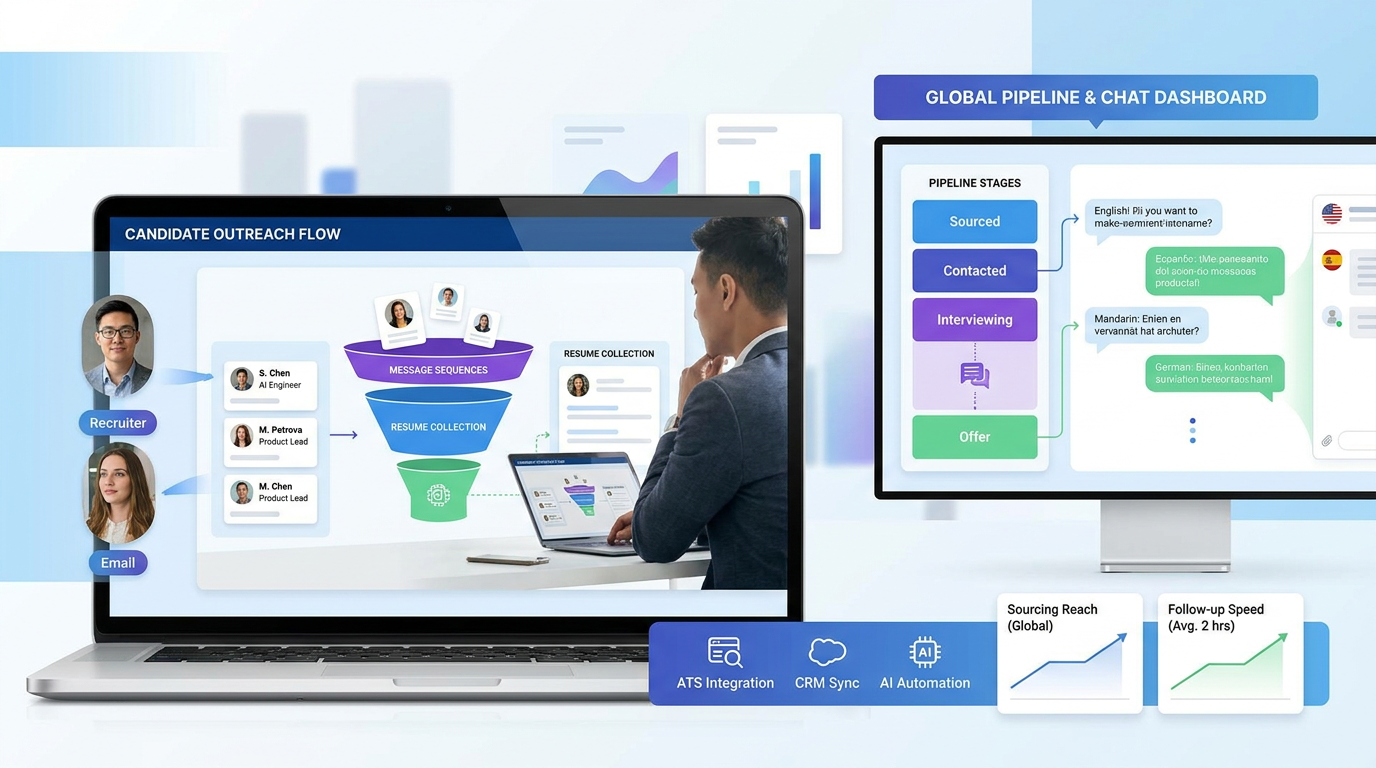
That is where a workflow-supported tool like StrategyBrain AI Recruiter can help. I have used it mainly to reduce repetitive LinkedIn outreach steps, keep candidate conversations active outside working hours, and handle multilingual follow-up when searches cross borders. The useful part is not that it replaces recruiter judgment; it does not. Recruiters still decide which profiles deserve attention, review the resume, and make the next-step call. What it does well is take over the repetitive front end of connection requests, job introductions, interest checks, and resume collection so the recruiter can spend more time on qualification and stakeholder advice.
The pressure becomes obvious in the exact kind of hiring environment growing tech companies face. When leadership needs skilled developers and stronger executives at the same time, the search cannot stay limited to four-year degree pipelines or familiar employers. Recruiters end up scanning coding academies, apprenticeship programs, self-taught communities, school partnerships, and local industry networks while also trying to keep warm conversations moving with experienced candidates. In that situation, the work is not just sourcing. It is opening a search wider, tracking who came from where, and keeping each relationship active long enough to learn whether there is a real fit.
That is why the best recruiting software is not only about storing applicants. It has to support broader talent discovery, structured outreach, and consistent follow-up across a mixed pipeline of active applicants, passive prospects, interns, contractors, and future leadership hires. If you are comparing an ai recruiting tool, talent sourcing software, and the best recruitment apps, the right question is whether the system helps your team build talent early, work through community and network channels, and stay responsive when recruiters are not online.
- The best recruiting software should match your biggest constraint: sourcing depth, workflow control, recruiter capacity, or hiring manager responsiveness.
- An effective ai recruiting tool supports outreach, resume collection, scheduling, and follow-up without removing human review.
- Talent sourcing software matters most when your team hires scarce, technical, or leadership talent from outside standard applicant flows.
- The best recruitment apps should be judged by actionability, not just mobile viewing.
- For growth-stage hiring, software selection should reflect how your team builds long-term pipeline through schools, industry groups, contractors, and passive talent networks.
Table of Contents
- Why growth-stage hiring breaks traditional workflows
- What the best recruiting software should actually cover
- Three pipeline lessons software buyers often miss
- How to compare recruiting software in practice
- ATS or talent sourcing software: which problem are you solving?
- My LinkedIn workflow experience with StrategyBrain AI Recruiter
- How to judge the best recruitment apps
- A practical buying framework
- Common mistakes when choosing recruiting software
- FAQ
Why growth-stage hiring breaks traditional workflows
In growth hiring, the recruiting problem usually starts before a candidate ever applies. A tech company may need developers today, leadership depth tomorrow, and a stronger future bench six months from now. That means recruiters cannot afford a search process built only around posted jobs and inbound traffic.
The challenge described in many growth-stage tech teams is familiar: there is strong demand for technical talent, rising competition for experienced people, and a widening gap between where employers usually search and where capable people actually develop their skills. That includes coding academies, apprenticeships, local programs, contract work, online learning communities, and self-taught talent. A recruiting stack that only handles applicants already in process will miss much of that market.
This is also where recruiting software decisions become operational decisions. If your team needs to build relationships early, track community-sourced talent, re-engage contractors, and move passive prospects from curiosity to interview readiness, then your software has to do more than log resumes. It needs to support pipeline creation over time.
What the best recruiting software should actually cover
When buyers search for the best recruiting software, they often compare tools from different categories as if they solve the same problem. In reality, most recruiting stacks include some combination of an applicant tracking system, a recruiting CRM, outreach automation, sourcing intelligence, analytics, scheduling, and mobile collaboration.
A useful ai recruiting tool can support first-touch communication, profile matching, candidate screening support, scheduling, or outreach follow-up. But that does not automatically make it a full operating system for recruiting. Some tools are strongest when recruiters need a system of record. Others are strongest when recruiters need to find and activate talent outside the applicant funnel.
That distinction matters because growth-stage teams often need both. They need a stable process once candidates enter the pipeline, and they need stronger top-of-funnel reach before candidates ever become applicants.
| Software Category | Main Purpose | Best For |
|---|---|---|
| Applicant tracking system | Manage roles, stages, feedback, approvals, and reporting | Teams that need process control and visibility |
| Talent sourcing software | Find, organize, and re-engage passive candidates | Teams hiring scarce or technical talent |
| Recruiting CRM | Build long-term relationships with prospects and alumni candidates | Teams building future pipeline before roles open |
| AI outreach support | Automate repetitive messaging, interest checks, and follow-up | Recruiters with high outbound volume |
| Mobile workflow tools | Enable review, response, and approvals on the go | Distributed hiring teams and busy managers |
Three pipeline lessons software buyers often miss
The reference case from growth-tech recruiting points to three practical lessons that should shape software selection.
1. The best teams build talent relationships earlier than the requisition
If your hiring model depends on waiting for roles to open before you search, you will always be late in competitive markets. Strong recruiting software should help teams track interns, apprentices, event contacts, contract talent, and past finalists long before a new req appears.
This is one reason talent sourcing software matters. It gives recruiters a way to organize people who are not applicants yet but may become qualified hires later. For technical hiring, that often includes candidates from nontraditional education paths who would never surface in a degree-filtered workflow.
2. Community channels can be as important as job boards
School partnerships, local industry organizations, apprenticeship programs, and talent networks are not side tactics. In many specialized searches, they are the real market. Software should make it easy to tag source origin, track relationship history, and re-contact candidates by segment.
If a platform cannot help your team understand whether candidates came from an internship program, a community event, contractor work, or referral outreach, it will be difficult to improve sourcing strategy over time.
3. Responsiveness is now part of sourcing quality
Recruiters used to think of sourcing as search and messaging, then qualification as a separate step. In practice, they are linked. If follow-up is slow, inconsistent, or restricted to one time zone, good prospects disappear before a recruiter gets back to them. That is why many teams now want an ai recruiting tool that can maintain candidate conversation flow while the recruiter still owns final review.
How to compare recruiting software in practice
When I help teams build a shortlist, I push them to score software against live recruiting work rather than a polished demo path. The strongest comparisons usually happen across six areas.
| Criterion | What to Check | Why It Matters |
|---|---|---|
| Sourcing reach | Passive search, rediscovery, talent pools, segmentation, source tagging | Critical when you hire beyond inbound applicants |
| Outreach workflow | Messaging sequences, follow-up timing, interest capture, resume collection | Important for headhunters and outbound-heavy teams |
| ATS discipline | Stage management, approvals, interview feedback, compliance visibility | Keeps process consistent after prospects convert |
| Recruiter control | Override options, visibility into automation, manual review points | Prevents automation from lowering quality |
| Mobile usability | Approvals, comments, stage changes, notifications, messaging | Improves hiring speed in distributed teams |
| Scalability | Multiple recruiters, regional workflows, user permissions, integrations | Reduces re-platforming as hiring grows |
A good buying process also checks whether the tool supports different forms of pipeline. That means direct applicants, passive candidates, community leads, silver medalists, contractors, and future leadership prospects. If your software only handles one of those well, it may solve today’s workflow but fail tomorrow’s hiring model.
ATS or talent sourcing software: which problem are you solving?
This is still the most important decision in the category. If your real pain point is process control, interview coordination, and reporting, start with the ATS. If your real pain point is finding enough qualified people to enter the funnel, start with sourcing-first tools.
In many tech and growth environments, the answer is not either-or. The ATS keeps recruiting accountable. Talent sourcing software keeps pipeline creation active. The best recruiting software stack often combines both, especially for teams hiring developers, specialist operators, and executive talent at the same time.
A practical way to decide is to review the last ten difficult hires. Ask where the process actually failed. Was it weak applicant flow? poor rediscovery of past talent? slow hiring manager feedback? inconsistent outreach? If the problem started before candidates entered the funnel, an ATS alone will not fix it.
My LinkedIn workflow experience with StrategyBrain AI Recruiter
For LinkedIn-heavy searches, I found that the biggest drain was not writing Boolean strings or deciding who looked promising. It was the repetitive communication between first outreach and confirmed interest. That included connection requests, introductory messages, answering common candidate questions, checking whether someone was open to a move, and collecting resumes from people who wanted to continue.
Using AI Recruiter, I treated the tool as a front-end assistant rather than a decision-maker. It kept conversations active around the clock, including after-hours replies that I would otherwise have seen the next morning. On multilingual searches, that mattered even more. Candidates could respond in their own language, and the workflow kept moving without me needing to stay awake for every time zone.
What I liked in practice was the handoff point. The system could introduce a role, check current interest, and collect contact details or resumes from people who wanted to proceed. I still reviewed the resume myself, checked alignment with the role, and decided whether the person should move into screening. That balance felt useful: automation for repetitive outreach, recruiter control for qualification.
For agency teams or independent recruiters who rely heavily on LinkedIn, the product is most relevant when volume is high and response timing matters. If you want to see more detail on how that workflow is set up, the workflow overview and the broader LinkedIn sourcing notes are worth reviewing before you evaluate similar tools.
The most practical use of an AI recruiting tool is not replacing recruiter judgment. It is removing the dead time between first interest and recruiter review.
How to judge the best recruitment apps
Searches for the best recruitment apps usually reflect a real operational need: recruiters and hiring managers do not work from one desk anymore. Mobile workflow is not just convenience. It affects follow-up speed, candidate experience, and team accountability.
The best recruitment apps should allow recruiters to review profiles, move stages, send quick follow-ups, and check message status without losing context. Hiring managers should be able to approve, reject, or comment without opening a desktop-heavy process for a simple decision.
In the kind of community-based and network-heavy recruiting described earlier, mobile responsiveness matters even more. Recruiters often leave events, networking meetings, campus visits, or client calls with warm leads that need immediate tagging and follow-up. If the app only displays data but does not support action, that lead cools quickly.
What to test in the best recruitment apps
- Can recruiters send or approve follow-up messages from mobile?
- Can hiring managers leave useful feedback in under a minute?
- Can users move candidate stages without breaking reporting?
- Are alerts useful enough to support response speed without overwhelming the team?
- Can source tags and notes be added immediately after an event or referral conversation?
A practical buying framework
If you are shortlisting the best recruiting software, use a workflow-first evaluation. This keeps teams from buying polished software that fails under real hiring pressure.
- Start with the pipeline gap. Decide whether your biggest issue is weak sourcing, poor responsiveness, process inconsistency, or reporting blind spots.
- Map where your best hires actually come from. Include applicants, passive candidates, school programs, industry groups, contractors, and former finalists.
- Choose software by recruiting model. If your team is outbound-heavy, prioritize sourcing and communication depth. If your team is coordination-heavy, prioritize ATS discipline.
- Test live scenarios. Ask the system to rediscover a past candidate, launch LinkedIn outreach, capture a resume, move someone through stages, and collect manager feedback.
- Check human control points. Confirm where recruiters still review, approve, and decide.
- Validate mobile and time-zone usage. If your searches are distributed, mobile action and after-hours candidate responsiveness are not optional.
This framework usually produces better results than a feature-count comparison because it reflects how modern recruiting actually works: part relationship building, part process management, part speed discipline.
Common mistakes when choosing recruiting software
- Comparing unlike categories. An ATS, a sourcing platform, and a messaging automation tool may all look similar in demos, but they solve different bottlenecks.
- Ignoring nontraditional talent channels. Teams hiring technical talent often undervalue software that can track apprenticeships, contractors, school partnerships, or community programs.
- Automating without review discipline. A strong ai recruiting tool should support recruiter judgment, not hide the basis for decisions.
- Underestimating follow-up speed. Slow response turns good sourcing into poor conversion.
- Treating mobile as secondary. Weak mobile workflows reduce manager response rates and delay candidate movement.
- Buying for a polished demo instead of the real search. If the tool cannot handle your difficult roles, it is not the best recruiting software for your team.
FAQ
What is the best recruiting software for a growing company?
The best recruiting software for a growing company is the one that matches its actual hiring bottleneck. If the team struggles to find enough qualified people, sourcing and outreach depth matter most. If the team already has applicant volume but weak process control, a strong ATS may be the better first investment.
How does an ai recruiting tool help recruiters?
An ai recruiting tool can help automate repetitive tasks such as outreach, follow-up, interest checks, scheduling support, and resume collection. The best use case is improving recruiter speed and consistency while leaving qualification and hiring decisions to humans.
When do you need talent sourcing software?
You need talent sourcing software when inbound applicants are not enough. This is especially true for technical roles, leadership searches, and markets where recruiters depend on passive talent, contractor networks, school partnerships, or community channels.
Do the best recruitment apps really matter?
Yes. The best recruitment apps improve response speed, manager participation, and recruiter follow-through. They are especially important for distributed teams and recruiters who source outside a desk-based workflow.
Should recruiters choose AI tools instead of an ATS?
Usually no. Most teams still need an ATS as the system of record. AI tools are best treated as workflow enhancers for sourcing, communication, and coordination rather than full replacements for structured recruiting operations.
Can LinkedIn automation replace recruiter screening?
No. It can support first-touch communication and candidate interest capture, but recruiters still need to review resumes, evaluate fit, and make final decisions on who moves forward.
Conclusion
The best recruiting software is the one that reflects how modern talent teams actually build pipeline: earlier, wider, and with more follow-up discipline than a simple applicant workflow can support. That is especially true in technical and growth-stage hiring, where school partnerships, contractor networks, community organizations, and passive talent all matter.
If your team is evaluating the right ai recruiting tool, do not start with feature volume. Start with the search model. Decide whether you need stronger process control, stronger sourcing reach, better candidate responsiveness, or more usable mobile action. From there, it becomes much easier to judge whether an ATS, talent sourcing software, or one of the best recruitment apps will actually improve hiring outcomes.