Recruiters can use this article to judge recruitment online for recruiters by workflow fit and avoid delays and missed submissions.
When that flow breaks, the damage is rarely limited to admin time. Agency owners lose visibility across open searches, solo recruiters lose momentum with passive talent, and corporate hiring teams lose credibility when candidates wait for updates, interview plans drift, or compensation conversations start without a clear market view. In practice, bad software choices create missed submissions, duplicated outreach, weaker candidate experience, and slower placements.
That is why I now look at automation more narrowly and more practically than I used to. In my own workflow, StrategyBrain AI Recruiter has been most useful when I need help with repetitive LinkedIn outreach, after-hours candidate replies, and multilingual follow-up across time zones. It does not replace recruiter judgment, résumé review, or final qualification. It handles the early communication load so the recruiter can focus on assessing fit, shaping the shortlist, and advising the client or hiring manager on next steps.
The real pressure point appears before any software demo. A recruiter begins with role scoping, tries to define what qualified really means, then translates that into a search plan, outreach sequence, and interview path. At the same time, candidates ask about pay, availability, remote expectations, and process timing. Hiring managers want speed, but they also want judgment. That tension is exactly where recruiter work becomes more than posting jobs or screening résumés.
Once you see recruiting as a chain of interpretation, communication, and decision support, the software question becomes clearer. The best recruiting software is not just a database. It is the system that helps recruiters scope roles, source talent, manage candidate conversations, coordinate interviews, and keep market context attached to every stage. That matters whether your readers are comparing tools for recruitment online for recruiters, researching the best staffing agencies for remote jobs near me, or evaluating recruiting companies in Florida through the lens of operational maturity.
Table of Contents
- Why recruiter work should shape software selection
- What “best recruiting software” really means
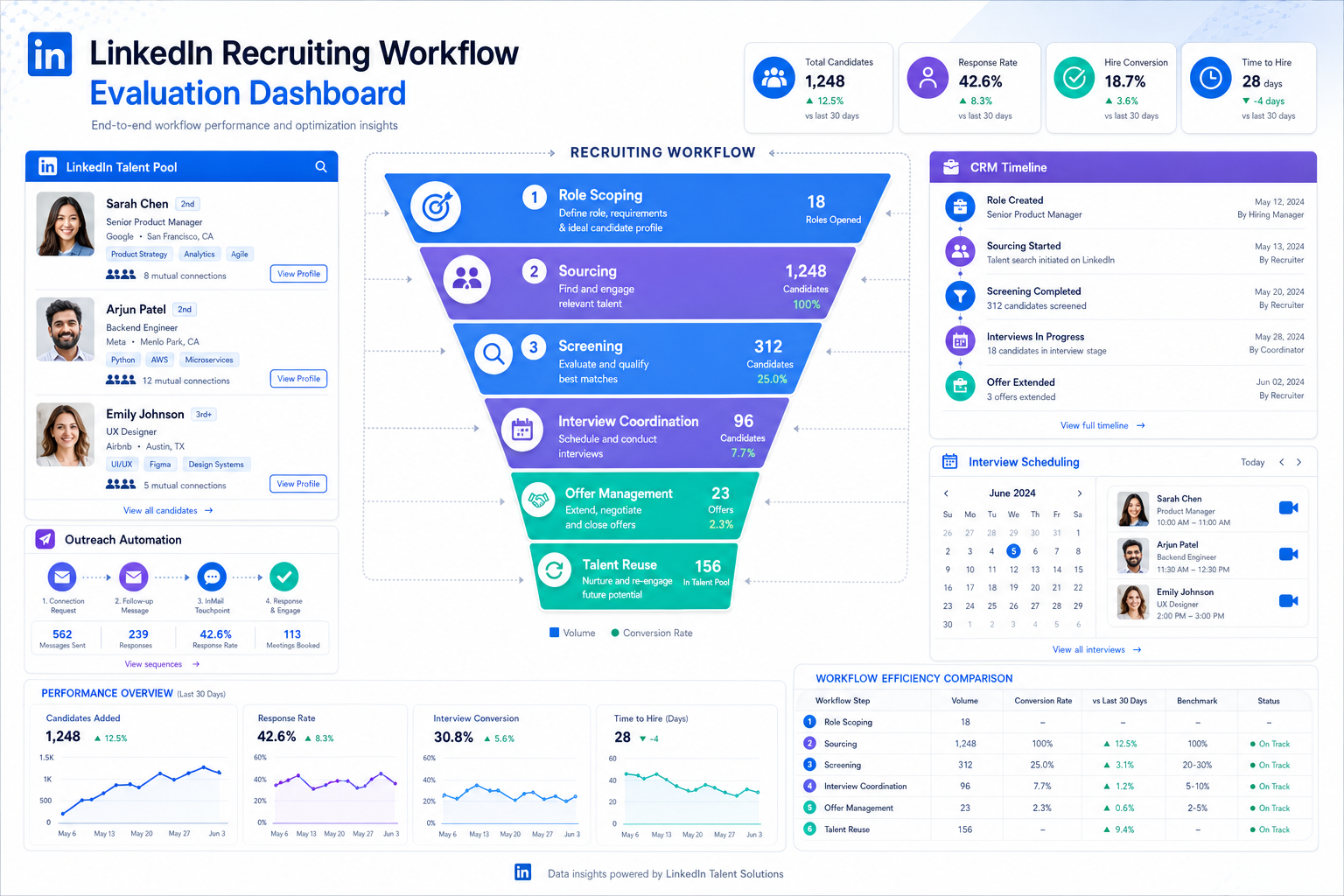
- The core workflow every recruiting system should support
- Quick comparison: how to evaluate platforms
- Where automation helps and where recruiters still decide
- How software supports remote hiring and online recruiting
- How selection changes by staffing model
- How to assess recruiting companies in Florida with a workflow lens
- A practical selection process for agency and staffing teams
- Common mistakes when choosing recruiting software
- FAQ
Why recruiter work should shape software selection
Too many software evaluations start with features and end with frustration because they ignore what recruiters actually do. A recruiter is not just a user moving records from stage to stage. The role includes clarifying job requirements, translating business needs into a candidate profile, sourcing active and passive talent, screening for alignment, advising on compensation and availability, coordinating interviews, and helping employers make tradeoffs when two candidates both look viable on paper.
That matters because the best recruiting software should support the recruiter’s full contribution to hiring, not reduce the job to application storage. If your platform cannot preserve candidate context, track communication history, surface market signals, and support structured follow-up, it gets in the way of the work that actually influences hiring outcomes.
In agency settings, the same principle applies at scale. The agency provides process, accountability, sourcing infrastructure, and specialization. The recruiter provides judgment, relationship depth, and market interpretation. Strong systems support both sides of that equation.
Key insight: Recruiting software works best when it strengthens recruiter judgment instead of forcing judgment outside the system.
What “best recruiting software” really means
The best recruiting software is the system that helps your team move from intake to placement with less friction, better visibility, and fewer handoff errors. For most firms, that means ATS discipline combined with CRM depth rather than a patchwork of separate tools.
From an operating standpoint, “best” should be defined by workflow fit. A retained search consultant, a temp staffing desk, a contract recruiter, and an in-house talent acquisition team all need sourcing, assessment, communication, and stage control, but they do not need the exact same reporting views, automations, or compliance controls.
If your goal is stronger recruitment online for recruiters, the software should improve how you define role criteria, segment talent pools, run outreach, coordinate interviews, capture feedback, and close searches without losing candidate context. A long feature list is secondary if the daily recruiter workflow remains fragmented.
Start your evaluation with three questions:
- Does the system manage candidates, clients, and job orders in one connected workflow?
- Can recruiters preserve notes, market context, and communication history without duplicate entry?
- Will managers get reporting that helps them coach execution and forecast outcomes?
The core workflow every recruiting system should support
When I assess a platform, I map it against the actual sequence of recruiter work rather than the vendor’s menu structure. The system should support at least six connected stages.
1. Role scoping and search calibration
Good recruiting starts with clarifying what success in the role really looks like. Software should let recruiters capture intake notes, preferred backgrounds, compensation expectations, location constraints, and hiring-manager feedback in a way that remains visible throughout the search.
2. Sourcing and talent discovery
Recruiters need fast search, tagging, segmentation, and rediscovery of past candidates. This matters especially when roles are hard to fill or when recruiters need to reach passive candidates who are not actively applying.
3. Screening and candidate assessment
The system should help recruiters document structured screening conversations, not just upload résumés. Transferable skills, communication style, timing constraints, and readiness often matter as much as direct title matches.
4. Interview coordination and stakeholder alignment
Strong software keeps interview steps, feedback requests, and candidate updates moving without hiding responsibility. Recruiters should be able to prepare candidates, remind hiring teams, and interpret feedback against a consistent framework.
5. Offer management and close support
When the market is competitive, timing, compensation expectations, and candidate communication become decisive. Your system should keep those conversations organized and visible.
6. Talent reuse and relationship continuity
One of the biggest long-term gains comes from not losing good candidates who were not selected the first time. CRM functionality should help recruiters re-engage silver-medalist candidates and keep relationship history connected to future openings.
Quick comparison: how to evaluate platforms
Before sitting through demos, create a shortlist based on recruiter reality. Ask each provider to walk through one live scenario such as a remote direct-hire role, a repeat client order, or a search with passive candidates and multiple stakeholders.
| Evaluation Area | Why It Matters | What Recruiters Should Ask |
|---|---|---|
| ATS + CRM workflow | Keeps candidate, client, and job activity connected | Can we run the full desk from intake to placement in one system? |
| Search and talent reuse | Improves sourcing efficiency over time | How easy is it to tag, segment, search, and reactivate candidates? |
| Screening support | Preserves recruiter judgment inside the workflow | Can we capture structured notes, feedback, and fit signals cleanly? |
| Outreach automation | Reduces repetitive manual communication | Can recruiters automate follow-up without losing control of tone or timing? |
| Interview coordination | Prevents delays and dropped candidates | Does it support remote scheduling and stakeholder alignment? |
| Reporting and attribution | Supports desk management and forecasting | Can managers see source quality, stage conversion, and recruiter activity? |
| Integrations | Protects workflow continuity | Will it connect with email, calendar, HR, payroll, or collaboration tools? |
| Compliance support | Reduces process risk | How does it handle records, consent, and regional requirements? |
| Remote hiring readiness | Critical for distributed recruiting | Can it support remote communication, scheduling, and follow-up at scale? |
Where automation helps and where recruiters still decide
Technology can support recruiting, but it should not blur the line between assistance and judgment. The strongest systems reduce repetitive work while leaving the recruiter responsible for interpretation, qualification, and hiring advice.
That distinction matters in everyday desk work. Early outreach, candidate replies, résumé collection, scheduling prompts, and multilingual follow-up can consume hours without necessarily requiring senior recruiter attention. Candidate fit assessment, shortlist decisions, search recalibration, and offer strategy still do.
In my own process, I have found AI Recruiter most useful on searches where LinkedIn outreach volume is high and candidate response windows stretch into evenings or other time zones. It can initiate conversations, introduce the opportunity, answer common role questions, and collect résumés or contact details from interested candidates. That removes a lot of repetitive front-end handling. What it does not do, and what I would not want it to do, is make the final call on whether a résumé truly fits the role. I still review the profile, compare it against the brief, and decide who moves to shortlist or interview.
That balance is especially helpful for smaller firms and individual headhunters. You get process relief without giving up the part of the job that actually differentiates a good recruiter: evaluating tradeoffs, probing for alignment, and advising clients when the market does not match the original job spec.
How software supports remote hiring and online recruiting
The phrase recruitment online for recruiters points to a fully digital operating model, not just job posting. It includes online sourcing, pipeline nurturing, structured follow-up, remote interview coordination, candidate preparation, and ongoing communication with both employers and talent.
This is where the overlap with search behavior like best staffing agencies for remote jobs near me becomes important. That query often mixes local trust with remote opportunity. Some searchers want a nearby agency. Others simply want a recruiter who can manage a remote process well. In both cases, process quality matters more than geography alone.
Features that matter most for remote recruiting workflows:
- Centralized pipeline visibility so recruiters can prioritize quickly
- CRM capability for follow-up and candidate rediscovery
- Digital outreach tools for consistent communication across channels
- Scheduling support that reduces friction across locations and time zones
- Reporting dashboards to track source quality and conversion
- Candidate communication history so context is not lost between stages
For recruiters handling remote work, software should also support the market-advisory side of the job. Candidates want clarity on location expectations, availability, process timing, and compensation. Hiring teams want realistic feedback on candidate movement and competitive pressure. If your system cannot keep those conversations attached to the record, remote hiring becomes harder than it needs to be.
How automation can ease remote communication load
One practical lesson from LinkedIn-heavy workflows is that candidate replies rarely arrive on the recruiter’s schedule. When I have used StrategyBrain AI Recruiter in live sourcing work, the benefit was not just speed. It was continuity. Interested candidates could respond after hours, ask follow-up questions, and share contact details without the conversation going cold overnight. For remote or international searches, that continuity matters. The recruiter still owns final screening and next-step decisions, but the top of funnel stops leaking attention.
How selection changes by staffing model
Different recruiting models need different workflow depth. That is one reason buyers struggle to identify the best recruiting software.
Agency recruiters
Agency teams usually need stronger candidate-client-job connectivity, faster search, better submission tracking, and clearer recruiter activity reporting. Because agency recruiters often run multiple searches at once, the system has to support context switching without losing detail.
In-house recruiters
Corporate teams often need closer alignment with hiring managers, internal approvals, and employer branding workflows. Their systems should support long-term workforce planning as well as immediate hiring execution.
Executive recruiters
Senior searches typically require discretion, tighter stakeholder control, and more nuanced candidate assessment notes. CRM history and confidential workflow handling become more important.
Contract or embedded recruiters
These recruiters need speed, transparency, and clean integration into an existing process. Their value often depends on how quickly they can understand business priorities and start producing usable candidate flow.
Practical takeaway: define whether your desk is primarily permanent, contract, temp, executive, or mixed before scoring systems. Workflow fit matters more than generic versatility claims.
How to assess recruiting companies in Florida with a workflow lens
Searches for recruiting companies in Florida often look local on the surface, but the real buyer intent is usually broader. Employers want to know whether a firm covers the right cities, understands the industry, communicates clearly, and can move candidates through the process reliably.
Whether you are evaluating firms in Miami, Tampa, Orlando, Jacksonville, or statewide, the better question is not simply who has a local office. It is whether the firm appears to have the operational discipline to define role requirements well, source intelligently, manage candidate communication, and keep hiring managers aligned.
Questions to ask when evaluating recruiting companies in Florida:
- Do they clearly explain whether they focus on direct hire, contract, temp, or executive search?
- Can they support remote and hybrid hiring as well as local placement?
- Do they show industry or functional specialization?
- How structured is their communication with clients and candidates?
- Do they appear organized enough to manage screening, interviews, and follow-up consistently?
This is also where software maturity becomes visible from the outside. Firms with fragmented systems often show slower response times, inconsistent updates, and weaker stage control, even if their sales presence looks polished.
A practical selection process for agency and staffing teams
If you want to choose the best recruiting software without wasting time, run a structured review process based on recruiter work rather than vendor storytelling.
- Map the real workflow. Document intake, sourcing, screening, candidate communication, interviews, offers, and placement tracking.
- List the decision points. Identify where recruiter judgment matters most, such as fit assessment, shortlist review, or compensation guidance.
- Separate repetitive work from high-value work. This helps you see where automation can help without undermining recruiter quality.
- Test remote-readiness. If your team supports distributed hiring, review scheduling, communication continuity, and candidate visibility.
- Ask for role-based demos. Recruiters, managers, and operations leads should each test their own workflow.
- Check reporting against live questions. Do not settle for dashboards that look polished but cannot answer operating questions.
Sample scorecard categories:
| Category | Weight | What to Review |
|---|---|---|
| Workflow fit | High | Candidate, client, and job-order flow |
| Recruiter usability | High | Speed, search, notes, and task handling |
| CRM capability | High | Nurture, segmentation, and relationship history |
| Remote hiring support | Medium | Scheduling, communication, distributed process |
| Reporting | High | Pipeline, source, recruiter, and conversion views |
| Integrations | Medium | Email, calendar, HR, payroll, collaboration |
| Compliance support | Medium | Records, consent, and process controls |
Common mistakes when choosing recruiting software
Most bad software decisions are process mistakes before they become technology mistakes.
- Buying for features instead of recruiter workflow. A broad feature list does not ensure adoption.
- Treating recruiting as résumé storage. Good systems must support communication, assessment, and market context too.
- Ignoring CRM depth. That weakens talent reuse and candidate relationship continuity.
- Confusing automation with qualification. Message automation can help, but recruiters still need to evaluate fit.
- Underestimating remote hiring complexity. Distributed hiring requires better scheduling, visibility, and candidate communication.
- Assuming proximity proves quality. As seen in searches like best staffing agencies for remote jobs near me, fit and execution matter more than location alone.
If a platform cannot support the real sequence of recruiter work in a demo, it usually will not become clearer after implementation.
FAQ
What is the difference between recruiting software and staffing software?
Recruiting software usually focuses on sourcing, candidate communication, pipeline management, and hiring workflow. Staffing software may include those capabilities but often needs broader support for agency operations, client management, and multiple placement models such as temp, contract, or direct hire.
Why should recruiter judgment matter when choosing software?
Because recruiters do more than move applicants through stages. They clarify role requirements, interpret candidate fit, advise on compensation and timing, and help employers navigate tradeoffs. Software should support that work rather than force it into email threads and side notes.
How does recruitment online for recruiters change software requirements?
It increases the importance of digital sourcing, CRM continuity, outreach management, remote interview coordination, and communication visibility. Recruiters need systems that preserve context across distributed candidate and client interactions.
Can automation replace a recruiter?
No. Automation can reduce repetitive work such as outreach, follow-up, or résumé collection, but final screening, fit assessment, and hiring advice still depend on recruiter judgment.
Can local agencies place remote candidates effectively?
Yes. A local presence may help with trust or market familiarity, but remote placement success usually depends more on specialization, process quality, communication speed, and the ability to coordinate a distributed hiring workflow well.
How should I evaluate recruiting companies in Florida?
Start with service model, geography, specialization, and role coverage. Then look for signs of process maturity, including how clearly the firm manages screening, candidate communication, interview coordination, and hiring-manager expectations.
What are the biggest benefits of a strong recruiting system?
The biggest benefits are workflow consolidation, better candidate tracking, stronger relationship continuity, improved reporting, and cleaner collaboration between recruiters, hiring managers, and clients.
Conclusion
The best recruiting software is the one that helps recruiters do their real job better: define the role accurately, find the right people, assess fit with context, communicate clearly, and keep hiring moving. In most environments, that means combining ATS structure with CRM depth, remote workflow support, and selective automation that reduces repetitive work without replacing recruiter judgment.
If you are comparing systems for recruitment online for recruiters, reviewing the best staffing agencies for remote jobs near me, or assessing recruiting companies in Florida, keep the evaluation grounded in execution. The strongest platform is the one that supports recruiter work from first brief to final decision with less friction and better visibility.