This guide shows recruiting leaders how to compare the best recruitment platforms by workflow resilience and avoid slow follow-up.
That matters most when recruiting conditions shift outside your control. A visa pathway may remain technically available, yet interpretation changes, renewal delays, or policy tightening can quickly affect who is willing to move, who needs answers now, and which roles become harder to close. For a solo recruiter, that means missed LinkedIn replies and weak handoffs. For a small agency owner, it means consultants spending too much time on repetitive outreach instead of qualified conversations. For an in-house talent lead, it means slower stakeholder alignment, longer time to hire, and a poorer experience for candidates already weighing legal and relocation risk.
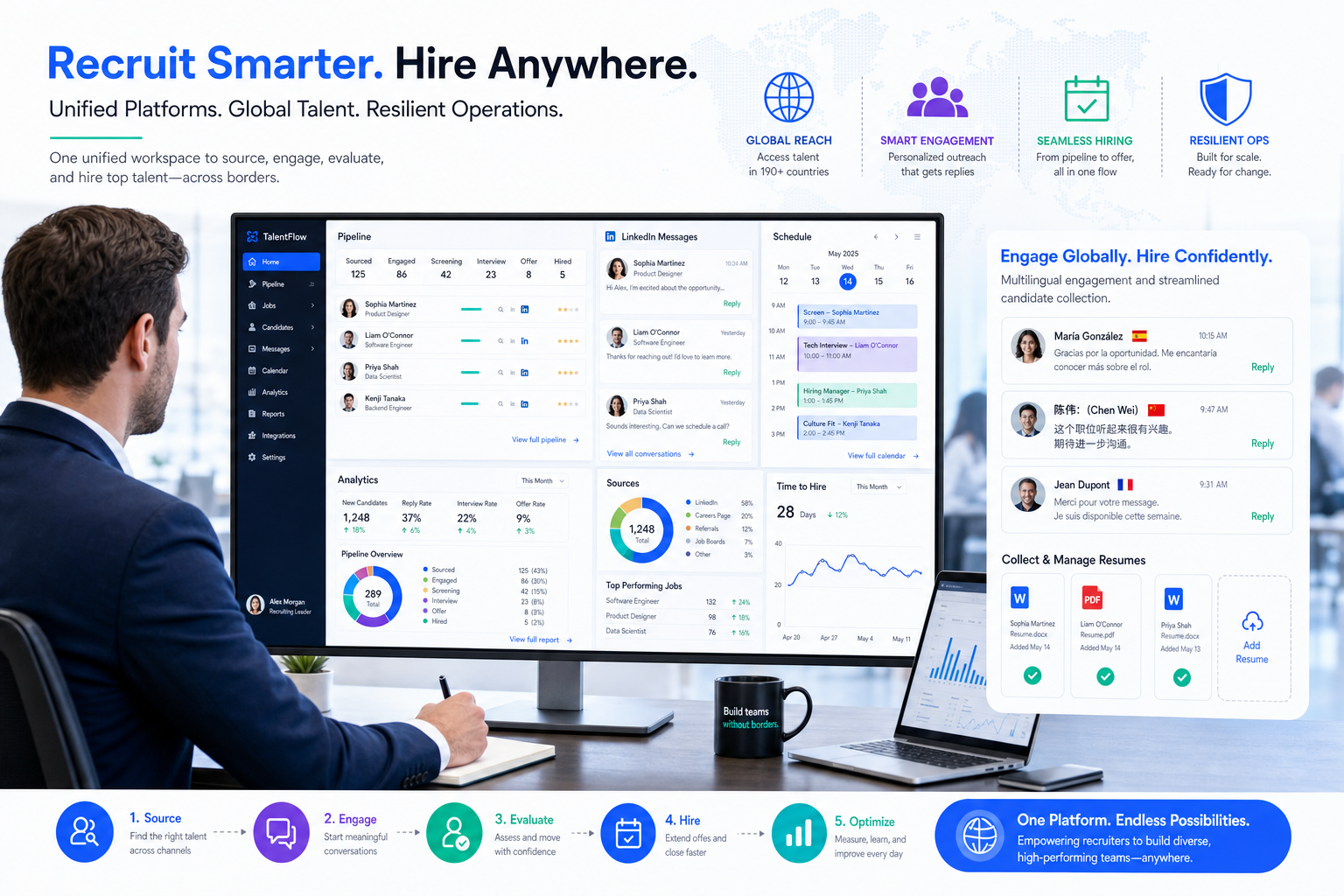
In that kind of workflow, I have found that StrategyBrain AI Recruiter can reduce the most avoidable friction without taking final judgment away from the recruiter. Its always-on candidate messaging, multilingual communication, and automated collection of resumes and contact details help when candidates respond after hours or across time zones. The recruiter still decides who is truly qualified, how a resume maps to the role, and what happens next.
A useful example comes from the kind of hiring pressure created when North American labor mobility rules become uncertain. When the United States-Mexico-Canada Agreement was finalized in late 2018 and expected to take effect around 2020 while NAFTA still remained in force, employers and candidates had to work through an awkward in-between period. On paper, the professional mobility route looked largely intact, but interpretation could still shift by country and by officer. Recruiters trying to place Canadian professionals into U.S.-linked roles had to check whether the job offer still fit existing professional categories, answer candidate concerns about renewals, and keep communication records straight while policies were being watched in real time.
That is exactly where weak recruiting systems start to show. A recruiter has to revisit the requisition list, reopen candidate conversations, confirm who is still interested, note who is worried about visa timing, and remind a hiring manager why a previously straightforward search now needs tighter follow-up. If that information lives across inboxes, LinkedIn threads, spreadsheets, and memory, the problem is not just sourcing volume. It is process visibility, candidate communication, and decision control. That is why choosing among the best recruitment platforms, the best hiring platforms for employers, and the top recruiting platforms should start with workflow resilience rather than feature count alone.
Practical takeaway: The right recruiting software is the one that keeps hiring coherent when market conditions change, candidate questions increase, and recruiters need to act faster without losing judgment.
Table of Contents
- Why hiring context matters when choosing recruiting software
- Recruiting software vs ATS: what employers are really buying
- A practical framework for comparing the best recruitment platforms
- Candidate communication, sourcing, and job distribution
- Screening, automation, and human review
- Pipeline management and hiring team collaboration
- Scheduling and speed to decision
- Reporting, compliance visibility, and process risk
- Integrations and operational fit
- How to choose by business type and hiring model
- Common mistakes when evaluating top recruiting platforms
- FAQ
Why hiring context matters when choosing recruiting software
One lesson experienced recruiters learn quickly is that software decisions make more sense when they start with the hiring environment, not the demo environment. The USMCA transition period is a good example of why. The agreement largely preserved the labor mobility logic many employers already knew under NAFTA, but uncertainty still changed behavior. Candidates became more cautious. Employers needed clearer answers. Recruiters had to document conversations more carefully because a process that looked stable on paper could still become harder in practice.
That same pattern appears in many hiring situations beyond immigration or cross-border mobility. A funding change, a new market expansion, a remote hiring push, or a spike in high-volume recruiting can all create the same operational stress: more candidate questions, more recruiter coordination, and more need for a system that holds the process together.
So when employers evaluate the best recruiting software, they should ask a broader question first: what kind of hiring volatility do we need this platform to absorb? Teams that answer that well usually make better software decisions than teams that begin and end with a feature checklist.
Recruiting software vs ATS: what employers are really buying
Buyers often use recruiting software, recruitment platform, and ATS as if they mean the same thing. They overlap, but they are not identical.
An ATS usually provides the operating core: applicant records, stage tracking, hiring activity history, and basic process control. Recruiting software often expands beyond that foundation into sourcing, candidate relationship management, communication workflows, scheduling, analytics, and integrations. In other words, the ATS is often the structured system of record, while the broader recruitment platform is the system that helps the team actually move work forward.
That distinction matters because many employers think they need the best recruitment platforms when what they really need is stronger coordination around a few weak points: outreach, follow-up, approvals, reporting, or scheduling. In my own work, I have seen teams improve far more from better recruiter workflow discipline than from buying the most complex platform in the category.
It is also where a specialized tool can help. If your team relies heavily on LinkedIn outreach, I have seen AI Recruiter work best as a front-end communication layer inside a broader recruiting process. It can handle repetitive first-touch messaging, collect resumes from interested candidates, and keep conversations active across time zones, while your ATS or main recruiting platform remains the place where qualification, stage movement, and hiring decisions are controlled.
A practical framework for comparing the best recruitment platforms
Before booking demos, compare the best recruitment platforms against a small number of operational tests. This keeps your evaluation tied to actual recruiter work instead of marketing language.
| Evaluation Area | What to Check | Why It Matters |
|---|---|---|
| Context fit | Can the platform handle your hiring model, stakeholder load, and geographic complexity? | Good tools fail when they are bought without regard to real operating conditions |
| Candidate communication | Can recruiters respond quickly, consistently, and across channels or time zones? | Communication lag often kills interest before screening begins |
| Screening workflow | Does the system help organize applicants and sourced talent without hiding recruiter judgment? | Recruiter speed matters, but so does explainability |
| Pipeline visibility | Can recruiters and hiring managers see stalls, ownership, and next steps clearly? | Lost momentum usually comes from unclear status, not lack of candidates |
| Scheduling | Does it reduce coordination overhead with candidates and interviewers? | Scheduling friction lengthens cycle time quickly |
| Reporting | Can you track source quality, bottlenecks, and time-to-stage movement? | Structured data turns opinion into management action |
| Integrations | Will it connect to the systems your team already relies on? | Disconnected software creates duplicate work and bad data |
| Automation quality | Does automation remove repetitive work without forcing black-box decisions? | Useful automation supports recruiters rather than replacing them |
When employers review the best hiring platforms for employers, this is the scorecard I recommend building first. It reveals quickly whether a product is operationally useful or just impressive in a demo.
Candidate communication, sourcing, and job distribution
Candidate communication is often undervalued during software selection because buyers focus first on database features. In practice, however, many searches break down much earlier. A recruiter reaches out to strong prospects, replies arrive at odd hours, multiple stakeholders want updates, and the team loses momentum because no one can keep the communication thread clean enough to act on it.
This gets worse in situations like cross-border hiring or international sourcing, where candidates may have more questions about role timing, work authorization, or location expectations. In those cases, the top recruiting platforms need to support not only job posting and applicant intake, but also faster conversation management and better source tracking.
I have used StrategyBrain AI Recruiter most effectively in this gap between sourcing and formal screening. It helps automate initial LinkedIn outreach, maintain ongoing candidate replies around the clock, and gather resumes and contact details from interested prospects. That is especially helpful when a recruiter is managing more conversations than they can personally monitor in real time. What it does not do, and should not do, is make the final hiring call. The recruiter still reviews the resume, confirms fit, and decides whether the candidate enters the structured pipeline.
What recruiters should evaluate here
- How easily jobs can be created, duplicated, and distributed
- Whether source attribution stays clean across posting and outreach channels
- How well the tool supports direct sourcing as well as inbound applicants
- Whether communication records remain visible to the broader hiring team
- How the workflow handles after-hours candidate replies and multilingual outreach
Screening, automation, and human review
The best automation in recruiting does not try to eliminate recruiter judgment. It removes repetitive steps so recruiters can spend more time evaluating fit, advising managers, and keeping candidates informed.
That is the standard I use for the best recruiting software. Can it speed up screening while keeping the reasoning transparent? Can it help sort by required skills, experience, geography, or job criteria without turning selection into a black box? Can it support both inbound resume review and sourced candidate follow-up?
For LinkedIn-heavy workflows, a specialized automation layer can be useful before formal screening begins. A tool like AI Recruiter can determine who is willing to engage, answer common role questions, and collect application materials, while the recruiter remains responsible for true qualification. That division of labor is important. Interest is not the same as fit, and no experienced recruiter should confuse the two.
Questions to ask during evaluation
- Can recruiters filter and rank candidates using role-relevant criteria?
- Is automation configurable by role type, business unit, or geography?
- Can the team explain why a candidate was advanced or deprioritized?
- Does the workflow support recruiter review before stage movement?
- Will the platform help both high-volume and specialist searches?
Pipeline management and hiring team collaboration
The opening case around USMCA-style uncertainty points to a broader truth: when the market changes, collaboration failures become visible faster. Recruiters need one view of candidate status. Hiring managers need simple ways to review and respond. Coordinators need to know what is waiting. Leadership needs enough visibility to understand whether the issue is sourcing, timing, candidate hesitation, or internal delay.
The best recruitment platforms support that by making ownership visible. They do not just store resumes. They show who is stalled, which stage is aging, where feedback is missing, and what needs attention next. That clarity matters even more when candidates are comparing multiple options or navigating relocation, compliance, or timing concerns.
What strong collaboration looks like
- Clear stage ownership across recruiters, coordinators, and managers
- Visible communication history tied to each candidate
- Fast resume review and feedback collection
- Talent pools for re-engaging previous prospects
- Permissions that match real team roles without unnecessary complexity
For employers comparing the best hiring platforms for employers, collaboration quality is often a better predictor of success than interface polish.
Scheduling and speed to decision
One reason candidate interest fades is simple delay. A search may begin well, the shortlist may be strong, and then scheduling slows everything down. That problem becomes more obvious in searches involving senior talent, international movement, or highly competitive roles, because candidates are already balancing risk and timing.
The top recruiting platforms reduce that drag by making interview planning, reminders, feedback collection, and rescheduling easier to manage. That does not sound glamorous, but in operational terms it often matters more than an extra sourcing feature.
Practical checks for employers
- Map your actual interview workflow before product demos begin.
- Test panel, sequential, and multi-stakeholder scheduling scenarios.
- Check how reminders, cancellations, and feedback requests are handled.
- Confirm whether delays can be tracked by role, team, or stage.
If recruiters say they are getting candidates interested but not getting them moved, scheduling is often where the hidden problem lives.
Reporting, compliance visibility, and process risk
Structured reporting becomes more valuable when hiring carries extra complexity. In a scenario like the USMCA transition, it is not enough to know that a role is open. Recruiters and employers need to know where uncertainty is affecting the funnel. Are candidates dropping after initial outreach? Are managers delaying decisions? Are some geographies producing stronger conversion than others?
This is where the best recruiting software becomes a management system rather than just a workflow tool. Strong reporting can show time to review, stage conversion, source-to-hire trends, aging candidates, and manager response time. Those insights help teams correct process problems early instead of blaming the market for everything.
Metrics worth reviewing
- Time to first recruiter response
- Time to first interview
- Stage conversion by role type or location
- Candidate aging by requisition
- Source quality and source-to-hire performance
- Hiring manager response time
- Offer acceptance and drop-off patterns
For recruiting leaders, the point is not to create more dashboards. It is to surface the few signals that tell you where hiring is actually slowing down.
Integrations and operational fit
No recruiting platform performs well in isolation. Candidate data moves across messaging tools, calendars, HR systems, and sometimes compliance or payroll workflows. If those connections are weak, recruiters end up rebuilding the process manually.
Most employers should evaluate integrations in three layers:
- Daily execution: calendars, email, communication tools, and sourcing workflows
- Operational handoff: HRIS, onboarding, and downstream employee records
- Management visibility: analytics, approvals, and reporting systems
If you use LinkedIn heavily, a practical setup may involve a main ATS or recruiting platform plus a specialized outreach layer such as StrategyBrain AI Recruiter for first-touch messaging and resume capture. That kind of combination can work well when your core system is strong at tracking and reporting, but weak at handling high volumes of ongoing recruiter outreach.
How to choose by business type and hiring model
The best recruitment platforms are not universal. They are context-dependent.
| Hiring Scenario | What to Prioritize | Why It Matters |
|---|---|---|
| Solo recruiter or boutique headhunter | Fast sourcing, simple CRM, lightweight automation | Small teams need leverage without adding admin burden |
| Growing agency | Pipeline visibility, communication scale, candidate re-engagement | More consultants means more handoff risk and inconsistent follow-up |
| In-house SMB recruiting team | Ease of use, scheduling, reporting, hiring manager collaboration | Adoption matters as much as functionality |
| Enterprise employer | Permissions, analytics, integrations, standardized workflow control | Large teams need governance and consistency |
| Cross-border or multilingual hiring | Communication speed, language support, process tracking | Candidate uncertainty increases when markets and mobility rules change |
| LinkedIn-led sourcing model | Outreach automation, response handling, resume collection, ATS handoff | Manual messaging becomes the bottleneck before screening does |
If your recruiting model depends heavily on direct outreach, the best hiring platforms for employers may not be a single product. They may be a workable system made of a strong ATS plus an outreach automation layer that recruiters actually use.
Common mistakes when evaluating top recruiting platforms
Most buying mistakes happen because teams evaluate software in a calm environment and then expect it to perform under hiring pressure.
- Choosing by feature volume alone: a longer feature list does not guarantee better recruiter throughput.
- Ignoring communication workflow: candidate follow-up is often where searches are won or lost.
- Overbuying complexity: teams adopt only the small subset they can realistically use.
- Treating automation as judgment: interest detection and outreach support are not the same as recruiter qualification.
- Skipping integration review: the hidden cost often appears after implementation.
- Forgetting volatility: software should work when hiring conditions become messy, not only when processes are predictable.
My own bias, after years of recruitment operations work, is to value software that remains useful when the market changes suddenly. That is why I look hard at communication speed, process visibility, and recruiter control. In LinkedIn-driven sourcing, I have also found value in using AI Recruiter conversation workflows to keep candidate engagement moving while preserving a human decision point before shortlisting.
FAQ
What does recruiting software do?
Recruiting software helps employers manage hiring from job posting and sourcing through screening, interviews, pipeline tracking, collaboration, and reporting. Some platforms focus mainly on ATS functions, while others support broader sourcing and communication workflows.
How is recruiting software different from an ATS?
An ATS typically tracks applicants and hiring stages. Recruiting software may include ATS functionality plus sourcing, CRM, scheduling, analytics, automation, and communication support. In many teams, the ATS is the system of record, while the broader platform supports day-to-day recruiter execution.
What should employers prioritize in the best recruitment platforms?
Employers should prioritize workflow fit, candidate communication, screening quality, pipeline visibility, scheduling, reporting, integrations, and sensible automation. The right mix depends on hiring volume, team structure, and business complexity.
Why do communication features matter so much?
Because many recruiting delays begin before formal interviewing starts. Candidates lose interest, reply outside working hours, or need clearer answers quickly. Platforms that support faster, better-documented communication usually improve recruiter responsiveness and candidate experience.
Are the best hiring platforms for employers always all-in-one systems?
No. Some teams do better with a strong ATS plus a specialized sourcing or communication tool. That can be especially true for recruiters who depend heavily on LinkedIn outreach and need automation for first contact and follow-up.
How should headhunters evaluate top recruiting platforms?
Headhunters should look closely at search speed, talent pool management, communication workflows, resume capture, candidate relationship history, and how easily the system supports repeat outreach for similar roles.
When is AI useful in recruiting software?
AI is most useful when it removes repetitive work such as outreach, reply handling, initial organization, or scheduling support. It should help recruiters move faster while leaving final qualification and hiring judgment to humans.
Why did this article use a cross-border hiring example?
Because recruiting software is easiest to evaluate when pressure is real. A scenario like USMCA-related uncertainty shows clearly whether a platform can handle candidate concerns, process changes, and recruiter coordination without losing visibility.
Conclusion
The best recruitment platforms are the ones that keep hiring clear when circumstances become less clear. That could mean faster outreach, better screening, stronger pipeline discipline, or cleaner reporting. But in every case, the real test is whether the software helps recruiters act with speed and control when candidates, managers, or market conditions become harder to predict.
If you are comparing the best hiring platforms for employers or narrowing down the top recruiting platforms, start with your workflow under pressure. Look at where communication breaks, where ownership gets lost, and where decisions slow down. Then choose software that fixes those exact points. That is how experienced recruiters choose the best recruiting software for real hiring, not just for polished demos.