When screening breaks before interviews start, this article helps recruiting teams judge where candidate ai improves consistency, trust, and shortlist quality without weakening human review.
That distinction matters because many hiring teams are not struggling with whether automation exists; they are struggling with when to trust it. In agency recruiting, the cost of a weak first screen is not just time. It shows up in missed response windows, poor shortlist quality, hiring manager friction, uneven candidate treatment, and extra admin that drags recruiters back into repetitive work instead of real evaluation.
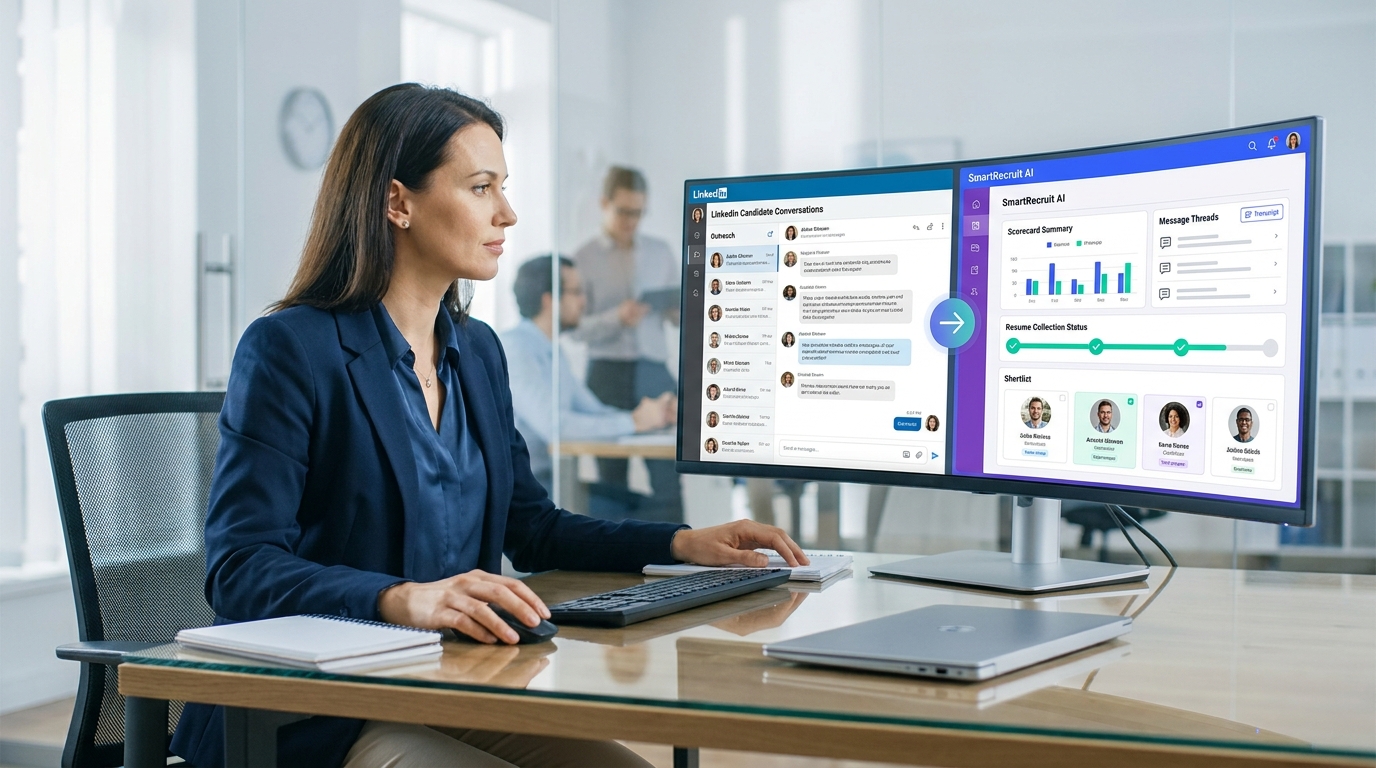
In that gap between volume and judgment, tools like StrategyBrain AI Recruiter can help with the front end of recruiting by handling repetitive outreach, after-hours candidate replies, and multilingual communication on LinkedIn while the recruiter still owns resume review and advancement decisions. I have found that kind of support especially useful when a search depends on fast initial contact, clean handoff of interested candidates, and better documentation before the real screening conversation begins. For teams sourcing across time zones, its always-on messaging and resume collection workflow can reduce the scramble that usually happens before a proper screen ever starts.
The reason this matters becomes clearer when you look at how professionals evaluate higher-stakes work transitions. In consulting-style hiring, whether the candidate is moving from a permanent role into interim work or stepping into a project-driven assignment, the first issue is rarely just skills. The real question is fit for a very different operating model: can this person act like a self-starter, build trust quickly, and make sound recommendations without long ramp-up time?
That is also why early conversations often break down. A strong candidate may know the work but struggle to explain why they are the right solution for a specific problem. Recruiters then spend extra time pulling out the story, clarifying the project context, and testing whether the candidate can handle a client environment where they arrive as an outsider, need to earn confidence fast, and still deliver results. In hiring terms, that pressure exposes exactly where ai candidate screening and the ai hr interview fit: not as replacements for recruiter judgment, but as structured ways to capture role-specific evidence before valuable candidates or clients lose patience.
This article takes that practical path. Instead of treating automation as magic, it looks at how candidate ai can support sourcing, pre-screening, structured interviews, and documentation for recruiters who need better consistency without giving up control. It also uses the consultant-style decision logic above to explain why the best screening workflows focus on readiness, narrative quality, stakeholder trust, and job-specific proof rather than generic ranking alone.
Table of Contents
- Why early screening fails before interviews start
- What AI candidate screening actually does
- What recruiter teams can learn from consulting-style hiring
- Where the AI HR interview fits
- Benefits for recruiters and hiring managers
- Limits, fairness, and control points
- How to evaluate tools and workflows
- Implementation best practices
- FAQ
Why Early Screening Fails Before Interviews Start
In many teams, the biggest screening problem starts before any scorecard is filled out. Recruiters lose momentum because the first stage is fragmented: outbound messaging happens in one place, resumes arrive in another, candidate replies come in after hours, and the actual qualification conversation starts too late. By the time a recruiter has enough context, a good prospect may already be cold, confused, or booked elsewhere.
That is why the earliest layer of workflow matters. In my own experience, using AI Recruiter for repetitive LinkedIn outreach and reply handling is most useful when the role has clear targeting criteria and the recruiter needs to separate basic interest from true fit. The tool can introduce the role, answer common questions, gather resumes and contact details, and keep conversations moving across time zones. What it does not do—and should not be allowed to do—is make the final call on whether the candidate really matches the mandate. That review still belongs with the recruiter.
Seen that way, candidate ai starts earlier than many people assume. It is not only about ranking applicants after they apply. It can also help create a cleaner entry point into screening by making sure interested candidates arrive with better context, captured information, and a clearer signal that they are ready for human review.
What Is AI Candidate Screening?
AI candidate screening is the use of software to support early-stage candidate evaluation in a more structured way. A typical workflow may include resume parsing, matching candidates to role-specific questions, applying knockout criteria, generating a ranked shortlist, and organizing outputs for recruiter review. Some teams also use candidate ai tools to support an AI HR interview that captures a recording, transcript, notes, and a scorecard for later review.
The practical standard is simple: screening should stay tied to the job. If the role requires weekend availability, a license, project turnaround experience, stakeholder management, language ability, or proof of specific outcomes, the workflow should test those requirements directly. Generic scores often look impressive in demos but help very little when a hiring manager asks why one candidate is moving forward and another is not.
This matters even more in roles where the candidate is expected to step into an unfamiliar environment and perform quickly. In those searches, a useful screen does not only ask whether the person has done similar work. It also asks whether they can enter a new team, absorb context quickly, communicate a plan, and build confidence fast.
What Recruiter Teams Can Learn From Consulting-Style Hiring
The consulting-career reference point is valuable because it frames screening as a decision about operating style, not just resume content. Professionals considering a move from full-time employment into interim or project work typically weigh three things before saying yes: whether they can self-direct, whether they can build trust quickly with new stakeholders, and whether they are confident enough to make recommendations without a long internal runway.
That same logic helps recruiters design better screening criteria. When the hiring need resembles a project hire, turnaround role, or high-accountability search, first-stage screening should test for at least three dimensions:
- Self-starting ability: Can the candidate work from a defined problem and turn it into an execution plan?
- People judgment: Can they manage relationships up, down, and across the client or internal team?
- Credibility under pressure: Can they explain their approach clearly enough that stakeholders trust them early?
The reference material also highlights another recruiter pain point: many candidates struggle to tell a compelling “why choose me” story. That is not a cosmetic issue. In screening, weak narrative often hides whether the candidate actually understands the business problem, the context of the role, and the results the employer needs. A good process should therefore look for specific examples, not polished generalities.
For that reason, some of the strongest ai candidate screening setups are not the ones with the most automation. They are the ones that help recruiters gather a small set of useful proof points: what problem the candidate solved, in what environment, with what constraints, and how they explain their value in relation to the actual role.
Where the AI HR Interview Fits
An AI HR interview is usually a scheduled spoken or written interview step used after basic interest and eligibility are established. The interview may ask role-specific questions, use adaptive follow-up prompts, and produce post-interview outputs such as a transcript, recording, summary, notes, and candidate scores. For recruiting teams, the advantage is not just speed. It is repeatability.
That repeatability matters when candidates must demonstrate problem-solving approach, communication clarity, and stakeholder readiness. Instead of relying on different recruiters improvising different phone screens, the team can start from the same question framework and the same evidence standard. That is especially useful in agency environments where multiple recruiters may touch the same search.
Still, the AI HR interview should remain one stage in a larger process. It can surface whether a candidate explains their thinking well, whether their examples are concrete, and whether they appear ready for the type of environment described in the brief. It cannot independently decide whether the candidate will succeed with a specific manager, client, or team dynamic. That is where recruiter interpretation still matters.
When an AI HR Interview Is Useful
- High-volume roles where recruiters need a consistent first screen
- Searches where communication quality is part of the job requirement
- Distributed teams working across time zones
- Project-based or consulting-style hires that require documented early evidence
- Agency workflows where multiple stakeholders review the same candidate
When Caution Is Needed
- Roles where live probing is essential from the first conversation
- Candidate groups that may need accommodation or alternative formats
- Processes without agreed scoring criteria
- Organizations that want automation to make final decisions without review
Benefits for Recruiters and Hiring Managers
The strongest case for ai candidate screening is operational, not theatrical. It helps teams create more consistent screening steps, reduce manual sorting, and improve documentation. When candidate ai workflows are role-specific and reviewed by humans, they make early-stage hiring more manageable without flattening judgment.
| Benefit | What it looks like in practice | Why it matters |
|---|---|---|
| Consistency | Structured questions and shared scorecards | Reduces random variation across screeners |
| Speed | Resume intake, basic qualification, and shortlist support | Helps recruiters handle larger applicant or sourced-candidate volumes |
| Documentation | Transcript, recording, notes, and summaries | Improves review quality and decision traceability |
| Collaboration | Hiring manager review in a common workflow | Makes feedback easier to compare |
| Candidate continuity | Cleaner handoff from outreach to screening | Reduces drop-off and confusion between stages |
For recruiters, one immediate advantage is time reallocation. Less effort goes into repetitive first-pass admin, and more goes into calibration, market mapping, candidate coaching, and stakeholder management. For hiring managers, the main benefit is often better signal quality. A scorecard tied to real job requirements is easier to trust than scattered notes or vague recruiter impressions.
There is also a practical gain in narrative review. Because many candidates struggle to position themselves as the right solution to the right problem, structured screening makes it easier to compare not only credentials but also relevance. That is often the difference between a shortlist that looks acceptable and a shortlist a client actually wants to interview.
Limits, Fairness, and Control Points
Experienced hiring teams should avoid claiming that ai candidate screening removes bias. It does not. Screening tools may improve consistency, but consistency alone is not fairness. If the criteria are flawed, if knockout rules are not truly job-related, or if no one reviews edge cases, the process can still produce poor or unfair outcomes.
The better approach is to treat candidate ai as a governed system. That means employers and recruiters remain accountable for the logic, the outcomes, and the candidate experience. In practice, that usually includes regular audits, adverse impact review, explainability, and documented review checkpoints.
Key Risk Areas to Watch
- Over-reliance on ranking: A ranked shortlist is useful, but recruiters should examine exceptions and borderline profiles.
- Weak job design: If the role requirements are vague, screening output will be vague too.
- Narrative bias: Candidates who speak confidently are not always the best operators, so examples still need verification.
- Accessibility gaps: Interview format, timing, and communication style may need accommodation.
- Missing ownership: If no one can explain why a candidate advanced or was rejected, the workflow is not defensible.
These risks are not theoretical. They show up most clearly in hiring situations where the employer needs someone to enter a team quickly and solve a specific problem. In those cases, poorly designed screening can either filter out adaptable talent or push forward candidates who sound polished but cannot actually deliver.
How to Evaluate Tools and Workflows
If you are evaluating ai candidate screening, start with process questions before feature questions. Too many teams buy software before they agree on what a good first screen should prove. That usually creates confusion later, especially when recruiters and hiring managers discover they have been measuring different things.
Questions to Ask Before You Buy or Roll Out
- What hiring problem are we solving: volume, response speed, consistency, documentation, or all four?
- Which roles are suitable for structured screening, and which need more live recruiter judgment?
- What does a strong first conversation need to prove for this role?
- Are our knockout criteria truly job-related?
- Can the workflow test for self-direction, stakeholder trust, or communication clarity where those matter?
- Will a recruiter or hiring manager review every screened recommendation?
- How are transcript, recording, and notes stored and accessed?
- How will outreach-stage tools hand off into actual screening?
- What is our process for bias audits and adverse impact testing?
At the product level, look for practical workflow support rather than novelty. A useful system should support role-specific questions, clear scorecards, human review steps, and documentation that can be shared across recruiter and hiring manager workflows.
Example Evaluation Table
| Evaluation Area | What to look for | Why it matters |
|---|---|---|
| Role fit | Role-specific workflows and questions | Prevents generic screening |
| Human review | Required recruiter or manager checkpoints | Supports employer accountability |
| Documentation | Transcript, recording, summary, and scorecard | Improves auditability and collaboration |
| Fairness controls | Bias review, explainability, adverse impact checks | Reduces governance risk |
| Workflow continuity | Clean handoff from outreach to screening | Improves adoption and candidate follow-through |
Implementation Best Practices
The most effective ai candidate screening programs are usually disciplined rather than flashy: clear criteria, structured conversations, documented reviews, and recruiter oversight. That is what makes them usable over time.
- Start with one role family. Pilot a role with repeatable screening criteria instead of trying to automate every opening at once.
- Define the business problem behind the role. Candidates should be screened against the situation they are entering, not just a skills wishlist.
- Build role-specific questions. Generic prompts produce weak signal.
- Use human review as a required checkpoint. Candidate ai output should inform decisions, not finalize them alone.
- Calibrate scorecards with hiring managers. Agree on what each score means and what evidence supports it.
- Capture candidate narrative. For high-accountability roles, evaluate how the candidate explains past problem-solving, not only what appears on the resume.
- Document exceptions. If a candidate advances despite a lower score, note why. If a candidate is declined despite ranking well, note that too.
- Run regular fairness checks. Review outcomes, not just settings.
- Plan the candidate experience. Explain what is being recorded, how it is reviewed, and when a human steps in.
One lesson I keep coming back to is that automation is most helpful when it clears space for better recruiting conversations. In searches that begin on LinkedIn, I would rather let StrategyBrain AI Recruiter handle repetitive contact and resume collection than ask recruiters to spend late evenings chasing first replies. That gives the human recruiter more time to test the candidate's real fit, sharpen the shortlist narrative, and prepare the hiring manager for a better interview loop.
Practical takeaway: The goal of ai candidate screening is not to remove people from hiring. It is to make recruiter judgment more consistent, better documented, and easier to apply at scale.
FAQ
What is AI candidate screening?
AI candidate screening is the use of software to support early-stage hiring tasks such as resume review, knockout criteria checks, structured interviews, shortlisting, and documentation for recruiter review.
What is an AI HR interview in hiring?
An AI HR interview is a structured spoken or written interview step used during early-stage screening. It may ask role-specific questions, generate follow-up prompts, and produce outputs such as a transcript, recording, summary, notes, and a scorecard for recruiter or hiring manager review.
Does a human review AI candidate screening results?
In a responsible process, yes. AI candidate screening should support human review rather than replace it. Recruiters or hiring managers should review recommendations, check edge cases, and make final advancement decisions based on role requirements and hiring context.
How does candidate ai help agency recruiters?
For agency recruiters, candidate ai can improve consistency, speed up first-stage organization, support structured interviews, and create clearer documentation for clients and hiring managers. It is especially useful when multiple recruiters work the same search.
Can AI screening help before a candidate formally applies?
Yes. In sourcing-led workflows, AI can help manage first contact, answer common role questions, collect resumes, and identify interested candidates before the recruiter begins deeper qualification. That is different from final matching, which still needs human review.
What data is typically recorded during an AI HR interview?
Teams commonly record the candidate response itself along with a transcript, recording, notes, summary, and scorecard. Candidates should receive a clear explanation of what is being captured and how it will be used.
Is AI candidate screening bias-free?
No hiring process should be described as automatically bias-free. AI candidate screening can improve consistency, but employers still need bias audits, explainability, documentation, and human oversight. Accountability remains with the employer and recruiting team.
Conclusion
AI candidate screening is most useful when it supports a structured recruiting process instead of pretending to replace one. The best candidate ai workflows help recruiters capture role-specific evidence, document candidate communication, and standardize early evaluation without handing over final judgment.
If your hiring team is exploring an AI HR interview or a broader screening workflow, start by reviewing where candidates are actually being lost: at outreach, at qualification, at story clarity, or at handoff to the hiring manager. Once those failure points are clear, it becomes much easier to decide what automation should do, what humans must still own, and where tools such as AI Recruiter can support the front end of the process without weakening the quality of the final hiring decision.