This article helps recruiting leaders judge sourcing platforms by the handoff gaps behind missed replies, rework, and weak shortlists.
That sounds obvious, but it is exactly where many recruiting teams still lose time and credibility. A solo recruiter may build lists in one tab, message candidates in another, track replies in email, and then copy notes into an ATS later. A boutique search firm owner feels the same drag at a larger scale: too much manual follow-up, too many missed callbacks after hours, and too little visibility into which searches are actually turning into qualified conversations. In-house talent teams see a different version of the problem when passive candidates disappear between sourcing and recruiter review, leaving hiring managers with thin pipelines and recruiters with preventable rework.
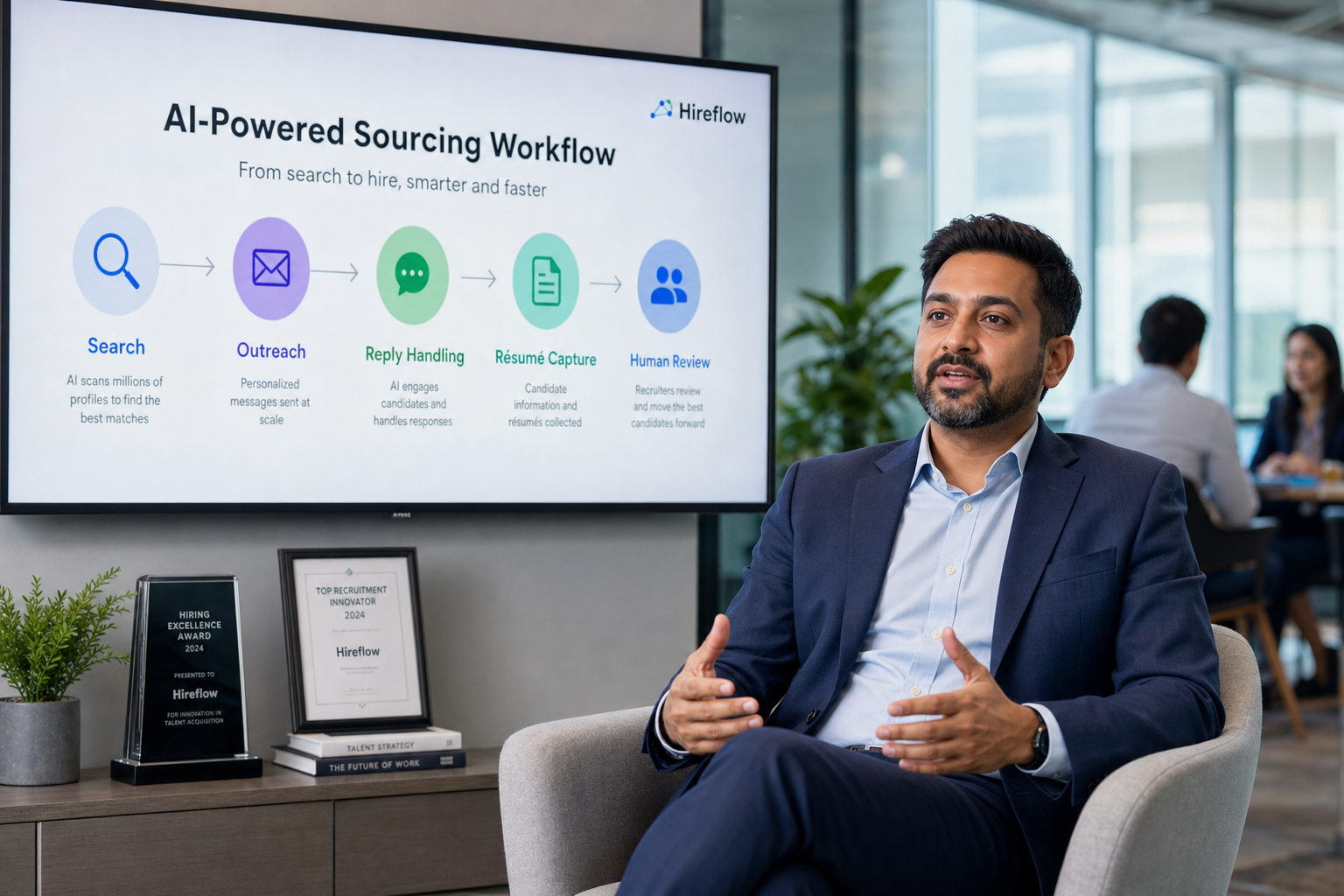
That is why I increasingly treat AI-supported sourcing as workflow support, not just search support. In my own testing, StrategyBrain AI Recruiter stood out when the real pain was repetitive LinkedIn outreach, late candidate replies, and the handoff from initial interest to human review. Its strengths are practical: automated first-touch communication, round-the-clock candidate response handling, and résumé or contact capture once a candidate is interested. The recruiter still owns the final judgment, résumé evaluation, and next-step decision, which is exactly how it should work in a disciplined sourcing process.
A useful way to understand the issue is to start with a career story that has nothing to do with recruiting software on the surface. In a Clarity Recruitment interview, finance leader Greg Twinney described building success from the ground up: first paying for college by starting a window-cleaning business as a teenager, then learning that growth depended on relentless outreach, constant follow-up, and a sales engine that everyone had to support. Later, after sending out roughly a hundred résumés for post-college roles, he landed an accounts receivable job, argued his case persuasively, and soon stepped into a bigger assignment helping build a new export operation tied to Cuba.
What matters for recruiters is not the biography alone but the operating pattern inside it. The work advanced because someone kept knocking on doors, kept cold calling, kept moving conversations forward, and then connected those early interactions to a larger business goal. When that follow-through breaks, opportunity stalls. In candidate sourcing, the same thing happens when outreach sits unattended, recruiter notes are incomplete, and early interest never becomes a reviewed profile. That is the real reason modern sourcing platforms matter: they keep top-of-funnel effort connected to business context, recruiter action, and the next decision.
If you are evaluating AI candidate sourcing now, that story points to the right questions. You are not simply buying search. You are deciding whether a sourcing system can support the same discipline that good operators have always needed: consistent prospecting, timely response, clean handoff, and visibility into progress. It also helps to separate recruiting technology from unrelated sourcing tools for procurement, which solve supplier and purchasing problems rather than talent discovery. The rest of this article focuses on how experienced recruiters should assess platform fit, workflow design, and AI support in real hiring conditions.
- What AI Candidate Sourcing Really Means
- From Hustle to System: Why Recruiters Need Workflow Support
- The Core Motion: Find, Respond, Capture, and Review
- Where AI Helps Most in LinkedIn Sourcing
- Standalone Tools vs Unified Sourcing Platforms
- How to Evaluate a Sourcing System
- Plain-English Search vs Boolean-Heavy Workflows
- Governance, Bias, and Human Oversight
- Why This Is Different From Sourcing Tools for Procurement
- Practical Buying Advice for Recruiting Teams
- FAQ
What AI Candidate Sourcing Really Means
AI candidate sourcing has moved well beyond running Boolean strings across résumé databases. In day-to-day recruiting, it means using software to help identify, prioritize, enrich, and engage likely-fit talent with fewer manual steps. The best sourcing platforms do not replace recruiter judgment; they reduce the friction between search, candidate response, and recruiter action.
That distinction matters. Recruiters are rarely struggling because they cannot type keywords into a search field. They struggle because sourcing is a chain of tasks. Someone has to translate a hiring brief into search logic, watch replies, answer basic candidate questions, capture résumés and contact details, and move the right people into the next review stage. A good sourcing system supports that whole chain instead of leaving the recruiter to patch it together with browser tabs, inboxes, spreadsheets, and memory.
From experience, the most useful AI sourcing features tend to fall into four categories: search interpretation, candidate ranking, profile enrichment, and outreach support. When those pieces work together, recruiters spend more time assessing candidate quality and less time on repetitive admin.
From Hustle to System: Why Recruiters Need Workflow Support
The Twinney story is a reminder that early growth often depends on disciplined, repetitive commercial effort. He described door knocking, cold calling, and the need for a strong sales engine. Recruiting has a similar top-of-funnel reality. Sourcing is still outreach work, even when it happens through search engines, talent databases, or LinkedIn messaging instead of neighborhood canvassing.
The difference today is volume and complexity. Recruiters are expected to manage more searches, respond faster, personalize communication, and keep better records than in the past. Without system support, teams either slow down or cut corners. That is when candidate replies get missed, passive talent goes cold, and hiring managers conclude that the market is weaker than it really is.
I have found that AI support is most useful when it protects recruiter attention rather than trying to impersonate recruiter judgment. For example, after-hours candidate responses are a real operational problem on LinkedIn. Strong candidates often reply when recruiters are offline. Using AI Recruiter for always-on message handling can keep the conversation moving, answer standard role questions, and collect contact details or résumés from interested people, while the recruiter reviews the actual fit later. That is a meaningful improvement in workflow continuity, not a replacement for sourcing craft.
Key operating lesson: sourcing performance improves when early outreach effort, candidate response handling, and recruiter review stay in one visible workflow.
The Core Motion: Find, Respond, Capture, and Review
Many articles frame sourcing around search alone. In practice, recruiters should evaluate AI sourcing around a more useful motion: find candidates, respond to engagement signals, capture the information needed to act, and review for fit. This sequence better reflects how real hiring work moves.
1. Find candidates
Discovery remains the first job of any sourcing platform. Recruiters need to search by title, function, skills, geography, industry, seniority, and adjacent experience. AI becomes useful when it interprets hiring language more intelligently than exact-match keyword search.
Test whether the platform understands role equivalencies, transferable backgrounds, and realistic variations in career path. A system that only returns literal keyword overlap tends to narrow the market too early.
2. Respond to engagement quickly
This is the step many teams underestimate. A recruiter may find a good candidate, send outreach, and then lose momentum when responses arrive at inconvenient times or in inconsistent volumes. Fast, relevant follow-up keeps more conversations alive.
In LinkedIn-heavy sourcing environments, this is where automation can take pressure off the recruiter. Used carefully, AI can acknowledge replies, share approved role information, and confirm whether a candidate is open to learning more. The recruiter should still step in for nuanced objections, final qualification, and relationship building.
3. Capture useful information
Interest without usable data does not move a search forward. Recruiters need clean contact details, résumé collection where appropriate, conversation history, and enough context to decide what happens next.
I have seen this become the hidden bottleneck in sourcing. A candidate replies positively, but the details live in private messages, the résumé arrives later by email, and the sourcing record never gets updated properly. A stronger sourcing workflow closes that gap.
4. Review and decide
This is where the recruiter earns their keep. AI can surface likely-fit candidates and support outreach, but it should not make the final call on suitability. The right operating model is decision support, not decision substitution.
For headhunters, this matters because client credibility depends on judgment. For in-house teams, it matters because shortlist quality affects hiring manager trust. The best sourcing platforms speed up the path to human review rather than pretending to eliminate it.
Where AI Helps Most in LinkedIn Sourcing
Because so much candidate sourcing now happens through LinkedIn workflows, it is worth being specific about where AI support is genuinely helpful. Based on hands-on recruiting reality, three use cases stand out.
Repetitive first-touch outreach
Writing every first message from scratch is not the best use of recruiter time, especially across large passive candidate pools. AI can help initiate outreach consistently and keep messages aligned with the role brief.
After-hours replies and global communication
Candidates reply outside business hours all the time, and cross-border hiring adds time-zone and language friction. A tool such as StrategyBrain AI Recruiter can keep conversations active around the clock and communicate in the candidate's language when needed, which reduces lag in early-stage engagement.
Interest confirmation and data capture
Once a candidate expresses interest, recruiters need a clean handoff into review. AI-assisted workflows can ask follow-up questions, request a résumé, and capture contact details so the recruiter can evaluate the profile without losing momentum. I see the value here less as “automation magic” and more as prevention of avoidable drop-off.
That said, limitations are important. AI can help identify willingness to talk, but recruiters still need to assess whether the résumé and background really align with the role. Keeping that boundary clear is essential for quality control.
Standalone Tools vs Unified Sourcing Platforms
One of the most important evaluation choices is whether you need a narrow outreach solution, a search-focused product, or a more unified platform that connects sourcing with your ATS or CRM. The answer depends on where your workflow breaks.
| Option | Best For | Main Strength | Main Limitation |
|---|---|---|---|
| Search-led standalone tool | Teams that mainly need better discovery | Can improve list building quickly | May leave outreach and handoff fragmented |
| Outreach automation tool | LinkedIn-heavy recruiters managing high message volume | Keeps early conversations moving | Needs careful review for quality and compliance |
| Unified sourcing platform | Teams that want search, rediscovery, and workflow continuity | Better visibility from sourcing to recruiter action | Requires stronger integration planning |
In my experience, unified sourcing platforms tend to win when teams care about candidate rediscovery, ATS write-back, shared notes, and reporting. More focused tools can still be the right choice when the main pain point is repetitive LinkedIn communication or initial engagement speed.
The practical question is simple: what happens after a candidate responds? If the answer involves copying notes by hand, forwarding screenshots, or chasing down missing résumés, your process still has a workflow problem even if search quality is decent.
How to Evaluate a Sourcing System
When comparing a sourcing system, I suggest using operational criteria rather than generic AI claims. Five areas deserve direct testing.
1. Search quality and interpretation
Use real requisitions and see whether the platform understands adjacent experience, title variation, and transferable skills. Good AI sourcing should widen useful discovery without flooding the recruiter with noise.
2. Engagement support
Ask how the system handles first-touch outreach, candidate replies, and handoff back to the recruiter. If LinkedIn sourcing is a core channel for your team, test this carefully with realistic outreach scenarios.
3. Data capture and enrichment
Review how the platform collects contact details, preserves conversation context, and enriches profiles. Recruiters need enough usable information to decide whether a candidate should move forward.
4. Workflow continuity
This is often where adoption lives or dies. Can recruiter notes, candidate status, outreach history, and documents move into the rest of your recruiting stack without manual cleanup? If not, efficiency gains will be smaller than the demo suggests.
5. Governance and control
Any AI-supported workflow should be auditable. Teams need to know what the system sends, what it captures, and where human review happens. This becomes especially important when automation touches live candidate communication.
For leaders, a scorecard built around these criteria is far more useful than feature theater. It also makes it easier to distinguish recruiting software from unrelated sourcing tools for procurement, which are built for supplier workflows, RFx events, and purchase processes rather than candidate pipelines.
Plain-English Search vs Boolean-Heavy Workflows
Experienced sourcers still value Boolean, and they should. Precision matters, especially in specialist searches. But the market is moving toward plain-English and semantic search because more recruiters need to execute sourcing well, not just the small number who enjoy building complex strings.
A modern sourcing workflow should support both:
- Plain-English search for faster intake-to-search execution
- Semantic search for interpreting related experience
- Boolean support for precision and editability
- Search refinement that helps recruiters narrow or widen intelligently
This is partly a software issue and partly an operating issue. If only one or two people on the team can source effectively, capacity stays fragile. Better systems expand access to competent sourcing while still letting advanced users work with precision.
Governance, Bias, and Human Oversight
AI sourcing should be evaluated for discipline as much as speed. Any system that ranks candidates or automates communication introduces governance questions around bias, explainability, and accountability.
Good practice includes:
- Reviewing whether ranking logic over-favors narrow career patterns
- Keeping a human decision-maker responsible for shortlist approval
- Using approved outreach content and clear escalation rules
- Documenting how candidate information is captured and stored
- Training recruiters to treat AI outputs as support, not truth
This is another reason I prefer workflow framing to hype framing. A well-run sourcing process still needs judgment, documentation, and professional restraint. Software should make those easier, not weaker.
Why This Is Different From Sourcing Tools for Procurement
The phrase sourcing causes confusion because it is used in multiple business categories. In recruiting, sourcing means finding, engaging, and moving candidates toward evaluation. In procurement, sourcing tools for procurement usually support supplier discovery, bidding events, contracting, and purchasing workflows.
Recruitment sourcing: candidate discovery, talent mapping, outreach, response handling, profile review.
Procurement sourcing: supplier selection, RFx processes, negotiation support, source-to-contract operations.
If your internal stakeholders use the term loosely, define the category clearly. It will save time in research, budgeting, and software comparisons.
Practical Buying Advice for Recruiting Teams
If I were advising a search firm or in-house TA team today, I would keep the evaluation practical.
- Start with the actual bottleneck. If the pain is poor search quality, test search depth first. If the pain is delayed candidate response, prioritize engagement workflow.
- Use live roles, not demo roles. Real requisitions reveal whether the platform understands your market.
- Test the handoff. See exactly how interested candidates become reviewed candidates.
- Check after-hours and global use cases. This is often where AI support creates real value in LinkedIn sourcing.
- Preserve recruiter judgment. Any workflow that blurs responsibility for final fit assessment will eventually cause quality issues.
Personally, I have found the strongest results come when recruiters use AI to absorb repetitive front-end activity and then apply their own judgment where it matters most. That is why tools like AI Recruiter are most helpful as workflow companions rather than autonomous hiring engines. They can keep outreach moving, collect what the recruiter needs, and reduce dead time between candidate interest and human review.
FAQ
What is AI candidate sourcing?
AI candidate sourcing is the use of software to help recruiters find, prioritize, enrich, and engage candidates more efficiently. It often includes search interpretation, matching, outreach support, and candidate data capture.
How are sourcing platforms different from an ATS?
Sourcing platforms focus on discovering and engaging talent before they become applicants. An ATS is built to manage candidates once they are in the hiring process.
What makes a good sourcing system?
A strong sourcing system combines effective search, usable ranking, profile enrichment, engagement support, workflow continuity, and clear human oversight.
Can AI help with LinkedIn recruiting?
Yes, especially with repetitive first-touch outreach, after-hours candidate replies, multilingual communication, and collecting résumés or contact details from interested candidates. Recruiters should still make the final evaluation.
Do recruiters still need Boolean search?
Yes. Boolean remains valuable for precision. But modern sourcing tools should also support plain-English and semantic search so sourcing is not limited to a few specialists.
Why do search results for sourcing sometimes show procurement software?
Because sourcing is used across industries. In recruiting it refers to candidate discovery; in procurement it refers to supplier and purchasing workflows.
Conclusion
AI candidate sourcing works best when you view it as an operating system for top-of-funnel recruiting, not a smarter search box. The strongest sourcing platforms help recruiters find candidates, keep early conversations moving, capture the information needed for review, and hand decisions back to humans cleanly.
The opening lesson from Greg Twinney's story still applies: growth depends on consistent outreach and disciplined follow-through. In recruiting, a modern sourcing system should preserve that discipline at scale. And if your research also surfaces sourcing tools for procurement, remember that supplier workflows and candidate sourcing belong to very different categories, even if they share the same word.