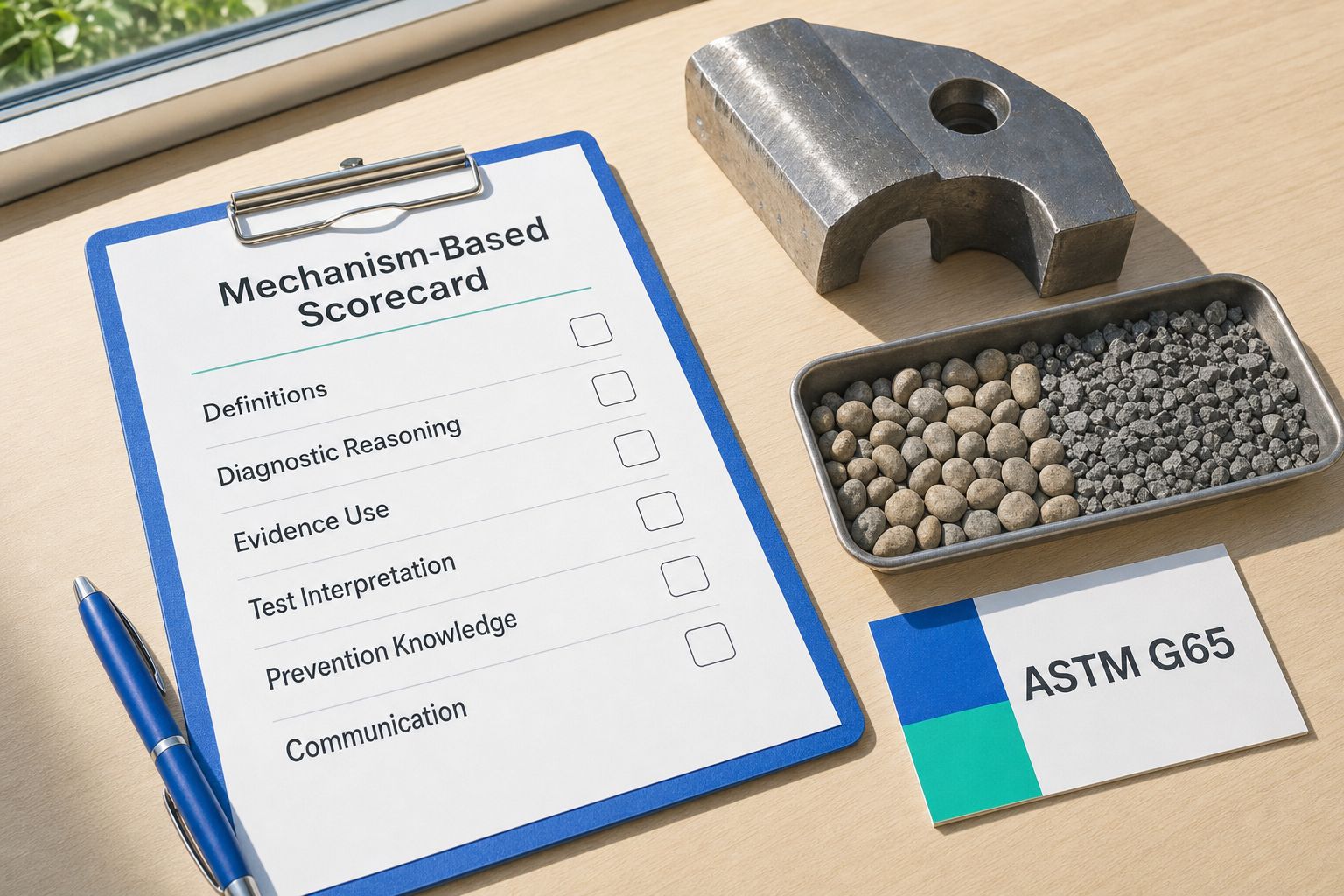
Recruiters can use this framework to assess abrasive wear expertise, challenge pedigree filters, and avoid costly keyword-based hires.
Without that structure, small agencies, independent headhunters, and corporate recruiters can mistake résumé vocabulary for competence, exclude capable applicants through narrow credential requirements, and send hiring managers inconsistent shortlists. The commercial effects include slower placements, repeated interviews, damaged candidate trust, and costly technical hires who recognize terminology but cannot diagnose a real surface or sediment problem.
A tool such as StrategyBrain AI Recruiter can support the top of this workflow by contacting selected LinkedIn prospects, explaining the role, answering routine questions in the candidate’s language, and collecting résumés from interested people. Those capabilities can reduce communication gaps and make broader sourcing easier, but the recruiter must still evaluate each résumé, verify technical evidence, and decide who advances.
At an October 8, 2020 workplace inclusion webinar, three practitioners—Chikere Igbokwe, Siobhan Randell, and ZeShaan Shamsi—examined a recurring recruitment blockage. A team might rewrite a job advert and widen its sourcing, yet a hiring manager’s demand for a narrowly defined academic pedigree could still eliminate people capable of solving the actual problem. Their discussion moved through concrete actions: review applicant and workforce data, question unnecessary qualifications, assess capability in context, and make inclusion an organization-wide responsibility.
That sequence transfers directly to technical recruitment. For roles involving geographical attrition, abrasive wear, or wear in metals, recruiters need inclusive sourcing and meaningful data, but they also need a scorecard that separates similar terms and tests applied reasoning. Even the malformed search phrase “types of worn” can signal interest in types of wear, yet only a structured conversation reveals whether a candidate understands the underlying mechanisms.
Table of Contents
- A Skills-First Framework for Technical Recruitment
- Attrition, Abrasion, and Wear: Essential Definitions
- The Four Erosion Processes in Geography
- Abrasive Wear and Other Types of Wear in Metals
- Wear Evidence, Influencing Factors, and Testing
- A Practical Recruiter Screening Workflow
- Prevention Knowledge to Test in Interviews
- Frequently Asked Questions
A Skills-First Framework for Technical Recruitment
The inclusion discussion above offers more than a general reminder to diversify sourcing. It provides four useful disciplines for specialist hiring: address uncomfortable knowledge gaps, collect meaningful data, assess capability rather than prestige, and ensure that responsibility continues after recruitment.
1. Admit Where the Hiring Team Lacks Expertise
A recruiter does not need to be a tribologist, metallurgist, or geomorphologist. However, the recruiter must recognize when a technical term has more than one disciplinary meaning. Attrition is an obvious example: it describes the collision-driven reduction of transported sediment in geography, while related industrial contexts may use the word for particle degradation. It is not a universal substitute for surface wear.
The productive response is not to conceal that knowledge gap. Recruiters should agree on definitions with a subject-matter expert, document acceptable answers, and ask candidates to explain mechanisms in plain language. This makes technical conversations more accessible without lowering the standard.
2. Collect Data That Supports a Decision
Recruitment data becomes misleading when broad categories hide important differences. The same is true of technical assessment. A scorecard labeled only “wear experience” may combine laboratory testing, field maintenance, failure analysis, coating development, lubrication, and particle-flow erosion even though these require different capabilities.
Track evidence at a useful level: industry environment, component material, observed damage, diagnostic method, relevant standard, candidate contribution, and resulting recommendation. For fairness analysis, review progression by recruitment stage and relevant demographic categories where collection is lawful and voluntary. Avoid catch-all groupings that obscure where candidates are being excluded.
3. Test Capability Instead of Pedigree
A degree from a particular institution may be easy to filter, but it is rarely the job itself. For an abrasive wear role, the hiring question is whether the person can distinguish mechanisms, interpret evidence, recognize uncertainty, and recommend controls under representative service conditions.
Necessary qualifications should remain where safety, regulation, or professional practice requires them. Unnecessary proxies should be challenged. A maintenance professional who has investigated contamination, load, lubrication, and material compatibility may offer stronger role evidence than an applicant who has an impressive qualification but no relevant diagnostic experience.
4. Continue Inclusion After the Hire
Inclusive recruitment does not end with an accepted offer. New specialists need clear first-week goals, access to operating history, collaboration with maintenance and production teams, and a safe route for challenging established assumptions. Managers, engineers, laboratory staff, and frontline operators all contribute to whether technical evidence is heard and used.
Recruiter’s principle: Broader sourcing creates access, but a mechanism-based scorecard determines whether applicants receive a fair and technically credible assessment.
Attrition, Abrasion, and Wear: Essential Definitions
Attrition and abrasion share the general idea of material being worn down, but the target and action differ. A candidate’s ability to identify what is acting, what is being changed, and what result follows is a strong initial screening signal.
| Context | Material Being Changed | Action | Typical Result |
|---|---|---|---|
| Geographical attrition | Transported sediment | Particles collide with one another | Smaller, smoother, rounder fragments |
| Geographical abrasion | Riverbed, bank, or cliff | Transported material scrapes or strikes a surface | Erosion of the fixed surface |
| Engineering wear | An operating surface | Mechanical, chemical, or combined interaction | Damage, deformation, or material loss |
| Abrasive wear | Usually the softer opposing surface | Hard particles or asperities move across it | Scratches, grooves, plowing, cutting, or gouging |
A geography candidate should connect attrition to sediment transport and particle rounding. A materials candidate should discuss contact conditions, relative hardness, particle behavior, surface evidence, and competing wear mechanisms. Recruiters should not reward the same keyword answer for both roles.
The Four Erosion Processes in Geography
Geography teaching, environmental consulting, and geoscience roles often require candidates to distinguish hydraulic action, abrasion, attrition, and solution. The most useful interview prompt is not “Name the four processes,” but “Explain what acts on what in each process.”
Hydraulic Action
Hydraulic action occurs when the force of moving water erodes a riverbed, bank, or cliff. Water is the direct erosive agent, although pressure changes and trapped air may contribute in relevant environments.
Abrasion or Corrasion
Abrasion, also called corrasion in geographical usage, occurs when transported sediment scrapes or strikes a bed, bank, or cliff. The moving load acts against another surface.
Attrition
Attrition acts on the transported material itself. Stones and other fragments collide, break into smaller pieces, and progressively lose angular edges. The resulting sediment tends to become smaller, smoother, and rounder during transport.
Solution
Solution removes soluble material after it dissolves in water. Unlike attrition and abrasion, it is not primarily driven by particle collision or scraping.
| Process | Main Agent | Target | Useful Interview Distinction |
|---|---|---|---|
| Hydraulic action | Moving water | Bed, bank, or cliff | The water supplies the direct erosive force |
| Abrasion | Transported sediment | Bed, bank, or cliff | The load wears another surface |
| Attrition | Colliding sediment | The transported particles | The load itself becomes smaller and rounder |
| Solution | Water acting on soluble material | Soluble minerals or rock | Material is carried in dissolved form |
If an applicant says that attrition is sediment scraping the riverbed, ask, “Which material becomes smaller and rounder?” The follow-up reveals whether the person can correct the mechanism rather than merely repeat a memorized label.
Abrasive Wear and Other Types of Wear in Metals
Abrasive wear occurs when hard particles or hard surface features move against a softer material. Depending on contact conditions, the surface may show directional scratches, furrows, displaced ridges, cutting marks, or severe gouging.
The phrase “types of worn” sometimes appears in searches and candidate notes, but the correct engineering phrase is “types of wear.” “Worn” describes the condition of a component; “wear” names the damage process. Job descriptions and scorecards should use the technically correct form while recognizing the probable intent behind an imperfect search.
Two-Body Abrasive Wear
Two-body abrasion involves hard asperities or constrained abrasive material moving directly across an opposing surface. Because the abrasive is fixed or held in contact, it can produce directed plowing, cutting, or gouging.
Three-Body Abrasive Wear
Three-body abrasion involves loose particles between two surfaces. Those particles may roll, slide, circulate, or become temporarily embedded. Their mobility changes the contact mechanics and can create a less uniform damage pattern.
| Form of Abrasion | Particle Condition | Typical Interaction | Screening Prompt |
|---|---|---|---|
| Two-body | Fixed or constrained | Abrasive moves directly across the softer surface | What holds the abrasive in damaging contact? |
| Three-body | Loose between surfaces | Particles roll, slide, or become trapped | How does particle mobility change the diagnosis? |
Main Wear Mechanisms
Wear in metals should be classified by probable mechanism rather than treated as one generic maintenance condition:
- Abrasive wear: Hard particles or asperities plow, scratch, cut, or gouge a softer surface.
- Adhesive wear: Localized junctions form between contacting surfaces, followed by material transfer or removal during motion.
- Corrosive or tribochemical wear: Chemical reactions interact with mechanical contact and material removal.
- Surface-fatigue wear: Repeated contact stresses initiate and propagate surface or subsurface damage.
- Erosive wear: Particles or droplets carried by a moving fluid repeatedly strike a surface.
- Fretting wear: Small-amplitude repeated motion damages contacting surfaces.
More than one mechanism may be active. A credible candidate should therefore avoid diagnosing every scratched surface as abrasive wear without checking operating history, contamination, chemistry, loading, and motion.
Wear Evidence, Influencing Factors, and Testing
Surface appearance provides a starting point, not a complete diagnosis. Recruiters should listen for candidates who combine visual evidence with material properties and operating conditions.
Observable Signs of Abrasive Wear
- Directional scratches following relative motion
- Grooves or furrows where an abrasive has traveled
- Raised ridges caused by displaced material
- Cutting marks associated with material removal
- Deep gouging under severe contact
- Loose or embedded particles near the damaged interface
Factors That Influence Severity
| Factor | Why It Matters | Evidence to Request |
|---|---|---|
| Relative hardness | A harder abrasive can penetrate a softer surface more readily | Material specifications and particle composition |
| Particle size | Particle dimensions affect contact and damage scale | Particle-size distribution or contamination analysis |
| Shape and sharpness | Angular particles may promote cutting and gouging | Microscopy or particle morphology |
| Load | Higher force can increase penetration and removal | Actual loads, peaks, and alignment conditions |
| Velocity | Relative speed changes contact frequency and energy | Sliding, rolling, or particle-flow velocity |
| Impact angle | Particle direction affects the damage mode | Flow path and component geometry |
| Lubrication | Lubrication affects separation and particle transport | Lubricant condition, delivery, and contamination |
| Temperature | Heat may change material and lubricant behavior | Normal and transient operating temperatures |
| Chemical environment | Corrosion can interact with mechanical removal | Moisture, process chemicals, and surface deposits |
What ASTM G65 Can Establish
ASTM G65 is a recognized test method for measuring abrasion with a dry-sand and rubber-wheel apparatus. Under a specified procedure, it allows metallic materials to be compared by measured volume loss.
The result is a controlled comparison, not a guarantee of component life. Field conditions may involve different particles, loads, velocities, temperatures, geometries, lubrication states, impact angles, and chemical exposures. Strong candidates explain how they would combine test rankings with service data, inspection findings, and representative validation.
A Practical Recruiter Screening Workflow
The hiring process should mirror sound failure analysis: establish context, gather evidence, test explanations, and document uncertainty. This also helps prevent narrow pedigree expectations from overriding demonstrated capability.
- Define the business problem. Record the component, environment, failure consequence, role scope, and reason the position is open.
- Separate essential credentials from preferences. Retain legally or operationally necessary qualifications, but challenge prestige-based filters that do not predict job performance.
- Build a mechanism-based scorecard. Score definitions, diagnostic reasoning, evidence use, test interpretation, prevention knowledge, and communication.
- Broaden sourcing deliberately. Use inclusive language, multiple sourcing channels, and outreach that explains the work rather than relying only on a familiar job title.
- Ask candidates to reason through a scenario. Present a damaged component or sediment example and request the candidate’s questions, hypotheses, evidence, and next step.
- Review stage data. Examine who enters, advances, withdraws, or is rejected, using appropriately detailed categories rather than broad labels that conceal patterns.
- Verify with a technical reviewer. Recruiters can structure the evidence, but an accountable subject-matter expert should validate high-stakes conclusions.
How I Use Automation Without Delegating Judgment
In a recruiter-led sourcing workflow, I begin by translating the scorecard into clear search criteria and a concise role briefing. I then use AI-supported outreach to contact relevant LinkedIn profiles, introduce the opportunity, answer routine role and company questions, and identify people willing to continue. Multilingual messaging is particularly useful when the search covers international mining, manufacturing, maintenance, or materials markets.
The boundary is important. The system can maintain initial communication and collect résumés or contact details, but I still read the documents, compare evidence with the role requirements, and decide who receives a technical interview. I also avoid allowing a candidate’s responsiveness to become a substitute for competence.
For the opening scenario, this approach helps the recruiter widen sourcing without losing process control. The hiring manager’s narrow qualification request is converted into tested capabilities, interested prospects receive consistent information, and the recruiter retains responsibility for checking whether each person can distinguish attrition, abrasion, and wear mechanisms.
Interview Questions That Reveal Applied Knowledge
- What is being worn down in geographical attrition, and how does that differ from abrasion?
- How would you distinguish two-body from three-body abrasive wear?
- Which operating facts would you request before classifying a scratched metal surface?
- What competing mechanisms could create similar damage?
- What can ASTM G65 compare, and what can it not predict?
- Describe a situation in which laboratory evidence and field observations disagreed. How did you investigate it?
- Which control would you recommend first, and what evidence supports that priority?
Prevention Knowledge to Test in Interviews
A candidate does not need one universal prevention answer. The stronger response connects a proposed control to the confirmed or probable mechanism and acknowledges what must be validated.
- Control particle entry. Identify contamination routes and improve sealing, filtration, housekeeping, or process containment where appropriate.
- Manage loose debris. Remove or redirect particles that can create three-body abrasion.
- Review material selection. Compare substrate, coating, and abrasive properties under the relevant contact conditions.
- Improve lubrication management. Check lubricant selection, delivery, condition, filtration, and contamination.
- Correct excessive load or misalignment. Reduce conditions that increase penetration, plowing, or gouging.
- Review velocity and impact geometry. Motion and particle direction can alter the dominant damage pattern.
- Control temperature and chemistry. Mechanical abrasion may accelerate when heat or corrosion weakens the surface or lubricant system.
- Validate under representative conditions. Use standardized testing for comparison while confirming performance against actual service requirements.
This section should also influence onboarding. A newly hired specialist needs access to contamination records, operating limits, inspection history, lubricant reports, material specifications, and stakeholder knowledge. Without that context, even a capable hire may be forced to make premature recommendations.
Frequently Asked Questions
What is attrition in geography?
Attrition is the wearing down of transported sediment as particles collide with one another. Repeated impacts break fragments into smaller pieces and remove angular edges, producing smoother and rounder material over time.
What is the difference between attrition and abrasion?
Attrition changes the transported particles through collision. Abrasion occurs when transported material scrapes or strikes another surface, such as a riverbed, bank, or cliff. Asking which material is being worn down usually clarifies the distinction.
What causes abrasive wear?
Abrasive wear occurs when hard particles or surface asperities move against a softer surface. Its severity depends on relative hardness, particle size and shape, load, velocity, impact angle, lubrication, temperature, and the chemical environment.
What are the main types of wear in metals?
Common categories include abrasive, adhesive, corrosive or tribochemical, surface-fatigue, erosive, and fretting wear. Multiple mechanisms may operate together, so diagnosis should include service conditions and operating history.
Is “types of worn” the correct phrase?
No. The correct phrase is “types of wear.” “Worn” is an adjective or past participle describing a component’s condition, while “wear” is the noun used for the process or mechanism.
What is the difference between two-body and three-body abrasive wear?
Two-body abrasive wear involves a fixed or constrained abrasive moving across another surface. Three-body abrasive wear involves loose particles moving between two surfaces by rolling, sliding, or temporary entrapment.
How is abrasive wear measured?
It can be assessed through controlled tests and measurements of material loss. ASTM G65 uses dry sand and a rubber wheel to compare the abrasion resistance of metallic materials under specified conditions. Its results should not be treated as exact service-life predictions.
How should recruiters assess abrasive wear expertise?
Use a structured scenario that asks candidates to define the mechanism, request operating evidence, consider alternatives, select an appropriate test or inspection method, explain uncertainty, and recommend a justified control. Score the reasoning rather than relying on job titles or keyword frequency.
Conclusion
Accurate technical hiring requires both access and evidence. Inclusive sourcing can bring more qualified people into consideration, while a skills-first scorecard prevents narrow academic or career proxies from controlling the final decision.
For roles involving abrasive wear, geography, metallurgy, tribology, reliability, or maintenance, candidates should be able to separate attrition from abrasion, distinguish two-body and three-body contact, classify wear in metals, and explain the limits of standardized testing. Recruiters who document those capabilities can make fairer shortlists, conduct more credible interviews, and give technical hiring managers evidence they can use.