This article helps headhunters diagnose why recruiting sourcing breaks, align role context, and avoid low-fit slates and rework.
When those three pieces are missing, the damage shows up quickly: recruiters chase the wrong profiles, hiring managers reject slates late, candidate replies stall, and smaller search teams lose billable time to rework. In-house TA leaders feel the same strain in a different way, because weak sourcing alignment creates slower hiring, poorer candidate experience, duplicated outreach, and less confidence in the funnel.
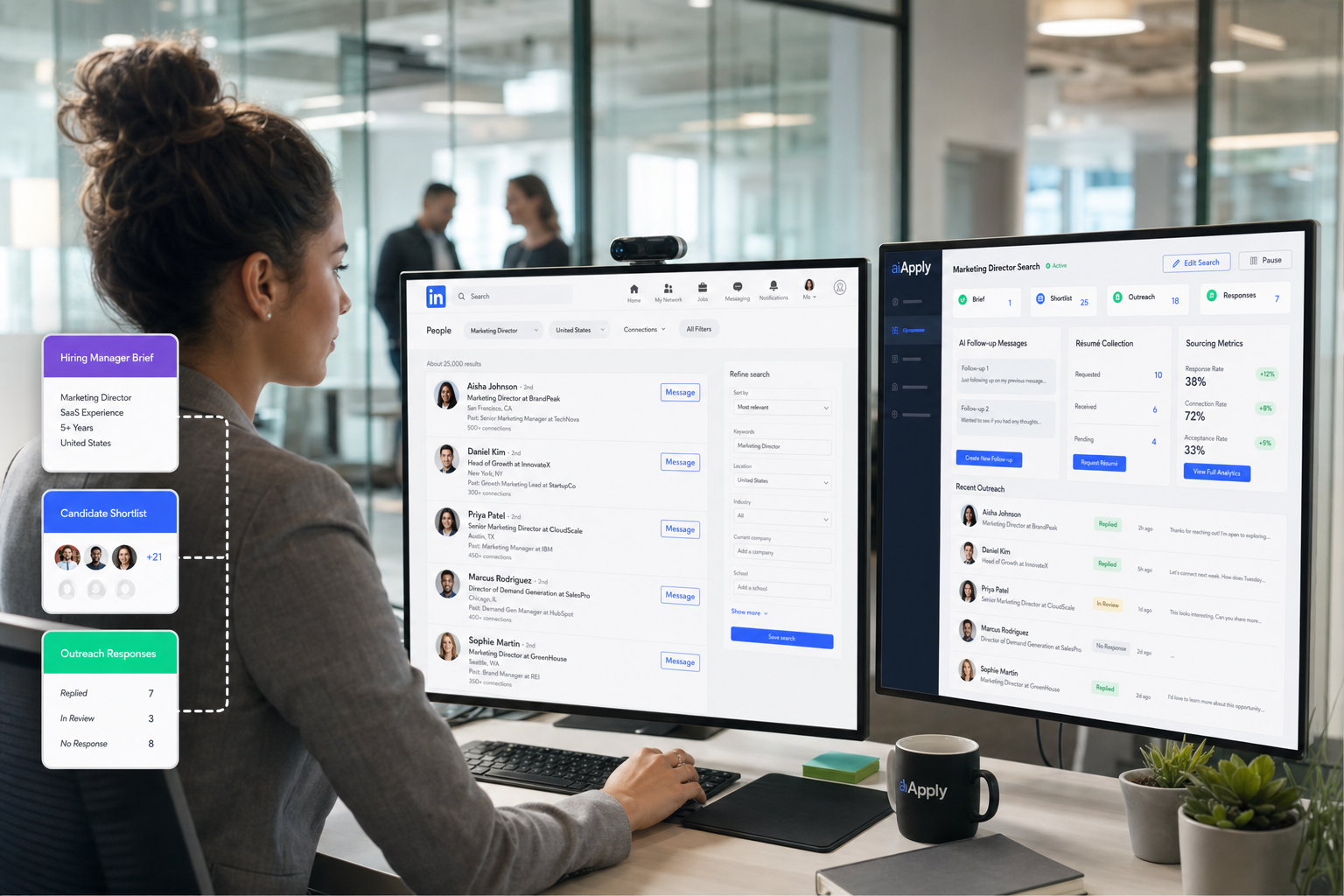
That is why I now treat AI support as workflow support, not magic. In my own sourcing work, tools like StrategyBrain AI Recruiter have been most useful when I need two things at once: steady LinkedIn follow-up and after-hours candidate communication without losing the thread of the search. Its automated outreach, multilingual messaging, and résumé collection can remove repetitive top-of-funnel work, but the recruiter still has to make the final call on fit, résumé quality, and next-step decisions.
A useful way to understand this comes from an older shared-services lesson, not from recruiting software. In that example, a finance leader described visiting a shared-services team and realizing that experienced people can still underdeliver when they are treated like a distant execution unit instead of part of the real team. They had the credentials, the process discipline, and years of experience, but they lacked enough business context to know why the work mattered and what a strong outcome should look like.
The same problem appears in recruiting sourcing when a sourcer, coordinator, or AI-supported workflow gets a role brief without the bigger picture. One person opens the requisition, another drafts outreach, another reviews replies, yet nobody has been told the acceptable substitutes, the business reason behind urgency, or why one background works better than another. As in the shared-services example, execution becomes narrower than strategy. That is exactly where AI candidate sourcing helps or hurts: it scales whatever level of clarity the team shares at the start.
So before discussing tools, channels, or automation, it helps to define the real operating question. In modern recruiting sourcing, the issue is not only where to find candidates. It is how to share enough role context, workflow ownership, and source logic that humans and AI can work from the same understanding. That is the practical answer behind hr sourcing meaning, and it is also the foundation for creative sourcing strategies recruitment teams can actually repeat.
Table of Contents
- Why Context Comes Before Search
- What Candidate Sourcing Means in Practice
- Sourcing vs. Recruiting
- What AI Candidate Sourcing Actually Changes
- A Shared-Workflow Model for Better Sourcing
- Channels and Creative Sourcing Strategies
- LinkedIn Sourcing Experience With AI Support
- How to Measure Sourcing Performance
- Common Mistakes to Avoid
- FAQ
Why Context Comes Before Search
The most valuable takeaway from the shared-services example is simple: specialized execution improves when people understand the bigger objective, not just the task in front of them. In recruiting sourcing, that means a sourcer needs more than a job description and a target title list. They need to know what the business is trying to solve, which requirements are fixed, which are flexible, and why this search matters now.
That is also why AI sourcing projects fail when teams expect technology to compensate for vague intake. If your role brief is contradictory, if your hiring manager wants “senior but inexpensive,” or if nobody defines feeder backgrounds, then no search workflow will stay sharp for long. AI can help interpret skills, surface similar profiles, and keep candidate conversations moving, but it cannot invent strategic clarity.
Key insight: Better recruiting sourcing starts with shared context, because search quality is only as good as the brief behind it.
This is where the shared-services analogy becomes surprisingly useful. In that original situation, work quality improved when the remote team was treated as part of the wider function rather than a separate unit that merely completed assigned tasks. In sourcing, the same principle applies to sourcers, recruiters, coordinators, and AI-assisted workflows. The closer they are to the true hiring context, the better the search output becomes.
What Candidate Sourcing Means in Practice
Candidate sourcing is the proactive process of identifying, evaluating, and engaging people before they formally apply. In day-to-day recruiting sourcing, that means building a pool of qualified prospects instead of relying only on inbound applicants.
If you are looking for hr sourcing meaning, the clearest definition is this: sourcing is a top-of-funnel talent activity focused on finding active and passive talent, organizing early-stage pipelines, and creating a better starting point for the rest of recruiting.
Strong sourcing is broader than profile searching. It includes talent mapping, internal database review, source tracking, outreach planning, market calibration, and candidate relationship management. That is why experienced recruiters do not treat sourcing as “just LinkedIn” or “just Boolean.” It is an operating discipline.
Sourcing vs. Recruiting
One of the most common misunderstandings in recruiting sourcing is assuming sourcing and recruiting are interchangeable. They overlap, but they serve different purposes.
| Area | Sourcing | Recruiting |
|---|---|---|
| Primary goal | Find and attract qualified prospects | Move prospects through the hiring process |
| Timing | Top of funnel | Full funnel |
| Main activities | Search, talent mapping, outreach, pipeline building | Screening, interviews, coordination, offers, close |
| Key metrics | Response rate, source quality, qualified leads | Interview conversion, offer acceptance, time to hire |
The difference matters even more when AI enters the workflow. If sourcing is treated as a shallow list-building task, AI will usually amplify noise. If sourcing is treated as a strategic top-of-funnel function with clear ownership and feedback loops, AI can increase reach and consistency without weakening judgment.
What AI Candidate Sourcing Actually Changes
AI candidate sourcing changes how recruiters search, revisit old data, and manage early conversations. Traditional sourcing depended heavily on exact title matches, keyword strings, and manual follow-up. Those methods still matter, but AI expands what recruiters can do by helping them search more flexibly and communicate more consistently.
In practical terms, AI sourcing usually improves several parts of the workflow:
- Semantic matching that goes beyond exact-title filtering
- Natural-language search based on role description rather than complex syntax alone
- Candidate rediscovery inside older ATS and CRM records
- Prioritized review so recruiters can focus on stronger prospects first
- Automated follow-up to keep candidate conversations moving outside business hours
That last point is increasingly important for LinkedIn-heavy sourcing. Many candidates reply after work, across time zones, or in short bursts that are easy to miss when a recruiter is juggling multiple searches. A tool such as AI Recruiter can help maintain momentum by handling initial outreach, answering common role questions, and collecting résumé details from interested prospects. But it should be used as a recruiter-support layer, not as a substitute for qualification.
I have found that this support is most useful when the search is already well-defined. If the role brief is strong, automated outreach and follow-up can meaningfully reduce manual LinkedIn strain. If the brief is weak, the technology simply helps the team move faster in the wrong direction.
A Shared-Workflow Model for Better Sourcing
The shared-services story also offers a useful management model for sourcing teams. In that original discussion, one major lesson was that specialized teams perform better when they understand the “why” behind the work. In recruiting sourcing, that translates into a shared-workflow model with four parts.
1. Define what success looks like before search begins
A role brief should not stop at requirements. It should explain the business problem, likely feeder backgrounds, acceptable substitutions, and the difference between “must have” and “nice to have.” Otherwise, the sourcer is working like the person asked to buy a blue suit without measurements, preferences, or intended use.
2. Share strategy, not just tasks
The original shared-services lesson distinguished between teams that can see wider strategy and outside partners who only get limited information. In sourcing, this is the difference between assigning a search and explaining the search. Recruiters produce better outcomes when they know the business context, stakeholder pressure, and role trade-offs.
3. Treat sourcing partners as part of the same team
Whether the work is done by an internal sourcer, a split-desk recruiter, a research function, or an AI-supported workflow, better results come when information flows both ways. Hiring manager feedback should improve future searches. Candidate objections should refine market assumptions. Search data should shape intake, not just report on it.
4. Build capability instead of repeating workarounds
In the source material, talent development mattered because the organization was investing in internal capability. Recruiting teams should think similarly. Good sourcing processes are not just about filling today’s opening. They improve future searches by creating cleaner data, sharper role briefs, stronger messaging patterns, and better talent maps.
Channels and Creative Sourcing Strategies
The phrase creative sourcing strategies recruitment often gets reduced to unusual channels, but creativity in sourcing is usually about relevance rather than novelty. The best sourcing strategies match the role, the talent market, and the level of candidate awareness.
1. Start with warm talent pools
Before launching a broad search, review past finalists, referrals, silver medalists, alumni, and ATS/CRM records. AI-assisted rediscovery can be especially useful here because older profiles often have inconsistent notes or outdated titles.
2. Use LinkedIn for market mapping, not just messaging
LinkedIn remains central to modern sourcing because it allows recruiters to trace career paths, identify feeder companies, and spot adjacent talent. But mass outreach rarely performs well without search logic and message relevance behind it.
3. Search adjacent backgrounds, not only identical titles
Many strong candidates do not carry the exact title in your requisition. Search around skill clusters, progression patterns, certifications, and likely transition points.
4. Layer community-based channels
Niche communities, professional groups, and association networks can surface talent that broad searches miss. These are particularly helpful when role titles vary by company or when demonstrated craft matters more than title prestige.
5. Segment outreach by candidate intent
Active candidates, passive candidates, and previously engaged candidates respond to different outreach styles. The more tailored the message, the better the response quality tends to be.
Practical sourcing principles:
- Search internal records before defaulting to cold outbound.
- Pair semantic search with recruiter review.
- Use feeder-background logic, not title dependence alone.
- Share role context before launching outreach.
- Track source quality so good ideas become repeatable process.
LinkedIn Sourcing Experience With AI Support
Because this topic often comes back to LinkedIn use in real recruiting work, it is worth being concrete. The hardest part of LinkedIn sourcing is not always finding profiles. It is maintaining timely, relevant communication at scale while still preserving recruiter judgment.
In one stretch of back-to-back searches, I used StrategyBrain AI Recruiter mainly to reduce repetitive first-touch work. The practical benefit was not that it “replaced recruiting.” It helped me keep candidate conversations moving when replies came in late, when people asked basic role questions, and when interested prospects needed a clean path to share a résumé or contact information. That removed some of the manual stop-start rhythm that often slows LinkedIn sourcing.
What I liked most was the operational fit for searches with high message volume or cross-border outreach. The multilingual communication support and continuous follow-up were useful when candidates responded outside my working hours. What still stayed with me, as it should, was final screening judgment. I still reviewed résumés myself, checked for fit against the true brief, and decided who should move forward.
For agency recruiters, independent headhunters, and lean in-house teams, that distinction matters. AI support can improve consistency and speed in the top of funnel, but the value only holds if the recruiter continues to own calibration, candidate quality, and stakeholder alignment.
How to Measure Sourcing Performance
Too many teams still measure sourcing by activity count alone. Profile views, search volume, or outreach numbers can be useful indicators, but they do not prove that the pipeline is improving. Better measurement connects sourcing work to quality and conversion.
| Metric | What it shows | Why it matters |
|---|---|---|
| Qualified candidates by source | Which channels produce relevant talent | Improves resource allocation |
| Response rate | How outreach resonates | Tests targeting and messaging |
| Screen-to-interview conversion | Whether sourced candidates are genuinely aligned | Measures sourcing quality |
| Time to first qualified slate | How quickly sourcing produces useful options | Important for urgent searches |
| Rediscovered candidates engaged | Value of internal talent pools | Shows warm-pipeline effectiveness |
| Hiring-manager acceptance rate | How well the brief was translated into search output | Connects context quality to search quality |
The final metric is especially important in light of the opening case. If slates are consistently rejected, the problem may not be sourcing effort. It may be that the search team never received enough context to interpret the role correctly in the first place.
Common Mistakes to Avoid
Scaling search before clarifying the brief
When recruiters or AI tools begin outreach before the role is properly calibrated, the team usually creates more rework than progress.
Assuming AI can replace role understanding
AI can accelerate search and communication, but it cannot determine business nuance on its own.
Skipping internal rediscovery
Past applicants, referrals, and former finalists often offer faster value than starting cold every time.
Overusing exact-title logic
Title matching alone misses adjacent talent and transferable experience.
Treating sourcing as separate from strategy
The opening shared-services lesson applies here directly: when execution is cut off from the bigger picture, quality falls even if effort stays high.
FAQ
What is candidate sourcing?
Candidate sourcing is the proactive work of finding, evaluating, and engaging people before they apply. It focuses on pipeline creation at the top of the funnel.
What is sourcing in recruitment?
Sourcing in recruitment is the part of talent acquisition focused on identifying prospects, building talent pools, and beginning candidate engagement before formal screening and interviews.
What is the simplest hr sourcing meaning?
The simplest hr sourcing meaning is proactive talent finding. It includes searching for candidates, organizing prospects, and building early pipeline for hiring teams.
How is sourcing different from recruiting?
Sourcing mainly covers finding and attracting talent, while recruiting covers the broader process of screening, interviewing, coordinating, offering, and closing.
What does AI candidate sourcing do?
AI candidate sourcing helps recruiters search more flexibly, rediscover overlooked talent, prioritize profiles, and maintain faster communication. It still requires recruiter review and final qualification.
What are good creative sourcing strategies recruitment teams can use?
Good creative sourcing strategies recruitment teams use include warm-pool rediscovery, feeder-company mapping, adjacent-skill searches, community-based sourcing, segmented outreach, and stronger source tracking.
Can AI help with LinkedIn sourcing?
Yes. AI can help with repetitive LinkedIn tasks such as initial outreach, follow-up, basic candidate communication, and résumé collection. Recruiters should still handle fit assessment and next-step decisions.
Conclusion
AI candidate sourcing is most effective when it is built on shared understanding rather than isolated execution. That is the strongest lesson carried over from the shared-services example: specialized work improves when people know the bigger goal, the decision logic, and the real definition of success.
For modern recruiting sourcing, that means better intake, clearer role context, stronger reuse of warm talent pools, and careful use of AI to support search and communication. When those pieces are in place, teams get more than speed. They get better slates, better outreach timing, and a sourcing process that scales without losing judgment.