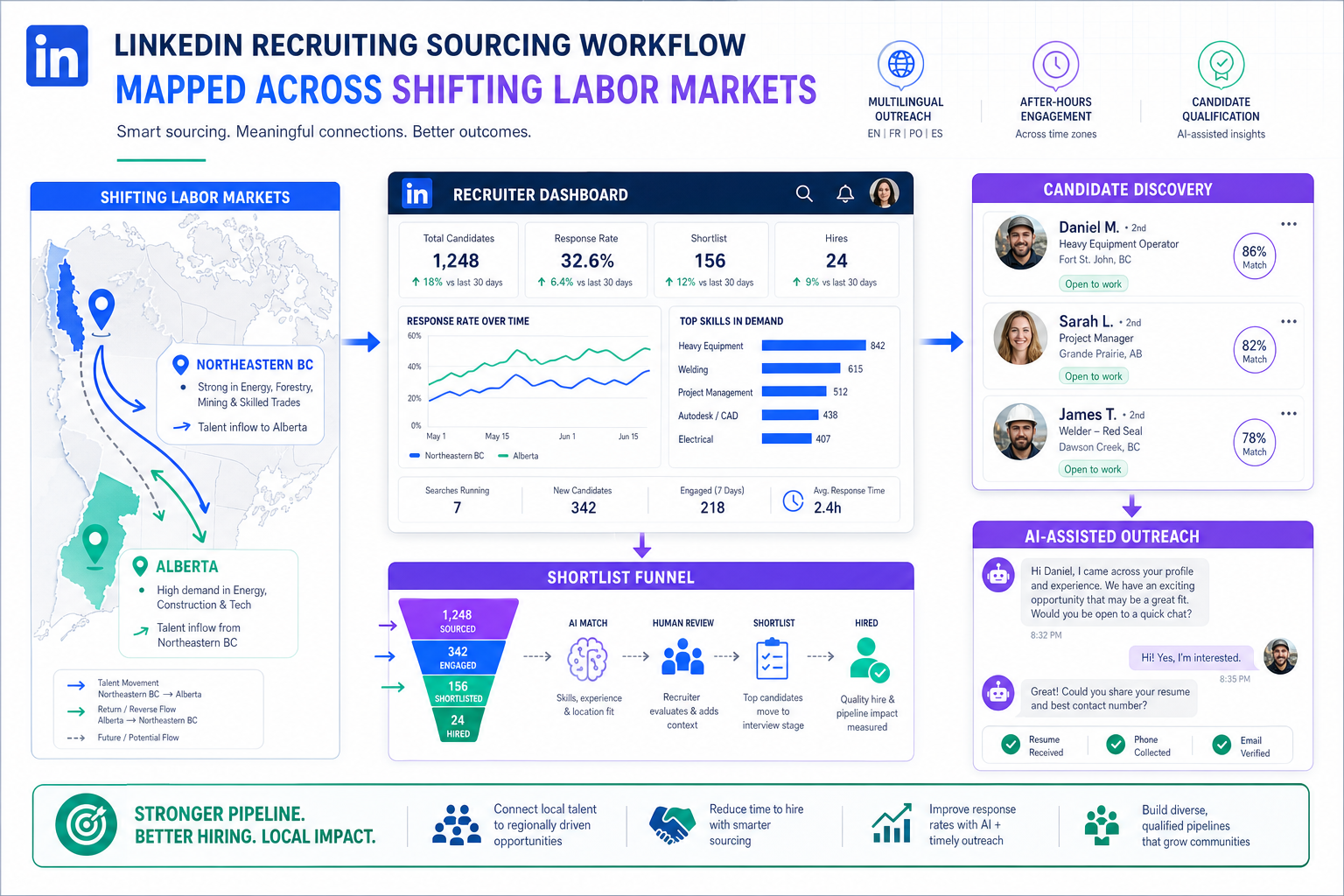
When labor markets shift fast, this article helps headhunters improve recruiting sourcing by judging where talent is newly reachable before response windows close.
When that discipline is missing, recruiters waste hours chasing the wrong talent pockets, over-message people with weak fit, and miss the window when displaced or passive candidates are actually open to a move. For small search firms, that means lower consultant output and weaker client trust. For in-house teams, it means stale shortlists, confused hiring managers, and unnecessary agency spend. Even when the labor market loosens, poor sourcing still creates avoidable delays because volume is not the same as relevance.
That is where StrategyBrain AI Recruiter can help without taking judgment away from the recruiter. In my own workflow, I have found it most useful for three things tied directly to this problem: keeping LinkedIn outreach active after hours, handling multilingual candidate replies when the search crosses regions, and collecting resumes and contact details from interested people so the recruiter can focus on fit and next steps. It supports the repetitive front end of sourcing, but the recruiter still decides who belongs on the shortlist, who is actually qualified, and when to move someone forward.
A good example comes from a labor-market pattern recruiters know well. In Northeastern British Columbia, unemployment rose after sustained commodity price declines, and the last six months were described as the most severe. Skilled workers and laborers suddenly became more available. Some laid-off employees from Tumbler Ridge began looking across the Northeast, while others considered Alberta, where demand had weakened but still remained comparatively strong. For a recruiter, that kind of shift is not just economic news. It changes where you search, which candidates may now respond, and how quickly you need to engage them before they reattach elsewhere.
The next layer of complexity was just as important. Forestry, wood manufacturing, and business services were driving job growth, while Site C dam hiring was expected to create hundreds of security and labor jobs plus a smaller number of apprenticeships. At the same time, many skilled trades roles were likely to be filled by workers from outside the region, and local sourcing was expected to produce only a limited number of experienced people. A recruiter trying to fill roles in that environment would need to review requisitions by trade, separate local from relocation-ready talent, update outreach based on shifting project demand, and track conversations carefully as candidate intent changed. That is exactly where AI candidate sourcing becomes practical: not as a replacement for recruiting sourcing, but as a way to keep search, response handling, and candidate capture aligned with a fast-changing market.
This is also the clearest way to understand hr sourcing meaning and to build a stronger talent sourcing strategy. Sourcing is not just finding names. It is reading market movement, identifying who is newly available, deciding which channels fit the role, and engaging candidates before demand changes again. The rest of this article breaks that process down in practical terms, with a focus on what experienced recruiters can automate safely and what still requires human judgment.
- What market shifts teach us about sourcing
- What is sourcing in recruitment?
- Sourcing vs. recruiting
- HR sourcing meaning in practice
- How to build a talent sourcing strategy
- How AI candidate sourcing improves recruiting sourcing
- Using AI for LinkedIn sourcing workflows
- Best sourcing channels and methods
- Outreach and engagement best practices
- Sourcing KPIs that matter
- Common sourcing mistakes
- FAQ
What Market Shifts Teach Us About Sourcing
Recruiters often talk about sourcing as if it begins with a search string. In reality, good recruiting sourcing starts earlier, with a read on supply, demand, geography, and timing. The Northeastern BC example is useful because it shows how quickly candidate availability can change when a regional economy moves.
When unemployment rises because a core industry slows, two things usually happen at once. First, more talent becomes reachable. Second, that talent does not stay available forever. Some people move to adjacent markets. Some wait for local projects to restart. Some shift industries entirely. If recruiters respond slowly, the short-term sourcing opportunity disappears.
That is why experienced sourcers do not treat labor-market shifts as background context. They turn them into action. They revise target company lists, reopen prior candidate pools, segment by mobility, and adjust messaging for people who may be newly willing to talk.
Practical takeaway: The best sourcing teams do not just search better. They interpret labor-market change faster and convert that insight into candidate outreach before the market rebalances.
What Is Sourcing in Recruitment?
Sourcing in recruitment is the proactive work of identifying, finding, and engaging people before formal screening and interviewing begin. That is the clearest answer to the question, What is sourcing in recruitment?
In day-to-day recruiting sourcing, this means the recruiter is not waiting for applicants alone. They are mapping talent pools, revisiting internal candidates, checking referrals, reviewing adjacent backgrounds, and reaching out to people who may fit even if they are not actively applying.
The market example above makes this more concrete. If a region suddenly has more available tradespeople, laborers, or project-based talent, sourcing is the function that notices the opportunity and acts on it. Recruiting handles the broader journey after that, but sourcing is what creates the initial pipeline.
Direct answer: Sourcing is the front-end talent discovery stage of recruiting, focused on finding and engaging qualified people before interviews and selection.
Sourcing vs. Recruiting: What Is the Difference?
Teams often blur the two terms, but they are not interchangeable. Sourcing is one component of recruiting. Recruiting covers the full hiring process, while sourcing is mainly about pipeline creation.
| Area | Sourcing | Recruiting |
|---|---|---|
| Primary goal | Find and engage talent | Move talent through the hiring process |
| Typical timing | Early stage | End-to-end |
| Main activities | Search, outreach, pipeline building | Screening, interview process, closing |
| Candidate type | Passive and active talent | Engaged applicants and sourced candidates |
| Success signal | Qualified pipeline creation | Interview progression and hires |
In practical terms, if a recruiter learns that local supply is tightening or that a project is about to create a new demand spike, sourcing is the function that acts first. If the team fails at sourcing, recruiting later becomes reactive and expensive.
This matters even more in AI candidate sourcing. Automation can help surface people and manage first-touch communication, but if the team has not separated sourcing from recruiting, the workflow gets noisy quickly.
HR Sourcing Meaning in Practical Terms
If someone asks about hr sourcing meaning, the plain answer is this: it is the part of talent acquisition that focuses on locating and attracting people for current and future hiring needs. It is proactive, research-based, and tied closely to business demand.
In a smaller company, one recruiter may own both sourcing and recruiting. In a larger organization, sourcing work may sit with dedicated sourcers, recruiters, talent intelligence partners, or hiring managers. The structure changes, but the core work usually includes:
- Clarifying the real hiring need
- Defining target backgrounds and adjacent profiles
- Selecting channels based on market conditions
- Searching internal and external talent pools
- Running outreach and follow-up
- Reviewing source quality and pipeline movement
The most useful interpretation of hr sourcing meaning is operational. It tells you whether your team has a repeatable way to create qualified candidate flow before the requisition stalls.
How to Build a Talent Sourcing Strategy
A durable talent sourcing strategy starts with market logic, not tools. The Northeastern BC labor story is a reminder that sourcing quality depends on reading demand, supply, and mobility correctly before sending a single message.
1. Start with demand context, not just the job description
Role intake should cover must-haves, trade-offs, target backgrounds, likely geographies, compensation realities, and any upcoming project pressure. If one project is ramping up while another local employer is laying people off, that changes who may be available and what message will resonate.
Strong recruiting sourcing translates the requisition into searchable signals. A hiring manager may ask for an operations hire, a recruiter, or a field supervisor, but the sourcer needs to know what backgrounds are truly acceptable and where similar people are likely to sit today.
2. Build a candidate map around movement patterns
A good sourcing persona is not a fictional profile. It is a working map of titles, skill adjacencies, likely employers, and mobility patterns. In volatile markets, this also includes who may now be newly open because local demand has softened.
That is one reason AI can be helpful. It can surface adjacent titles and transferable profiles that standard keyword logic may miss.
3. Choose channels based on the market, not habit
A practical talent sourcing strategy uses multiple channels intentionally. Common sourcing channels include:
- LinkedIn and direct social search
- Referrals
- Internal talent pools
- Candidate databases
- Industry communities and associations
- Job boards for active candidates
- Regional and project-based networks
The right mix changes by role. If local supply is shallow, you may need relocation outreach. If a layoff event increases talent availability, direct outreach may outperform inbound channels for a short period.
4. Search with breadth, then narrow with judgment
Traditional Boolean search still matters, but modern AI candidate sourcing can add semantic matching and related-profile discovery. That helps recruiters spend less time chasing exact-title perfection and more time reviewing realistic fit.
In my own experience using AI Recruiter, the biggest benefit was not that it "found magic candidates." It was that it kept outbound motion going while I refined who actually deserved attention. I could let initial outreach and response handling continue, then step in for qualification once resumes and candidate intent were clear.
5. Personalize outreach around why now
Candidate engagement improves when the message reflects both fit and timing. In a shifting market, timing matters more than recruiters sometimes admit. A message to someone who has just been laid off, is considering a relocation, or is watching project demand soften should not sound like a generic evergreen pitch.
Even when AI helps draft or continue conversations, the recruiter should control the final framing and verify the role logic.
6. Measure what converts, not what keeps people busy
Track source performance, response rate, qualified candidate rate, and speed to shortlist. If a channel creates a lot of names but very few qualified conversations, it is not doing enough work for you.
How AI Candidate Sourcing Improves Recruiting Sourcing
The best use of AI candidate sourcing is not full replacement of recruiter judgment. It is support for better decisions at scale, especially when market conditions shift quickly and outreach volume rises.
AI broadens discovery beyond exact matches
Many recruiters miss good people because profiles do not use expected titles. AI can identify related experience patterns and adjacent skills, which is especially useful when candidates are moving between industries or adapting to a changed market.
AI keeps response handling moving
One of the most practical bottlenecks in recruiting sourcing is not search alone. It is what happens after the first message. Candidates reply after work hours, across time zones, or in another language. If nobody answers, the conversation dies.
This is where StrategyBrain AI Recruiter is useful in a very grounded way. It can continue LinkedIn conversations, answer common role questions, identify whether someone is open to hearing more, and collect resumes or contact details. That reduces dead time between first contact and recruiter review.
AI helps recruiters prioritize effort
When labor supply suddenly expands, recruiters can become overwhelmed by profile volume. AI can help move likely matches to the front of the queue so the recruiter spends time on evaluation instead of repetitive sorting.
AI supports workflow, but recruiters still qualify
This is the line experienced practitioners should protect. AI can connect, message, follow up, and collect information. It does not replace recruiter calibration with the hiring manager, resume review, or final qualification decisions.
Using AI for LinkedIn Sourcing Workflows
Because much modern sourcing happens on LinkedIn, workflow discipline matters as much as search logic. Recruiters lose candidates when first-touch messages sit unanswered, when notes are incomplete, or when resume requests happen too late.
In that environment, AI Recruiter can be a practical support layer. Based on the way it is designed, the strongest fit is for recruiters who need help with:
- Starting and maintaining high-volume LinkedIn outreach
- Responding to candidate questions around the clock
- Handling multilingual conversations across regions
- Collecting resumes and contact details from interested candidates
I would still use it with a simple rule: let the system handle repetitive initial communication, then take over personally when candidate quality, salary expectations, or hiring-manager nuances need a human read. That balance protects candidate experience while keeping the funnel active.
For recruiters who want to review how similar workflows are discussed, the published LinkedIn automation overview and the broader StrategyBrain site give a clearer sense of the operating model. The key point is still the same: the recruiter remains responsible for judgment.
Best Sourcing Channels and Methods
The best channel depends on role type, labor-market pressure, and recruiter capacity. The Northeastern BC example showed why channel choice has to reflect reality on the ground rather than recruiter habit.
LinkedIn and direct social search
Useful for passive candidate discovery, mobility signals, and direct outreach. Especially valuable when candidates are newly open but not actively applying yet.
Employee referrals
Still highly effective because employees often know who is becoming available in their market before public signals catch up.
Internal talent and prior finalists
Often underused. If market timing matters, your fastest qualified pipeline may come from people you already know.
Industry communities and regional networks
Important in sectors where project demand and geographic mobility shape hiring more than polished online profiles do.
Job boards
Still useful for active talent, but they should not be mistaken for a full sourcing plan.
Candidate databases and direct outreach
These remain core parts of recruiting sourcing, especially when the role is specialized and the available market is shifting quickly.
Outreach and Engagement Best Practices
Strong outreach should answer three questions quickly: Why me? Why this role? Why now? That last question matters even more when sourcing into a changing market.
- Lead with a real match: mention the experience or project pattern that made the person relevant.
- Acknowledge timing: if the market or industry is shifting, your message should reflect that reality naturally.
- Keep the ask light: passive and uncertain candidates respond better to low-pressure invitations.
- Follow up with purpose: one useful follow-up beats several empty nudges.
- Know when to switch from AI to human: once interest is real, recruiter ownership matters.
Candidates can usually tell when a conversation has no judgment behind it. Automation can support engagement, but relevance still closes the gap.
Sourcing KPIs That Matter
If you want sourcing to improve, measure outcomes, not just activity volume.
| KPI | What it shows | Why it matters |
|---|---|---|
| Source performance | Which channels produce usable candidates | Helps shift effort toward what works |
| Response rate | How often candidates engage | Signals targeting and messaging quality |
| Qualified candidate rate by source | Which channels deliver actual fit | Prevents overvaluing volume |
| Pipeline conversion | Movement from sourced lead to interviews | Shows whether sourcing quality is real |
| Time to shortlist | How quickly viable options emerge | Important when market windows are short |
These metrics matter for both manual and AI candidate sourcing. If automation creates more conversations but not more qualified candidates, the workflow still needs adjustment.
Common Recruiting Sourcing Mistakes to Avoid
Most sourcing mistakes become more expensive during a market shift.
- Ignoring labor-market signals: recruiters miss timing advantages when they source as if nothing has changed.
- Using the job description as the search plan: postings are too broad to guide effective sourcing alone.
- Overvaluing exact title matches: adjacent experience often matters more.
- Relying on one channel: it narrows reach and skews judgment.
- Sending generic outreach: this wastes the short period when candidates may be newly open.
- Automating without review: AI should support workflow, not replace qualification.
- Tracking activity instead of outcomes: busy does not mean productive.
The fix is usually better structure, not simply more effort.
FAQ
What is sourcing in recruitment?
Sourcing in recruitment is the proactive process of finding and engaging potential candidates before screening and interviewing begin.
What does HR sourcing mean?
HR sourcing meaning refers to the talent acquisition work of identifying, attracting, and initiating contact with people for current or future roles.
How is sourcing different from recruiting?
Sourcing focuses on talent discovery and outreach. Recruiting covers the wider process, including screening, coordination, interviews, and offers.
What is a talent sourcing strategy?
A talent sourcing strategy is a repeatable plan for defining target talent, selecting channels, searching effectively, conducting outreach, and measuring source quality.
How does AI candidate sourcing help recruiters?
AI candidate sourcing can improve discovery, keep outreach moving, support multilingual communication, and collect resumes or contact details from interested candidates.
Does AI replace recruiters in sourcing?
No. Recruiters still need to evaluate fit, review resumes, calibrate with hiring managers, and make final process decisions.
Why do labor-market shifts matter for sourcing?
They affect candidate availability, channel choice, mobility patterns, and response timing. Good sourcers adjust quickly when the market changes.
Conclusion
The real lesson from shifting markets like Northeastern BC is simple: candidate availability is dynamic, and sourcing has to respond faster than the market resets. That is why strong recruiting sourcing depends on more than search mechanics. It requires labor-market awareness, role clarity, channel discipline, and good follow-through.
If your team understands what sourcing is, what hr sourcing meaning looks like in operations, and how to build a repeatable talent sourcing strategy, then AI candidate sourcing becomes much more useful. Used well, it helps recruiters keep outreach active, capture candidate interest faster, and spend more time on judgment instead of repetitive admin. That is the point: better sourcing decisions, not just more sourcing activity.