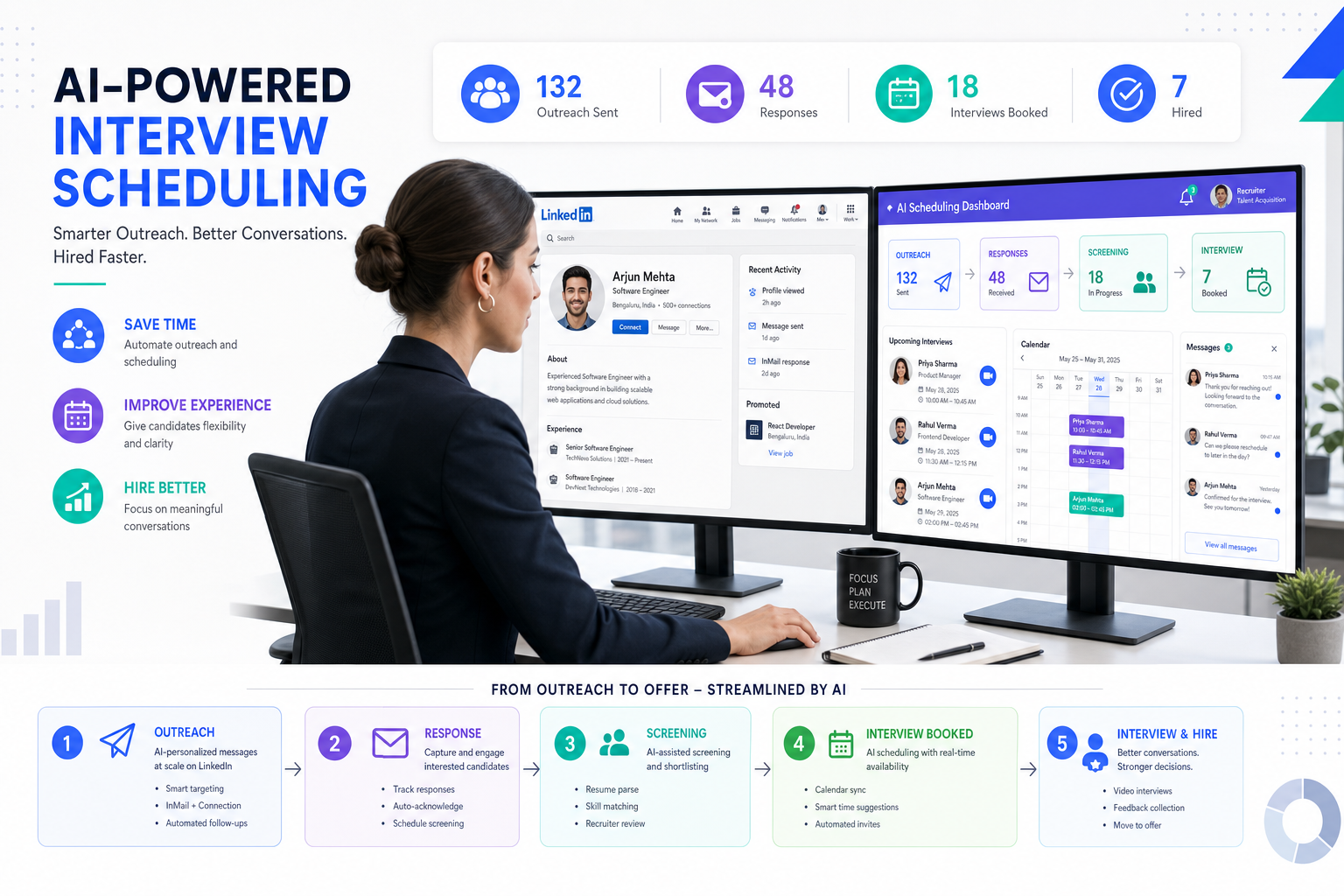
When candidate momentum is fragile, this article helps headhunters judge ai hiring software by workflow control to avoid scheduling delays that cost interviews.
That matters most when the labor market tightens and candidates start weighing more than salary. In that environment, every delayed reply, every missed follow-up, and every extra round of calendar chasing creates avoidable risk. A recruiter can lose speed, a hiring manager can lose visibility, and a firm can lose trust with both clients and candidates. The damage is not only operational. When one departure triggers another and hiring demand stacks up, interview coordination becomes a business pressure point, not an admin task.
In my own workflow, tools that support outreach, after-hours follow-up, and resume collection before scheduling have helped reduce that pressure. One option in that category is StrategyBrain AI Recruiter, which can keep candidate conversations moving, respond across time zones, and gather resumes or contact details before a recruiter steps in for shortlist review. That matters in high-volume search work because the recruiter still makes the final judgment on fit, but repetitive front-end communication no longer has to stall the interview pipeline.
The underlying issue becomes clearer in a market where experienced professionals know they have leverage. In the biotech hiring update that shaped this discussion, the real tension was not abstract talent scarcity. It was what happened after people started leaving: extra workload on the remaining team, expensive replacement activity, and a recruiting process that quickly became stressful when several openings had to be filled at once. Recruiters were not only competing on pay. They were also dealing with candidates who wanted flexibility, career progression, and work that felt worthwhile.
Picture the recruiting work behind that scenario. A recruiter is reviewing resumes for technical roles, replying to candidates who ask about remote options, logging who is still interested, and trying to line up first interviews before attention shifts to another employer. Then a second resignation lands, stakeholder urgency rises, and the same recruiter now has to coordinate multiple interview stages without losing the context of why each candidate might actually move. The bottleneck is no longer sourcing alone. It is the handoff from interest to interview.
That is exactly where automated interview scheduling earns its place inside modern ai hiring software. When candidates are comparing flexibility, growth, and employer credibility, the process needs to move quickly without becoming careless. It also explains where free video interview platforms and a video job application platform fit: they can remove friction early, but only if they support a structured workflow rather than adding one more disconnected step.
- Why Scheduling Speed Matters More in Candidate-Led Markets
- What Automated Interview Scheduling Really Means
- Choosing Between Video Application, Async, and Live Interviews
- A Practical Recruiter Workflow From Interest to Interview
- When Free Video Interview Platforms Are Enough
- How to Evaluate AI Hiring Software for Scheduling Control
- Best Practices for Fair and Structured Scheduling
- Common Mistakes That Slow Down Hiring
- Quick Comparison Table
- FAQ
Why Scheduling Speed Matters More in Candidate-Led Markets
Recruiters often talk about interview scheduling as a productivity feature, but in practice it is a market response. When skilled candidates have options, they judge employers partly by how the process feels. Slow replies suggest weak coordination. Repeated rescheduling suggests low internal alignment. A vague next step suggests the role may not be a priority.
The biotech labor-market perspective is useful here because it highlights the chain reaction that follows attrition. One resignation creates backfill work. Multiple resignations create cost, urgency, and cultural stress at the same time. For hiring teams, that means more resumes to review, more stakeholders to coordinate, and more chances for candidate momentum to fade between stages.
It also changes what recruiters need to capture early. If candidates are weighing remote work, professional advancement, and whether the company mission feels credible, the interview process has to surface those concerns quickly. Scheduling software alone cannot do that. But ai hiring software that connects communication, pre-screening, and scheduling can help a recruiter move faster while preserving context.
Key insight: automated interview scheduling is not only about saving recruiter time. It is about reducing the delay between candidate interest and informed next steps in a market where delay changes outcomes.
What Automated Interview Scheduling Really Means
In recruiting, automated interview scheduling usually means candidates can choose from approved time slots without trading several rounds of email. In a stronger workflow, it also includes reminders, rescheduling rules, interviewer coordination, and stage updates tied to the applicant tracking process.
That sounds simple, but good scheduling automation does more than book a meeting. It preserves structure. Recruiters define who interviews at each stage, how much buffer time is needed, what happens when someone reschedules, and when a candidate should move from screening to shortlist review. Inside ai hiring software, that turns scheduling from a standalone calendar action into part of the hiring system.
For headhunters and in-house teams, the real question is whether the system protects decision quality while removing admin. If candidates can self-schedule but the recruiter still controls stage design, interviewer assignment, and final qualification, automation is doing its job.
Choosing Between Video Application, Async, and Live Interviews
Teams get better results when they separate early-stage formats instead of treating all video steps the same. That choice should follow the hiring question you need to answer.
1. Video application before formal screening
A video job application platform is often useful before the first interview is even scheduled. Candidates submit short recorded responses or introductions that help recruiters assess motivation, communication, or role understanding. This can be especially practical for customer-facing, commercial, or stakeholder-heavy roles where presence and clarity matter.
The advantage is not novelty. It is reducing unnecessary live interviews. If the team can review a structured set of responses first, only the better-matched candidates move to the scheduling stage.
2. One-way asynchronous interviews
Asynchronous interviews remove calendar friction from first-round screening. Candidates respond on their own time, and reviewers assess everyone against the same prompts. This helps when hiring volume is high or when time zones make live screening inefficient.
In my experience, this format works best when the questions are tightly scoped and tied to the actual role. If prompts are too generic, the process feels like extra homework rather than meaningful screening.
3. Live interviews with automated scheduling
Live interviews still matter once the team needs follow-up questions, stakeholder interaction, or deeper assessment. This is where automated interview scheduling has the clearest value: fewer emails, cleaner handoffs, and less recruiter time spent coordinating availability across hiring managers.
The mistake is using live interviews too early for everyone. In candidate-led markets, speed matters, but so does proportionality. Use real-time interviews where they add decision value.
A Practical Recruiter Workflow From Interest to Interview
The strongest workflows connect sourcing, communication, screening, and scheduling rather than treating each as a separate tool purchase.
- Candidate interest is confirmed: outreach, referral, or inbound application creates the first signal.
- Basic information is collected: resume, contact details, and immediate interest level are captured.
- Context is clarified: the recruiter identifies practical motivators such as flexibility, growth, location, or mission fit.
- Early screening happens: through a video job application platform or asynchronous interview step where useful.
- Qualified candidates self-schedule: selected applicants receive approved interview windows.
- Live interviews run with structure: interviewers receive timing, reminders, and role context.
- Shortlist decisions stay centralized: notes, stage movement, and final review happen in one workflow.
I have found that front-loading communication makes scheduling easier later. When I tested AI-supported messaging in sourcing-heavy roles, the most useful outcome was not that the system “picked” candidates. It was that repetitive contact work moved faster. With AI Recruiter, candidate questions can be answered after hours, resumes can be collected while interest is still fresh, and the recruiter can step in once a candidate is ready for real evaluation. That is particularly helpful when hiring across regions or when LinkedIn replies arrive outside normal working hours. The human recruiter still reviews resumes, decides who belongs on the shortlist, and owns the interview decision.
When Free Video Interview Platforms Are Enough
Free video interview platforms can be useful, but only in the right circumstances. For a small firm, a pilot program, or occasional hiring, a free plan or free trial may be enough to test candidate adoption and internal workflow discipline.
They make the most sense when:
- You are testing one-way interviews for first-round screening.
- You have low hiring volume and limited stakeholder complexity.
- You want to evaluate candidate comfort with video before redesigning the full process.
- You do not yet need deep workflow integration.
They become less useful when:
- Several recruiters and hiring managers need shared visibility.
- Rescheduling rules and stage control matter.
- Interview scheduling must connect cleanly with screening decisions.
- Reporting and process consistency are important across multiple searches.
The key lesson from tight labor markets is that fragmentation creates risk. A free tool may be good enough for a single step, but if it forces recruiters back into manual tracking, the process starts slowing down again exactly where candidate attention is most fragile.
How to Evaluate AI Hiring Software for Scheduling Control
If you are comparing options, evaluate the workflow rather than the feature list. A recruiter does not buy “automation” in the abstract. They buy fewer delays, cleaner handoffs, and better process control.
Candidate power and response speed
Can the system help you move from candidate interest to scheduled interview before momentum fades? This matters more in labor markets where good candidates are weighing multiple opportunities at once.
Support for flexibility questions
The reference market update emphasized remote work, advancement, and meaningful work as major decision factors. Your software should help you capture and route those questions early, not lose them in email threads.
Stage clarity
Can you separate video applications, asynchronous screening, and live interviews without confusing candidates or interviewers?
Recruiter control
Does the system automate admin while keeping the recruiter responsible for final review, shortlist quality, and the decision to move forward?
Communication continuity
If replies come in after hours or across regions, can the workflow keep moving? This is one place where AI-supported communication tools can help the process before scheduling begins.
Data handling and visibility
Recorded responses, resumes, scheduling status, and interviewer notes should be easy to review in one place. Otherwise, the process gains speed in one stage and loses it in another.
Best Practices for Fair and Structured Scheduling
Good automation depends on good design. These are the practices I would put in place before expanding any scheduling workflow.
Set the rules before sharing links
Define interviewer pools, time windows, buffers, and rescheduling rules first. Candidate flexibility works best when recruiter control is clear.
Match the format to the hiring question
If you need motivation and communication samples, a video job application platform may be enough. If you need consistency at scale, asynchronous interviews help. If you need stakeholder discussion, move to live interviews with self-scheduling.
Keep candidate motivators visible
In tight markets, candidates are not only asking about compensation. They are weighing flexibility, growth, and the employer’s purpose. Keep those details attached to the candidate record so interviewers understand what matters to the person they are meeting.
Communicate the mechanics clearly
Tell candidates if a download is required, whether an account is needed, how long the step will take, and how recordings will be used. This is particularly important with free video interview platforms, where the user experience can vary.
Protect alternatives and accessibility
Any automated process should include an alternative path for candidates who cannot complete a video step or who need another scheduling arrangement.
Common Mistakes That Slow Down Hiring
- Automating a weak process: speed only helps if stage design is already clear.
- Using live calls for everyone: this creates avoidable bottlenecks in early screening.
- Ignoring why candidates move: if flexibility or growth is driving the decision, interview timing alone will not solve drop-off.
- Separating communication from scheduling: candidate questions often need answers before they will commit to a slot.
- Choosing only on price: some free video interview platforms are useful, but low cost is not the same as workflow fit.
- Letting AI overstep recruiter judgment: automation should support response handling and admin, while recruiters keep control of fit assessment and progression.
Quick Comparison Table
| Use Case | Best Fit | Main Advantage | Watch-Out |
|---|---|---|---|
| Large first-round screen volume | Asynchronous video interviews | Review candidates without coordinating live calls | Needs structured prompts and reviewer discipline |
| Early communication and resume capture | AI-supported sourcing and messaging workflow | Keeps interest moving before scheduling starts | Recruiter must still own qualification and shortlist decisions |
| Early application filtering | Video job application platform | Helps reduce unnecessary live interviews | Should be relevant to the role, not added as a novelty step |
| Low-volume pilot hiring | Free video interview platforms | Low-cost way to test adoption | Often lacks workflow depth and shared visibility |
| Multi-stage structured hiring | AI hiring software | Connects screening, scheduling, and interview progression | Requires process design, not just software setup |
FAQ
What is automated interview scheduling in recruiting?
It is a workflow that lets candidates choose from approved interview slots while the recruiting team controls stage rules, interviewer availability, reminders, and rescheduling conditions.
How does ai hiring software improve interview scheduling?
It improves scheduling by connecting candidate communication, screening status, and interview booking in one process. That reduces manual handoffs and helps recruiters move faster without losing visibility.
When should I use a video job application platform?
Use a video job application platform when a short recorded response can help assess motivation, communication, or job understanding before a live interview is worth scheduling.
Are free video interview platforms worth trying?
Yes, especially for small teams, low hiring volume, or short-term testing. But they are usually less effective when you need multi-stage coordination, consistent evaluation, and recruiter collaboration.
Can AI handle interview decisions for recruiters?
No system should replace final recruiter judgment. AI can support messaging, follow-up, and data collection, but resume review, shortlist quality, and hiring decisions should remain with the recruiter and hiring team.
Why does scheduling matter more in a tight labor market?
Because strong candidates have options. If they are comparing flexibility, career growth, and employer quality, a slow or confusing interview process can push them toward another opportunity before your team gets a real evaluation chance.
Conclusion
Automated interview scheduling works best when it solves a real market problem: candidates have choices, recruiters have too many moving parts, and delay changes outcomes. The labor-market logic behind this is straightforward. When resignations increase, replacement pressure rises, and candidates begin prioritizing flexibility, advancement, and meaningful work, the recruiting process has to become faster without becoming sloppy.
That is why the strongest approach is usually a connected one. Use ai hiring software to keep scheduling tied to communication and stage control. Use a video job application platform when early recorded responses improve shortlist quality. Use free video interview platforms selectively when the workflow is simple enough to support them. And where front-end candidate communication is slowing down sourcing, tools such as StrategyBrain AI Recruiter can help keep interest warm until the recruiter is ready to evaluate and schedule the right people.