Headhunters can use this guide to judge which ai recruiting tool speeds screening without hurting trust or shortlist quality.
That matters because most recruiting pain does not start with a lack of technology. It starts when message volume rises, candidate conversations spill across channels, hiring managers want faster shortlists, and recruiters are left deciding what should be automated without making the process feel careless, biased, or impersonal. For a solo recruiter, that means lost response windows and missed passive talent. For a small search firm, it means weaker throughput and more delivery risk. For an in-house team, it can damage candidate experience and employer reputation at the same time.
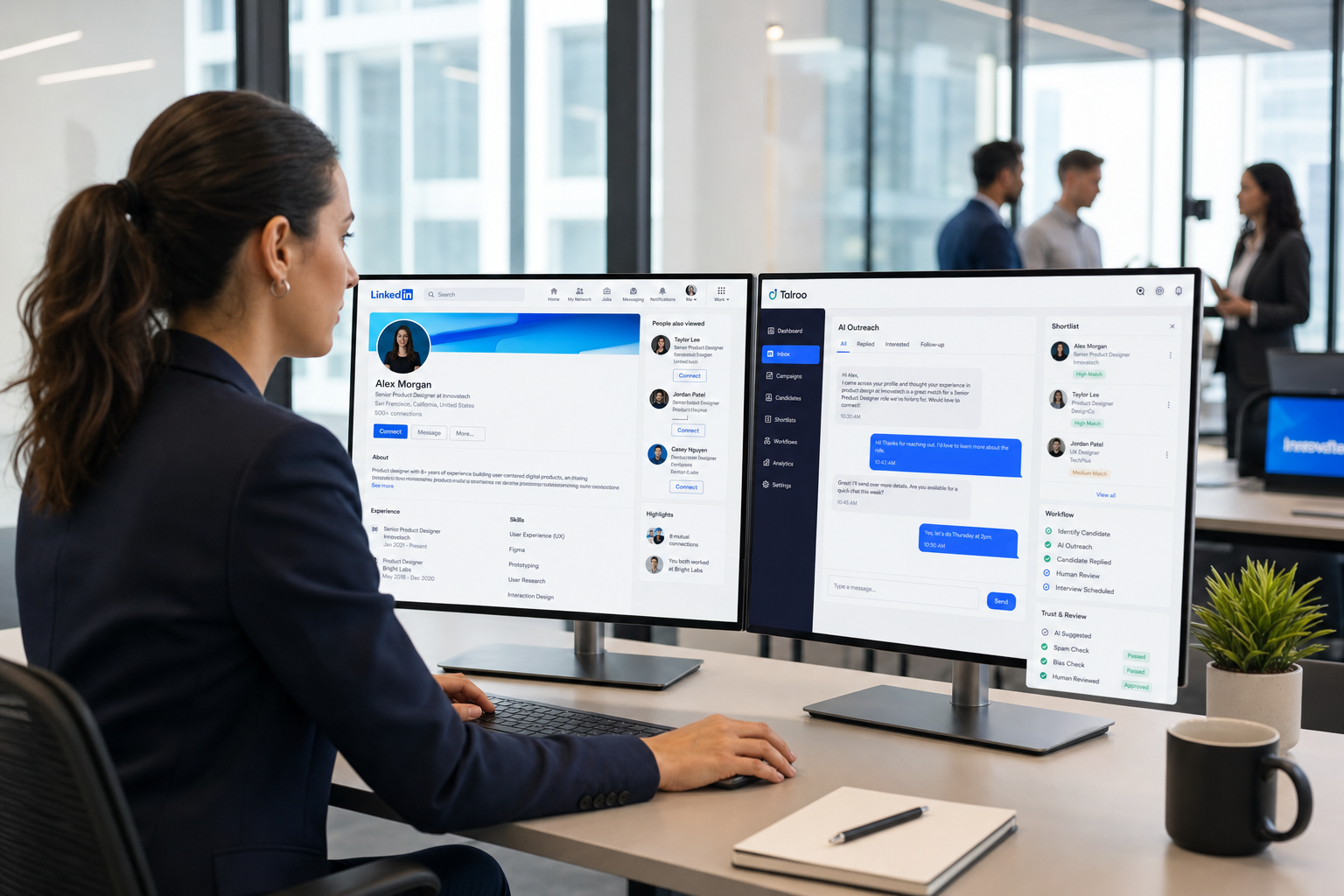
In my own workflow, tools like StrategyBrain AI Recruiter are most useful when they absorb the repetitive front-end work that drains recruiter time: initial outreach, after-hours candidate replies, and collecting resumes or contact details from interested people. Its always-on multilingual messaging and LinkedIn-centered automation can reduce follow-up lag in exactly those moments when conversations would otherwise go cold, but the recruiter still owns resume review, fit assessment, and the decision on who moves to interview.
The management challenge behind that is not new. Long before recruiters were evaluating AI, employers were already dealing with a similar workplace problem: people bring strong opinions, emotions, and personal context into structured environments, and once discussions become disruptive or inconsistent, morale, trust, and even legal risk can follow. In that earlier policy debate, the practical lesson was clear: organizations needed neutral rules, consistent enforcement, and a framework for handling edge cases rather than hoping judgment alone would hold under pressure.
Recruiting teams now face a parallel version of that same problem. When an AI hiring workflow ranks, messages, nudges, or filters candidates, the issue is not just whether the software is fast. The real question is whether your process has clear guardrails, consistent review points, and enough transparency for recruiters to explain what happened. That is why evaluating ai recruiting software, comparing ai recruiting companies, or selecting an ai hiring platform should start with policy logic and workflow discipline, not feature hype.
Table of Contents
- Why Trust Matters in AI Recruiting Software
- Where an AI Recruiting Tool Needs Guardrails
- AI Recruiting Software vs Applicant Tracking System
- Best Use Cases for Recruiters and Hiring Teams
- How to Evaluate AI Recruiting Companies and Platforms
- LinkedIn Workflow Experience With AI Support
- Implementation, Adoption, and Process Design
- Bias, Compliance, and Human Oversight
- What Drives Pricing and ROI
- Quick Comparison Table
- FAQ
Why Trust Matters in AI Recruiting Software
Recruiters do not need more black-box activity. They need software they can trust in live hiring conditions. That trust comes from the same principles employers rely on when they write workplace conduct policies: clear boundaries, consistent application, and defined escalation paths when a conversation or recommendation becomes risky.
In recruiting, trust means an ai recruiting tool should help the team move faster without hiding why candidates were surfaced, why outreach was sent, or why a sequence stalled. It also means recruiters can step in easily when context matters more than automation.
That distinction is important because AI in hiring often touches sensitive areas indirectly. Candidate communication can cross into compensation expectations, relocation concerns, visa questions, or personal circumstances. Screening logic can affect fairness. A ranking model can shape who gets attention first. So the buying decision is not just technical. It is operational and reputational.
Key insight: The strongest AI recruiting software acts like a well-governed recruiting assistant, not an unchecked decision-maker.
Where an AI Recruiting Tool Needs Guardrails
If the reference point for good workplace policy is neutral enforcement and a clear protocol for disruptive situations, the recruiting equivalent is a workflow with visible guardrails. Before you compare features, define where AI is allowed to act and where a recruiter must intervene.
1. Candidate outreach and first response
Automating top-of-funnel messaging is often efficient, especially for LinkedIn sourcing, after-hours responses, and repetitive qualification questions. But guardrails matter. Outreach should reflect the actual role, communicate clearly, and avoid overpromising. Recruiters should review message logic before launch and monitor replies for drift.
2. Resume collection and lead capture
One of the more practical benefits of an ai hiring platform is turning expressions of interest into usable next steps. If a candidate is open to a conversation, software should make it easy to gather a resume and contact details without losing the thread. That helps, but it does not replace evaluation. Recruiters still need to judge whether the background matches the search brief.
3. Screening recommendations
AI-assisted ranking can help reduce backlog, but it needs transparency. A recruiter should be able to understand what signals drove prioritization and where edge cases may be getting excluded. This mirrors the workplace-policy lesson from the reference article: inconsistent or opaque treatment creates avoidable conflict.
4. Candidate communication during sensitive moments
Status updates, scheduling, and logistics are usually safe to automate. Rejections, compensation alignment, and nuanced candidate objections generally are not. Even the best ai recruiting companies should be evaluated on how easy it is to separate low-risk automation from high-judgment conversations.
5. Compliance and override points
If a recruiter cannot pause automation, review conversation history, or override a recommendation, the system is too rigid for serious hiring teams. Software should support accountability, not blur it.
AI Recruiting Software vs Applicant Tracking System
Recruiters still ask whether AI recruiting software replaces an ATS. In most cases, no. The better way to look at it is this: the ATS records the hiring process, while AI helps recruiters operate inside that process with more speed and less repetitive work.
| Category | Applicant Tracking System | AI Recruiting Software |
|---|---|---|
| Primary role | Manage requisitions, applicants, and stages | Improve speed, matching, automation, and insights |
| Core value | Process control and recordkeeping | Workflow acceleration and decision support |
| Best for | Compliance, visibility, and structured hiring operations | Sourcing, screening, engagement, scheduling, analytics |
| Human involvement | High | Still high; AI should assist rather than replace |
| Buyer question | Can the team run hiring consistently? | Can the team run hiring more efficiently and intelligently? |
That is why many teams evaluating an ai recruiting tool end up needing both layers. The ATS holds the record. The AI layer reduces lag, improves prioritization, and helps recruiters focus their time where it counts.
But there is a caution here that experienced talent teams learn quickly: if your process is vague, AI will scale that vagueness. Poor intake meetings, weak scorecards, inconsistent notes, and unclear hiring-manager expectations do not become better because software is faster.
Best Use Cases for Recruiters and Hiring Teams
The best use case depends less on the label and more on where your workflow currently breaks down. In practice, a few patterns show up repeatedly.
High-volume recruiting
When applicant flow is heavy, AI can help organize inbound demand, automate updates, and keep scheduling moving. This is where teams often feel the immediate value of an ai hiring platform.
LinkedIn-heavy sourcing
Agency recruiters, executive search teams, and corporate sourcers who live in LinkedIn often lose time to repetitive first-touch work. In those environments, an AI layer can help keep outreach active beyond business hours, capture interested replies, and reduce the drop-off between message response and recruiter follow-up.
Lean teams with too much coordination work
Small teams often do not need more dashboards. They need fewer manual handoffs. A practical ai recruiting tool can reduce admin work so recruiters spend more time qualifying talent and aligning with hiring managers.
Global or multilingual hiring
If your recruiting spans regions and time zones, communication delays become expensive. AI-assisted messaging can help maintain momentum when candidates respond outside local working hours or prefer another language.
Difficult-to-fill roles
For specialized searches, AI is useful when it expands search coverage and keeps early conversations moving. It is less useful when buyers expect software alone to understand context, transferability, and market nuance better than an experienced recruiter.
How to Evaluate AI Recruiting Companies and Platforms
When comparing ai recruiting companies, I would not start with the broadest promise. I would start with the narrowest real bottleneck in your current process and then test whether the platform solves it in a controlled way.
1. Define the disruption you want to remove
Borrowing from the policy logic in the reference article, start by naming the problem behavior. Is it screening delay, inconsistent candidate follow-up, weak visibility into funnel progress, or recruiter overload caused by manual outreach? If you cannot define the operational disruption, every demo will sound impressive.
2. Ask how the system applies rules consistently
A good platform should let you see how messaging sequences work, how candidates are routed, and where human review happens. Consistency matters in the same way even-handed workplace rules matter: uneven treatment creates trust issues.
3. Separate low-risk automation from high-judgment tasks
Strong systems help recruiters automate logistics and repetitive communication while preserving human ownership of fit, judgment, and stakeholder alignment. This is often where the difference between a useful product and an overreaching one becomes obvious.
4. Test transparency, not just output
If the system recommends candidates, rank order, or next steps, recruiters should understand why. If that explanation is too vague, adoption will be fragile.
5. Review communication quality in real recruiting conditions
This matters more than many buyers expect. Candidate messaging is part of employer brand and recruiter credibility. Review whether the workflow handles after-hours replies, repeated questions, and multilingual exchanges without creating robotic or confusing interactions.
6. Check data handling and governance
Because candidate information is sensitive, buyers should review privacy controls, data use boundaries, and whether customer data is isolated from model training. Governance is not an add-on. It is part of the buying decision.
7. Measure fit by recruiter adoption
The best recruiting software is usually the software recruiters actually trust enough to use daily. That means workflow fit beats feature count.
LinkedIn Workflow Experience With AI Support
When the job is LinkedIn-heavy sourcing, the most practical AI gains often come from removing repetitive messaging work while keeping recruiter judgment intact. That is where I found AI Recruiter genuinely relevant to workflow design rather than just automation theory.
Used carefully, StrategyBrain AI Recruiter can automatically connect with candidates who fit defined search criteria, introduce the role, continue the conversation when replies arrive late, and collect resumes or contact details from interested people. In practice, the value is not that it replaces recruiting. The value is that it keeps top-of-funnel conversations from stalling while the recruiter stays responsible for resume review, shortlist quality, and the decision to move someone into interview.
What I liked most in this kind of setup was the reduction in response lag. Candidates often answer when recruiters are offline, especially across time zones. An always-on workflow helps preserve momentum. For teams working internationally, multilingual candidate communication is also useful because misunderstandings at the first-contact stage can quietly kill interest.
The limits matter too. No responsible recruiter should hand final qualification to an automated conversation layer. A candidate can sound interested and still be wrong for the role. That is why the best use of LinkedIn automation is operational support, not final selection.
For recruiters who want to see how these conversation flows are structured, the conversation examples are useful as a process reference, and the hands-on sourcing notes are closer to what daily recruiter use actually feels like.
Implementation, Adoption, and Process Design
Implementation success usually depends less on setup screens and more on whether your recruiting team has agreed on process boundaries. The workplace-policy parallel still applies: without shared rules, individual interpretation creates inconsistency.
Define where AI should act alone
Scheduling reminders, first-response follow-up, and basic candidate Q&A may be fine to automate. Final fit calls, rejection reasoning, and hiring-manager calibration should stay human-led.
Standardize your intake and scorecards
AI performs better when the recruiting process itself is clear. Before rollout, align on must-have skills, acceptable adjacent backgrounds, compensation boundaries, and knockout factors.
Train recruiters on interpretation
Do not limit training to button clicks. Recruiters need to know when to trust the system, when to challenge it, and how to explain AI-supported steps to candidates and hiring managers.
Monitor edge cases
Some of the strongest candidates look unconventional on paper. Build regular review loops for false negatives, messaging misunderstandings, and candidate drop-offs that may signal an automation problem.
Bias, Compliance, and Human Oversight
Bias and compliance concerns in AI recruiting are real, but they are often discussed too narrowly. The software matters, but so do the inputs, the process rules, and the people using it.
Bias can be embedded upstream
If the hiring team defines success too narrowly or carries forward historical preferences without challenge, AI may reinforce those patterns. Review the job brief, screening criteria, and scorecards before blaming the model.
Human oversight has to be designed, not assumed
Recruiters should review ranked candidates, audit unusual exclusions, and stay accountable for decisions that affect candidate progression. Oversight only works when the workflow makes intervention easy.
Transparency supports candidate trust
Candidates do not need a technical lecture, but they do need a fair process. If AI is involved in communication or routing, recruiters should be prepared to explain the experience in plain language.
Data protection should be part of vendor review
Any team evaluating an ai hiring platform should review data isolation, storage practices, and whether candidate information is used to train models. This is especially important when the tool handles resumes, direct messages, and personal contact details.
What Drives Pricing and ROI
Pricing varies widely across AI recruiting software, so ROI should be evaluated against the actual operational burden being removed.
- Workflow coverage: A sourcing assistant is different from a broad AI hiring platform.
- Message volume and recruiter seats: Teams with larger outreach workflows often value automation differently.
- Integration depth: More reliance on ATS sync, reporting, and workflow controls usually means more implementation effort.
- Global communication needs: Time-zone coverage and multilingual support can materially affect value for cross-border hiring.
- Governance requirements: Teams with stricter review, legal, or privacy standards may invest more time up front.
In practice, the cleanest ROI questions are simple: Did recruiter response times improve? Did candidate conversations move forward more reliably? Did manual sourcing admin decline? Did shortlist quality hold up? Those are more useful measures than vague transformation claims.
What the Best Recruiting Software Usually Has in Common
When experienced recruiters talk about the best recruiting software, they are usually not describing the loudest AI claim. They are describing a system that feels reliable under pressure.
- Clear division between automation and recruiter judgment
- Strong workflow fit from sourcing through reporting
- Visible logic behind ranking, routing, and messaging
- Useful support for LinkedIn and other high-friction sourcing channels
- Communication tools that protect candidate experience
- Governance controls for fairness, compliance, and override review
That is the lasting lesson carried over from the reference article's policy framework: structured environments work better when expectations are explicit and applied consistently. Hiring is no different.
FAQ
What is AI recruiting software?
AI recruiting software is hiring technology that helps with sourcing, screening, candidate communication, scheduling, and reporting. The practical goal is to reduce repetitive recruiter work while keeping people responsible for final hiring decisions.
How does an AI recruiting tool work?
An ai recruiting tool typically uses automation and language-based assistance to identify prospects, support outreach, organize replies, collect candidate information, and surface workflow insights. It should support recruiter judgment, not replace it.
Is AI recruiting software the same as an ATS?
No. An ATS is usually the structured system of record for requisitions, applicants, and hiring stages. AI recruiting software adds speed, prioritization, communication help, and workflow support around that structure.
What should recruiters ask when comparing AI recruiting companies?
Ask how the platform handles messaging quality, screening transparency, candidate data, recruiter override controls, ATS compatibility, and workflow fit. Those questions reveal more than broad automation promises.
Can an AI hiring platform improve LinkedIn recruiting?
Yes, especially when the main bottleneck is repetitive outreach, delayed replies, and lost follow-up momentum. The best results usually come when AI handles first-touch communication and resume collection while recruiters keep ownership of qualification and interviews.
What are the main risks of AI recruiting software?
The main risks are overautomation, unclear screening logic, poor candidate communication, bias in the underlying process, and weak human oversight. Good implementation reduces those risks through guardrails and review points.
Conclusion
The right ai recruiting tool is not the one that promises to remove recruiters from recruiting. It is the one that helps recruiters control a busy hiring workflow without losing fairness, context, or candidate trust.
If you are reviewing ai recruiting companies or comparing an ai hiring platform, use the same discipline smart employers use when setting workplace rules: define what is allowed, where judgment is required, and how exceptions are handled. That approach leads to better software decisions and better hiring outcomes.