When reactive hiring keeps breaking pipelines, this article helps headhunters judge ai talent management software by shortlist quality, not hype.
That matters because most recruiting pain does not start with a bad interview. It starts earlier, when teams wait for an approved opening, search too narrowly, lose track of passive talent, or treat speed as the only metric that matters. For boutique search firms, that means more manual follow-up and more missed outreach windows. For in-house teams, it means longer time-to-shortlist, weaker hiring-manager confidence, and higher risk of filling urgent roles with the most visible candidate rather than the best-fit one.
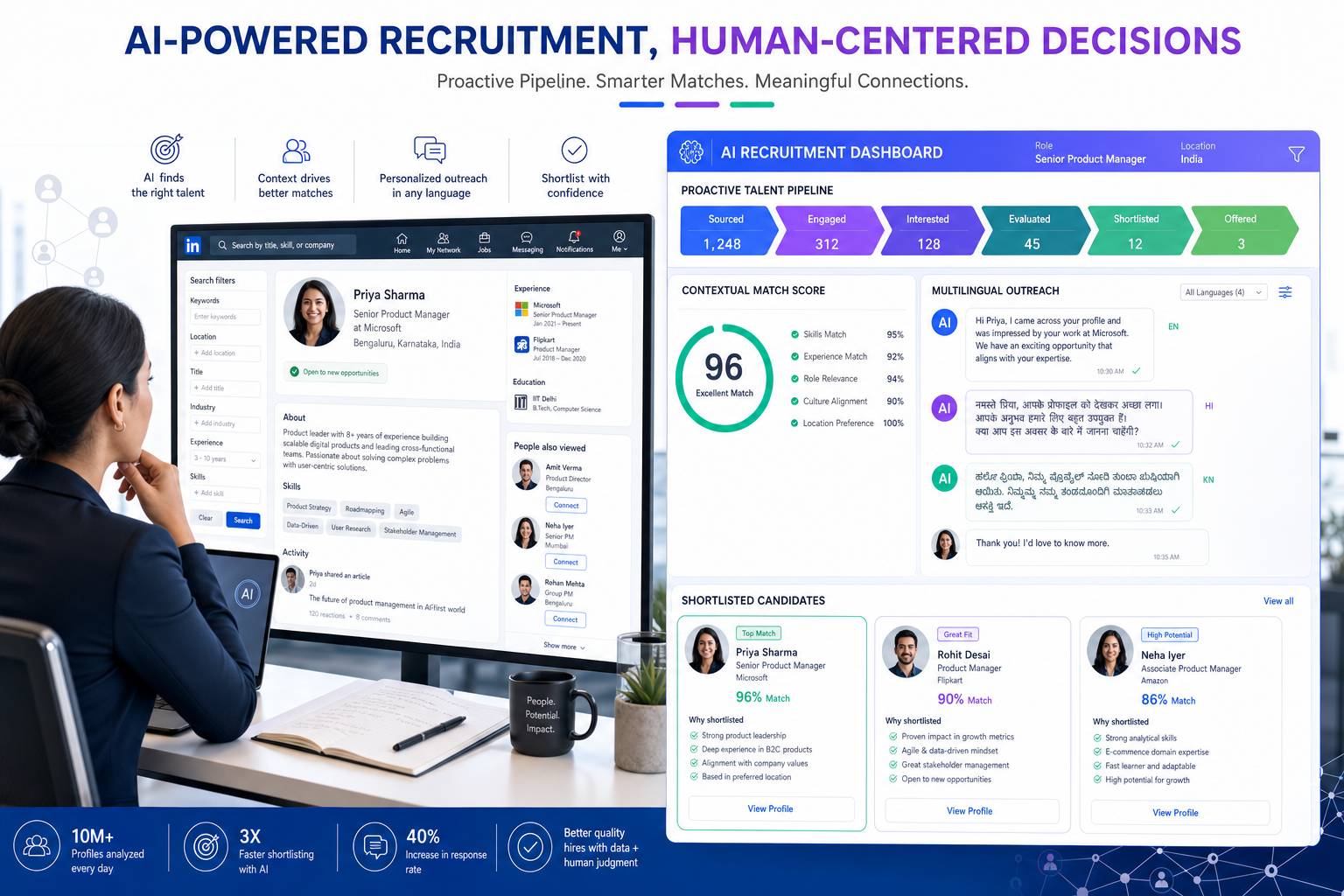
In that gap between urgency and judgment, I have found tools like StrategyBrain AI Recruiter useful as workflow support rather than decision replacement. The practical value is not magical matching. It is the way always-on candidate outreach, multilingual follow-up, and résumé collection can keep early pipeline activity moving while the recruiter still owns final review, résumé assessment, and the decision about who advances.
The bigger shift behind that experience is straightforward: recruiting is moving from vacancy-driven reaction to proactive pipeline building, while screening is becoming more human, not less. In real work, that shows up when a recruiter starts mapping a difficult skill market before a requisition is live, revisits past conversations, checks who replied after hours, and tries to keep hiring managers aligned on what matters beyond a perfect keyword match.
When those steps happen without a reliable talent matching platform or broader talent platform, the process becomes fragmented fast. Candidate relationships sit in one system, old ATS records in another, LinkedIn conversations in another, and the shortlist gets shaped by whichever profile was easiest to find. That is why ai talent management software is now less about storing applicants and more about supporting proactive sourcing, contextual matching, screening discipline, and recruiter judgment across the full hiring workflow.
- The most useful AI-powered talent acquisition workflows start before a vacancy opens.
- Modern recruiting still depends on human screening, structured judgment, and clear role criteria.
- A strong talent matching platform should improve contextual discovery, not just keyword search.
- A broader talent platform should connect pipeline building, rediscovery, and ATS workflow without creating more admin.
- Governance, explainability, and recruiter control matter as much as automation.
Table of Contents
- What is changing in recruiting and what still works
- Why hiring is moving from reactive to proactive
- Why screening is becoming more human, not less
- Core capabilities to expect from ai talent management software
- How an AI-powered talent acquisition workflow should run
- How AI strengthens the ATS instead of bypassing it
- How to evaluate a talent matching platform or talent platform
- Governance, fairness, privacy, and recruiter control
- Where the market is heading next
- FAQ
What is changing in recruiting and what still works
Recruiting has changed quickly over the last decade, but the fundamentals of strong hiring have not disappeared. Good recruiters still need clear role definition, thoughtful screening, honest communication, and strong relationships with both candidates and hiring managers. What has changed is the pressure around those fundamentals. Teams are expected to move faster, search wider, and make better decisions with more fragmented data than before.
That is the useful lens for evaluating ai talent management software. The real question is not whether AI is new. It is whether the technology helps employers and search teams improve outcomes without adding noise, cost, or risk. In practice, the strongest systems support what experienced recruiters already know works: proactive pipelines, contextual review, structured collaboration, and better decision quality.
This is also where market language gets confusing. A talent platform may refer to a recruiting suite, an internal mobility system, a staffing workflow, or a candidate marketplace. A talent matching platform may focus narrowly on fit scoring and search. For buyers, the important step is defining what problem needs to be solved first: pipeline creation, candidate rediscovery, screening consistency, or full workflow orchestration.
Why hiring is moving from reactive to proactive
One of the clearest shifts in recruiting is when the work begins. Older workflows usually started after a vacancy appeared. Someone resigned, a headcount was approved, and then the search began. In tighter talent markets, that delay puts employers behind immediately.
Modern AI-powered talent acquisition increasingly starts earlier with three practical activities:
- building candidate pipelines before roles open
- keeping relationships warm with promising talent over time
- tracking movement in critical skill areas before demand spikes
This is where ai talent management software can create operational value. It can help recruiters search across prior applicants, CRM records, sourced leads, and ongoing outreach activity rather than beginning from zero every time. A useful system should not just accelerate search. It should preserve continuity.
In my own recruiting work, one of the most practical uses of AI Recruiter has been handling repetitive first-touch communication when I already know the target profile but do not want to lose momentum overnight or across time zones. It keeps outreach moving, answers early candidate questions, and gathers résumés from interested people, but I still review the actual backgrounds myself because initial responsiveness is not the same as fit.
For specialized, senior, or recurring roles, proactive recruiting also improves decision quality. When recruiters already know the market, understand likely compensation friction, and have prior conversations on record, hiring managers get better shortlists faster. That advantage compounds over time.
Why screening is becoming more human, not less
There is a persistent myth in recruiting software marketing that more automation automatically means better screening. In real hiring, the opposite is often true. The best modern workflows use automation to support experienced review, not to replace it.
That shift matters because the cost of poor screening is high. Over-filtering can remove strong candidates with adjacent experience. Under-structured review can let charisma or resume formatting outweigh actual capability. And pure keyword search often misses the people who can do the work but describe it differently.
A stronger talent matching platform should help teams move away from resume filtering and toward contextual assessment. That means evaluating signals such as:
- explicit and adjacent skills
- title progression and scope
- industry relevance
- evidence of learning agility
- role-specific must-haves versus trainable gaps
Recruiters still need to do the harder part: judge motivation, communication, compensation alignment, timing, and stakeholder fit. That is why experienced teams are using AI to narrow and prioritize, while keeping human review central during screening.
| Screening approach | What it emphasizes | What usually happens |
|---|---|---|
| Keyword filtering | Exact terms and resume overlap | Fast review but narrow discovery |
| Contextual matching | Skills, adjacent skills, scope, and experience patterns | Broader and more realistic shortlist quality |
| Structured human screening | Role criteria, judgment, and conversation quality | Better final decisions and fewer avoidable misses |
Practical takeaway: If a platform looks impressive on easy roles but cannot help on ambiguous or hard-to-fill searches, it is not solving the problem that matters most.
Core capabilities to expect from ai talent management software
If recruiting is becoming more proactive and more judgment-driven, then the right ai talent management software should reflect that reality. The checklist below is more useful than a generic feature grid.
1. Pipeline building and candidate rediscovery
A modern system should help recruiters find relevant people before and after roles open. That includes prior applicants, silver medalists, passive prospects, archived profiles, and partially engaged leads. Rediscovery is one of the fastest ways to reduce duplicated sourcing work.
2. Skills-based and contextual matching
Look for matching that goes beyond term overlap. Stronger systems infer related capabilities, account for adjacent backgrounds, and make room for transferable experience. This is where a good talent matching platform separates itself from a resume database.
3. Natural language search
Recruiters should be able to search in plain English rather than depending on complex Boolean strings alone. Natural language search improves usability and helps hiring managers participate more effectively in profile review.
4. Outreach and response continuity
Pipeline quality drops quickly when candidates reply late at night, across regions, or after a recruiter has moved on to other searches. This is one area where tools such as StrategyBrain AI Recruiter can help by maintaining candidate conversations, introducing the opportunity, and collecting contact details or résumés from interested prospects. The recruiter still decides whether the profile fits the brief and whether the candidate should move to interview.
5. Screening support with visible reasoning
Match scores by themselves are not enough. Recruiters need plain-language explanations of why a candidate was surfaced, where the evidence is strong, and where gaps remain.
6. ATS and CRM integration
A useful talent platform should read from the systems recruiters already use and write meaningful updates back into them. If the software creates a second manual operating layer, adoption usually collapses.
7. Analytics tied to hiring decisions
Track pipeline health, source quality, stage conversion, outreach responsiveness, and shortlist acceptance by hiring managers. Decision quality matters more than vanity metrics.
How an AI-powered talent acquisition workflow should run
The easiest way to evaluate any AI recruiting workflow is to follow it from the first market signal to the final shortlist. The process should feel more connected, not more complicated.
- Start before the requisition becomes urgent. Build target talent pools around critical skills, senior roles, and recurring positions.
- Define role criteria with business context. Separate non-negotiables from trainable needs, and align with the hiring manager early.
- Search across your full talent history. Review ATS records, CRM pools, sourced leads, and live outreach conversations.
- Use contextual matching to rank options. The system should surface likely fits based on skills and experience patterns, not only exact phrases.
- Keep outreach active. For passive candidates, maintain fast and consistent communication so interest does not fade between messages.
- Apply human screening. Validate motivation, availability, compensation range, communication quality, and actual relevance.
- Sync notes and status updates. Preserve decision history inside the ATS or core system of record.
- Review outcomes and refine. Measure which shortlists convert and where process friction remains.
That workflow reflects what is actually changing in recruiting: less waiting for vacancies, less dependence on resume perfection, and more emphasis on structured, collaborative decisions. It also shows why software selection should focus on workflow quality rather than isolated AI claims.
How AI strengthens the ATS instead of bypassing it
Most teams do not need a completely new hiring operating model. They need to get more value from the systems they already have. That is why the best use of ai talent management software is often as an intelligence layer around the ATS and CRM, not as a replacement for them.
When done well, AI expands the existing system in practical ways:
- Better searchability: recruiters can find people by capability and context, not just tags.
- Improved rediscovery: past applicants can be reconsidered for new roles quickly.
- Faster shortlist assembly: ranked recommendations reduce repetitive review work.
- More complete communication records: outreach responses, resumes, and contact details are easier to preserve.
- Stronger collaboration: hiring managers see better-organized candidate reasoning instead of raw profile dumps.
- Cleaner reporting: leaders can compare sources, conversion, and bottlenecks more consistently.
These are not just technical upgrades. They directly affect how recruiters manage urgency, candidate relationships, and decision quality. If your ATS remains only a storage system, you are likely underusing data you already paid to collect.
How to evaluate a talent matching platform or talent platform
Good demos often hide weak operating reality. To evaluate a talent matching platform or broader talent platform, use real recruiting conditions instead of vendor scripts.
Questions worth asking in evaluation
- Can the platform support proactive pipeline building before a vacancy opens?
- How does matching work beyond exact keyword overlap?
- Can recruiters see why a candidate was surfaced in plain language?
- How well does the system rediscover older or passive profiles?
- What happens when candidates reply after hours or across languages?
- Does the platform support recruiter-owned final qualification rather than automated final decisions?
- What ATS and CRM data sync in both directions?
- How are privacy, retention, and fairness handled operationally?
Buying criteria that matter more than hype
| Evaluation area | What good looks like | Why it matters |
|---|---|---|
| Pipeline support | Helps teams build and maintain talent pools before requisitions open | Reduces reactive hiring pressure |
| Matching quality | Uses skills, adjacent skills, titles, and context | Improves shortlist relevance |
| Screening support | Offers reasoning without replacing recruiter judgment | Builds trust and consistency |
| Workflow continuity | Connects outreach, rediscovery, screening, and ATS sync | Prevents fragmented hiring operations |
| Usability | Simple enough for recruiters and hiring managers to adopt | Drives real usage, not shelfware |
| Governance | Provides clear controls, privacy handling, and auditability | Protects employers and candidates |
If you are deciding between a specialist matching tool and a broader platform, return to the opening problem. Are you struggling most with finding people, keeping outreach active, standardizing screening, or coordinating all of it? The right answer depends on where your workflow breaks first.
Governance, fairness, privacy, and recruiter control
As recruiting technology matures, governance is no longer a footnote. Buyers should expect clear answers on human review, privacy controls, and explainability before implementation.
At minimum, any ai talent management software used in hiring should support:
- human-in-the-loop review for advancement decisions
- documented role criteria to reduce arbitrary screening
- explainable outputs instead of opaque rankings
- data protection controls around resumes, contact details, and conversation history
- regular fairness review to identify unintended exclusion patterns
These standards are especially important when the workflow includes sourcing and candidate messaging. Tools that automate communication can create real operational leverage, but they also require disciplined handling of consent, disclosure, and recordkeeping. The safest model is still the most practical one: let automation handle repetitive communication support, and keep recruiters responsible for fit judgment and hiring progression.
Where the market is heading next
The market is moving toward broader workflow intelligence rather than isolated AI features. That includes stronger talent rediscovery, better natural language search, more continuous candidate engagement, and closer connections between sourcing activity and ATS data.
But the most important trend is not technical. It is strategic. Recruiting teams are becoming more deliberate about what they want AI to do well. The priority is shifting away from novelty and toward practical support for proactive pipeline building, contextual screening, and collaboration across recruiters and hiring managers.
In other words, what still works in recruiting remains the foundation. Clear role definitions still matter. Thoughtful screening still matters. Honest communication still matters. AI simply becomes more useful when it strengthens those fundamentals instead of trying to replace them.
FAQ
What is ai talent management software in recruiting?
It is software that helps recruiting teams source, match, screen, rediscover, and manage candidates more intelligently across the hiring workflow. The best tools support recruiters with better search, contextual ranking, and workflow integration rather than acting as passive databases.
How is a talent matching platform different from a talent platform?
A talent matching platform usually focuses on search, ranking, and fit decisions. A broader talent platform may include sourcing workflows, CRM, ATS connectivity, internal mobility, analytics, and collaboration features. Some organizations need matching depth first, while others need wider workflow coverage.
Why is recruiting moving from reactive to proactive?
Because waiting for a vacancy to open often means starting too late. Competitive hiring markets reward teams that already have candidate relationships, market awareness, and searchable talent pools before urgent hiring begins.
Does AI make screening less human?
It should not. Stronger recruiting workflows use AI to narrow options, standardize criteria, and improve consistency, while experienced recruiters still evaluate motivation, communication, readiness, and overall fit.
Can AI help with candidate outreach as well as matching?
Yes. Some tools can support always-on outreach, follow-up, multilingual communication, and resume collection. Used carefully, that can help recruiters keep passive pipelines active while retaining control over final qualification and interview decisions.
What should I test during platform evaluation?
Test hard-to-fill or ambiguous roles, not easy ones. Review how the system handles adjacent skills, prior ATS candidates, passive prospects, after-hours responses, and recruiter explainability. Those conditions reveal whether the platform can improve real hiring work.
Conclusion
AI talent management software is most valuable when it supports what strong recruiters already know: start earlier, search wider, screen more thoughtfully, and keep human judgment at the center. The best systems help teams move from reactive vacancy-filling to proactive talent acquisition without losing control of quality.
If you are evaluating a talent matching platform or a broader talent platform, look past feature claims and focus on workflow reality. The right technology should help you build pipelines before roles open, rediscover overlooked talent, support structured screening, and keep candidate communication moving without turning recruiting into a black box.