When candidate drop-off and slow feedback hurt placements, this article helps headhunters judge which hire platform fixes speed and control gaps.
That matters most when the market turns candidate-led. In tight hiring conditions, recruiters lose good people in small gaps: a missed reply after work, a hiring manager who sits on feedback, a sourced prospect who never gets logged correctly, or a shortlist that goes stale while the team waits for a perfect match. For boutique search firms, in-house talent teams, and solo recruiters, those delays mean more than admin pain. They damage fill rates, weaken client confidence, increase workload, and force harder trade-offs on compensation, development, and hiring speed.
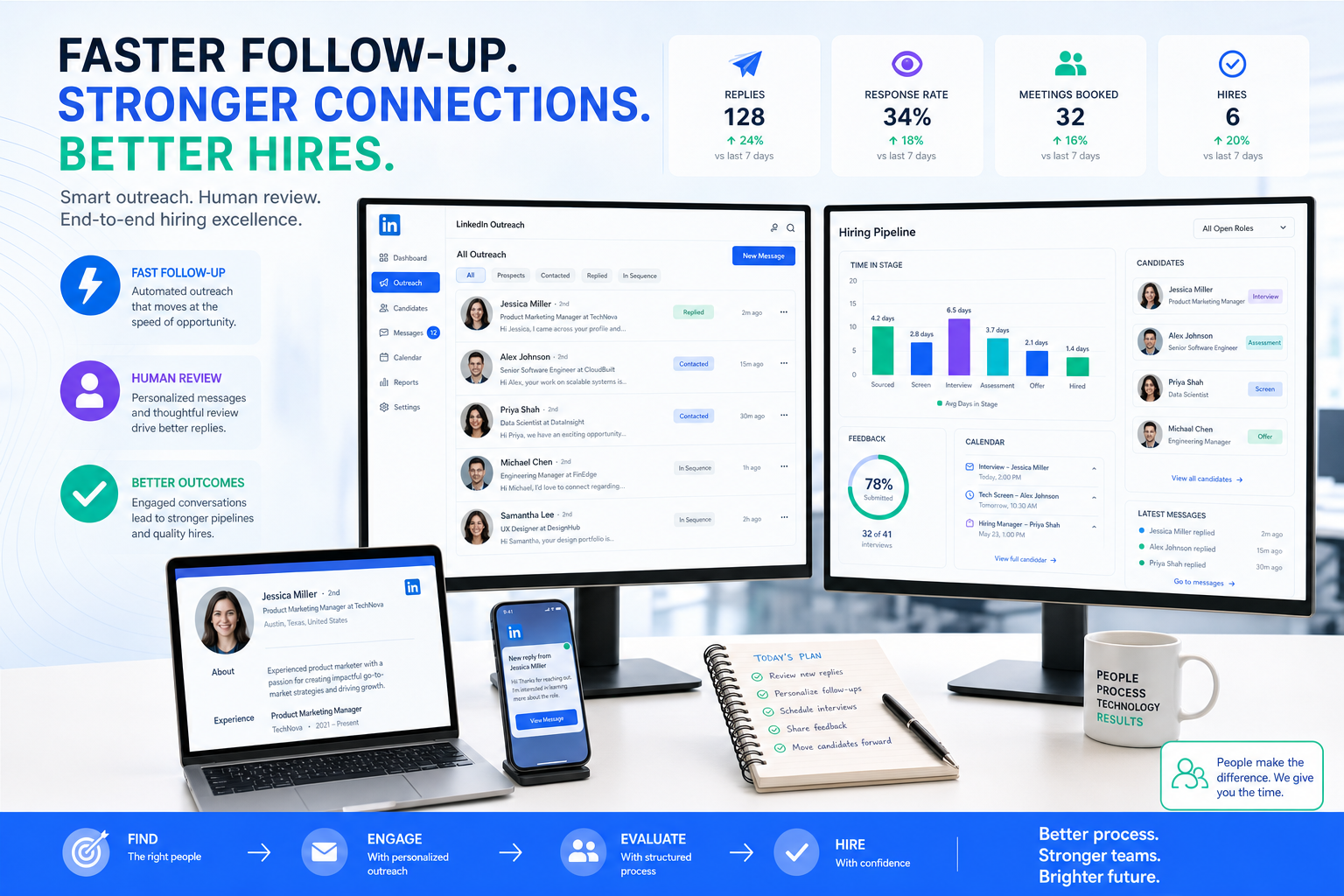
In my own workflow, one useful support layer for this problem has been StrategyBrain AI Recruiter. I do not use it as a replacement for recruiter judgment, and I would not want software making final fit calls for me. What it does help with is the repetitive front end of outreach and follow-up, especially when candidates respond outside business hours, when multilingual communication matters, or when I need consistent first-touch messaging across active LinkedIn searches. In practice, tools like AI Recruiter can keep conversations moving and collect resumes or contact details, while the recruiter still owns qualification, resume review, and the next decision.
A good example of why this matters came from a manufacturing hiring cycle shaped by a sharp demand surge. When Canada’s manufacturing PMI hit its strongest reading in seven years, new orders accelerated, inventories were built up before production, and regions such as Quebec saw especially strong momentum. At the same time, input costs rose, material delivery times stretched, and tariff pressure around steel added uncertainty. For recruiters covering that market, the problem was not abstract. They were opening requisition lists, replying to candidates with competing offers, chasing hiring manager confirmation, and updating candidate stages while employers were already operating near capacity.
In that kind of market, the hiring task changes quickly. Recruiters are no longer just screening for qualifications; they are deciding how fast a client needs to move, what requirements are truly essential, and whether a team should hold out for a near-perfect profile or hire a strong candidate and plan development after start. That is exactly where the best recruiting software matters. A strong hire platform should help recruiters act quickly without losing process discipline, improve the candidate experience platform side of hiring, and keep direct-hire needs separate from broader employment platform functions that do not solve the immediate recruiting bottleneck.
- When hiring demand outpaces talent supply, the best recruiting software helps teams move faster without losing judgment or process control.
- A modern hire platform should support sourcing, communication, scheduling, pipeline visibility, and recruiter-led decision making in one operating flow.
- Candidate-led markets make candidate experience platform features more important because slow or unclear communication increases drop-off.
- The term employment platform can blur software categories, so buyers should confirm they are evaluating recruiting operations tools rather than broader workforce administration systems.
- For headhunters and internal TA teams alike, the right software choice depends on speed pressure, workflow complexity, and how much repetitive outreach can be safely automated while humans keep final control.
- Why tight talent markets change software needs
- What a hire platform should mean for recruiters
- Core features in the best recruiting software
- ATS vs broader recruiting platform
- Why candidate experience belongs on the shortlist
- What employment platform should mean in this context
- Where AI supports recruiter workflows best
- Best fit by hiring model
- How to evaluate and compare options
- Common buying mistakes in recruiting software
- FAQ
Why tight talent markets change software needs
When demand accelerates in sectors like manufacturing, the software question becomes operational rather than theoretical. If employers are hiring into capacity pressure, if supply chains are uncertain, and if top candidates are juggling multiple options, a slow process is not a neutral inconvenience. It is a competitive disadvantage.
That was the practical lesson from the manufacturing surge described above. Stronger order growth and inventory build-up created urgency on the employer side, while longer delivery times and cost pressure made business planning harder. Recruiters in that environment had to manage two realities at once: clients needed people quickly, and candidates had more leverage. The result is a market where response times, follow-up consistency, and visibility across open roles matter much more than a static database of applicants.
For software buyers, this means the best recruiting software is not simply the system with the most features. It is the one that helps a recruiting team maintain speed under pressure, preserve a good candidate journey, and keep everyone aligned when hiring criteria start to shift during the search.
Practical takeaway: when candidates have options, software should reduce hesitation, not add another layer of process drag.
What a hire platform should mean for recruiters
A hire platform should be understood as the working environment recruiters use to attract, organize, engage, assess, and move talent through a hiring process. Buyers may search under different labels such as recruiting software, talent acquisition platform, recruitment platform, or ATS, but the real question is usually the same: can this system support how our team actually hires?
In a balanced labor market, teams can sometimes survive with fragmented tools and manual follow-up. In a candidate-led market, those gaps show up fast. If sourced prospects live in one place, applicant records in another, interview scheduling in a third, and hiring manager feedback in email threads, the recruiter becomes the integration layer. That is expensive, slow, and risky.
From experience, the category becomes clearer when you define the operating model first. Ask:
- Are you mainly handling inbound applicants, outbound sourcing, or both?
- Do candidates often have competing offers?
- How much of recruiter time is spent on manual messaging and scheduling?
- How often do hiring managers delay decisions?
- Do you need one workflow for headhunters, HR, and hiring managers together?
If those questions point to coordination pain rather than simple record-keeping, you are likely evaluating a platform, not just a tracker.
Core features in the best recruiting software
The best recruiting software usually combines applicant tracking with communication, sourcing support, workflow automation, reporting, and hiring-team collaboration. In other words, a useful hire platform should support the moments that break first when markets tighten.
| Feature area | Why it matters in a tight market | What to test |
|---|---|---|
| ATS workflow | Keeps stages, approvals, and decisions visible when openings move quickly | Can recruiters customize stages, scorecards, and permissions without workarounds? |
| Candidate CRM | Helps teams reuse and re-engage talent instead of restarting every search | Can you segment, tag, and revive past prospects easily? |
| Outreach support | Improves first-touch consistency and response coverage | How are messages triggered, tracked, and handed back to recruiters? |
| Screening workflows | Reduces confusion when hiring criteria evolve mid-search | Can recruiters adjust must-haves and document exceptions clearly? |
| Interview scheduling | Prevents good candidates from stalling in coordination gaps | Does it support self-scheduling, calendar sync, and rescheduling cleanly? |
| Automation | Removes repetitive status updates and reminders | Which triggers are configurable, and where can humans override? |
| Analytics | Shows drop-off, time-in-stage, and hiring bottlenecks | Can managers see where speed is breaking down? |
| Integrations | Keeps recruiting connected to HR and assessment systems | Are integrations native, stable, and useful in daily work? |
I would also separate "nice in demo" from "useful in live recruiting." The strongest systems are not necessarily the flashiest. They are the ones that make it easier to keep candidate conversations moving, maintain complete records, and prompt decisions when urgency rises.
What I prioritize first in software reviews
- Workflow fit for the actual recruiting motion, not the idealized one.
- Adoption likelihood across recruiters and hiring managers.
- Communication speed across sourcing, screening, and scheduling.
- Reporting clarity on funnel leakage and delay points.
- Control over permissions, audit trails, and compliance.
ATS vs broader recruiting platform
An ATS usually handles jobs, applicants, hiring stages, and final decisions. A broader recruiting platform adds more of the upstream and middle workflow: sourcing support, CRM, automated engagement, scheduling, analytics, and cross-team visibility.
The distinction matters because many teams underestimate how often a tight market exposes ATS-only limitations. A lightweight tracker may be enough if candidates come inbound and hiring managers decide quickly. It is rarely enough when recruiters must source aggressively, follow up outside normal working hours, manage competing offers, and keep multiple stakeholders aligned.
That is why a broader hire platform often creates more value than a basic tracker in difficult markets. The ATS gives you order. The platform gives you order plus momentum.
- A basic ATS helps centralize applicant data.
- A platform helps recruiters source, engage, schedule, and convert faster.
- The best systems support both without forcing manual patchwork between tools.
Why candidate experience belongs on the shortlist
In candidate-led markets, the buying conversation should include more than recruiter efficiency. It should also include how the process feels on the candidate side. That is where candidate experience platform capabilities become important.
Strong candidate experience is usually less about branding language and more about operational basics done well: simple applications, clear status updates, timely follow-up, convenient scheduling, and fewer repeated questions. When markets are tight, candidates notice every point of friction.
In manufacturing-style demand spikes, this becomes very practical. A candidate who is already considering another offer is less likely to tolerate a slow application, a vague next step, or days of silence after an interview. A team that can communicate clearly and move decisively often looks more credible, even when compensation is similar.
Features that improve candidate experience most
- Easy application flow with minimal duplication
- Fast, relevant updates instead of silence between stages
- Self-scheduling where appropriate
- Clear process visibility so candidates know what happens next
- Structured screening that respects the candidate’s time
- Career-site clarity on role expectations and process steps
My advice is always to test this directly. Apply to a mock role, trigger the confirmations, schedule an interview, and review the follow-up as if you were a busy candidate with another offer in hand. That test tells you more than a feature slide ever will.
What employment platform should mean in this context
The term employment platform often creates confusion because it can refer to very different software categories. Sometimes it points to recruiting tools for direct hiring teams. In other cases, it refers to payroll, employer-of-record services, labor marketplaces, or wider workforce administration systems.
For this article, the relevant meaning is narrower: software that helps internal TA teams, HR, and recruiters hire employees directly. If your real buying intent is best recruiting software, then compare systems on sourcing, screening, communication, scheduling, approvals, and reporting. Do not let broader employment administration features blur the shortlist unless they genuinely affect recruiting operations.
This distinction is especially important when urgency is high. Teams under hiring pressure sometimes overvalue broad platforms that look complete on paper but are weaker where speed matters most in talent acquisition.
Where AI supports recruiter workflows best
AI is now part of most recruiting software conversations, but the useful question is not whether a system has AI. It is whether the automation reduces recruiter drag without weakening judgment, transparency, or candidate trust.
In my own work, I have found AI most helpful in the repetitive communication layer rather than the final decision layer. That is one reason I keep coming back to StrategyBrain AI Recruiter as a supplemental workflow tool in sourcing-heavy searches. It can maintain first-touch outreach, keep candidate conversations active after hours, and handle multilingual exchanges more consistently than a human recruiter trying to monitor every reply manually. But it does not replace the recruiter's final screening decision, and that is exactly the right boundary.
That boundary matters. A recruiter should still review the resume, judge fit against the role, decide whether trade-offs are acceptable, and manage the next conversation with the hiring team. AI helps most when it reduces the operational lag between identifying a prospect and deciding whether the person belongs in a serious shortlist.
| AI use case | Operational value | What to verify |
|---|---|---|
| Natural-language sourcing | Speeds up profile discovery | How well results match recruiter intent |
| Automated first-touch outreach | Keeps response volume moving without constant manual effort | Whether messages remain relevant and reviewable |
| After-hours reply handling | Prevents missed momentum when candidates answer late | How handoff to the recruiter is managed |
| Multilingual communication | Supports broader candidate coverage across regions | Whether tone and meaning stay clear |
| Resume and contact capture | Reduces admin during active outreach | How data is stored and surfaced for review |
| Workflow orchestration | Automates reminders and status movement | Visibility, auditability, and override controls |
If you want to understand this type of workflow support in more depth, the headhunter workflow notes here and the conversation examples here are worth reviewing for process ideas, even if your final stack includes other core systems as well.
Best fit by hiring model
No platform is best for every recruiting environment. The right choice depends on how your team hires, where the bottlenecks appear, and whether your biggest problem is structure, speed, or coordination.
| Team type | What matters most | Best software focus |
|---|---|---|
| Small in-house team | Usability and quick setup | Lean ATS plus strong communication workflow |
| Growth-stage company | Sourcing, automation, and reporting | Platform that scales beyond inbound recruiting |
| Enterprise TA | Governance, integrations, and approvals | Configurable recruiting platform with strong control layers |
| High-volume hiring | Speed, screening, scheduling | Workflow automation and candidate experience optimization |
| Search or staffing firm | CRM depth, pipeline reuse, outreach consistency | Platform with recruiter productivity tools and strong sourcing support |
For headhunters, I would add one extra criterion: can the system help you maintain momentum across multiple live searches without turning you into a full-time administrator? In candidate-short markets, that is where the wrong software starts costing placements.
How to evaluate and compare options
A structured evaluation process leads to better software decisions than broad demos and category language. The market pressure described in the opening case is a good reminder that buyers should test software against real operating conditions, not idealized claims.
- Map the live workflow. Document how searches open, how prospects enter, how communication is tracked, and how decisions move.
- Identify urgency points. Where do candidates stall, drop, or accept another offer?
- Separate recruiter work from system work. The platform should reduce admin, but the recruiter should keep final evaluation authority.
- Test realistic scenarios. Use a role that requires sourcing, manager feedback, scheduling, and a quick close.
- Review candidate-side experience. Do not evaluate the system only from the recruiter dashboard.
- Check AI boundaries. Understand what is automated, what is explained, and what remains recruiter-led.
- Confirm implementation burden. Good features matter less if setup and adoption fail.
Questions worth asking in every demo
- How does the system support a candidate-led market where response speed affects outcomes?
- Can recruiters manage both sourced prospects and inbound applicants in one clear workflow?
- What candidate experience platform features are included natively?
- How are outreach, resume capture, and follow-up handled?
- What happens when hiring criteria shift during a search?
- How do reports show time-in-stage and candidate drop-off?
- How does the platform stay focused on recruiting rather than drifting into unrelated employment platform functions?
Common buying mistakes in recruiting software
Most recruiting software mistakes are not caused by ignorance. They happen because teams buy under pressure and overreact to demos, trends, or incomplete category definitions.
- Confusing labels with needs. A hire platform is only useful if it fits the real workflow.
- Buying for feature count. More capability does not help if recruiters avoid the system.
- Ignoring candidate speed. In tight markets, communication delays cost hires.
- Over-automating judgment. AI should support recruiter execution, not replace final fit decisions.
- Mixing recruiting with broader employment tooling. Keep the shortlist aligned to talent acquisition needs.
- Underestimating manager adoption. Good software still fails if hiring managers leave feedback late.
The strongest buying discipline is simple: choose the system that helps your team execute the right actions by default when the market gets fast and messy.
FAQ
What is the best recruiting software for a candidate-led market?
The best recruiting software in a candidate-led market usually combines ATS structure with fast communication, sourcing support, scheduling, reporting, and automation. The goal is to reduce delays while keeping recruiter judgment in control.
What is a hire platform in recruiting?
A hire platform is software that supports the end-to-end hiring workflow, from sourcing and applicant tracking to interview coordination, communication, and reporting. In practice, many buyers use it as a broader term than ATS.
How is a candidate experience platform different from an ATS?
A candidate experience platform focuses on how the process feels and functions for candidates, including applications, updates, scheduling, and communication. An ATS focuses more on internal tracking and workflow management. Many modern systems now combine both.
What does employment platform mean here?
In this article, employment platform refers only to software relevant to direct hiring by recruiters and HR teams. It does not refer to payroll, labor marketplaces, or general workforce administration unless those features directly support recruiting operations.
How should recruiters use AI in hiring software?
Recruiters should use AI for repetitive tasks such as outreach support, after-hours messaging, scheduling assistance, and workflow reminders, while keeping resume review, qualification judgment, and final hiring decisions under human control.
Why does manufacturing market pressure matter in a recruiting software article?
Because it shows how hiring conditions change software requirements. When demand rises, delivery times lengthen, and candidates have multiple offers, recruiters need systems that help them move quickly and stay organized under pressure.
Conclusion
The best recruiting software is not defined by broad category language or by the loudest automation claims. It is defined by whether the hire platform helps recruiters maintain speed, clarity, and judgment when the market gets competitive.
The manufacturing case at the start makes that visible. When hiring demand rises, supply tightens, and candidates gain leverage, small process failures become expensive. That is why platform choice should be tied to workflow reality: better communication, stronger pipeline visibility, cleaner scheduling, and AI support where it genuinely reduces repetitive work. If you evaluate software through that lens, you are far more likely to choose a system that helps recruiters, hiring managers, and HR teams make faster and better hiring decisions.