When high-stakes searches stall, this article helps recruiters evaluate hiring systems to spot workflow gaps, protect shortlist quality, and avoid costly delays.
That matters most when a role cannot be filled with volume alone. In not-for-profit, foundation, healthcare-adjacent, education, and advocacy hiring, recruiters often face lean budgets, smaller talent pools, board scrutiny, and candidates who are evaluating purpose as much as pay. Without a solid workflow, the damage shows up fast: delayed shortlists, weak follow-up, poor source visibility, and hiring managers who lose confidence because nobody can clearly explain where the search is stuck.
In those situations, I have found that tools built for recruiter workflow support are more useful than flashy feature lists. When I need help with outreach and follow-up, I use StrategyBrain AI Recruiter to keep candidate conversations moving, especially on LinkedIn, where passive prospects often reply after hours or from different time zones. Its always-on messaging, multilingual communication, and automated résumé collection reduce repetitive front-end work, but the recruiter still makes the final call on fit, résumé quality, and whether a candidate should move forward.
A useful example comes from mission-led recruiting itself. In a not-for-profit search tied to healthcare fundraising, the organization needed an executive leader ahead of a capital campaign. The board preferred local talent, but also needed senior fundraising depth, which immediately narrowed the field. That kind of search sounds straightforward until the actual work begins: mapping who is genuinely local, who has donor-facing credibility, who understands a mission environment, and who can step into leadership without wasting weeks on mismatched outreach.
Then the operational friction starts. Recruiters have to review the requisition against board expectations, track outreach to passive candidates, sort interview notes from multiple stakeholders, and keep a clean shortlist while budget sensitivity hangs over the process. In the source material behind this article, about 20 candidates were interviewed before a successful match emerged. That is exactly where hiring systems stop being admin software and start becoming decision infrastructure for employee recruiting, especially when you need to advertise for employees carefully rather than simply broadcast a role everywhere.
If you are comparing the best recruiting software, this is the lens that matters. Most searches for hiring systems are really searches for software that can hold together sourcing, screening, communication, scheduling, reporting, and stakeholder alignment when the role has more context than a standard requisition. The best tools do not just process applicants. They help recruiters run nuanced searches with enough structure to improve employee recruiting and enough flexibility to support hard-to-fill roles.
Table of Contents
- Why mission-led and complex hiring changes software needs
- What hiring systems actually do
- Best recruiting software categories by use case
- Quick comparison table
- The evaluation principles that matter most
- Must-have features in modern hiring systems
- How software helps you advertise for employees
- ATS vs broader recruiting platform
- Buying considerations and real tradeoffs
- How to choose the right system
- Common mistakes
- FAQ
Why mission-led and complex hiring changes software needs
One of the best lessons from not-for-profit recruitment is that strong hiring depends on more than matching a résumé to a job description. The right person may need to align with mission, work effectively inside budget limits, understand donor or grant realities, collaborate with boards or community stakeholders, and combine strategic thinking with hands-on execution. Those same pressures show up outside the nonprofit sector too, especially in healthcare, education, social impact, and specialist leadership hiring.
For recruiters, that changes how software should be evaluated. A system that looks fine in a product demo may still fail in live recruiting if it cannot support layered decision-making. When candidate motivation, culture fit, location constraints, and stakeholder alignment all matter, software needs to make the process clearer rather than more complicated.
Key insight: The best recruiting software is rarely the platform with the longest feature list. It is the system that helps your team preserve context while moving candidates forward without losing speed.
This is why experienced recruiters tend to judge hiring systems by workflow quality, not marketing language. Can the tool support a narrow, high-stakes shortlist? Can it show where a search is slowing down? Can it help a lean team stay responsive to candidates while maintaining consistent notes, approvals, and reporting? Those are the questions that matter in real employee recruiting.
What hiring systems actually do
Hiring systems are software tools used to manage the recruiting process from opening a role to offer stage and, in some cases, into preboarding. In most organizations, the core layer is an applicant tracking system. That is where candidate records, resumes, status changes, notes, interview feedback, and compliance history live.
More advanced recruiting software extends beyond tracking. It may include job distribution, sourcing workflows, candidate relationship management, interview scheduling, analytics, automation, and campaign tools to advertise for employees across channels. In practical terms, this means the software can support both inbound applicants and outbound search work.
For teams handling complex requisitions, the value is operational consistency. Instead of juggling spreadsheets, inboxes, calendar threads, and side conversations, recruiters can work from a shared system of record. That improves visibility for HR, makes hiring manager participation easier, and reduces the risk of losing strong prospects because no one followed up at the right time.
Best recruiting software categories by use case
There is no universal winner in recruiting tech. The best recruiting software depends on your hiring model, process maturity, volume, and whether the challenge is mainly applicant management or active outreach.
Small business hiring systems
Small teams usually need a simple ATS first. The software should make employee recruiting easier without forcing founders, office managers, or lean HR teams into heavy configuration. The core needs are usually job posting, candidate tracking, interview scheduling, and a clean careers page.
If your process is still informal, do not overbuy. Basic structure often creates more value than advanced automation at this stage.
Mid-market recruiting software
Mid-sized employers typically need stronger workflow discipline. They are often hiring across departments or locations and need scorecards, approvals, reporting, integrations, and clearer accountability by stage. This is where hiring systems begin to influence leadership decisions because reporting quality starts to matter.
For these teams, software should make bottlenecks visible. If hiring managers sit on feedback or source quality varies widely, the platform should reveal that without requiring a separate reporting project.
Enterprise recruitment platforms
Enterprise teams usually need governance, permissions, workflow configuration, analytics, and integration depth. They may also need internal mobility support, employer brand assets, and regional process variations. The challenge is not simply processing volume. It is standardizing employee recruiting while allowing different business units to hire for very different realities.
Agency and search firm recruiting software
Agency recruiters and headhunters work in a more search-driven environment. They need fast candidate rediscovery, relationship history, submissions tracking, and outreach support. A static ATS often feels limiting here because the work depends on repeated contact with passive talent, client updates, and fast movement between live mandates.
When LinkedIn outreach is a major channel, I have seen recruiters pair their core ATS with StrategyBrain AI Recruiter for the repetitive top-of-funnel work. My experience with it has been strongest in searches where candidates reply outside business hours or across regions. It handles initial conversations and résumé capture well, while I retain control over screening judgment and shortlist quality.
High-volume hiring systems
For retail, logistics, support, hospitality, or seasonal hiring, speed and repeatability matter most. Software should support bulk posting, mobile-friendly applications, automation rules, screening workflows, and self-scheduling. In these environments, delays are often caused by administrative drag rather than lack of applicant flow.
Quick comparison table
| Use Case | Best Fit | Core Features Needed | Advanced Features Worth Considering |
|---|---|---|---|
| Small business | Simple ATS | Job posting, pipeline tracking, scheduling, careers page | Templates, basic reporting, simple automation |
| Mid-market | Workflow-focused recruiting software | Approvals, scorecards, analytics, integrations | Talent pools, nurture workflows, source quality reporting |
| Enterprise | Configurable recruitment platform | Permissions, governance, analytics, structured processes | Internal mobility, recruitment marketing, advanced dashboards |
| Agency or search | CRM-led recruiting platform | Rediscovery, submissions tracking, relationship history | Outreach automation, multilingual communication, deep search |
| High-volume | Automation-led hiring system | Bulk workflows, screening, mobile apply, self-scheduling | Campaign tracking, chat support, ranking assistance |
The evaluation principles that matter most
The nonprofit reference behind this article points to four useful evaluation principles that apply far beyond one sector. I use them whenever I assess hiring systems for teams with lean resources or context-heavy roles.
1. Judge fit beyond résumé matching
In mission-led hiring, the candidate must often align with values, stakeholder realities, and resource constraints, not just technical requirements. Your system should help preserve those notes and judgments across the process. If software turns nuanced hiring into a shallow keyword exercise, recruiters will end up doing the real work outside the tool.
2. Prioritize reach without losing targeting
Many strong candidates are passive. That means recruiting software should support both job posting and directed outreach. Teams that only rely on inbound flow may struggle in leadership, fundraising, specialist, or confidential hiring. This is especially true when you need to advertise for employees selectively and still build a quality shortlist.
3. Measure time saved in actual recruiter work
Time efficiency is not about a vendor claiming automation. It is about whether recruiters spend less time chasing messages, resending information, collecting résumés, and updating statuses by hand. In my own workflow, that is where AI Recruiter has helped most on LinkedIn-heavy searches. It keeps conversations moving while I focus on shortlist judgment, stakeholder calibration, and final screening decisions.
4. Protect discretion and communication quality
Some searches require confidentiality, especially leadership transitions or roles tied to sensitive stakeholder relationships. Hiring systems should support controlled access, communication history, and clear handoffs. If a role cannot be handled casually, your software should not force a casual process.
Must-have features in modern hiring systems
When buyers ask what really separates average tools from the best recruiting software, the answer usually comes down to a handful of features that directly affect execution.
Job posting distribution and source tracking
If your team needs to advertise for employees across multiple channels, the software should let you publish roles without duplicate manual work. It should also track where candidates came from so you can compare source quality, not just source volume.
This is especially important when budgets are tight. In sectors where every posting decision matters, source tracking helps recruiters defend spend and refine channel mix.
Candidate organization and rediscovery
A strong applicant tracking system should support search, tagging, filtering, notes, and easy movement across stages. For headhunters and internal recruiters alike, the value is not storage alone. It is fast retrieval of previous prospects, past applicants, and warm contacts who may now be relevant.
Interview scheduling and stakeholder alignment
Hiring often stalls at the coordination layer. Good software reduces back-and-forth, ties calendars into workflow, and makes structured feedback easy to complete. In context-heavy roles, this also keeps decision criteria visible so stakeholders do not drift into inconsistent evaluation standards.
Reporting that answers operational questions
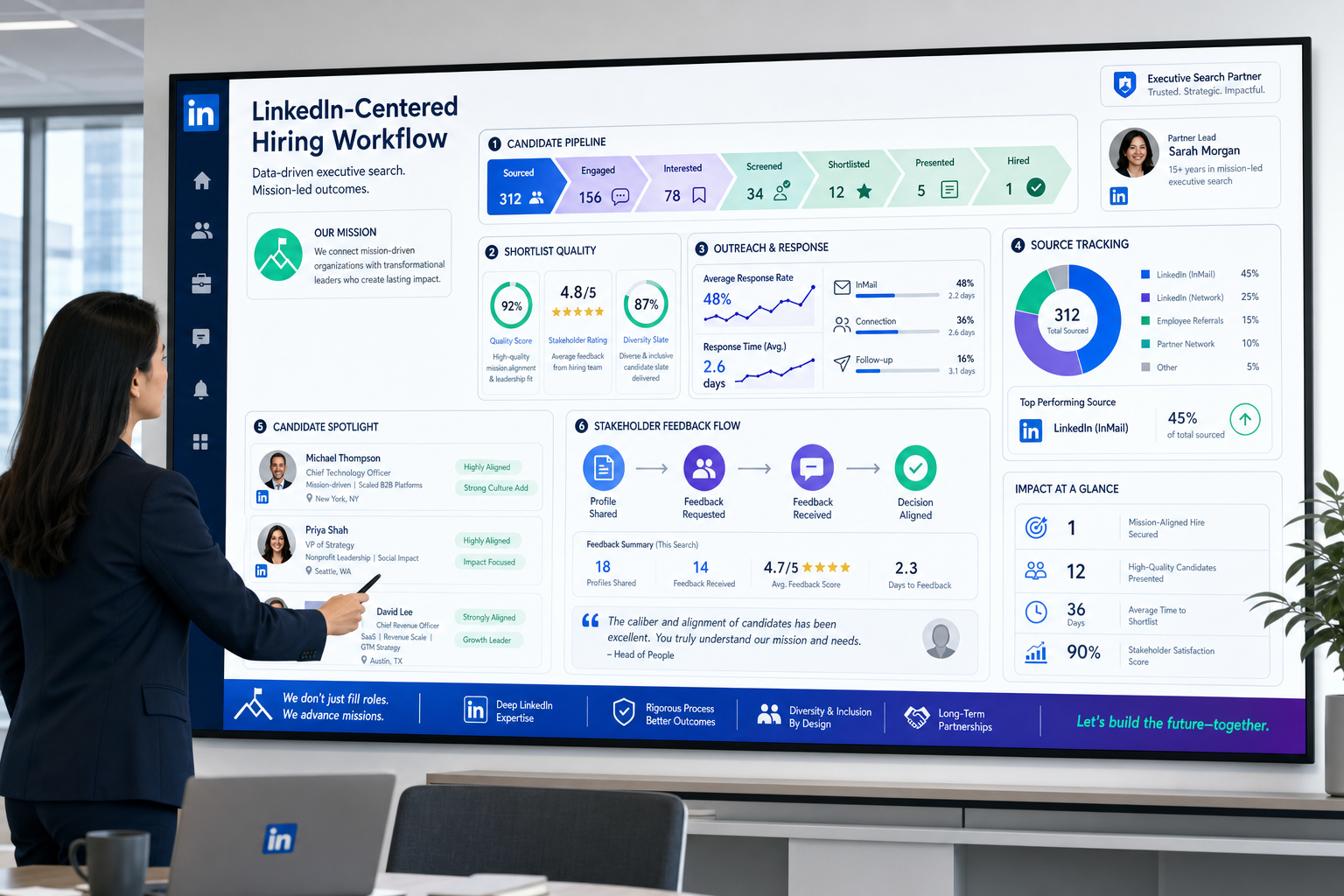
The best hiring systems show time in stage, source effectiveness, recruiter workload, conversion rates, and bottlenecks by team or role type. Useful reporting is not about pretty dashboards. It is about helping recruiters answer basic questions quickly: where are we losing candidates, what is delayed, and which channels are actually working?
Automation that supports recruiter judgment
Automation is most helpful when it reduces repetitive work without hiding decision logic. Candidate communication, follow-up reminders, application routing, and status changes are reasonable places to automate. Final screening and fit assessment should remain visible and reviewable.
That is also how I think about StrategyBrain AI Recruiter. It is effective for repetitive LinkedIn outreach tasks, initial role introductions, after-hours reply handling, and collecting contact details or résumés from interested candidates. What it does not replace, and should not replace, is recruiter judgment on whether a candidate truly fits the brief.
CRM-style relationship management
For agency recruiters, nonprofit executive search, fundraising recruitment, and evergreen hiring, relationship history matters. Software with CRM-style talent pools and nurture workflows is often more useful than a basic ATS alone because it reflects how real search work happens over time.
How software helps you advertise for employees
Many teams still treat hiring systems as back-office admin tools. In practice, they also shape your front-end ability to advertise for employees effectively and convert interest into applications or conversations.
Multi-channel distribution
Software should help recruiters launch roles consistently across job boards, career pages, and social channels. This reduces manual posting errors and shortens time to market, which is especially valuable when a search must begin quickly but still stay targeted.
Career pages that carry the mission
The nonprofit reference offers a useful reminder here: top candidates often want more than compensation. They want purpose, culture, impact, and clarity about what success looks like. Your careers page should help communicate that. A weak careers page can undercut an otherwise strong employee recruiting strategy.
Social and passive-candidate support
Some roles will not be filled through job boards alone. Social sharing, recruiter outreach, and passive candidate engagement matter more when the talent pool is narrow. That is where LinkedIn workflow support becomes important. In my own searches, using AI Recruiter conversation workflow has been useful for keeping warm leads active without forcing me to personally respond to every message in real time.
Candidate experience and message consistency
Candidate experience is often improved by simple things: timely replies, clear next steps, and a smoother handoff from outreach to screening. Software that supports those basics will usually outperform tools with more features but weaker execution.
ATS vs broader recruiting platform
An ATS is primarily designed to track applicants through defined hiring stages. A broader recruiting platform includes ATS functionality but adds sourcing, outreach, relationship management, analytics, and campaign support.
If your main problem is organizing applicants, approvals, and interview scheduling, a solid ATS may be enough. If your problem is finding talent, maintaining passive pipelines, and running more proactive employee recruiting, you may need a broader setup.
For many search firms and recruiting teams, the practical answer is a combination: a dependable ATS for process control plus specialized tools for outreach. That is often the most realistic way to support both governance and top-of-funnel activity without forcing one platform to do everything poorly.
Buying considerations and real tradeoffs
Cost matters, but a lower subscription fee does not automatically create value. The more important question is whether the software reduces recruiter effort, improves hiring manager participation, and supports better hiring decisions.
When evaluating vendors, ask questions like:
- Will this system reduce manual work in posting, outreach, or status tracking?
- Can it support high-context hiring where candidate motivation and stakeholder fit matter?
- Will hiring managers actually use the feedback workflow?
- Does the reporting answer real questions about pipeline health and source quality?
- Can it support both inbound applicants and outbound search if needed?
- Will it still fit as our employee recruiting needs become more complex?
In budget-sensitive sectors, the hidden cost is usually process friction. Missed follow-up, weak shortlist visibility, and poor collaboration are more expensive than they look because they extend time-to-fill and erode candidate trust.
How to choose the right system
If you are selecting among hiring systems, use a recruiting-first process rather than a demo-first process.
- Map your live workflow. Document how jobs are approved, posted, sourced, screened, interviewed, and closed.
- Identify which roles break your current process. Leadership, specialist, or mission-led roles often expose software gaps faster than routine hiring.
- Separate core needs from vendor theater. Posting, tracking, scheduling, communication, and reporting come before novelty.
- Test the hiring manager experience. If managers avoid the tool, recruiter workload increases immediately.
- Review outreach support. If passive candidates matter, assess how the system helps you advertise for employees and manage direct outreach.
- Evaluate reporting in context. Make sure you can answer operational questions without exporting everything into spreadsheets.
- Check judgment points. Automation should support, not obscure, final recruiter and manager decisions.
My own rule is simple: if a system cannot support a narrow, high-stakes search with multiple stakeholders and limited room for error, it probably is not robust enough to call one of the best recruiting software options.
Common mistakes
- Buying for feature count instead of process fit. More modules do not automatically mean better recruiting.
- Ignoring mission, culture, or stakeholder context. Some roles need richer evaluation notes and stronger alignment tools.
- Treating outreach and ATS workflow as separate worlds. The best employee recruiting processes connect them.
- Overtrusting automation. Speed matters, but recruiter judgment still determines shortlist quality.
- Skipping source analysis. If you regularly advertise for employees, you need to know which channels actually convert.
- Underestimating confidentiality needs. Leadership and sensitive searches require cleaner permissions and communication control.
FAQ
What is the best recruiting software for small teams?
Usually a simple ATS with posting, tracking, scheduling, and basic reporting is enough. Small teams benefit more from usability and consistency than from deep configuration.
Are hiring systems the same as applicant tracking systems?
Not exactly. An ATS is the core tracking layer, while hiring systems can refer more broadly to software that also supports sourcing, CRM, automation, analytics, and recruitment marketing.
How do hiring systems help advertise for employees?
They support job distribution, careers pages, source tracking, and sometimes social sharing or campaign workflows. Better systems make promotion easier to manage and easier to measure.
What matters most in employee recruiting software?
The essentials are candidate tracking, communication history, scheduling, reporting, source visibility, and a workflow that hiring managers will actually use.
When does a team need outreach support beyond an ATS?
Usually when roles are hard to fill, passive candidates matter, or LinkedIn outreach is a major source of pipeline. In those cases, teams often need tools that help with messaging and follow-up in addition to standard ATS functions.
Can AI tools replace recruiters?
No. They can reduce repetitive work such as initial outreach, message handling, and résumé collection, but recruiters still need to evaluate fit, manage stakeholder expectations, and make final screening decisions.
What can StrategyBrain AI Recruiter help with?
It can help automate repetitive LinkedIn recruiting tasks such as connecting with candidates, introducing roles, handling messages across time zones, and collecting résumés or contact details from interested prospects. The recruiter remains responsible for reviewing candidates and deciding next steps.
Conclusion
The search for the best recruiting software becomes clearer when you stop treating all hiring systems as interchangeable. The nonprofit recruitment example at the start of this article shows why: some searches demand more context, tighter communication, stronger stakeholder alignment, and better judgment support than a basic applicant funnel can provide.
Whether you are hiring for a mission-led leadership role, running agency searches, or trying to improve day-to-day employee recruiting, the right system should help you protect three things at once: process clarity, candidate quality, and recruiter time. If it can also help you advertise for employees more effectively and support outreach without replacing recruiter judgment, you are looking in the right direction.