When a shortlist is thin and the brief keeps shifting, this article helps headhunters judge candidate management software to avoid search drift and lost passive talent.
That matters most when the role is business-critical and the shortlist is small. In retained search, a messy workflow does more than waste recruiter time. It weakens confidential outreach, slows partner alignment, buries prior conversations with passive candidates, and makes it harder to tell whether the problem is sourcing quality, hiring-manager indecision, or a broken handoff between research, outreach, and interview stages.
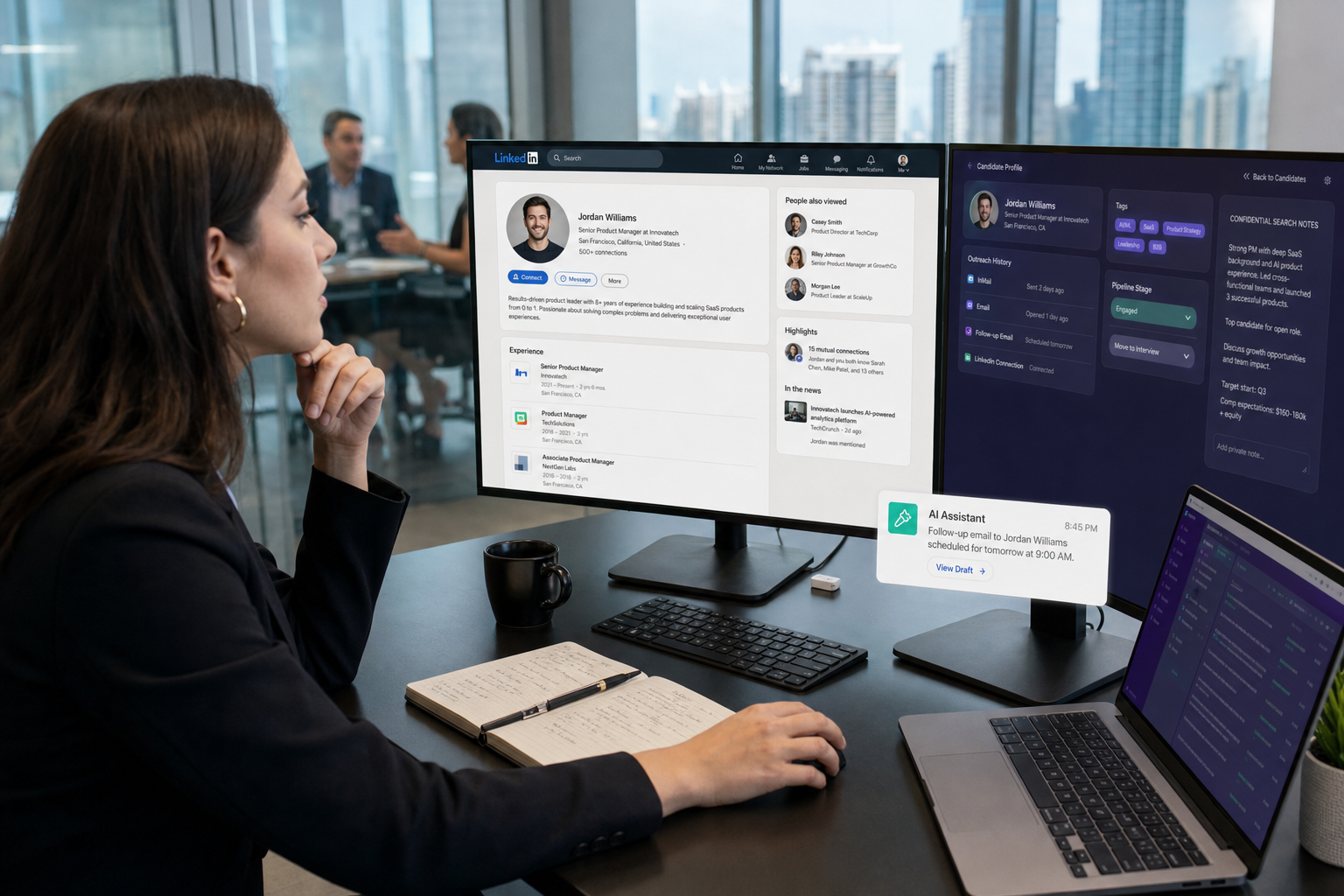
In my own workflow, tools that reduce those gaps are the ones that earn a place in the stack. I have used StrategyBrain AI Recruiter to keep LinkedIn outreach moving after hours, reply to candidates in their preferred language when needed, and collect resumes or contact details from people who were open to a conversation. It helped most when I needed fast first-touch coverage without losing context, while I still handled the final resume review, candidate judgment, and next-step decisions myself.
You see why that matters in executive search. When a company needs a CEO to lead a new growth phase or a GM to launch a new facility, the search rarely starts with active applicants. The recruiter has to clarify what the business actually needs, map where comparable leaders are likely to sit, and begin discreet outreach to people who are already succeeding elsewhere. At that point, every note, reply, and search adjustment has to be easy to retrieve.
The pressure increases when the original brief is too narrow. A hiring leader may ask for a specific certification set or a familiar industry pedigree, but the real requirement is broader: operational discipline, change leadership, or the ability to scale a business from one stage to the next. If candidate history is scattered and outreach lives in inboxes, the recruiter cannot easily widen the search, revisit adjacent profiles, or explain why a different candidate pattern may be the better fit.
That is exactly why evaluating the best recruiting software should start with candidate management software, not just job posting or resume storage. For search firms, internal TA leaders, and hiring managers working on high-stakes roles, the real test is whether the system supports confidential outreach, passive-candidate tracking, rediscovery, collaboration, and the external journey that candidate experience software shapes. In some organizations, those needs also overlap with the best talent management software if executive hiring is tied to succession and long-term workforce planning.
- Why high-stakes hiring changes software needs
- Candidate management software vs ATS vs talent suites
- What good recruiting software actually supports
- Features that matter most in real recruiting work
- Where candidate experience software fits
- Comparison by hiring model
- How I evaluate recruiting tools in practice
- Common selection mistakes
- FAQ
Why high-stakes hiring changes software needs
Not every hiring process places the same demands on software. Filling repeat frontline roles is different from running a confidential leadership search, expanding into a new market, or hiring for a role where the candidate pool is both small and mostly passive.
In those situations, the software has to do more than process applications. It needs to support targeted research, structured outreach, internal calibration, and long-term relationship tracking. That is why experienced recruiters often care less about the biggest feature list and more about whether the platform can hold the full search narrative in one place.
From that lens, the best recruiting software is the system that helps a team answer four operational questions quickly:
- What is the real business problem behind this role?
- Where are comparable candidates likely to be found?
- Who has already been contacted, screened, or ruled out, and why?
- What would make a strong passive candidate actually engage?
Those questions mirror how executive and specialist searches are actually run. A role may look straightforward on paper, but once the recruiter starts mapping the market, the brief often changes. Software should make that shift easier, not harder.
Practical takeaway: The more strategic, confidential, or passive-candidate-heavy the search, the more your evaluation should center on candidate management depth rather than ATS basics alone.
Candidate management software vs ATS vs talent suites
These categories overlap, but they solve different problems.
Candidate management software
Candidate management software is the best starting point for most recruiting evaluations because it reflects how recruiters actually work over time. It focuses on searchable records, talent pools, communication history, stage movement, tagging, rediscovery, and recruiter memory at scale. That matters especially in headhunting and executive search, where the same candidate may be relevant across multiple mandates over several years.
Applicant tracking system
An ATS is mainly built to collect applications and move people through a defined process. That structure is useful, and the applicant tracking system benefits are real: clearer stages, consistent feedback capture, workflow discipline, and better reporting. But an ATS alone can still feel limited if your hiring depends on passive outreach, nuanced relationship history, or repeated revisiting of prior candidates.
Candidate experience software
Candidate experience software covers the candidate-facing side of the process. Think mobile application flow, self-scheduling, timely updates, branded communication, candidate portals, and less friction between outreach and interview. On leadership searches, this matters because high-value candidates judge the process quickly. Slow replies or disjointed scheduling can damage credibility fast.
Best talent management software
The best talent management software usually extends well beyond recruiting into onboarding, learning, performance, succession, and internal mobility. That broader scope can make sense when leadership hiring is tightly connected to long-term bench planning and workforce strategy. It makes less sense if the immediate problem is that recruiters cannot run searches cleanly today.
A simple rule helps here: if your biggest issue is running searches, build around recruiting workflows first. If your bigger issue is managing leadership pipelines across the full employee lifecycle, include talent suites in the comparison.
What good recruiting software actually supports
The strongest recruiting systems support the same discipline good search consultants already use manually. They help the team define the brief accurately, widen or narrow the market intelligently, keep outreach organized, and maintain trust with both candidates and hiring stakeholders.
That means the software should support:
- Business-context capture: not just title and requirements, but the reason the role exists now.
- Search strategy tracking: target companies, adjacent backgrounds, market notes, and shifts in the brief.
- Candidate relationship history: outreach attempts, replies, concerns, compensation signals, and timing.
- Stakeholder alignment: feedback, approvals, comments, and the rationale behind search pivots.
- Talent rediscovery: fast access to previous finalists, silver medalists, and passive contacts.
- Confidential process control: restricted visibility for sensitive roles and leadership transitions.
This is where the reference case from executive search is useful. The recruiter is not simply matching resumes to job titles. They are often reframing the brief itself. A leader asked for a narrow credential profile, but the real need may be process discipline, growth-stage experience, or change leadership. Software should make that reasoning visible.
When it does not, teams revert to side spreadsheets, private notes, and inbox memory. That is usually where candidate quality, process speed, and stakeholder trust start slipping.
Features that matter most in real recruiting work
If you are comparing the best recruiting software, these are the features I would prioritize first.
1. Searchable candidate database
A recruiter should be able to find past candidates by function, industry, location, seniority, compensation band, recency of contact, and status. If rediscovery is weak, the team keeps restarting from zero.
2. Strong pipeline and stage visibility
You need clean stage movement, aging visibility, and enough nuance to distinguish sourced prospects, engaged passive candidates, formal applicants, and active finalists. Executive and specialist searches rarely fit a simplistic apply-screen-interview flow.
3. Outreach and communication history
Every reply, note, and attachment should sit in one record. This is basic in theory and surprisingly inconsistent in practice. It becomes critical once multiple recruiters or partners touch the same search.
4. Workflow automation that saves recruiter time
Good automation handles reminders, scheduling prompts, follow-ups, and admin-heavy updates without removing recruiter judgment. In my experience, that is also where StrategyBrain AI Recruiter can complement a broader system well. I found it especially useful for repetitive LinkedIn outreach, after-hours replies, and early interest capture, while the recruiter still decides whether the resume matches the brief and whether the conversation should advance.
5. Hiring-manager and stakeholder collaboration
Look for structured feedback, visible comments, approval paths, and clear ownership. On complex searches, delays often come from decision-makers, not sourcing.
6. Reporting that reflects funnel reality
Basic volume reporting is not enough. You need source quality, stage conversion, time in stage, and reasons candidates disengage. Otherwise, you cannot tell whether the bottleneck is market scarcity or process failure.
7. Candidate-facing experience
This is where candidate experience software overlaps with the recruiting core. Fast scheduling, clear updates, and low-friction communication matter far more than many teams admit, especially with passive or senior candidates who will not tolerate a clumsy process.
8. Privacy and confidentiality controls
Leadership searches, replacements, and market-sensitive hires require careful access control. If the platform treats every opening like a standard public requisition, it may not fit high-stakes recruiting.
9. Integrations and downstream handoff
Once the candidate accepts, HR still needs a clean handoff into onboarding or broader people systems. If that handoff is important across your organization, this is one place where the best talent management software may have an advantage.
Quick evaluation checklist
- Can the team revisit passive candidates quickly?
- Can a recruiter explain why the brief changed halfway through the search?
- Can hiring leaders see bottlenecks without asking for manual updates?
- Can candidates move from outreach to scheduling with minimal friction?
- Can the system support confidential searches with restricted visibility?
- Can repetitive outreach tasks be automated without outsourcing final judgment?
Where candidate experience software fits
Too many software evaluations still separate recruiter efficiency from candidate perception, even though candidates experience them as the same process. When a recruiter cannot retrieve context quickly, candidates feel the lag. When scheduling requires too many messages, candidates notice. When a team cannot coordinate feedback, candidates interpret silence as disinterest or disorganization.
That is why candidate experience software deserves its own evaluation. For some teams, the application flow is the main problem. For others, the biggest win is simpler scheduling, faster updates, or a better communication layer for passive candidates who were never enthusiastic applicants to begin with.
In retained search and leadership recruiting, candidate experience is also tied to credibility. Senior candidates expect discretion, responsiveness, and clarity. If your process feels fragmented, they may decline early, even if the role is strong.
Comparison by hiring model
| Hiring Model | Best Fit | Capabilities to Prioritize | Main Risk if You Underbuy |
|---|---|---|---|
| Small in-house team | Simple recruiting software with solid ATS basics | Stage tracking, templates, scheduling, basic reporting | Manual work remains spread across email and spreadsheets |
| Growth-stage internal TA team | Candidate management software with automation | Rediscovery, collaboration, analytics, outreach history | Rising requisition volume creates process drift |
| Agency or search firm | CRM-style recruiting platform with relationship depth | Passive-candidate records, submissions tracking, segmentation | Candidate memory stays in individual recruiters' inboxes |
| Enterprise TA function | Scalable recruiting software with controls and integrations | Governance, approvals, reporting, confidential workflows | Local speed suffers or compliance gaps appear |
| Company aligning hiring with succession | Best talent management software or broader suite | Recruiting plus onboarding, internal mobility, succession | Recruiting remains disconnected from leadership planning |
No platform is best for every employer. The right choice depends on whether your operation is application-heavy, sourcing-led, confidential, agency-based, or part of a larger HR system.
How I evaluate recruiting tools in practice
When I am looking at recruiting software, I start less with the demo and more with the mandate. I want to know what kind of search the tool can actually support once the brief starts shifting, the hiring manager changes direction, or passive candidates begin replying outside business hours.
- Map the real workflow. Separate applicant processing from sourcing-led or executive search work.
- Test rediscovery. Search for a past candidate with partial information and see how fast the record becomes useful.
- Run a collaboration scenario. Add recruiter notes, stakeholder comments, and a changed search brief.
- Test the candidate-facing steps. Review outreach, response handling, scheduling, and updates.
- Evaluate automation narrowly. It should remove repetitive work, not hide weak process design.
- Check what still requires human judgment. That matters especially with AI-supported outreach.
On that last point, I have found AI Recruiter most useful as a support layer rather than a replacement layer. It can keep communication active on LinkedIn, capture interest, and collect candidate details while I focus on calibration, resume review, and whether the person actually fits the role beyond surface signals. For headhunters and lean internal teams, that division of labor is practical because it removes repetitive first-touch work without pretending that executive qualification can be automated away.
If your team works internationally or handles candidates across time zones, the multilingual and always-on communication side is also useful. The real value is not hype. It is that fewer interested people sit waiting in the gap between reply and recruiter follow-up.
Common selection mistakes
- Buying for postings when your problem is search. Executive and passive-candidate hiring need relationship depth, not just application flow.
- Treating the original brief as fixed. Good recruiting software should support market learning and search pivots.
- Ignoring candidate experience. Senior candidates often disengage because of process friction, not role quality.
- Overweighting generic AI claims. Test actual use cases like outreach support, reply handling, summaries, or rediscovery.
- Skipping confidentiality checks. Sensitive searches need role-level access controls and careful visibility settings.
- Assuming a suite is always better. Sometimes the best talent management software is too broad if recruiting execution is the immediate failure point.
FAQ
What is the best recruiting software for executive search teams?
The best fit is usually software with strong candidate relationship history, passive-candidate tracking, stakeholder collaboration, and confidential workflow controls. Executive search depends more on targeted outreach and long-term candidate memory than on application intake alone.
How is candidate management software different from an ATS?
Candidate management software focuses on maintaining useful candidate records over time, including rediscovery, tagging, communication history, and talent pools. An ATS is more focused on collecting applications and moving candidates through defined hiring stages.
When does candidate experience software matter most?
Candidate experience software matters most when application completion, interview attendance, response rates, or senior-candidate engagement are weak. It is especially important in competitive or passive-candidate markets.
Should companies buy best talent management software instead of recruiting software?
Choose the best talent management software when recruiting is part of a broader goal that includes succession, internal mobility, onboarding, and performance management. If your immediate issue is recruiting execution, a more focused recruiting platform may be the better first move.
Can AI help without replacing recruiter judgment?
Yes. AI-supported tools can help with repetitive outreach, after-hours replies, multilingual communication, and contact capture. Recruiters should still make the final decision on fit, resume evaluation, and whether a candidate should move forward.
What are the biggest applicant tracking system benefits?
The main applicant tracking system benefits are cleaner stage management, more consistent feedback capture, better visibility into bottlenecks, and less manual administration. Those gains become more important as hiring volume and stakeholder complexity increase.
Conclusion
The best recruiting software is not the one with the most modules. It is the one that supports the kind of hiring your team is actually doing. If your work includes confidential searches, passive-candidate outreach, or leadership hiring where the brief evolves as the market responds, then candidate management software should be your main evaluation lens.
From there, assess where candidate experience software improves conversion and credibility, and whether the best talent management software is necessary because leadership hiring connects directly to succession and the broader employee lifecycle. The executive search perspective makes one thing clear: high-stakes hiring succeeds when recruiters can keep strategy, outreach, candidate history, and stakeholder alignment in one usable system.