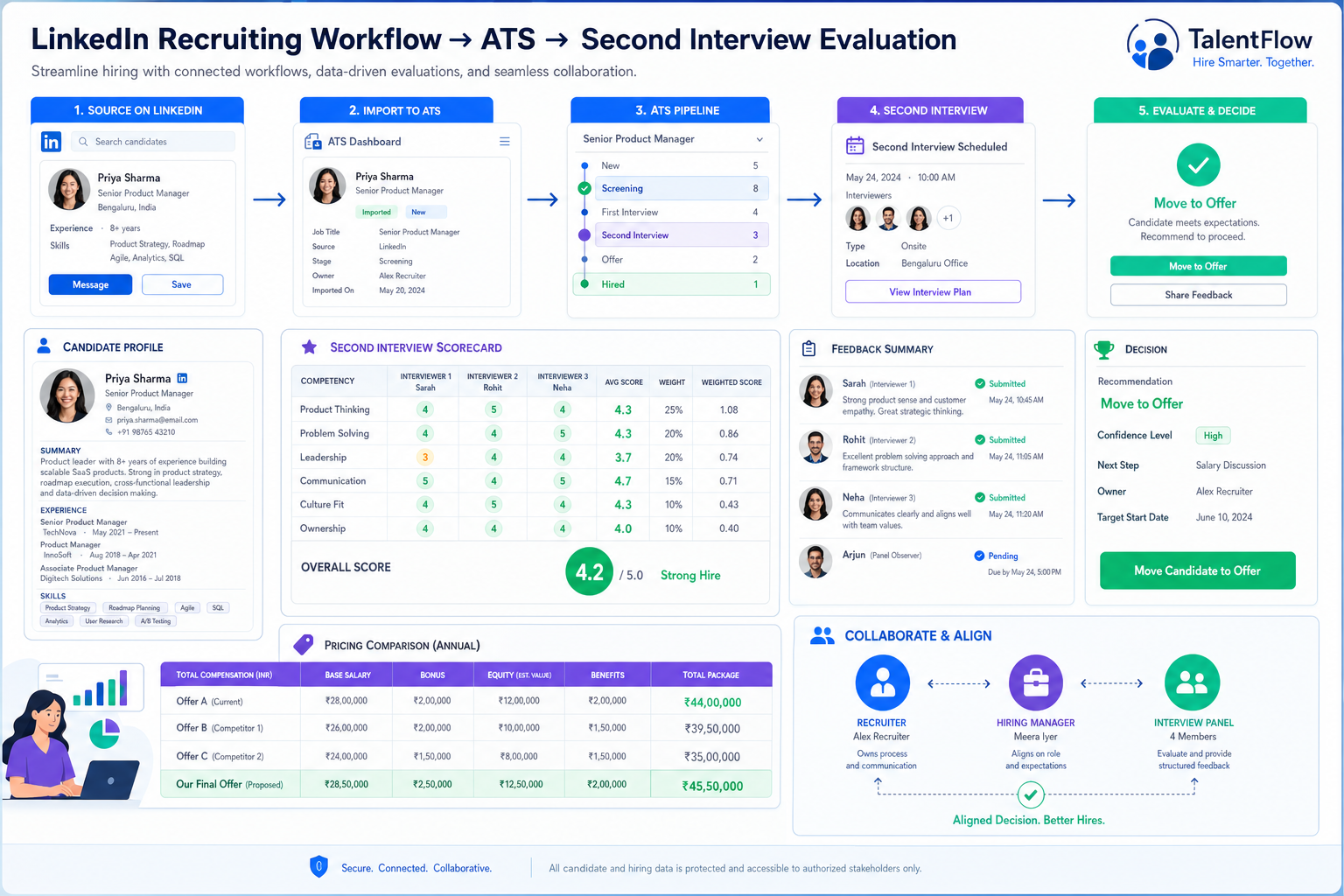
Assess ATS recruitment software here so your hiring team can avoid second-round delays, repeated questions, and weak decisions.
That matters because hiring usually becomes expensive in the second interview stage, not the first. Once a shortlist is formed, delays in feedback, repeated questions, unclear ownership, and missing candidate context start hurting everyone involved. Agency recruiters lose momentum with clients, in-house teams frustrate candidates with slow follow-up, and hiring managers make decisions with partial notes instead of a complete picture.
In that gap between initial screening and final judgment, I have found that StrategyBrain AI Recruiter can relieve a very specific kind of pressure. It can keep candidate communication moving after hours, handle multilingual outreach when sourcing spans regions, and collect resumes or contact details from interested prospects before a recruiter steps in. Just as important, the recruiter still owns final qualification, resume review, and the decision about who advances.
The second interview is where a hiring team usually stops asking broad fit questions and starts testing judgment, working style, collaboration habits, and role-specific thinking. By that point, the candidate has already learned about the company, researched the role, and likely met an initial interviewer. Now the team wants sharper answers: how this person solves problems, what they would prioritize early, where they may struggle, and how they would work with peers or stakeholders.
If your process cannot carry that richer context from first contact to second-round evaluation, the issue is not only interview quality. It is a software and workflow issue. The best recruiting software should help recruiters move from outreach to structured assessment without losing candidate history, stakeholder feedback, or pricing control, which is exactly why a serious review of ATS recruitment software, ats pricing comparison, and ats for collaborative hiring belongs together.
Key takeaway: A strong ATS is not just a place to store applicants. It should help your team run deeper interviews, collect better feedback, and make faster decisions when more stakeholders enter the process.
Table of Contents
- Why second-round hiring tests your ATS
- What ATS recruitment software means now
- Features that support better hiring decisions
- ATS pricing comparison: what buyers should really compare
- ATS for collaborative hiring: what good teamwork looks like
- Best recruiting software by team type
- How I evaluate an ATS in practice
- Common buying mistakes
- FAQ
Why second-round hiring tests your ATS
Most recruiting systems look fine when the process is still broad. You open a role, publish it, collect applications, and move promising people into an initial screen. The real test comes later, when the second interview turns into a decision stage rather than an interest stage.
At that point, the hiring team needs more than applicant storage. Recruiters need to recap the first interview, carry forward role expectations, route more specific questions to the right interviewers, and compare feedback without forcing everyone into side emails or spreadsheets. Candidates also tend to ask better questions in round two: about success measures, team relationships, leadership style, growth, and practical obstacles in the job. If your system cannot preserve that context cleanly, decisions become slower and weaker.
This is also where many teams accidentally repeat the first interview instead of deepening it. In my experience, that usually happens for one of three reasons:
- Incomplete notes from earlier conversations
- No structured way to assign second-round focus areas
- Poor collaboration tools for hiring managers and interview panels
That is why the search for the best recruiting software should not start and end with resume parsing or job board distribution. It should include how the system supports second-round interview design, scenario-based evaluation, and final stakeholder alignment.
What ATS recruitment software means now
Years ago, many teams treated an applicant tracking system as a digital filing cabinet. Today, ATS recruitment software is expected to sit at the center of recruiting operations. It often manages job posting, stage movement, interview scheduling, hiring team feedback, approvals, reporting, and handoff into later HR workflows.
That shift matters because modern hiring rarely follows a single linear path. Candidates may come from inbound applications, sourcing, referrals, or LinkedIn outreach. Recruiters may need to coordinate across departments, external stakeholders, or regional teams. A second interview can include behavioral questions, role-specific scenarios, and cross-functional input in the same round. A basic database cannot support that well.
In practical terms, strong ATS recruitment software should give you:
- One source of truth for candidate activity and stage history
- Clear interview structure from first screen to final decision
- Shared visibility for recruiters, hiring managers, and interviewers
- Reporting discipline around bottlenecks and stage conversion
- Better process consistency across roles and departments
When people talk about the best recruiting software, they often ask which tool has the most features. In reality, a better question is whether the system supports how your team actually evaluates talent once the process becomes more specific and more collaborative.
Features that support better hiring decisions
A good ATS can track candidates. Great recruiting software helps teams make sharper decisions. That distinction becomes obvious in later-stage interviews, when broad fit is no longer enough and the conversation turns to judgment, trade-offs, and likely day-to-day performance.
The most useful systems usually include the following:
- Flexible pipelines with stage rules that match real hiring steps
- Interview scorecards tied to competencies or responsibilities
- Shared notes that reduce repeated questioning
- Scenario or interview kits for deeper role-specific evaluation
- Scheduling workflows that do not bury coordinators in admin
- Approval paths for shortlist, offer, or requisition decisions
- Searchable records so prior conversations are easy to revisit
- Reporting on feedback delays, stage drop-off, and hiring velocity
Why structured second interviews matter here
The reference point I keep coming back to is simple: second interviews should reveal how a candidate thinks, how they work through problems, and how they may fit into real team dynamics. That requires more focused questions than a first interview, often involving behavior-based examples, practical scenarios, and targeted questions about early priorities or likely obstacles in the role.
If your software makes it hard to prepare those interviews, assign topics to interviewers, or compare answers afterward, you are not just dealing with a usability issue. You are reducing the quality of your hiring signal.
A note from practice on AI support
I have used AI Recruiter most effectively before this stage, especially when candidate replies arrive outside normal hours or when outreach stretches across time zones. The value is not that it replaces recruiter judgment; it does not. The value is that by automating repetitive outreach, answering routine candidate questions, and capturing resumes or contact details from interested prospects, it helps me enter the interview stage with a cleaner pipeline and fewer loose threads. That matters when the second interview requires precision rather than catch-up.
ATS pricing comparison: what buyers should really compare
ATS pricing comparison is where many software evaluations go wrong. The visible price is rarely the operating price. By the time your team adds more recruiters, more hiring managers, more active roles, and more reporting needs, the economics can look very different from the initial quote.
Most pricing models fall into three broad patterns:
- Per-seat pricing: common when user counts are stable
- Per-job pricing: often workable for smaller teams with limited active openings
- Custom enterprise pricing: usually tied to workflow complexity, governance, and support
| Pricing Model | Best For | Main Risk | How Costs Grow |
|---|---|---|---|
| Per seat | Internal teams with predictable recruiter counts | Extra charges for coordinators, admins, or wider manager access | As users increase |
| Per job | Low-volume or seasonal hiring teams | Costs spike during growth or hiring surges | As active openings increase |
| Custom enterprise | Large or regulated organizations | Opaque packaging and bundled add-ons | As complexity, support, and integrations increase |
A useful ats pricing comparison should include more than a starting fee. I recommend comparing these fields side by side:
- Base plan assumptions
- User limits and what counts as a billable user
- Open role limits or requisition caps
- Hiring manager access rules
- Implementation or onboarding fees
- Integration availability
- Reporting access by tier
- Support levels and response expectations
Where hidden cost shows up in real hiring
The second interview workflow is actually a good place to spot hidden pricing problems. If scorecards, approval flows, advanced reporting, or broad manager access sit behind higher plans, then your team may end up paying extra for capabilities that should be central, not optional. That is especially true if your process depends on cross-functional interviewers or multi-step stakeholder review.
Transparent pricing is not just a procurement concern. It is a workflow concern. If cost pressure forces you to limit users or remove collaboration features, your recruiting process becomes narrower than your hiring reality.
ATS for collaborative hiring: what good teamwork looks like
ATS for collaborative hiring is not a buzz phrase. It is the practical difference between a process that moves and one that stalls between interviews. By the second round, more people usually need to participate: the recruiter, hiring manager, future peers, maybe an executive, and sometimes a cross-functional stakeholder who can test how the candidate would work in context.
That kind of process works best when the system supports:
- Shared candidate visibility across the full panel
- Structured scorecards tied to clear evaluation themes
- Assigned interview focus areas so rounds do not repeat each other
- Visible missing feedback without manual chasing
- Approval workflows for shortlist and offer decisions
- Role-based access so stakeholders see what they need without clutter
How second interviews expose weak collaboration
When collaboration is poor, second interviews become shallow. One interviewer revisits motivation, another repeats background questions, and nobody clearly owns scenario testing or role-specific concerns. Feedback arrives late, often by email, and the recruiter has to translate loose opinions into a decision summary.
Strong ats for collaborative hiring reduces that friction. It lets the team recap prior interviews, assign deeper questions, compare candidate reasoning, and capture what candidate questions reveal about motivation, success expectations, or team fit. That last point matters more than many buyers expect. The questions candidates ask in round two often reveal how seriously they are evaluating the opportunity.
Best recruiting software by team type
There is no universal winner. The best recruiting software depends on hiring volume, team structure, process maturity, and how much collaborative interviewing your organization actually does.
Small businesses and lean teams
Smaller teams usually benefit most from straightforward ATS recruitment software with clean setup, simple stage management, basic scheduling, and enough reporting to catch obvious bottlenecks. If hiring manager participation is light, ease of use matters more than enterprise-level customization.
Mid-market hiring teams
This is often where buying gets tricky. You need stronger workflows, more reliable analytics, and better manager participation, but you may not yet need enterprise governance. Here, ats pricing comparison becomes critical because growth in users, jobs, or collaboration features can quickly change the total cost.
Enterprise organizations
Larger companies usually need more structure across business units, more approval logic, stronger permissions, and reporting that can hold up under executive review. Second-round interviews in these environments often involve more stakeholders, so ats for collaborative hiring is usually central rather than optional.
Agencies and headhunters
Agency teams need speed, searchable records, client-specific workflows, and enough context retention that second interviews do not start from scratch each time. If your process includes both sourcing and later-stage advisory work with clients, workflow continuity matters as much as basic applicant tracking.
High-volume recruiting teams
At scale, the challenge is throughput without process collapse. You still need quality interviews, but the software must also support bulk movement, scheduling efficiency, and consistent hiring manager participation. A system that looks polished in a demo can still fail when dozens of candidates hit second-round review at once.
How I evaluate an ATS in practice
When I assess recruiting software, I do not start with a broad feature spreadsheet. I start with the moments where hiring usually breaks. Second interviews are one of those moments because they demand context, structure, and collaboration all at once.
- Map the real interview sequence
Document what the first interview confirms and what the second interview must uncover. Usually that means behavior, judgment, collaboration style, problem-solving, and role-specific thinking.
- Check whether the system supports progressive depth
A good workflow should let the team recap prior interviews, assign new focus areas, and avoid asking the same questions twice.
- Test stakeholder participation directly
Do not evaluate only with recruiters in the room. If hiring managers and peers will use the system, they should test scorecards, notes, and approval steps themselves.
- Build a real ATS pricing comparison sheet
Include who needs access, how many jobs may open at peak volume, which reports matter, and whether collaboration features or integrations cost extra.
- Review candidate communication gaps
This is where I often pair the ATS with StrategyBrain AI Recruiter. It helps maintain momentum in the top of funnel so recruiters can spend more time on decision-heavy interview stages instead of repetitive outreach and follow-up.
- Look for surviving manual work
If the team still needs spreadsheets to chase interviewers, reconstruct context, or compare second-round feedback, the software is not solving enough of the real problem.
Common buying mistakes
- Buying for the demo, not the decision stage
Many systems look good during job posting and applicant intake. The trouble starts later, when the team needs better interview structure and stakeholder coordination.
- Using a shallow pricing review
A weak ats pricing comparison misses the costs that appear as hiring managers, open roles, reporting needs, and support expectations grow.
- Underestimating collaborative hiring
If the process depends on multiple interviewers, then ats for collaborative hiring should be a buying requirement, not a nice extra.
- Repeating first-round thinking in later stages
The second interview should not be a duplicate conversation. Your software should support a more focused round with deeper questions and clearer evaluation goals.
- Confusing automation with judgment
AI can help with outreach, follow-up, and information capture. Recruiters still need to own final evaluation, resume review, and hiring decisions.
FAQ
What is ATS recruitment software?
ATS recruitment software is software that helps teams manage hiring from application or sourcing through interviews and final decisions. Modern systems often include posting, tracking, scheduling, reporting, collaboration, and workflow controls.
Why do second interviews matter when choosing recruiting software?
Second interviews are where hiring becomes more structured and collaborative. They test whether the system can carry forward candidate context, support deeper questions, and collect reliable stakeholder feedback without confusion or repetition.
How should I do an ATS pricing comparison?
A proper ats pricing comparison should include pricing model, user limits, job limits, implementation fees, support tiers, collaboration access, integrations, and reporting availability. Do not rely on the headline number alone.
What does ATS for collaborative hiring mean?
ATS for collaborative hiring refers to capabilities that let recruiters, hiring managers, interviewers, and decision-makers work in a shared process. Typical features include scorecards, shared notes, assigned interview focus, approvals, and visible missing feedback.
Can AI replace recruiter judgment in ATS workflows?
No. AI can help with repetitive tasks such as outreach, candidate replies, multilingual communication, and information capture. Final qualification, resume review, interview assessment, and next-step decisions should remain with recruiters and hiring teams.
What should small teams prioritize first?
Small teams should usually prioritize ease of use, clear workflows, manageable pricing, and enough collaboration support to avoid manual chasing as the process gets more serious.
Final takeaway
The best recruiting software is the system that helps your team move from early interest to final confidence without losing context along the way. In practice, that means choosing ATS recruitment software that can support deeper second interviews, cleaner collaboration, and realistic cost control.
If you are evaluating options now, do not stop at feature count. Run a real ats pricing comparison, test ats for collaborative hiring with actual stakeholders, and look closely at whether the software helps your team ask better questions, collect better answers, and make better hiring decisions.