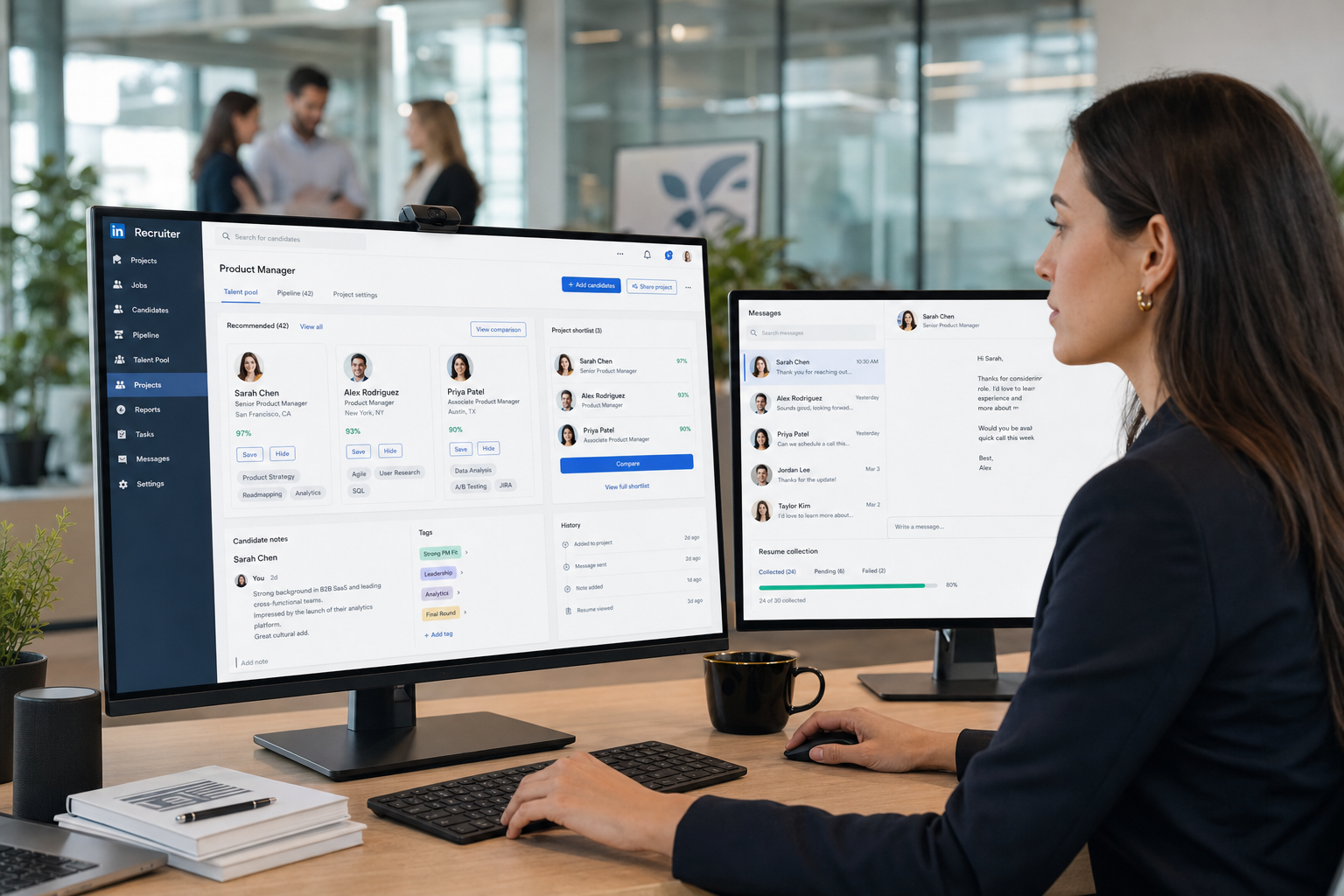
A better candidate database for recruiters helps hiring leads compare talent with full context, avoid biased shortlists, and stop repeated sourcing.
That matters more than most software demos admit. Recruiters do not lose time only because sourcing is hard; they lose time because good people get buried, notes live in inboxes, follow-up happens too late, and hiring decisions become shaped by memory, urgency, and individual preference instead of a complete record. For a solo headhunter, that means repeated sourcing and missed placements. For a small agency owner, it means lower desk productivity and weaker client confidence. For an in-house talent lead, it means preventable delays, inconsistent shortlists, and more pressure from hiring managers who feel the process is subjective.
That is also where workflow support can help without pretending to replace recruiter judgment. In my own sourcing process, I have used StrategyBrain AI Recruiter mainly to handle the repetitive front end of outreach on LinkedIn, keep candidate conversations moving after hours, and collect resumes and contact details from interested prospects before I review fit myself. The practical advantage is not that it decides who should be hired; it is that it reduces message lag, preserves more candidate responses, and gives the recruiter more time to evaluate resumes, compare context, and make the final call.
A useful hiring lesson comes from bias research published in a 2015 white paper by a recruitment firm focused on finance and accounting hiring in the GTA. The paper argued that companies trying to hire stronger talent were often blocked not only by market scarcity, but by judgment problems inside the hiring process itself. In practice, that shows up in familiar recruiting actions: a recruiter reopens a search, pulls a few resumes that feel right, checks scattered notes from an earlier campaign, and sends a shortlist forward before the wider database has really been searched. The task gets done, but the process quietly rewards whatever profiles are easiest to retrieve or most recently seen.
The same paper emphasized that better hiring requires more objective and efficient practices, not just better intentions. That point lands hard when you are reviewing previous applicants, silver medalists, referrals, and newly sourced candidates at the same time. If your team cannot search cleanly, compare candidates with complete context, and revisit historical records without guesswork, then software stops being a hiring advantage and becomes a storage problem. That is why the real question behind the best recruiting software is not only where you can browse resumes for free or which resume finders surface new talent fastest. It is whether your system helps recruiters make better decisions with a searchable, usable, and less bias-prone candidate database for recruiters.
Table of Contents
- Why decision quality matters in recruiting software
- Candidate database vs external resume access
- Features that reduce search noise and judgment gaps
- Best recruiting software by team type
- When to browse resumes for free and when not to
- How to evaluate software with real recruiting scenarios
- Common selection mistakes
- FAQ
Why Decision Quality Matters in the Best Recruiting Software
Most articles about the best recruiting software focus on features, integrations, or automation. Those matter, but they are not the first operational test I use. I start with a simpler question: does the system help recruiters make clearer decisions with complete candidate context, or does it leave the team relying on memory, partial notes, and whatever resumes are easiest to pull up quickly?
That is where the hiring-bias angle from the white paper becomes useful. The recruiting issue is not limited to unconscious preference in interviews. Bias also enters earlier, when candidate records are fragmented, when search results are weak, when notes are inconsistent, and when recruiters cannot easily compare past applicants against current sourcing. In those conditions, speed wins over rigor, and familiarity often wins over fit.
For that reason, the best recruiting software usually combines three practical layers:
- An applicant tracking system for process control
- A CRM-style layer for outreach and relationship history
- A searchable candidate database for recruiters that keeps records usable over time
When those layers work together, recruiters can revisit talent pools, evaluate candidates with less guesswork, and give hiring managers a shortlist built on evidence rather than convenience.
Key insight: Strong recruiting software does more than store resumes; it reduces avoidable judgment errors by making candidate history easier to find, compare, and trust.
That is also why I do not treat sourcing tools and internal systems as interchangeable. A sourcing tool may help you find names. A working database helps you decide well.
Candidate Database for Recruitors vs External Resume Access
Recruiting teams often mix up three separate needs: finding new people, managing active applicants, and reusing known talent. Those are related, but they are not the same. If you are buying software for the wrong problem, you usually end up with either a bloated ATS that nobody searches properly or a sourcing subscription that creates activity but not long-term recruiting memory.
| Category | What It Does | Where It Helps | Main Risk |
|---|---|---|---|
| Internal candidate database | Stores applicants, sourced prospects, referrals, notes, tags, and history | Rediscovery, structured review, long-term talent pooling | Becomes unreliable if data hygiene is weak |
| ATS workflow | Tracks candidates through jobs, stages, and approvals | Process control, compliance, hiring team coordination | Can become static if search and CRM tools are weak |
| External resume access | Provides third-party resume inventory | Net-new sourcing and market reach | You do not own the environment or candidate history |
| Resume finders | Help locate or rank resumes internally or externally | Search speed and relevance | Useful for discovery, but not a full operating system |
If your main goal is to improve judgment quality, the owned system matters most. The lesson from the bias research is simple: better hiring comes from more objective, more efficient practices. In recruiting operations, objectivity is easier when profiles, notes, and prior interactions are visible in one place instead of scattered across browser tabs and inbox threads.
External search still matters, especially for agency recruiters and hard-to-fill roles. I use LinkedIn heavily for that reason. But even there, I have found that the value of outreach rises when responses are captured cleanly and pushed back into the broader recruiting workflow. That is why tools such as AI Recruiter are most useful when they support the database, not when they are treated as the whole system.
Features That Reduce Search Noise and Judgment Gaps
Once you evaluate software through the lens of decision quality, some features become far more important than glossy dashboards.
1. Search that reflects how recruiters actually think
Good search is not just keyword matching. Recruiters need to filter by title, function, location, seniority, industry, language, compensation context, and often combinations of those factors. A useful candidate database for recruiters should also make historical notes searchable, because recruiter insight often lives in comments, not only in resumes.
If the system cannot help you retrieve relevant candidates beyond exact phrasing, your team will keep restarting searches from scratch.
2. Structured resume parsing
Parsing matters because weak structure creates weak comparison. If titles, skills, employers, and dates are not normalized reasonably well, recruiters cannot trust filters or talent pools. That creates more manual review and increases the risk that strong candidates are overlooked simply because their profiles were entered inconsistently.
3. Deduplication and profile merging
Duplicates are more than an admin problem. They split feedback, hide previous outreach, and make it harder to judge the full relationship with a candidate. In agency environments especially, duplicate records can distort both search results and client submissions.
4. Notes, tags, and interaction history
This is where recruiting software starts to improve judgment. A resume may show capability, but notes reveal context: why a candidate declined before, whether compensation was the issue, whether a hiring manager liked the profile but paused the role, or whether the person was strong but simply timed poorly. Those details help teams build more objective shortlists.
5. Candidate rediscovery
One of the most practical applicant tracking system benefits is not workflow movement. It is candidate rediscovery. Past applicants, silver medalists, and sourced prospects become far more valuable when a recruiter can resurface them quickly for a new opening.
I have seen this most clearly in LinkedIn-heavy workflows. When outreach is handled manually, replies can come in late, across time zones, and through inconsistent message threads. Using StrategyBrain AI Recruiter for automated first-touch messaging and resume collection helped me preserve more of those early interactions so they were easier to review later inside the broader recruiting process. The AI handled repetitive contact and follow-up; I still reviewed the resume, checked role fit, and decided who moved forward.
6. Collaboration without context loss
The white paper's underlying warning about clouded judgment applies to hiring teams too. If recruiters, hiring managers, and coordinators all see different pieces of candidate information, comparison becomes inconsistent. The best recruiting software keeps collaboration tied to one visible record so decisions are easier to explain and revisit.
Best Recruiting Software by Team Type
There is no universal best option because recruiter needs change by business model. The right system for a retained search desk is not always right for a startup founder-led hiring process.
Agency recruiters and headhunters
Agency teams need fast sourcing, strong search, detailed note capture, duplicate control, and candidate movement across multiple client searches. Their systems also need to preserve relationship history because repeat market coverage is where desk efficiency compounds.
For this group, external sourcing and resume finders are highly relevant, but only if candidate responses are converted into owned records. In practice, many agency recruiters now combine a core ATS/CRM with LinkedIn outreach support. That is one case where StrategyBrain AI Recruiter can fit naturally: it automates initial outreach, handles multilingual communication, and keeps prospect conversations active around the clock, while the recruiter remains responsible for qualification, resume review, and shortlist decisions.
In-house talent acquisition teams
Internal teams usually benefit most from candidate rediscovery, hiring manager alignment, and a clear applicant record. Their software should help them compare applicants fairly, preserve interview and outreach history, and reuse talent across future roles.
If the white paper's lesson is that organizations need more objective hiring practices, then in-house teams should be especially careful about fragmented systems that leave applicant history invisible.
Lean startups
Smaller teams need software that is easy to adopt and maintain. They usually do not need complex configuration first; they need records that are easy to add, easy to search, and easy to review later. Simplicity matters because unused sophistication quickly becomes database decay.
Occasional hiring organizations
Some employers hire only when a key role opens and are tempted to rely mainly on job posts or attempts to browse resumes for free. That can be enough for short-term experimentation, but it rarely builds cumulative recruiting knowledge. Even light hiring benefits from a system that stores candidate information properly for future reuse.
When to Browse Resumes for Free and When Not To
The intent behind browse resumes for free is understandable. Recruiters want to test market depth, evaluate search quality, or validate whether a role is even sourceable before paying for another tool. That can be sensible.
| Option | Useful For | Common Limits |
|---|---|---|
| Free resume browsing | Initial market checks and light sourcing tests | Restricted views, stale data, gated contact details |
| Free trial of recruiting software | Testing workflow fit, search, and collaboration | Short evaluation window, setup may be rushed |
| Basic free plan | Very small teams or occasional hiring | User caps, record caps, limited automation or exports |
| Paid internal system | Repeatable hiring operations and owned talent pools | Needs process discipline and adoption |
Use free options when you are answering narrow questions:
- Can we find enough people in this market?
- Do the filters return relevant profiles?
- Is this sourcing channel worth deeper testing?
Move to a stronger system when your questions become operational:
- How do we preserve candidate context?
- How do we compare current and past talent fairly?
- How do we prevent repeated outreach and lost notes?
- How do we make better decisions under time pressure?
That distinction matters because free browsing solves discovery, not memory. The best recruiting software solves both.
How to Evaluate the Best Recruiting Software
If you want a better buying process, evaluate software against real recruiter decisions instead of vendor feature tours.
Test 1: Can the system support more objective hiring?
This is the most overlooked test. Create a sample shortlist task using a mix of old applicants, sourced prospects, and referrals. See whether the system makes it easy to compare them with complete history visible. If not, the software may increase activity without improving hiring quality.
Test 2: Run a candidate rediscovery scenario
Take a role you filled or nearly filled six months ago. Try to rebuild a shortlist from existing data. Check whether the search can surface prior finalists, tagged prospects, and past applicants quickly. If it cannot, the database is not doing enough useful work.
Test 3: Review the speed of front-end sourcing
For LinkedIn-led teams, evaluate how repetitive outreach is handled and how candidate responses are captured. In my own workflow, using AI Recruiter improved responsiveness in the earliest part of sourcing because it kept outreach moving, answered candidate questions about the role, and collected resumes from interested prospects while I focused on judgment-heavy review. That support is especially helpful when candidates reply after hours or across regions, but the recruiter still has to qualify the resume and decide next steps.
Test 4: Examine data hygiene controls
Look for parsing quality, deduplication, note visibility, tagging consistency, and profile completeness. These are the controls that keep your candidate database for recruiters usable over time.
Test 5: Check team adoption friction
The best recruiting software is the one recruiters actually trust under pressure. If adding notes is slow, searching feels unreliable, or hiring managers cannot review records easily, the system will decay no matter how strong the demo looked.
Common Selection Mistakes
Confusing sourcing access with a recruiting system
External resume access can be valuable, but it is not the same as an internal operating system. If you rely only on third-party inventories, you may keep finding people without ever building durable recruiting memory.
Overvaluing job posting reach
Posting helps top-of-funnel visibility, but stored candidate intelligence is where efficiency compounds. Past applicants, previous outreach, and recruiter notes are often more valuable than another undifferentiated source of inbound volume.
Treating resume finders as complete evaluation tools
Resume finders can speed up discovery, but they do not automatically improve decision quality. Search is only one part of hiring. Comparison, context, outreach history, and rediscovery matter just as much.
Ignoring the bias problem inside workflow design
The white paper's central message still applies: organizations need more efficient and objective hiring practices. If your software makes relevant history hard to retrieve, bias does not disappear; it simply hides inside bad workflow.
Buying software that does not match recruiter type
An agency desk, a lean startup, and an enterprise talent team all work differently. The best recruiting software for one may create unnecessary friction for another.
FAQ
What is the most important part of the best recruiting software?
For most teams, it is the quality of the candidate database for recruiters. If records are searchable, structured, and reusable, the software supports better shortlists and less repeated sourcing.
Can recruiters browse resumes for free?
Yes. Many tools offer limited access, free plans, or trials that let recruiters browse resumes for free. That is useful for testing search quality or market depth, but it usually does not replace a full recruiting workflow.
What are resume finders?
Resume finders are tools that help recruiters locate, search, or rank candidate resumes. Some are external sourcing tools, while others work inside recruiting software to search an internal talent pool.
How is a candidate database different from an ATS?
An ATS manages candidate movement through hiring stages. A candidate database stores and organizes broader recruiting knowledge, including sourced prospects, applicants, tags, notes, and historical interactions. The best recruiting software usually combines both.
Can AI help without replacing recruiter judgment?
Yes. AI can help with repetitive sourcing tasks such as first-touch messaging, follow-up, multilingual communication, and collecting resumes or contact details. Recruiters should still evaluate fit, review resumes, and make the final decision on who advances.
Why is candidate rediscovery so important?
Candidate rediscovery turns old records into active hiring value. Instead of restarting every search, recruiters can revisit previous applicants, silver medalists, and sourced prospects with full context already attached.
Conclusion
The strongest answer to the best recruiting software question is not the flashiest feature set. It is the system that helps recruiters search well, compare fairly, and reuse talent intelligently. The bias research behind the opening example points to the same conclusion: better hiring depends on more objective and efficient practices.
In practical recruiting terms, that means building a reliable candidate database for recruiters, not just finding more places to source. Test whether the system supports rediscovery, preserves notes, reduces duplicate effort, and helps your team review candidates with full context. If you only need to browse resumes for free, use that access to test relevance. If you are building a real hiring function, invest in software and workflows that improve judgment as much as they improve speed.