This article helps recruiting leaders judge best recruitment platforms before search drift causes delays, weak records, and lost trust.
That sounds obvious until a live search starts to drift. A recruiter loses time across inboxes, spreadsheets, LinkedIn replies, and interview calendars. A small agency owner feels the margin pressure when consultants spend hours chasing updates instead of speaking with candidates. An in-house talent lead sees a different cost: slower hiring manager feedback, weaker candidate experience, and more risk when important decisions are made without a clean record.
In my own workflow, tools like StrategyBrain AI Recruiter have been most useful when they take repetitive outreach and follow-up off the recruiter’s plate without taking away recruiter judgment. The parts I found most relevant were always-on candidate messaging, multilingual communication for cross-border searches, and automatic collection of resumes and contact details after a candidate shows interest. It helped keep conversations moving, but I still had to review the resume, assess fit, and decide whether the person should move forward.
The hiring tension becomes sharper when the opportunity itself is more than salary and benefits. In many searches, especially at senior level, candidates are weighing extra incentives, long-term upside, and sometimes even a path into partial ownership or a formal partnership arrangement. That changes the recruiting conversation. The recruiter is no longer just filling a role; they are helping both sides examine expectations, responsibilities, and the risk of a bad match before anyone commits.
Once those stakes rise, the old habit of treating recruiting software as simple software for job posting breaks down fast. You need a system that can track sensitive conversations, preserve role clarity, document stakeholder input, and support careful follow-up. That is why evaluating the best site for hiring employees increasingly means evaluating the full operating system behind hiring, not just the place where a vacancy appears.
Practical takeaway: The best recruiting software is not the platform with the longest feature list. It is the one that helps your team manage higher-stakes decisions with speed, role clarity, documented communication, and consistent recruiter control.
Table of Contents
- Why recruiting software now has to support bigger hiring decisions
- What the best recruitment platforms actually do
- Decision points to check before you buy
- Feature comparison table
- How I evaluate recruiting software in practice
- Applicant tracking system benefits that matter in real teams
- Best fit by hiring environment
- Career site and candidate-facing considerations
- Common buying mistakes
- FAQ
Why recruiting software now has to support bigger hiring decisions
Recruiting software used to be judged mainly on administrative efficiency. Could it store resumes, track stages, and help a team post jobs? Those basics still matter, but they no longer capture the whole buying decision.
In a market where employers compete with more than salary, candidates often compare flexibility, incentives, long-term upside, and leadership influence before accepting an offer. The reference point here is familiar to any experienced recruiter: once an opportunity includes broader commitments or leadership-level responsibility, role definition matters more, stakeholder alignment matters more, and weak process design becomes more expensive.
That is also why senior searches break down when expectations are vague. In business partnerships, advisors often warn that unclear roles, poor legal preparation, and no exit terms create avoidable conflict. Hiring has a parallel problem. If your recruiting system cannot capture responsibilities, approvals, communication history, and decision ownership, the process may look active while actually drifting toward misunderstanding.
So when teams search for the best recruitment platforms, what they often need is not a prettier database. They need infrastructure for clearer hiring agreements, better coordination, and cleaner documentation from first outreach through final decision.
What the best recruitment platforms actually do
In current hiring language, applicant tracking system, recruiting software, and recruitment platform often overlap. An ATS is usually the process core. A broader platform adds sourcing, scheduling, reporting, career site management, and automation.
The difference matters because many buyers start by looking for the best recruiting software and end up realizing they need a more complete operating layer. If your team handles executive hiring, agency-style outreach, multi-stakeholder approvals, or international searches, a basic posting tool is rarely enough.
The strongest platforms usually support five kinds of work at once:
- Attraction: publishing jobs and presenting them clearly to candidates.
- Sourcing: finding and re-engaging talent beyond inbound applicants.
- Coordination: tracking stages, owners, and next actions.
- Communication: keeping outreach, replies, notes, and scheduling in one flow.
- Decision support: reporting, documentation, and feedback visibility.
That broader frame is especially important when a recruiter is managing conversations that include leadership expectations, growth paths, variable compensation, or partnership-like upside. In those cases, the system has to support nuance, not just volume.
Decision points to check before you buy
The reference material behind this topic highlights a pattern that carries directly into recruiting: define roles early, involve the right advisors, and plan for disagreement before pressure arrives. Those are not just legal or partnership principles. They are also strong software selection principles.
1. Define role ownership early
If a platform does not make ownership visible, delays multiply. Recruiters need to know who is responsible for screening, hiring managers need clarity on feedback expectations, and leadership may need approval checkpoints. The best recruitment platforms make those obligations visible instead of leaving them in side conversations.
2. Test whether the system supports informed judgment
Good hiring decisions depend on complete context. For example, a senior candidate may look ideal on paper but have unresolved questions about scope, incentives, or governance. Your platform should help the recruiter keep that context attached to the record, not scattered across email and chat.
3. Check how the system handles outside expertise
In higher-stakes searches, recruiting often overlaps with legal, finance, executive leadership, or external advisors. A platform should not block that collaboration. It should make notes, approvals, and version history easier to manage without confusing access or ownership.
4. Plan for exits, drop-offs, and stalled processes
One of the smartest lessons from partnership planning is that people should think about endings before they are emotionally invested. Hiring software should support the same discipline. Can the team document withdrawals, archive decisions clearly, and pick up a search without losing context? If not, every stalled search becomes a reset.
Feature comparison table
Use this framework when comparing the best recruitment platforms. I recommend evaluating by workflow pressure, not by vendor language.
| Feature Area | What It Should Do | Why It Matters | What to Ask |
|---|---|---|---|
| Job posting distribution | Publish roles across channels from one place | Reduces manual duplication and keeps information consistent | How many openings do you publish each month? |
| Candidate sourcing | Support proactive search, talent pools, and rediscovery | Important when strong candidates are not actively applying | Do you rely mostly on inbound applicants or outbound recruiting? |
| Pipeline management | Track stages, owners, and next actions clearly | Protects accountability in collaborative hiring | Can everyone see who owns the next move? |
| Interview scheduling | Coordinate calendars and candidate communication | Saves recruiter time and reduces avoidable delays | How much time is the team losing to scheduling every week? |
| Automation | Trigger reminders, follow-ups, and repetitive actions | Improves speed without removing recruiter control | Which tasks feel repetitive but still matter operationally? |
| Reporting | Show funnel movement, source quality, and bottlenecks | Helps leadership understand where hiring slows down | What hiring questions do executives ask regularly? |
| Career site support | Manage candidate-facing job pages and apply flow | Shapes conversion and trust before screening starts | Does your current job page help or hurt applications? |
| Communication tracking | Store replies, notes, and contact history in one record | Critical when searches involve complex candidate concerns | Where is candidate context getting lost today? |
How I evaluate recruiting software in practice
After years of working around hiring systems, I have found that the best evaluation process starts with live workflow testing rather than polished demos.
Map the real search before looking at software
Document what happens from requisition approval to offer acceptance. Include where outreach starts, how candidates are reviewed, who gives feedback, and where negotiations or alignment typically slow down. This is where you see whether you need a light ATS or a broader recruitment platform.
Recreate two different searches
I usually test one straightforward role and one higher-stakes role. The straightforward search shows whether the platform handles speed and routine admin well. The more complex search shows whether it can support richer notes, more stakeholders, and candidate conversations that go beyond compensation and title.
Test recruiter work, not just administrator setup
A system may look strong in configuration but feel slow in daily use. Ask recruiters to post a role, move candidates through stages, schedule interviews, log a nuanced candidate concern, and generate a report. If those actions feel heavy, adoption will suffer.
Test hiring manager behavior honestly
Managers are often the hidden failure point. If they cannot leave feedback quickly, compare candidates easily, or see what is expected of them, recruiters end up doing more manual coordination. That is how platform value leaks away.
Use AI support carefully where it removes repetition
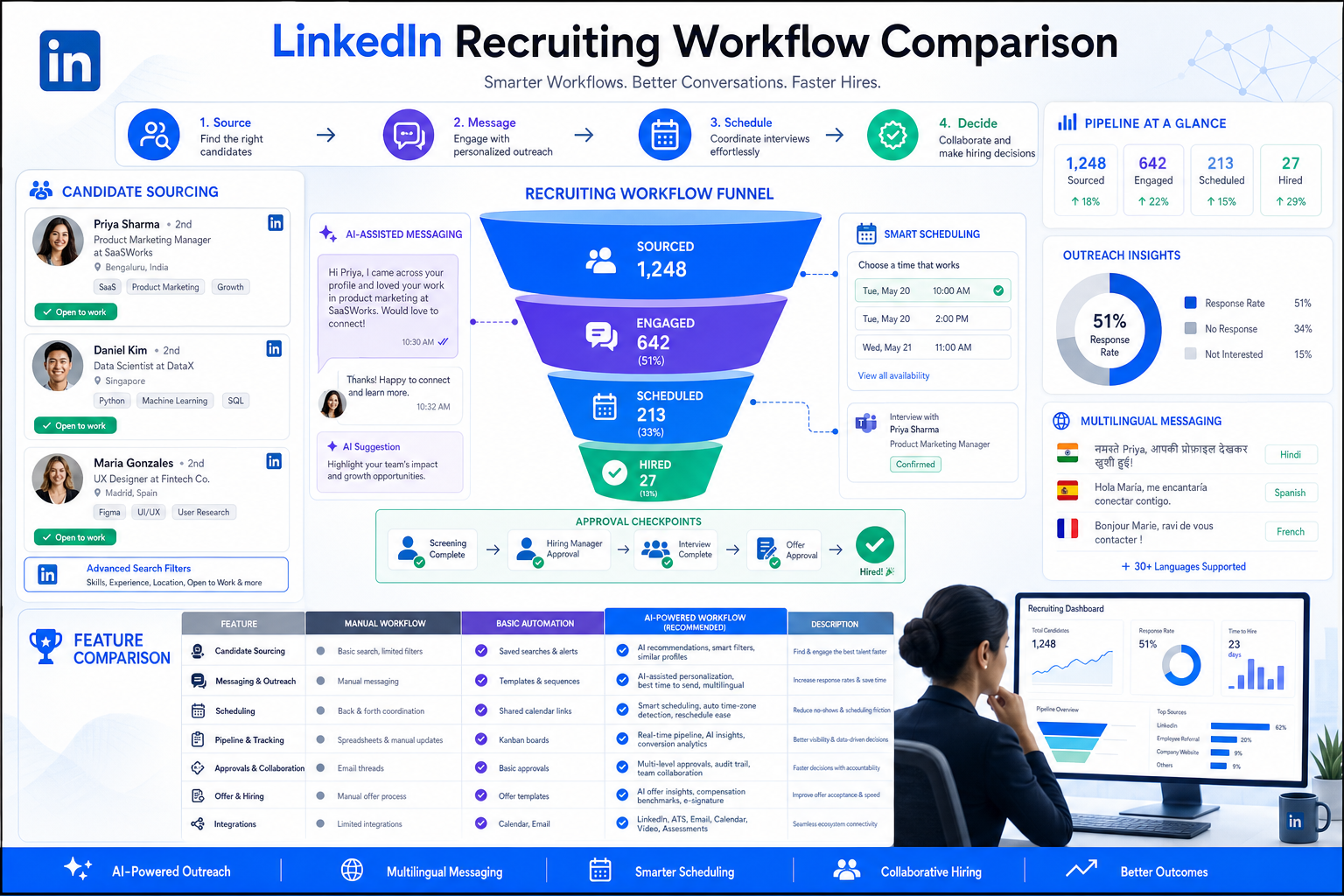
In outreach-heavy searches, I have used AI Recruiter alongside a broader hiring workflow to keep candidate communication moving outside working hours, especially on LinkedIn and across time zones. What I liked was not the idea of automation by itself, but the way it reduced repetitive first-touch work and collected interested candidate information consistently. The final judgment still sat with me: I reviewed resumes, checked fit, and decided who should enter the formal pipeline.
That matters because AI-supported recruiting works best when it strengthens discipline rather than replacing recruiter thinking. For teams dealing with multilingual outreach or after-hours response gaps, a tool like StrategyBrain AI Recruiter can help cover the communication layer while the ATS or recruitment platform remains the source of process control.
Applicant tracking system benefits that matter in real teams
When people discuss applicant tracking system benefits, they often stop at organization. The deeper value is that a good system protects decision quality when hiring becomes more collaborative, more sensitive, or more complex.
For recruiters
- Centralized records: less context lost between outreach, notes, and candidate status.
- Faster prioritization: clearer visibility into who needs action now.
- Stronger communication discipline: less dependence on memory and inbox search.
- More consistent follow-up: automation helps reduce dropped conversations.
- Cleaner handoffs: easier movement between recruiter, manager, and leadership review.
For hiring managers
Managers benefit when the platform turns participation into a short, structured task rather than an open-ended responsibility. Clear scorecards, visible stage ownership, and easy feedback entry reduce friction and shorten response time.
For HR and leadership
Leadership needs more than applicant counts. They need a clean view of process health, source quality, decision delays, and search risk. In searches where the role includes strategic influence or unusual incentive structures, that visibility becomes even more important.
Best fit by hiring environment
There is no universal winner in this category. The best recruiting software depends on hiring context.
Small business hiring
Small teams usually need simple setup, clear posting workflows, and enough structure to stop hiring from living in email. The best option here is often the one the team can actually adopt quickly.
Staffing agencies and independent recruiters
Agencies need speed, sourcing support, searchability, and strong communication tracking. They also benefit from tools that help maintain outbound momentum. For LinkedIn-heavy desk work, some recruiters pair their core platform with AI-supported outreach workflows so the ATS remains the system of record while repetitive messaging is handled more efficiently.
Enterprise recruiting
Larger organizations need approvals, permissions, reporting depth, and process consistency across teams. The platform must support governance, not just recruiter convenience.
High-volume hiring
When the challenge is volume, speed wins. Automation, fast scheduling, clear dispositions, and easy manager participation matter more than nice-to-have customization.
Executive and partnership-sensitive hiring
This is the use case many teams underestimate. When a candidate is evaluating not just a job, but influence, long-term upside, or a semi-partnership style role, the process needs stronger documentation and clearer stakeholder alignment. The best recruitment platforms help recruiters capture those decision layers without losing pace.
Career site and candidate-facing considerations
Many teams focus so much on internal workflow that they underweight the candidate-facing side. But the best site for hiring employees is not just where jobs are posted. It is also where candidates decide whether the opportunity feels credible, understandable, and worth their time.
That matters even more when the role includes leadership scope or unusual incentives. Candidates will look for signs that the company is organized, transparent, and serious. If job pages are confusing, mobile applications are clumsy, or role descriptions leave too much unstated, drop-off rises before any recruiter conversation begins.
If your platform manages career pages, review role clarity, mobile usability, and update control carefully. Candidate experience is not separate from software selection; it is part of the same system decision.
Common buying mistakes
The same buying mistakes appear again and again when companies compare the best recruitment platforms.
- Buying for features instead of process pressure. A feature list does not tell you what happens when a real search gets messy.
- Ignoring role clarity. If ownership is vague, delays and duplicated work follow.
- Testing only recruiter actions. Hiring manager adoption often decides whether the platform succeeds.
- Treating complex hiring like basic posting. Senior or incentive-heavy roles need stronger documentation and communication support.
- Assuming automation can replace judgment. Automation should reduce repetition, not remove recruiter evaluation.
- Forgetting exit scenarios. Withdrawals, stalled approvals, and role changes should be easy to document and recover from.
In practice, the best software choice is usually the one that still works well when expectations are unclear, stakeholders disagree, or the role itself becomes harder to define.
FAQ
What is the difference between recruiting software and an applicant tracking system?
An applicant tracking system is usually the core system for storing candidate records and moving applicants through stages. Recruiting software is a broader term that may also include sourcing, scheduling, reporting, automation, and career site tools. Many modern platforms combine both.
What makes the best recruitment platforms stand out?
The best recruitment platforms reduce manual work, keep communication organized, and make decision ownership clear. They should help recruiters and hiring managers move faster without losing context.
What are the main applicant tracking system benefits?
The main benefits are centralized records, clearer collaboration, more consistent follow-up, better reporting, and stronger process visibility. For experienced recruiters, the biggest value is often cleaner decision support rather than simple storage.
Is software for job posting enough for most teams?
Usually not. Basic posting tools can help advertise roles, but growing teams often need applicant tracking, sourcing support, scheduling, reporting, and communication history to manage hiring effectively.
Is the best site for hiring employees the same as the best recruiting software?
Not always. A site for hiring employees may refer to the public-facing job experience, while recruiting software usually includes internal workflow management too. The strongest setup supports both visibility and process control.
Where can AI tools help without replacing the recruiter?
AI is most useful in repetitive communication tasks such as first outreach, after-hours replies, multilingual messaging, and collecting candidate details after interest is confirmed. Final resume review, fit assessment, and advancement decisions should still stay with the recruiter.
Conclusion
The best recruiting software is the one that supports the way real hiring decisions are made under pressure. For routine hiring, that may mean simplicity and speed. For agency work, it may mean stronger sourcing and communication support. For senior or partnership-sensitive roles, it means role clarity, better documentation, and cleaner stakeholder alignment.
If you are comparing the best recruitment platforms now, start with your actual process, your decision risks, and the kinds of conversations your recruiters manage every week. Then judge each system by the work it removes, the context it preserves, and the judgment it protects.