When screening gets rushed, this article helps headhunters judge candidate ai, protect fit checks, and avoid weak hiring decisions.
That matters most when hiring pressure is not theoretical but operational: a teammate is out, a project has spiked, a client has frozen permanent headcount, or a hiring manager suddenly needs specialist cover. In those moments, poor screening creates more than delay. Recruiters lose time to back-and-forth messaging, candidates drop out while waiting, interview teams rely on thin notes, and the business ends up making rushed decisions with weak evidence.
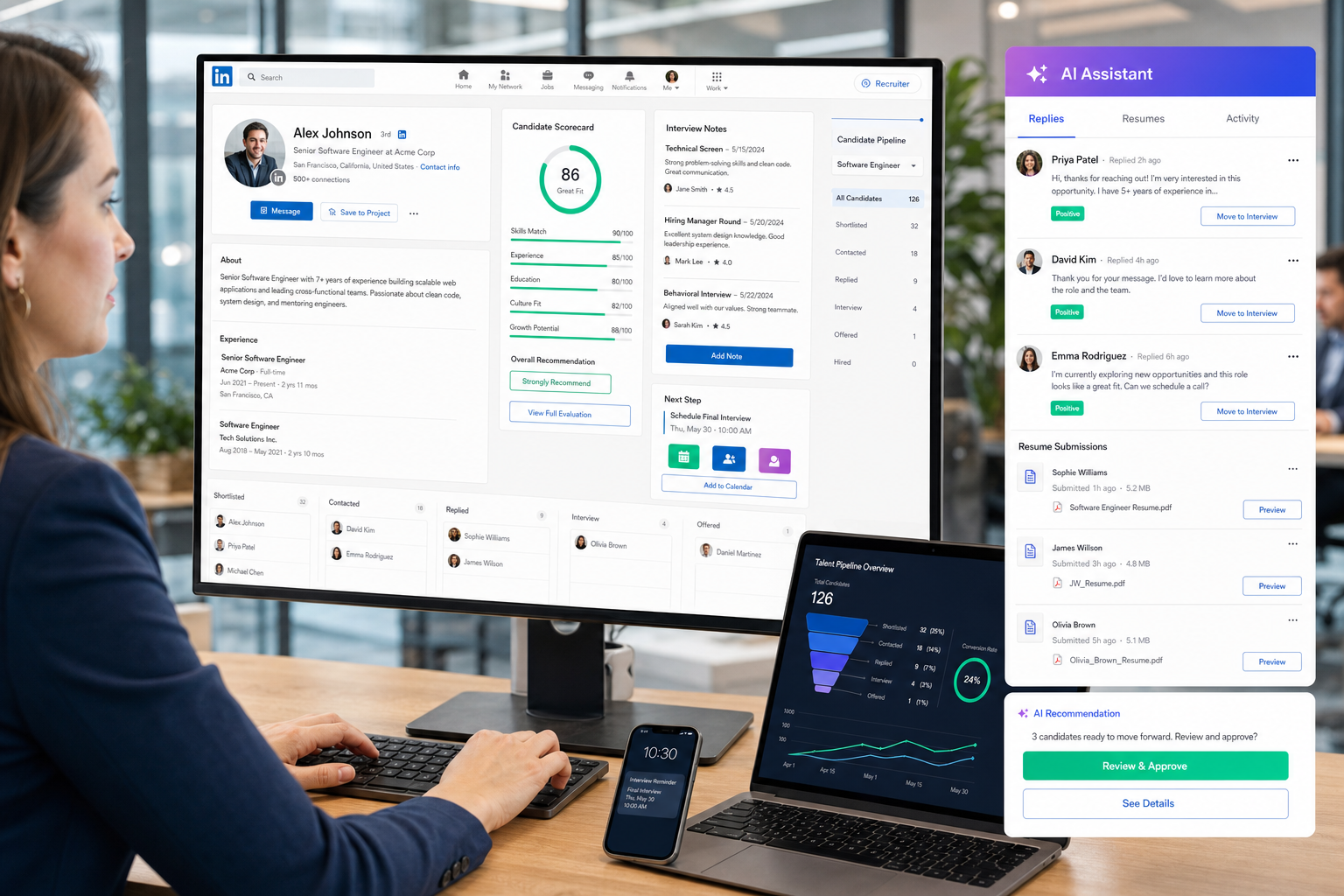
In my own recruiting workflow, tools like StrategyBrain AI Recruiter have been most useful when they handle the repetitive top-of-funnel work that usually slows response time: outreach conversations, after-hours follow-up, and collecting resumes or contact details from interested prospects. That kind of support is valuable in fast-moving hiring because the recruiter still owns the final resume review, fit assessment, and next-step decision, but no longer has to manually chase every early interaction alone.
A practical example comes from the same kind of uncertainty many staffing teams have worked through in recent years. When workloads jump because of layoffs, illness, project shifts, or broader economic disruption, employers often lean on contract and temporary talent first. The immediate question is not only who is available. It is who can step into a short-term assignment, work remotely if needed, bring a specialist skill set, and reduce pressure on an already stretched team without creating a long decision cycle.
That is exactly where screening gets complicated. A recruiter may be reviewing candidates who are immediately available, underemployed for reasons outside their control, or open to contract work as a way to test mutual fit before a longer commitment. If the process is slow or inconsistent, the strongest people get picked up elsewhere, while internal stakeholders still need coverage. In other words, the contract-staffing logic of speed, fit, specialist capability, and reduced risk now shows up directly inside AI candidate screening, ai during interview workflows, and every ai hr interview decision that follows.
So the real question is not whether candidate ai belongs in hiring. It is where it helps most, where it creates risk, and how recruiters can use it responsibly when the business needs fast support without weakening fairness or judgment.
- Why AI Screening Matters Most Under Hiring Pressure
- What AI Candidate Screening Actually Covers
- Where Candidate AI Helps Before the Interview
- How AI Is Used During Interviews
- Benefits for Contract, Urgent, and Specialist Hiring
- Risks and Governance
- How to Run a Responsible AI Screening Process
- How to Evaluate Your Workflow
- FAQ
Why AI Screening Matters Most Under Hiring Pressure
AI candidate screening becomes most attractive when a hiring team is under strain. That can happen during business uncertainty, unexpected absences, short-term project surges, or rapid shifts in talent demand. In those conditions, employers often turn to temporary or contract hiring because it offers flexibility, targeted skill coverage, and a way to assess fit before making a longer-term commitment.
From a recruiter’s perspective, those same conditions create ideal use cases for candidate ai. The problem is not just volume. It is speed with accountability. You may need to identify available candidates, confirm interest quickly, gather resumes, brief the hiring team, coordinate interviews, and compare structured feedback before the business impact spreads.
That is why the best use of AI in screening is usually operational support around urgent hiring needs, not blind automation of judgment. In my experience, when I used AI Recruiter to keep candidate conversations moving outside normal working hours, the real advantage was continuity. Interested people did not sit in a message queue waiting for my next login, and I could come back to organized responses and resumes instead of restarting every thread from scratch.
The contract-staffing lens also sharpens how employers should think about screening quality. When the role is short-term, project-based, or designed to relieve pressure on an existing team, screening has to answer practical questions fast:
- Is the person available soon enough to help?
- Do they bring the specialist skill set the assignment requires?
- Can they work independently or remotely if needed?
- Is this a sensible fit worth testing before a permanent move?
- Can the employer evaluate them fairly without adding more friction?
Those are not abstract AI questions. They are real recruiting questions, and they shape how candidate ai should be configured and reviewed.
What AI Candidate Screening Actually Covers
Many employers still hear AI candidate screening and think only of resume filtering. In practice, the scope is much broader. Candidate ai can assist across the full path from first contact to interview debrief.
That broader definition matters because the governance risk changes depending on what the system is actually doing. A sourcing assistant, a note summarizer, and a ranking model do not carry the same level of impact.
What AI candidate screening can include
- Sourcing support: identifying people who appear relevant based on role criteria
- Outreach and initial engagement: contacting candidates, answering basic questions, and confirming interest
- Application intake: parsing resumes and capturing candidate information
- Screening organization: tagging, sorting, or prioritizing candidate records
- Assessment support: consolidating skills evidence or test results
- Interview support: scheduling, question prompts, transcripts, notes, and summaries
- Post-interview coordination: combining scorecards and feedback for review
For search firms, agency recruiters, and in-house teams, it helps to define which of these steps count as screening in internal policy. If your policy covers only resume review but ignores AI-generated interview summaries or one-way video workflows, your risk map is incomplete.
Where Candidate AI Helps Before the Interview
Before interviews begin, candidate ai usually delivers the most value in work that is repetitive, time-sensitive, and easy to bottleneck. That is especially true when hiring for contract support, urgent coverage, or skills-specific projects.
| Hiring Stage | How Candidate AI May Help | Why It Matters in Time-Sensitive Hiring |
|---|---|---|
| Pre-application | Sourcing suggestions, outreach drafting, candidate messaging | Speeds up early market coverage when availability is limited |
| Initial contact | Interest checks, FAQ handling, follow-up conversations | Reduces candidate drop-off during busy or after-hours periods |
| Resume capture | Collecting resumes and contact details | Keeps recruiter attention on review rather than admin chasing |
| Screening prep | Tagging records, surfacing relevant profiles, organizing responses | Helps recruiters compare urgent-fit candidates faster |
| Scheduling | Interview coordination and reminder workflows | Shortens delays when the business needs fast decisions |
One reason this matters in contract hiring is that talent availability can shift quickly. Strong candidates who are open now may not be open in a week. That is especially true during periods when many good people are underemployed and reassessing their options. Candidate ai can help maintain momentum, but the recruiter still has to decide whether the person is genuinely right for the role.
That distinction is important. AI can help identify willingness to engage and keep the process moving, but it should not be treated as a substitute for human review of job relevance, employment context, or hiring risk.
How AI Is Used During Interviews
The search intent behind ai during interview is practical. Employers and candidates want to know what the system is doing once the interview starts. In most mature recruiting teams, the strongest use cases involve support rather than autonomous decision-making.
Live interviews with AI assistance
In live interviews, AI may help with scheduling, interview guides, note capture, transcript creation, summary drafting, and scorecard prompts. This can be useful when recruiters are balancing several urgent requisitions and need cleaner documentation across interviews.
What it should not do is replace interviewer attention. A transcript may be accurate and still miss what matters. A summary may be polished and still emphasize the wrong points. Recruiters and hiring managers remain responsible for probing, listening, and evaluating evidence against the role.
Recorded or asynchronous interviews
One-way video and recorded response formats often appear in high-volume or time-sensitive screening. AI may organize transcripts, identify whether a candidate addressed required topics, and help compare answers against a structured competency framework.
That can help with efficiency, but it requires care. Candidates should know how recordings are used, whether people review them, and whether another format is available if needed for accessibility or fairness reasons.
AI-assisted interviewer workflows
An ai hr interview process often works best when AI acts as a discipline tool: reminding interviewers to use a consistent scorecard, helping clean up notes, and making debriefs easier to compare. That is very different from systems that claim to infer quality from facial expressions, vocal patterns, or vague personality signals.
For most employers, the safer principle is straightforward: use AI to improve structure, not to outsource judgment.
Interview-stage comparison
| Interview Format | Typical AI Support | Main Risk |
|---|---|---|
| Live recruiter interview | Notes, transcripts, summaries, prompts | Overreliance on summaries instead of direct evaluation |
| Hiring manager interview | Structured questions, scorecard guidance | Inconsistent human use of AI-generated prompts |
| One-way video interview | Transcript organization, response sorting | Accessibility concerns and weak candidate experience |
| Panel interview | Feedback consolidation and comparison | Bias scaling across multiple reviewers |
Benefits for Contract, Urgent, and Specialist Hiring
The reference case around contract staffing is useful because it highlights where AI screening can deliver practical value without overpromising. In uncertain periods, employers often need flexible support, lower commitment risk, and fast access to specialist capability. Candidate ai can strengthen those goals when used responsibly.
1. Faster response when workload spikes
When absence, restructuring, or sudden project demand creates a gap, AI can help recruiters maintain candidate flow without losing hours to manual admin. That is one of the clearest advantages in temporary and urgent hiring.
2. Better fit checks before longer commitments
Temporary and contract hiring often functions as a lower-risk way to test fit. AI can support this by organizing candidate information, standardizing early screening questions, and making it easier to compare evidence. The decision itself still belongs to the recruiter and hiring team.
3. Easier access to specialist skill sets
Contract professionals are often hired because they can solve a narrow problem quickly. Candidate ai helps when the market search needs to move fast, but the screening criteria still have to stay close to the actual assignment rather than generic hiring preferences.
4. Stronger support for remote-capable talent pools
Many experienced contractors are already equipped to work remotely and independently. AI-supported sourcing and communication can widen access to that market, particularly when recruiters need to keep conversations active across time zones or outside standard office hours.
5. Less strain on the internal team
One overlooked benefit from the contract-staffing perspective is morale. When a team is already stretched, a faster and more organized screening process can reduce stakeholder frustration. Hiring managers get clearer candidate records, recruiters spend less time on repetitive follow-up, and existing employees see that relief is actually on the way.
Key insight: The most defensible value of AI candidate screening is not perfect prediction. It is faster, more structured recruiting when the business needs support now.
Risks and Governance
The pressure that makes AI attractive can also make misuse more likely. When roles are urgent, hiring teams sometimes lower their scrutiny of the process itself. That is exactly when governance matters.
Bias and adverse impact
If a tool shapes who is shortlisted, advanced, or rejected, employers need to understand whether the criteria are job-relevant and whether outcomes should be monitored for fairness. This is especially important in high-volume screening or recorded interview workflows.
Accessibility and alternative paths
Not every candidate can engage with the same format in the same way. Timed interfaces, video-based steps, and voice-heavy tools may create barriers. A responsible employer provides a clear accommodation route and a practical alternative, not a hidden one.
Transparency with candidates
Candidates should know whether AI is involved, what the system actually does, what data is collected, and whether a person reviews the output. In my view, transparent communication is especially important when the employer is moving fast and using AI to keep pace.
Data handling and oversight
Whenever resumes, contact details, transcripts, or interview records are being captured and stored, recruiters should know who controls the data, how it is used, and what compliance standards apply. That is part of process design, not an afterthought.
Opaque scoring methods
Employers should be especially cautious with claims that a system can evaluate personality, tone, or facial behavior in ways that meaningfully predict job success. Those methods are difficult to validate and even harder to defend if challenged.
How to Run a Responsible AI Screening Process
Responsible use is less about a slogan and more about operating discipline. The strongest recruiting teams build clear boundaries around where candidate ai helps and where human judgment must stay central.
- Define the use case precisely. Separate sourcing support, admin automation, interview assistance, and decision-shaping functions.
- Match the workflow to the hiring need. Urgent contract coverage, specialist projects, and standard permanent hiring may need different levels of automation.
- Keep recruiters accountable for fit. AI may support outreach, organization, and summaries, but recruiters should still own resume review and movement decisions.
- Use structured criteria. Skills, availability, scope fit, and role requirements should be documented before the screening starts.
- Protect candidate experience. Explain the process clearly and make accommodations easy to request.
- Review AI outputs regularly. Check whether summaries, rankings, or prompts are emphasizing irrelevant signals.
- Keep a human conversation in the process. Especially for roles requiring collaboration, judgment, or client interaction.
- Document who can override the system. Governance fails quickly when no one knows who owns the final call.
For recruiters handling LinkedIn-heavy sourcing, I have found that AI Recruiter is most useful when you treat it as a continuity layer rather than a replacement for evaluation. It can carry early communication, answer routine role questions, and collect resumes from interested prospects, while the recruiter remains the one who checks relevance, context, and interview readiness. That setup is much easier to defend than any workflow that treats AI engagement as proof of candidate quality.
How to Evaluate Your Workflow
If your team is using or considering AI candidate screening, evaluate the process the way an experienced recruiter would evaluate a rushed search assignment: by mapping the actual points of pressure.
Practical review checklist
- What exact task is the AI supporting?
- Is the output administrative, advisory, or decision-shaping?
- Does the process help with urgent workload coverage, specialist hiring, or contract-fit review?
- Can a recruiter explain the criteria used to move candidates forward?
- Are those criteria linked to the actual job or assignment?
- Do candidates know when AI is involved?
- Are accommodations and alternatives available?
- Are interview summaries reviewed by a human before decisions are made?
- Is there a meaningful live conversation somewhere in the process?
- Who owns compliance, data handling, and override authority?
This checklist matters because the real failure point is rarely “using AI.” It is usually using AI without clearly defining the business problem, the hiring context, or the recruiter’s decision role.
FAQ
Is AI candidate screening only about filtering resumes?
No. AI candidate screening can include sourcing, outreach, resume intake, interview scheduling, transcript support, summaries, and structured comparison across interviewers.
How is AI used before interviews?
Before interviews, candidate ai is often used for sourcing suggestions, interest checks, messaging support, resume capture, scheduling, and organizing candidate records for recruiter review.
How is AI used during interviews?
AI during interview stages is commonly used for note capture, transcripts, summaries, scorecard prompts, and interview structure. In a responsible process, it supports the interviewer rather than replacing judgment.
What makes AI useful in contract or urgent hiring?
It can help teams move faster when workloads spike, specialist skills are needed quickly, or employers want a lower-risk way to assess fit before a permanent commitment.
What is the safest ai hr interview approach?
The safest ai hr interview approach is augmentation: use AI for scheduling, notes, summaries, and workflow support while keeping recruiters and hiring managers responsible for evaluation and final decisions.
Should candidates be told AI is involved?
Yes. Candidates should understand whether AI is being used, what it does, what data it collects, whether people review the output, and how to request alternatives or accommodations.
Can AI decide who is the best hire?
It should not be treated that way. AI can improve structure and speed, but final hiring decisions should stay with people who can assess job relevance, context, fairness, and team fit.
Conclusion
AI candidate screening works best when it serves the same goals recruiters already care about under pressure: quick support, clearer fit checks, stronger documentation, and less wasted motion. The contract-staffing perspective makes that obvious. When the business needs someone who can step in, contribute fast, and reduce risk, candidate ai can help organize the path to that decision, but it cannot own the decision itself.
If you are reviewing your process now, start where the pressure is highest. Map where AI enters the workflow, decide what counts as support versus judgment, keep recruiters accountable for fit, and make interview-stage use transparent. That is how candidate ai becomes useful in practice rather than just impressive in theory.