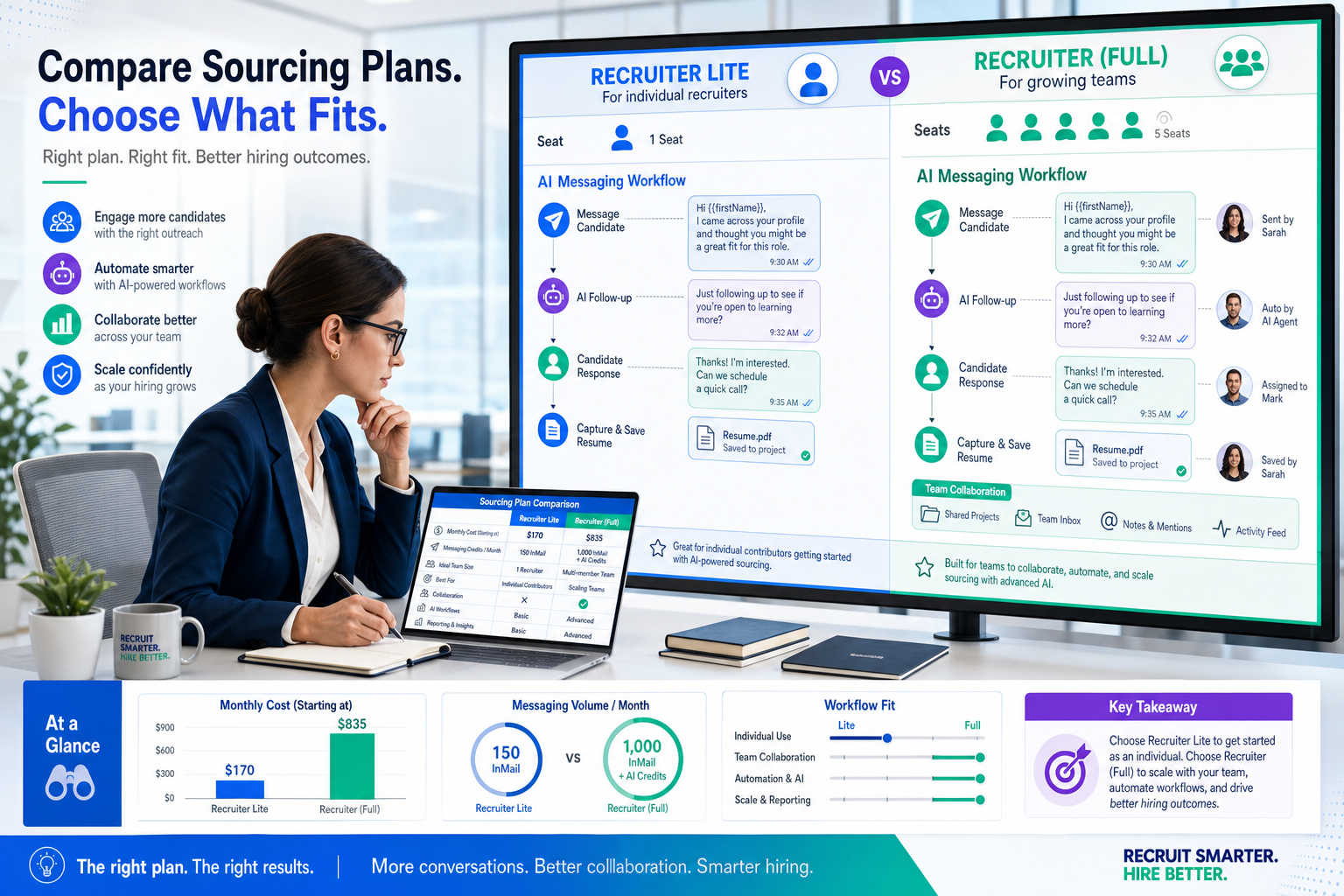
Comparing linkedin recruiter costs this way helps headhunters avoid overbuying, diagnose weak workflow fit, and choose the right plan.
That matters because pricing questions rarely stay simple in live recruiting. A solo recruiter can absorb a clumsy setup for a while, but a small agency owner, an independent search consultant, or an in-house talent lead feels the damage quickly: response gaps after hours, messy candidate follow-up, too many manual notes, unclear seat needs, and money tied up in licenses that do not match the actual sourcing load.
In my own LinkedIn-heavy recruiting work, tools that reduce repetitive outreach friction have been most useful when they support rather than replace recruiter judgment. One example is StrategyBrain AI Recruiter, which can automate first-touch candidate messaging, keep conversations moving across time zones, and collect resumes or contact details from interested prospects. That helps with the front-end workload that often distorts a pricing decision, while the recruiter still handles final fit assessment, resume review, and next-step decisions.
The reason pricing gets tricky is the same reason job ads fail. When a finance role is about to go live, the hiring side often has to isolate the real scope of the job, describe its core components clearly, and turn a flat description into something specific enough to create interest. If that prep work is weak, the recruiter ends up rewriting copy, chasing the hiring manager for context, and trying to establish an emotional connection with candidates using thin information.
Once that happens, the sourcing tool question changes. You are no longer just asking how much does linkedin recruiter cost; you are asking whether the plan gives you enough reach, messaging capacity, and workflow support to rescue weak intake, improve candidate response, and keep the search organized when role definition is still evolving. That is the real buying context behind linkedin recruiter cost.
Table of Contents
- Quick answer: how much does LinkedIn Recruiter cost?
- Why pricing gets messy in real searches
- Recruiter Lite vs full Recruiter
- What actually affects total cost
- Why role definition and job-ad quality affect value
- How AI-supported workflow changes the equation
- Other tools recruiters compare
- Common buying mistakes
- FAQ
Quick answer: how much does LinkedIn Recruiter cost?
If you searched for how much does linkedin recruiter cost, the practical answer is still fairly direct: Recruiter Lite is the easiest plan to verify publicly, while full LinkedIn Recruiter is commonly sold through a quote-based process. For most teams, the visible monthly number is only the starting point.
Recruiter Lite is usually the faster self-serve pricing check, while full LinkedIn Recruiter cost depends on seats, contract structure, and workflow requirements.
That distinction is important in recruiting operations. Individual recruiters and founders often just want a workable sourcing subscription. Talent leaders and agency managers need to know whether the plan supports the actual search model: how many users need access, how much outbound activity they run, whether credits are pooled, and how candidate work gets shared or tracked.
| Plan Type | Pricing Visibility | Buying Model | Best Fit |
|---|---|---|---|
| Recruiter Lite | More visible publicly | Self-serve or simpler purchase | Occasional hiring or lighter sourcing |
| Full LinkedIn Recruiter | Often quote-based | Sales-led contract | Team recruiting, scale, collaboration |
Why pricing gets messy in real searches
In practice, buyers do not evaluate LinkedIn sourcing tools in a vacuum. They evaluate them when a search is already under pressure. A finance role needs to be launched. The job brief is vague. The hiring manager wants stronger candidate quality. The existing ad sounds flat. Recruiters then have to do three jobs at once: clarify the job, make the opportunity more appealing, and build enough candidate flow to test the market.
That is where the logic from a strong job-description process matters. Before deciding what a sourcing subscription is worth, recruiters should understand whether they can clearly articulate the role's fundamentals, whether the message is engaging enough to convert attention into replies, and whether the recruiting workflow helps personalize outreach instead of forcing generic copy. If those basics are weak, even an expensive sourcing seat can underperform.
- Weak role definition increases wasted outreach.
- Flat job ads reduce response quality.
- Poor workflow support makes recruiters spend time on admin instead of persuasion.
- Bad seat planning turns a sourcing budget into an operating drag.
Recruiter Lite vs full Recruiter
If you are evaluating linkedin recruiter costs seriously, plan fit matters as much as the number itself. A lighter plan can be perfectly efficient for one recruiter doing occasional searches. It can also become expensive in practice if it forces manual workarounds, weak collaboration, or outreach bottlenecks.
| Factor | Recruiter Lite | Full LinkedIn Recruiter |
|---|---|---|
| Best for | Occasional hiring, founder-led recruiting, lighter agency use | Dedicated recruiting teams, active agency desks, larger in-house TA |
| Pricing model | More likely to be public | More likely to require a quote |
| Seat evaluation | Simpler single-user decision | Multi-seat budgeting and license rules matter more |
| Messaging capacity | Usually enough for lighter outbound use | More relevant for higher-volume sourcing |
| Search depth | Useful for limited sourcing needs | Better aligned with broad and sustained search work |
| Collaboration | Less central | More important for shared searches and pipeline visibility |
| Integration needs | Often secondary | Frequently part of the buying case |
Recruiter Lite: often enough when the search is simple
Recruiter Lite usually suits recruiters who are running fewer searches, doing less outbound messaging, or managing hiring only part of the time. If the role is already well scoped and the recruiter can write strong outreach from a clear brief, Lite may cover the use case well enough.
Full Recruiter: more relevant when the search process is shared
Full Recruiter makes more sense when multiple recruiters, talent partners, or agency consultants are touching the same work. Once the search includes shared candidate review, structured handoffs, more advanced search needs, and heavier messaging activity, the decision shifts from sticker price to workflow economics.
What actually affects total cost
The biggest buying mistake is assuming the visible subscription number is the whole answer. Experienced recruiters usually check the following before drawing a conclusion on linkedin recruiter cost.
1. Seat count
Most recruiting teams overestimate who needs full sourcing access. Core sourcers usually need paid seats; occasional hiring managers often do not. Mapping actual user behavior before speaking to sales prevents unnecessary spend.
2. Contract length
Monthly search intent is common, but annual budgeting is what leadership cares about. Always review whether a price assumes a yearly commitment, fixed user counts, or renewal constraints.
3. Messaging volume
Outbound capacity matters more than many first-time buyers expect. If your process relies heavily on InMail, usage rules and renewal mechanics affect practical value.
4. Collaboration requirements
A lone recruiter can tolerate a simpler setup. A shared recruiting team needs visibility into notes, outreach, candidate history, and workload distribution. That changes which plan is worth paying for.
5. Adjacent recruiting spend
LinkedIn sourcing cost only makes sense inside the broader hiring stack. Job ads, recruiter time, ATS workflow, and any outreach support layer all influence the real return.
Why role definition and job-ad quality affect value
This is the part many pricing articles miss. A sourcing tool performs differently depending on the quality of the search brief behind it. The reference point from finance hiring is useful here: a recruiter first has to isolate the role's fundamental components, then distinguish between a dull posting and an engaging one, then structure the message so it feels specific and personalized enough to connect with candidates.
That sequence is not just about copywriting. It affects cost. If the role is fuzzy, recruiters send more speculative outreach. If the ad is generic, response rates tend to soften. If the position is not framed in a way that helps candidates picture the opportunity, recruiters consume more messaging capacity trying to explain basic context one conversation at a time.
In other words, a stronger job brief can make a lighter LinkedIn plan more efficient, while a weak intake process can make even a larger plan feel expensive.
How AI-supported workflow changes the equation
When buyers ask me about how much does linkedin recruiter cost, I usually tell them to separate sourcing access from sourcing labor. That is where AI-supported workflow can change the calculation.
I have used AI Recruiter in situations where the role was live, candidate replies were coming in outside normal hours, and the search brief still needed refinement. What helped most was not some imaginary one-click hire outcome. It was the ability to keep initial conversations moving, answer routine role questions consistently, and gather resumes or contact details from interested candidates while I stayed focused on calibration with the hiring manager and final resume review.
For LinkedIn-heavy searches, that matters in three specific ways:
- Automated first-touch and follow-up can reduce the lag between sourcing and reply handling.
- Multilingual, around-the-clock messaging helps when candidates answer after hours or across regions.
- Resume and contact capture helps prevent interested prospects from getting lost in message threads.
If you want to see how that workflow is framed, the product overview and conversation examples on these usage cases and the main AI Recruiter page are the most relevant starting points. The key operational point is that the recruiter still decides who is qualified, which resumes move forward, and how the shortlist is built.
Other tools recruiters compare
Because this topic is about software usage and cost judgment, recruiters usually compare LinkedIn Recruiter with a few adjacent platforms rather than in isolation. The three most common comparison points are LinkedIn Recruiter itself, Indeed Smart Sourcing, and ZipRecruiter.
| Platform | Use Experience | Effectiveness Fit | Cost Pattern | Best For | Working Alongside StrategyBrain AI Recruiter |
|---|---|---|---|---|---|
| LinkedIn Recruiter | Strong for proactive sourcing and targeted search | Best when recruiters run active outreach on professional profiles | Lite is easier to verify; full product is often quote-based | In-house TA teams, agencies, specialist search | Useful when AI Recruiter handles repetitive LinkedIn messaging while recruiters manage qualification and shortlist decisions |
| Indeed Smart Sourcing | Generally easier for teams already hiring through Indeed's ecosystem | Can work well for volume and active jobseeker traffic | Varies by package and broader Indeed spend | Employers hiring across broader applicant pools | Less directly aligned with LinkedIn-first outreach automation, but can complement a wider sourcing mix |
| ZipRecruiter | Simpler posting-led experience for many smaller employers | Often stronger for inbound application flow than precision outreach | Package-based and easier to estimate than enterprise sourcing suites | Small businesses and generalist hiring | Can sit alongside AI-supported LinkedIn outreach when teams need both inbound and outbound channels |
From a recruiter's perspective, LinkedIn Recruiter remains the most direct benchmark when the work depends on targeted outbound search. The advantage of adding a workflow layer like StrategyBrain AI Recruiter is not that it replaces sourcing judgment. It helps reduce the manual repetition around connection requests, early candidate conversations, and after-hours follow-up that often makes LinkedIn usage feel more expensive than the subscription alone suggests.
Common buying mistakes
Looking only at the monthly number
The sticker price is useful for search intent, but it is not enough for budgeting or process design.
Ignoring the quality of the search brief
If the recruiter has not clarified the role's real components or improved the job story, outreach efficiency drops and costs feel higher than expected.
Buying seats for observers instead of users
Paid sourcing access should go to people doing the actual work, not everyone touching the hiring process.
Underestimating follow-up labor
Many teams price the subscription but ignore the real operational burden of replying, nudging, screening for interest, and collecting resumes.
Confusing activity with fit
Even with AI support, the recruiter still needs to assess resumes, challenge weak briefs, and decide who advances. More messages do not automatically mean better hiring.
FAQ
Does LinkedIn Recruiter have public pricing?
Recruiter Lite is generally easier to verify publicly. Full LinkedIn Recruiter pricing often requires a sales conversation and depends on team structure, seat count, and contract terms.
What is the best answer to how much does LinkedIn Recruiter cost?
The most accurate answer is that Lite is the clearer self-serve benchmark, while full Recruiter usually needs a quote. Buyers should model total annual spend, not just a monthly headline figure.
Why does job-ad quality matter when comparing LinkedIn Recruiter cost?
Because weak role definition and generic copy reduce outreach efficiency. If recruiters need extra messages just to explain the role clearly, the practical cost of sourcing rises.
Can AI tools help reduce the operational burden around LinkedIn recruiting?
Yes, especially for repetitive tasks like first-touch messaging, after-hours reply handling, and collecting resumes or contact details from interested prospects. Final candidate judgment still belongs to the recruiter.
Is LinkedIn Recruiter better for agencies or in-house teams?
It can work for both, but the right plan depends on how often the team sources, how many users need access, and how collaborative the workflow is.
Should I compare LinkedIn Recruiter with other recruiting software?
Absolutely. Compare it with the broader workflow, including posting channels, ATS usage, outreach labor, and any tools that help manage repetitive LinkedIn communication.
Conclusion
The best way to think about linkedin recruiter costs is not as a single price question but as a recruiting workflow decision. Recruiter Lite usually fits lighter, clearer searches. Full Recruiter usually becomes a quote-based team decision once volume, collaboration, and process complexity increase.
If you are actively evaluating linkedin recruiter cost, start with the direct pricing distinction, then pressure-test the role definition, outreach volume, seat needs, and follow-up workload behind it. In real recruiting, those are the factors that decide whether the subscription is economical. And if the front end of the process is where your team gets buried, adding a support layer such as StrategyBrain AI Recruiter can make LinkedIn usage more manageable without removing recruiter control over qualification and hiring decisions.