This article helps recruiters judge whether people gpt can surface hidden fits in complex searches and prevent weak shortlists.
That difference matters most when a search is tied to a demanding hiring brief, because bad sourcing does more than waste time. It leads to thin pipelines, weak hiring-manager confidence, avoidable outreach fatigue, and expensive delays when the role sits open while recruiters chase people who were never a practical fit in the first place.
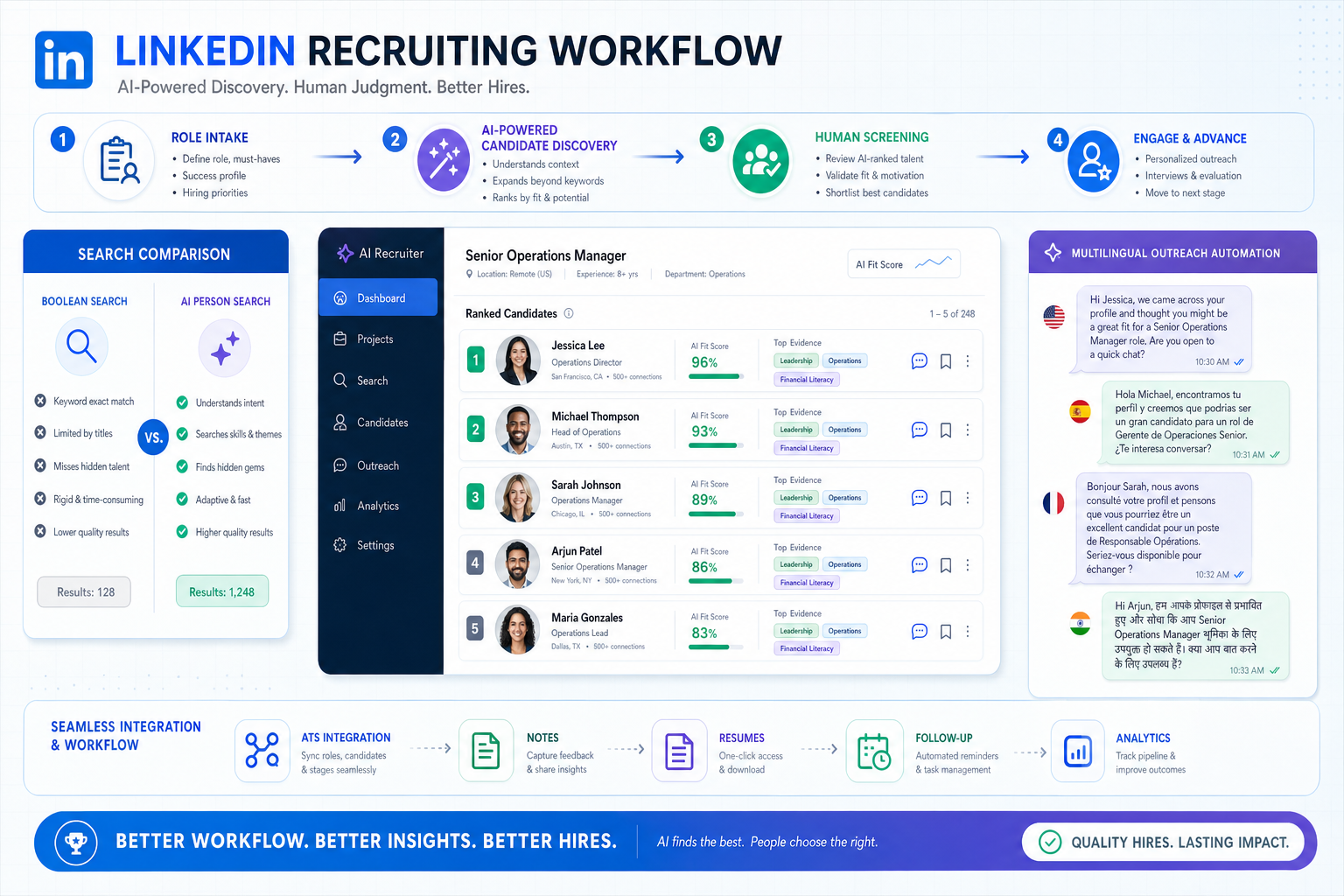
In that gap between speed and judgment, I have found that StrategyBrain AI Recruiter is most useful when it handles repetitive LinkedIn outreach, after-hours candidate replies, and multilingual first-touch communication while the recruiter still owns final screening, resume review, and submission decisions. Used that way, it supports sourcing rather than pretending to replace recruiting judgment.
A useful way to understand this is to look at how opportunity evaluation works for operations manager hiring. Strong operations managers do not judge a move by title alone. They look at whether the facility is in shape, whether the company has invested in tools and systems, and whether they will be walking into a setup where success is realistic instead of sabotaged by weak equipment, poor process, or outdated software.
Employers make a similar judgment in reverse. They increasingly want operations leaders who can do more than supervise the floor. They expect financial literacy, comfort with performance metrics, and the ability to connect process decisions to profit, forecasting, and sometimes even multi-site or cross-border operations. That combination creates a sourcing challenge: the right person may be hidden behind nonstandard titles, adjacent backgrounds, or profile wording that a rigid search misses. This is exactly where ai candidate sourcing, an ai person finder, and a better ai person search workflow become valuable for recruiters.
Table of Contents
- Why Role Context Matters More Than Keywords
- What People GPT Means in Recruiting
- Boolean Search vs AI Person Search
- How Recruiters Use an AI Person Finder Day to Day
- What Strong AI Candidate Sourcing Workflows Should Show
- Using AI for LinkedIn Sourcing Without Losing Control
- How AI Sourcing Fits With ATS Workflows
- What to Check Before You Choose a Tool
- Common Mistakes in AI Candidate Sourcing
- FAQ
Why Role Context Matters More Than Keywords
One lesson from operations manager recruiting applies directly to AI sourcing: top candidates evaluate the opportunity itself, not just the compensation or title, and recruiters have to search with that same level of business context in mind.
If a company wants an operations manager to stabilize a facility, improve processes, and influence financial outcomes, then the search cannot stop at generic title matching. The recruiter needs to understand the state of the operation, the level of systems investment, the reporting expectations, and whether the role touches budgeting, KPI ownership, forecasting, or multiple locations. Without that context, even experienced sourcers can pull the wrong market.
That is why the best sourcing work starts before the search bar. Intake matters. A recruiter should know which factors are non-negotiable, which are trainable, and which signals indicate that a candidate can succeed in a role where leadership, operational discipline, and financial fluency all matter.
Key takeaway: Better sourcing usually starts with a better role model, not a longer keyword string.
What People GPT Means in Recruiting
People gpt is best understood as a recruiter-facing search workflow that lets you describe the person you need in natural language and then ranks candidates based on evidence, similarity, and likely fit. Instead of forcing the sourcer to predict every title variant or synonym up front, the system tries to interpret intent.
In practical recruiting terms, that matters because real candidates rarely organize their experience the way hiring teams describe openings. Someone who can run plant operations, improve throughput, and read a P&L may not use the exact title your client wrote into the requisition. Someone with cross-functional leadership may have grown through maintenance, site leadership, supply chain, or continuous improvement rather than a textbook operations-manager path.
A good ai person finder helps bridge those gaps, but only if the recruiter can see the evidence behind the ranking. That keeps search broad without turning the shortlist into a black box.
Boolean Search vs AI Person Search
Traditional Boolean sourcing still has value. I still use it when I need source-specific precision, exact mandatory skills, or direct control over what gets included and excluded. But it becomes brittle when the role spans multiple title conventions, transferable backgrounds, or context-heavy expectations.
AI person search can reduce that friction. A recruiter can write a query closer to how the hiring brief is actually discussed, such as finding operations leaders who have improved facility performance, managed process change, understand financial targets, and can work across more than one site. That allows the system to look for patterns, not just exact terms.
| Approach | Best For | Main Weakness | Practical Use |
|---|---|---|---|
| Boolean sourcing | Exact terms and tight control | Can miss adjacent profiles and title variants | Use when must-have terms are clear and narrow |
| AI person finder | Intent-based discovery and ranked matches | Needs visible evidence and human review | Use early to widen the pool and spot hidden fits |
| Hybrid workflow | Balanced speed and precision | Requires disciplined review | Start broad with AI, then narrow manually |
For most recruiters, hybrid wins. Start with people gpt style discovery to surface possibilities, then tighten with filters, notes, and direct profile review.
How Recruiters Use an AI Person Finder Day to Day
An ai person finder becomes useful when it supports live recruiting work rather than just an impressive demo. The strongest use cases tend to be passive discovery, niche role sourcing, talent rediscovery, and intake support.
Passive candidate discovery
When the best people are not applying, AI-assisted search helps recruiters identify likely fits based on public career signals, role history, and adjacent experience. This is especially useful for roles where the hiring manager cares about leadership scope, business judgment, and operating environment, not just a checklist of software or certifications.
Practical advice: Build searches around outcomes and operating context. Ask what the person had to improve, manage, or influence, not only what title they held.
Niche role sourcing
Some roles are easy to describe and hard to source. Operations positions are a good example because titles vary widely and the expectations have expanded. Employers may want leadership, process ownership, analytical ability, and financial literacy in one hire. A strong ai person search workflow can surface those blended profiles more effectively than a rigid title filter.
Practical advice: Review the first set of matches closely and refine the prompt based on what the system is overvaluing or missing.
Talent rediscovery
Many recruiting teams already have prior candidates, silver medalists, and old outreach threads that become relevant again. AI sourcing is not only about finding new people. It is also about re-ranking known talent against a new brief.
Practical advice: Rediscovery only works well if prior notes, tags, and disposition reasons were captured cleanly.
Intake support for complex hiring briefs
When a hiring manager asks for a candidate who can lead teams, improve operations, and understand financial performance, search setup becomes a translation exercise. AI can help recruiters test the market quickly and show where the brief may be too narrow, too broad, or built around unrealistic title assumptions.
What Strong AI Candidate Sourcing Workflows Should Show
If you are evaluating people gpt workflows, the search box is not the real test. What matters is whether the system helps recruiters understand why a profile appeared, how confidently identities were resolved, and whether the search reflects the business realities behind the role.
1. Clear ranking evidence
Recruiters should be able to see why a person was surfaced. Useful signals include role similarity, skill overlap, industry relevance, leadership scope, and career progression. For context-heavy roles, this matters because the shortlist must stand up to hiring-manager scrutiny.
2. Context beyond title matching
Strong results should reflect operational environment, functional overlap, and transferable experience. That is often the difference between finding someone who merely looks similar on paper and someone who can actually do the work.
3. Source transparency
A good ai person finder should make it clear where profile information comes from and what the likely limits are. Public-source recruiting always has freshness issues, so recruiters still need to verify before outreach.
4. Identity confidence
If the system combines multiple public records into one person view, it should show supporting evidence rather than asking recruiters to trust silent profile merging.
5. Workflow support after search
Search is only one part of sourcing. Recruiters also need notes, outreach tracking, resume handling, and a clean handoff into the next stage of evaluation.
Using AI for LinkedIn Sourcing Without Losing Control
Because so much passive candidate work now starts on LinkedIn, the real workflow question is not only how to find profiles, but how to keep conversations moving without turning outreach into a manual bottleneck.
In my own workflow, I have used StrategyBrain AI Recruiter as support when candidate response windows are scattered across time zones and evenings. What I found most practical was not some idea of fully automated recruiting, but its ability to keep first-touch conversations active, respond in the candidate's language when needed, and collect resumes or contact details from people who actually wanted to continue. That took repetitive LinkedIn back-and-forth off my plate while leaving me responsible for the real recruiting work: evaluating the resume, judging fit, and deciding whether the person should move forward.
That distinction matters. For recruiters sourcing operations leaders or other nuanced profiles, the risk is not simply missing replies. The bigger risk is losing momentum while administrative messaging piles up. AI support can help with:
- Maintaining prompt outreach and follow-up across time zones
- Handling routine candidate questions during early contact
- Capturing resumes and contact details from interested candidates
If you want to review how that workflow is positioned, the AI Recruiter overview and its conversation examples are useful references. The right way to use it is as communication support around LinkedIn sourcing, not as a substitute for recruiter judgment.
How AI Sourcing Fits With ATS Workflows
Even the best ai candidate sourcing process should not sit alone. Search can widen discovery, but an ATS remains the operating system for stage tracking, team visibility, notes, rediscovery, and structured decision-making.
This is especially important in searches like operations management, where the brief often evolves after market feedback. The recruiter may learn that the company really needs someone with stronger facility turnaround experience, more financial depth, or comfort managing multiple sites. If those insights are not captured in the workflow, sourcing quality drops with every handoff.
Why the ATS still matters
- Process control: One place for status, ownership, and next actions
- Shared visibility: Hiring teams can review the same evidence and notes
- Rediscovery: Prior candidates become searchable again under revised criteria
- Documentation: Search assumptions and market feedback do not disappear into inboxes
Practical advice: If you add AI sourcing, clean up ATS hygiene first. Better search creates more top-of-funnel activity, and messy records make that harder to manage, not easier.
What to Check Before You Choose a Tool
If your team is comparing sourcing tools or broader recruiting software, use a scorecard grounded in actual recruiter work.
- Can it understand role context? Especially for jobs where success depends on more than a title.
- Can recruiters see ranking logic? Explainability matters when defending a shortlist.
- Does it reflect public-source limits honestly? Freshness and completeness should not be assumed.
- Can it support LinkedIn-heavy workflows? Search without usable follow-up creates another bottleneck.
- Does it preserve human control? Final judgment should stay with the recruiter.
- Does it fit ATS and team process? Standalone speed means little if handoff quality is weak.
For LinkedIn-led sourcing specifically, many teams compare workflow options that vary widely in communication support, multilingual handling, and outreach automation. If that is a major part of your process, it is worth reviewing how LinkedIn-centric recruiting workflows are being framed before deciding what belongs in-house, what should be automated, and what still needs a recruiter's direct touch.
Common Mistakes in AI Candidate Sourcing
Treating ranking as final truth
A ranked list is a starting point, not a submission list. Review the evidence and pressure-test assumptions against the role.
Writing prompts without business context
If the role involves facility quality, metrics ownership, or financial literacy, search should reflect that. Generic prompts create generic results.
Ignoring candidate-side opportunity logic
The operations-manager example is useful here because top candidates also evaluate the environment they are entering. Recruiters who understand that can source and message more credibly.
Automating outreach too far
AI-supported messaging helps with consistency and speed, but personalized recruiter review still matters. Candidates can tell when no real human judgment sits behind the approach.
Letting workflow discipline fall behind sourcing speed
More discovery only helps if notes, resumes, and next steps are captured cleanly. Otherwise you create noise faster than you create hires.
FAQ
What does people gpt mean in recruiting?
In recruiting, people gpt usually refers to an AI-driven people search experience that lets recruiters describe a target candidate in natural language and receive ranked results based on profile evidence and likely fit.
How is an AI person finder different from Boolean search?
An ai person finder is designed to understand context, adjacent experience, and title variation, while Boolean depends on exact terms and logic operators supplied by the recruiter.
What is AI person search best for?
AI person search is especially useful for broadening discovery early in a search, surfacing hidden fits, and helping recruiters handle roles where the ideal candidate may not use the obvious title.
Can AI candidate sourcing replace recruiters?
No. It can speed up discovery, ranking, and early workflow steps, but recruiters still need to validate fit, review resumes, judge motivation, and manage the hiring relationship.
Why is role context so important in AI sourcing?
Because many roles are defined by operating environment, goals, and constraints, not just job title. Operations manager recruiting is a good example: facility condition, process maturity, and financial expectations all shape who can succeed.
How can LinkedIn sourcing be supported without losing quality?
Use AI to support repetitive messaging, follow-up, and candidate response handling, while keeping final qualification and decision-making with the recruiter.
Should AI sourcing connect to an ATS?
Yes. Without ATS discipline, better search simply creates more disconnected activity. The strongest workflow links sourcing, review, outreach, and rediscovery.
Conclusion
AI candidate sourcing works best when it reflects how experienced recruiters actually think about a role. The operations-manager lens makes that clear: strong hiring decisions depend on context, expectations, and fit, not just titles. That is the practical value behind people gpt, ai person finder, and ai person search workflows when they are used well.
For recruiters sourcing through LinkedIn, the best setup is usually a combination of AI-assisted discovery, disciplined human review, and workflow support that keeps conversations moving without handing judgment over to automation. That is why tools such as StrategyBrain AI Recruiter can be useful in the communication layer, especially for repetitive outreach and response handling, while the recruiter remains accountable for shortlist quality and hiring decisions.