When shortlist quality slips in business recruitment, this article helps recruitment leaders judge software fit, recalibrate process, and avoid slow hires.
That matters because most recruiting teams do not fail on effort; they fail on time, handoff quality, and role calibration. Owners of smaller search firms lose billable hours to admin. Individual recruiters lose momentum when outreach, notes, and follow-up live in separate places. Internal talent teams lose credibility when hiring managers wait too long for a credible shortlist or receive candidates who were never properly aligned to the brief.
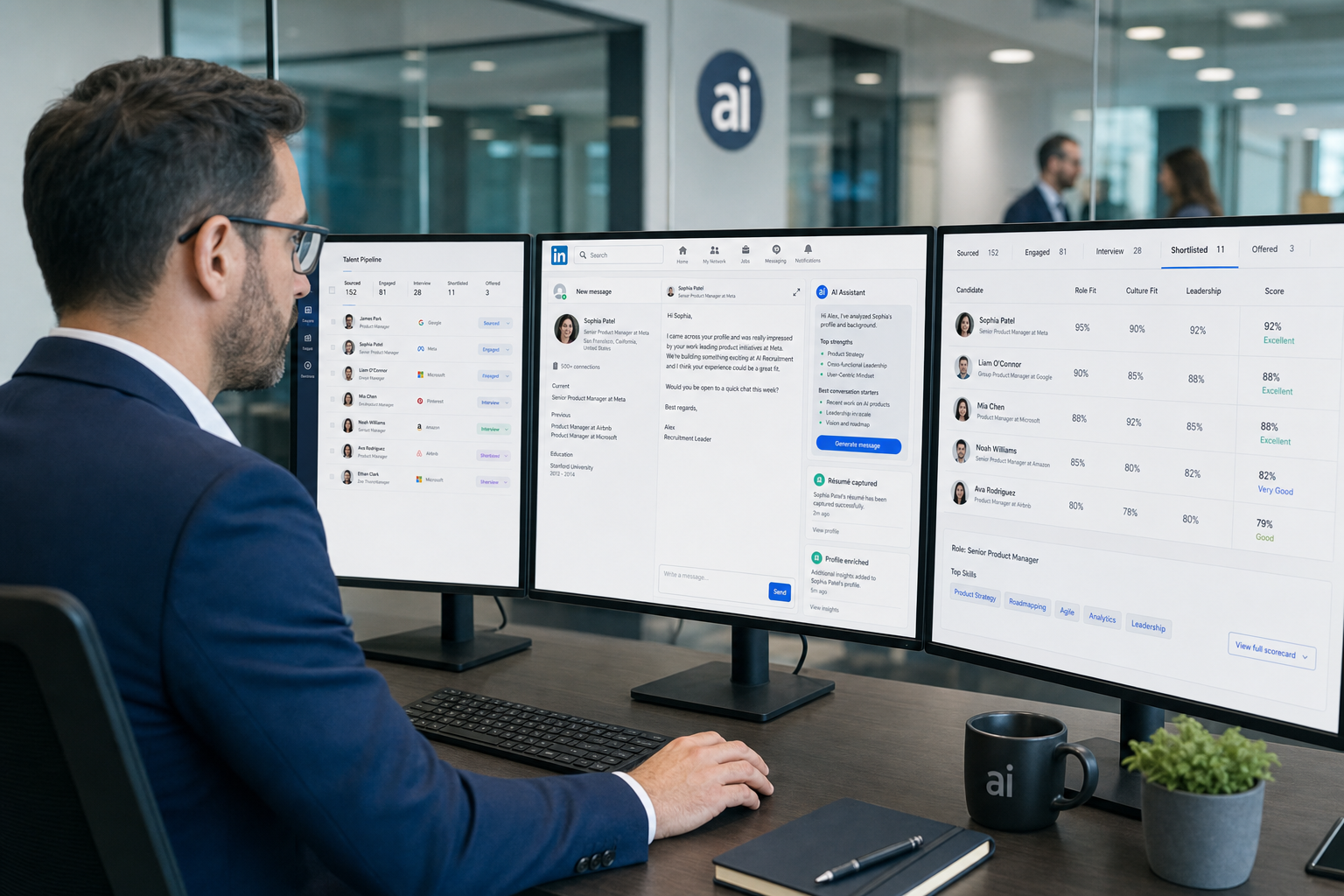
In my own workflow, tools that remove repetitive sourcing communication have been most helpful when used carefully rather than blindly. I have used StrategyBrain AI Recruiter to keep LinkedIn outreach moving after hours, answer routine candidate questions, and capture résumés and contact details from interested prospects, especially when searches crossed time zones. What it did well was reduce the drain of first-touch messaging and follow-up; what it did not replace was recruiter judgment. I still had to review the résumé, assess fit, and decide who truly belonged on the shortlist.
The opening problem is familiar in specialist hiring. A finance leadership role goes live, the brief is only partly aligned, and the employer already feels behind. Someone has to refine requirements, get the role to market, sort through applications that do not really match, and somehow produce a shortlist fast enough for the business to stay confident. That pressure is exactly why niche recruitment agencies have traditionally been valued: they can move faster, pull from established networks, and narrow the field before the client burns time on avoidable screening.
But speed alone is not the full story. In accounting and other professional hiring, the real friction often appears when the shortlist is weak or misaligned. A client may want a higher-caliber candidate than the compensation or role design will realistically attract. A recruiter then has to recalibrate expectations, test market response, compare team-fit factors alongside technical competence, and manage the offer-close stage with a realistic read on what the candidate will actually accept. That sequence exposes the software question behind the search: what system helps a recruiter move quickly, preserve context, improve shortlist quality, and stay organized through closing?
That is the lens for this article. If you are evaluating the best recruiting software for business recruitment, especially across agency, search, and senior-level hiring, the useful question is not which platform has the most features. It is which software supports the real work revealed by that scenario: faster access to talent, stronger shortlist discipline, better expectation management, and cleaner offer-stage execution. Those needs are especially relevant for a headhunting agency and for recruitment agencies for senior positions.
Table of Contents
- What Good Recruiting Software Actually Solves
- Best Recruiting Software by Use Case
- The Three Pressure Points: Speed, Shortlist, Close
- Key Features That Matter in Business Recruitment
- Applicant Tracking System Benefits and Limits
- Executive Search vs Agency Recruiting
- Pricing Factors to Understand Before You Buy
- How to Choose the Best Recruiting Software
- Common Mistakes Teams Make During Selection
- FAQ
What Good Recruiting Software Actually Solves
Recruiting software is not just a database. In practice, the best systems help recruiters handle three recurring pressures that show up in almost every search: compressed timelines, uneven shortlist quality, and difficult close processes.
That framing is more useful than generic feature shopping because it mirrors how recruitment work is experienced by both clients and recruiters. A company usually starts looking for help when hiring is taking too long, when applicants are missing the mark, or when a good finalist becomes hard to secure. Software should support those moments directly.
For business recruitment, it helps to separate the main software categories clearly:
- Applicant tracking system for recruiters: built for job posting, application review, pipeline stages, interviews, and hiring workflow control.
- Recruiting CRM: built for candidate relationship management, passive talent tracking, and sourcing continuity over time.
- Executive search software: built for market mapping, confidential hiring, shortlist presentation, and stakeholder reporting.
- Recruitment marketing platform: built for employer branding, career site performance, and candidate attraction campaigns.
A fast-growing in-house team, a staffing desk, and a headhunting agency do not need the same operating system. If the software cannot support how your team actually wins searches, it becomes another layer of admin rather than a productivity tool.
Key insight: The best recruiting software is the one that helps recruiters reach the market faster, build a better shortlist, and close the right candidate with less friction.
Best Recruiting Software by Use Case
Use case should come before vendor messaging. That simple order prevents many bad software decisions.
Best for in-house recruiting teams
Internal talent teams usually need an ATS-led workflow. Their pressure points are requisition control, interview scheduling, hiring manager feedback, approval flow, and reporting. If the team is struggling to move from intake to shortlist without delays, a structured applicant tracking system is usually the first requirement.
The value here is consistency. Recruiters spend less time chasing updates, hiring managers have clearer visibility, and leadership can see where roles stall. In business recruitment, that is often the difference between a hiring process that feels managed and one that feels improvised.
Best for staffing agencies
Staffing and contingent teams usually need a hybrid model: strong ATS discipline plus CRM flexibility. They are balancing active jobs, candidate submissions, repeat clients, and speed-to-fill pressure. Software should help them search the database quickly, log activity, track submissions, and avoid duplicated work across desks.
If an agency works on short-cycle roles, speed and usability matter more than elegant complexity. Recruiters need to move candidates from first contact to submission without losing notes or client context.
Best for executive search firms
Executive search firms live in a different rhythm. Searches are longer, stakeholders are more numerous, outreach is more discreet, and the shortlist matters more than the volume of applicants. This is why executive search teams often need software that behaves more like a relationship and research platform than a standard ATS.
They need market mapping, long-form notes, target company tracking, shortlist development, and progress reporting that can be shared with clients or internal leadership. A basic ATS may support the process, but it rarely defines it.
Best for a headhunting agency
A headhunting agency typically works through targeted outreach rather than waiting for inbound applications. That changes what software success looks like. Search history, communication memory, candidate interest signals, and discreet follow-up become more valuable than a high-volume application inbox.
This is also where I found StrategyBrain AI Recruiter useful as a support layer rather than a replacement for core recruiting software. For LinkedIn-heavy sourcing, it helped keep first-contact conversations active, collect responses while I was off-line, and hand back candidate information for my own screening. For headhunting work, that kind of continuity can protect momentum without removing recruiter control.
Best for recruitment agencies for senior positions
Recruitment agencies for senior positions tend to work across director, VP, C-suite, and occasionally board-level hiring. Their workflows require stronger documentation, more careful calibration with the client, and better control over who is contacted and when.
For these teams, the best recruiting software should support search strategy notes, role calibration history, talent mapping, interview debriefs, and offer-stage stakeholder coordination. Senior hiring is usually won or lost in the gray areas between stages, not in the stages themselves.
Best for senior hiring inside the business
Internal teams filling leadership roles face many of the same realities as external search firms. Candidates may enter via referral, networking, targeted outreach, or prior relationship rather than a career page. That means the software has to preserve context over a long cycle.
A standard ATS may still be necessary, but for senior-level hiring it often needs CRM-style capability around outreach history, candidate notes, and stakeholder alignment.
The Three Pressure Points: Speed, Shortlist, Close
The reference scenario from accounting recruitment is useful because it highlights the three moments where software either earns its place or gets bypassed.
1. Accelerated timelines
Employers often begin the hiring process with too little time and too many disconnected tasks. They need to agree on the role, advertise it, review applications, coordinate stakeholders, and keep daily business moving. Agencies are hired in part because they compress that workload.
The software implication is straightforward: recruiters need tools that help them reach viable candidates quickly, search prior networks, and keep communication moving without manual duplication. When a platform slows the recruiter down at first contact, it fails the first real test.
2. Shortlist quality
A shortlist is where recruitment credibility is tested. It is not enough to send over available people; the recruiter has to understand whether the employer's expectations are realistic, whether the role design is competitive, and whether a candidate fits the team as well as the brief.
Good software supports this by preserving intake notes, compensation context, candidate comparisons, and interview observations in one place. It should help a recruiter explain why someone is on the shortlist, not just show that they are.
3. Offer and close execution
Closing a candidate is often where weak process becomes expensive. Recruiters need a market view, a record of candidate motivations, and visibility into stakeholder timing. In senior hiring, one missed concern can undo weeks of work.
Software that supports offer-stage notes, communication history, and internal coordination can materially improve execution. It does not close the hire for you, but it makes it less likely that critical information stays stuck in private inboxes or memory.
Key Features That Matter in Business Recruitment
Once you frame software around actual recruiting pressure points, feature evaluation becomes more practical.
Sourcing and candidate relationship management
In business recruitment, sourcing is not just about finding names. It is about preserving relationship history so future searches move faster and with better judgment. This matters even more for a headhunting agency and for recruitment agencies for senior positions, where passive candidates are often the real market.
Look for database search, segmentation, message history, tagging, and reminders that support long-cycle relationships.
Pipeline management and workflow visibility
Pipeline visibility is one of the clearest advantages of a solid ATS. Every candidate should have a known stage, owner, and next action. If recruiters are constantly asking who is waiting, who replied, or who needs a nudge, the workflow is too dependent on memory.
This is where structured software pays off: it turns movement into something reviewable and measurable.
Interview coordination and feedback collection
Interview operations create more drag than many teams expect. Strong software should simplify scheduling, standardize feedback capture, and surface blockers quickly. In senior hiring, this matters even more because multiple stakeholders influence the final decision.
Reporting and decision support
Reporting should help recruiters and leaders answer practical questions: Which sources produce real finalists? Where does the process stall? Which searches are not converting? For search teams, reporting may also need to show target-company coverage, outreach response, and shortlist progress.
The best recruiting software turns activity into decision support rather than just dashboard decoration.
Candidate experience
Candidates experience process quality through response speed, clarity, and consistency. Organized communication affects not only completion rates but also trust, especially in senior and confidential searches.
That is one reason I have kept StrategyBrain AI Recruiter in mind for heavy outbound periods. Used carefully, it can maintain timely first-response communication and collect candidate details while the recruiter remains responsible for the actual qualification decision. In my experience, that works best when the search relies on LinkedIn outreach and time-zone gaps would otherwise slow the process.
Agency and stakeholder collaboration
Many employers rely on external recruiters for specialist hiring. Software should therefore support permission control, external submissions, ownership clarity, and clean collaboration. Without that, duplicated outreach and confused candidate messaging become common.
Integrations, compliance, and usability
No recruiting platform operates in isolation. Calendar integration, communication tools, HR systems, privacy controls, and ease of use all matter because adoption is the real measure of software quality. If recruiters and hiring managers avoid the system, the process falls back into side spreadsheets and inbox threads.
Applicant Tracking System Benefits and Limits
Most teams with more than one person involved in hiring benefit from an ATS. It centralizes records, creates stage visibility, improves coordination, and supports reporting. Those are real operational gains.
The main applicant tracking system benefits include:
- Centralized candidate records: less dependence on scattered spreadsheets and inbox notes.
- Faster coordination: fewer missed handoffs across interviews, feedback, and approvals.
- Better reporting: clearer funnel insight and bottleneck detection.
- More consistent candidate experience: steadier communication and process discipline.
- Stronger collaboration: recruiters, hiring managers, and agencies work from the same record.
But ATS value also has limits. A standard ATS can struggle when the search depends on passive talent, long-term relationship memory, or discreet executive outreach. For a headhunting agency, ATS structure alone is rarely enough. The best setup usually blends workflow control with CRM-style relationship depth.
| Need | Why It Matters | Best-Fit Software Style |
|---|---|---|
| High application volume | Needs structured screening and stage control | ATS-led platform |
| Passive candidate sourcing | Needs outreach history and long-term relationship tracking | Recruiting CRM |
| Executive and confidential hiring | Needs discretion, research notes, and shortlist reporting | Executive search software |
| Employer brand and attraction | Needs campaign and conversion visibility | Recruitment marketing platform |
Executive Search vs Agency Recruiting
This distinction matters because buyers often compare tools across very different recruitment models.
What a headhunter usually does
A headhunting agency usually works through targeted identification and outreach for hard-to-fill, specialist, or senior roles. The workflow is proactive, not applicant-led. That means the software needs to preserve context across multiple conversations and often across long stretches of time.
What retained search means
Retained search typically involves a more formal process, often with exclusivity and a stronger advisory role. That brings greater need for market mapping, progress reports, candidate documentation, and careful stakeholder communication.
Contingency recruiting vs senior-level search
Contingency recruiting can be highly effective for many commercial roles, but it usually prioritizes speed and placement volume. Recruitment agencies for senior positions operate closer to executive search logic, even when the commercial model differs. Their software needs reflect that: more context, better notes, stronger reporting, and tighter control over outreach quality.
For employers, the practical takeaway is simple: if you are hiring at director level or above, do not assume a general staffing workflow is enough.
Pricing Factors to Understand Before You Buy
Software price is easy to compare. Cost of fit is not. That is why recruiting teams often underestimate the real buying decision.
- User model: recruiter seats, hiring manager access, and admin roles can change cost quickly.
- Workflow complexity: senior hiring and agency collaboration often require deeper setup.
- Implementation: migration, permissions, and process design are often more important than headline pricing.
- Integration needs: added systems increase implementation and support demands.
- Reporting depth: advanced analytics may sit behind higher tiers.
- Compliance controls: data handling and access management matter more in regulated or multi-region hiring.
In business recruitment, cheap software often becomes expensive when recruiters maintain side processes to make it workable.
How to Choose the Best Recruiting Software
- Start with your hiring model
Decide whether you are solving for in-house hiring, staffing, executive search, or a blended environment. This one step narrows the right software category quickly.
- Map the actual friction
Is the pain in sourcing speed, shortlist quality, stakeholder coordination, or offer-close execution? The opening accounting-style scenario is useful here because it reflects the real moments where process breaks down.
- Separate must-haves from extras
For many teams, must-haves include candidate records, stage visibility, feedback collection, reporting, and integrations. For a headhunting agency, relationship tracking and discreet outreach support may be non-negotiable.
- Test everyday usability
Software should be easy for recruiters to work in at pace and easy for hiring managers to respond in without training friction.
- Review support for senior hiring
If your business uses recruitment agencies for senior positions or runs executive hiring internally, test for long-cycle notes, search documentation, and stakeholder visibility.
- Inspect reporting before purchase
Ask to see how the system handles source quality, stage delay, shortlist progression, and recruiter activity. If the reporting cannot support decision-making, it will disappoint later.
Common Mistakes Teams Make During Selection
- Buying for features instead of workflow
Large feature lists often hide weak fit for real recruiting work.
- Confusing ATS and CRM needs
Teams buy one and later realize they needed both structure and relationship memory.
- Ignoring shortlist quality
Software is judged on speed, but not on whether it helps the team present better candidates.
- Underestimating offer-stage complexity
Searches often fail late because motivations, concerns, and stakeholder timing were not captured properly.
- Treating senior hiring like standard hiring
Executive and confidential roles need a different operating rhythm and often different software support.
A useful rule is to choose software based on how your recruiters actually create and close a shortlist, not on how clean a demo looks.
FAQ
What is the difference between a recruiter and a headhunter?
A recruiter is a broad term covering in-house, agency, staffing, and search professionals. A headhunter usually works through targeted outreach for difficult, specialist, or senior roles. A headhunting agency often works with a search-oriented mindset rather than an applicant-led one.
Do agencies need an ATS or a CRM?
Many need both. An ATS helps manage jobs, submissions, and process stages. A CRM helps preserve sourcing history, passive candidate relationships, and future pipeline value.
Why does shortlist quality matter so much in software selection?
Because speed without relevance wastes client confidence. The best recruiting software should help recruiters preserve intake context, compare candidates properly, and explain why someone belongs on the shortlist.
How does software help fill senior positions?
It helps teams document search strategy, track discreet outreach, store candidate motivations, coordinate stakeholders, and preserve decision context across longer timelines. This is especially important for recruitment agencies for senior positions.
What features matter most for executive recruiting?
Relationship management, confidential workflow support, market mapping, shortlist presentation, stakeholder reporting, interview coordination, and clear usability usually matter most.
Can AI help without replacing recruiter judgment?
Yes. In my experience, tools like StrategyBrain AI Recruiter are most useful when they handle repetitive LinkedIn outreach, candidate replies, and résumé collection while the recruiter retains responsibility for fit assessment and next-step decisions.
Conclusion
The best recruiting software is not the system with the most categories checked on a comparison sheet. It is the one that helps your team do the real work that matters in business recruitment: reach the market faster, build a stronger shortlist, and close the right candidate with better control.
That logic applies whether you are running an internal talent function, a staffing desk, a headhunting agency, or one of the many recruitment agencies for senior positions working on high-stakes searches. If you evaluate software through the lived pressures of recruiting rather than through marketing language, the right choice becomes much easier to see.